Shaft

[Image: Photo by Adrià Goula, courtesy of Carles Enrich].

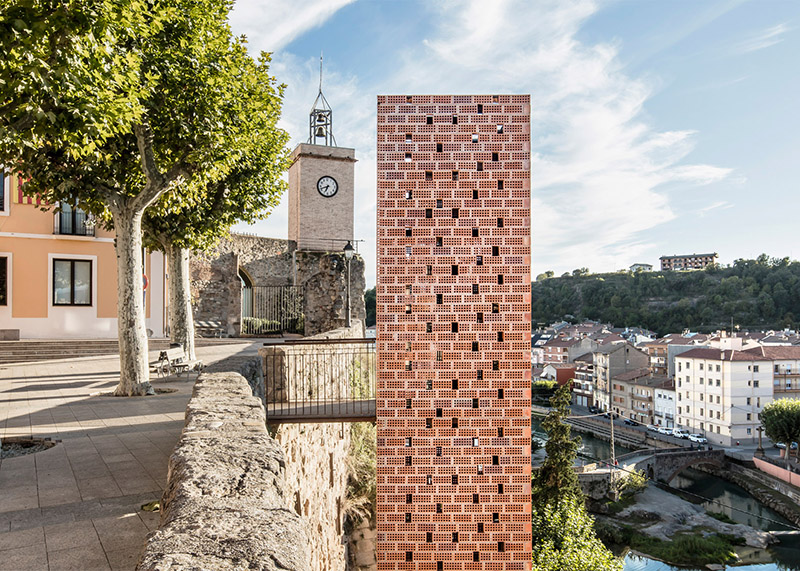
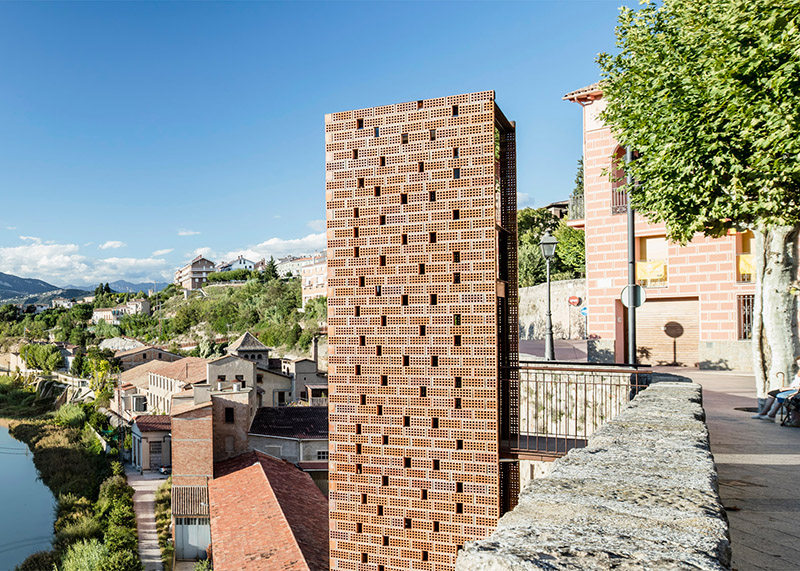
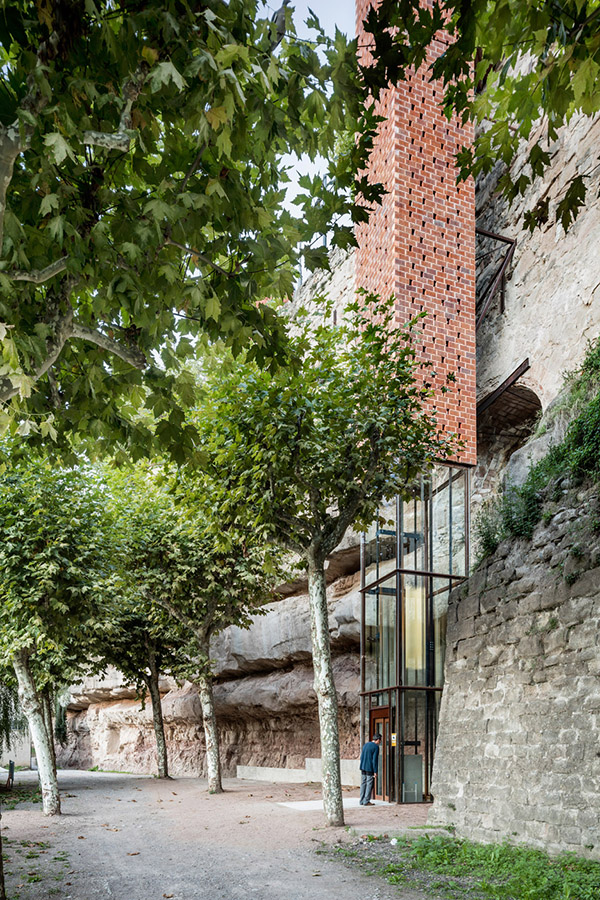
Here’s another prosthetic elevator project—in fact, the reason I posted the previous one—this time around designed by architect Carles Enrich for the riverside city of Gironella, Spain.

[Image: Photo by Adrià Goula, courtesy of Carles Enrich].

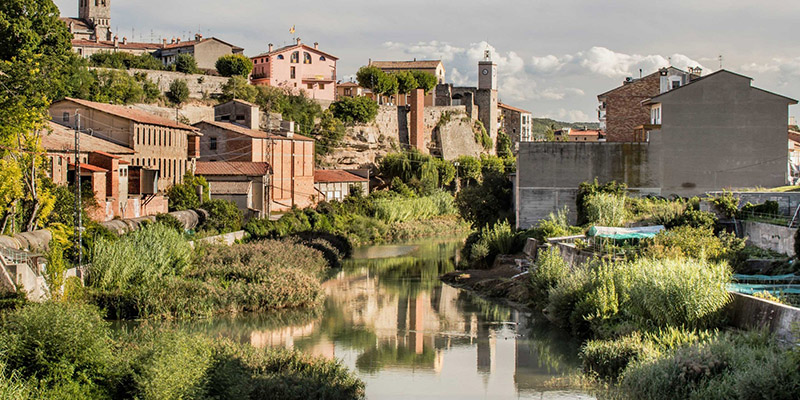
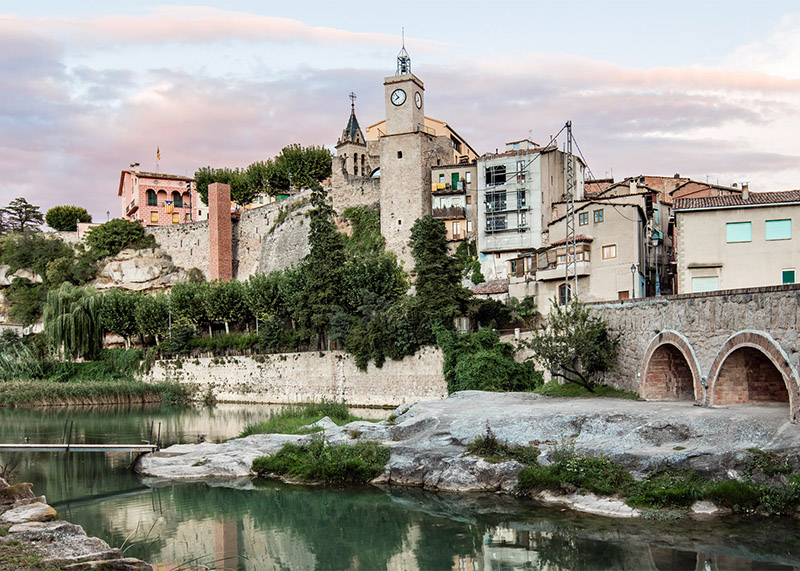
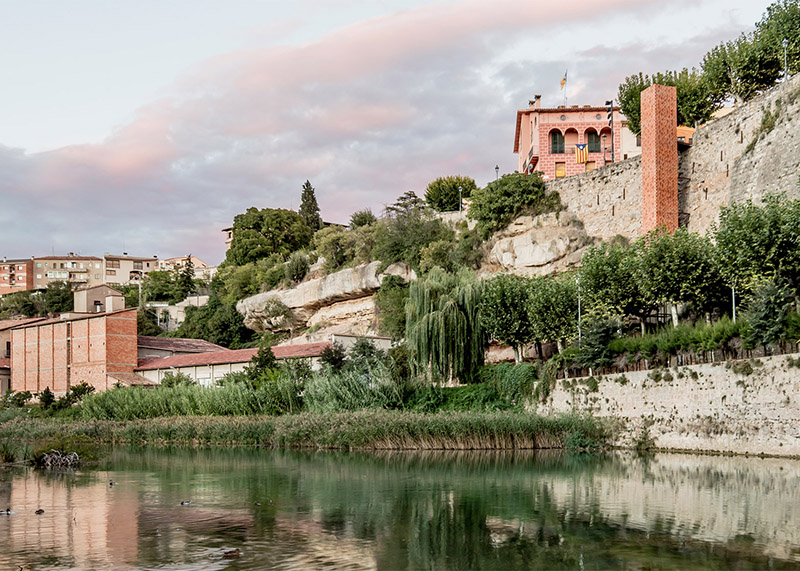
The elevator connects the old and new parts of town, offering ease of access to the young and elderly alike, and reopening social and economic circulation between the two halves of the city.

[Image: Photo by Adrià Goula, courtesy of Carles Enrich].

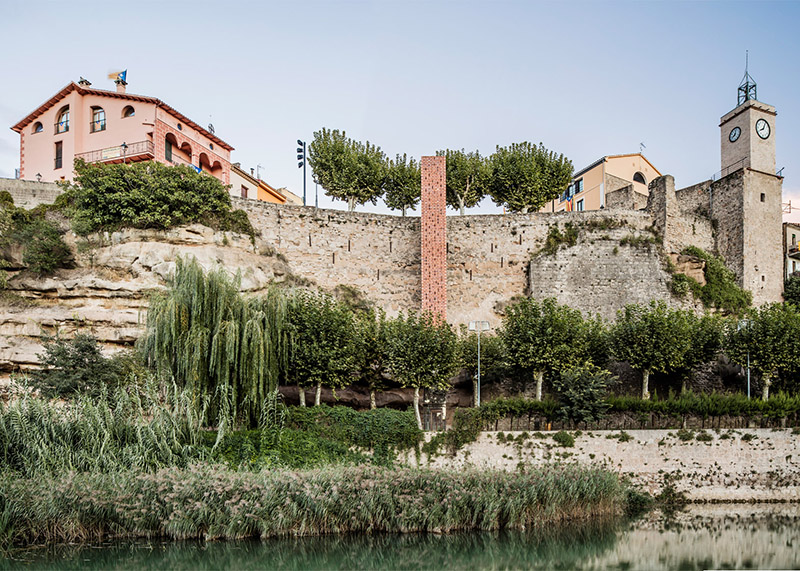
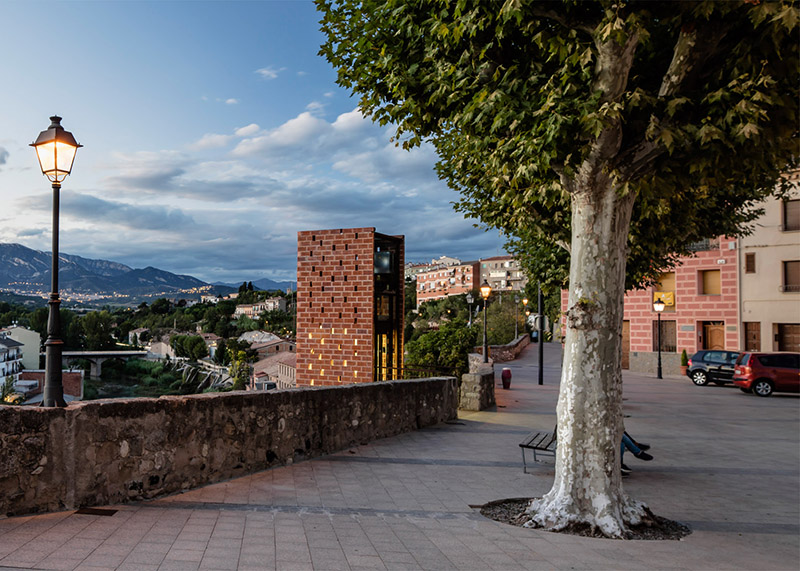
Built using steel, glass, and bricks, the project also blends into the existing color scheme of the city, looking like a chimney or a church steeple, a tower of roofing tiles suddenly standing alongside the city’s cliff.

[Image: Photo by Adrià Goula, courtesy of Carles Enrich].

Among many things, I love how unbelievably simple the project is: it’s just a rectangle, going from level A to level B. That’s it.

[Image: Photo by Adrià Goula, courtesy of Carles Enrich].

I’m not entirely sure why I find projects like this so fascinating, in fact, but the notion that two radically separate vertical levels can suddenly be connected by the magic of architecture is one of the most fundamental promises of construction in the first place: that, through a clever use of design skills and materials, we can create or discover new forms of circulation and unity.

[Images: Photos by Adrià Goula, courtesy of Carles Enrich].

With staircases, of course, you have more leeway for introducing expressive shifts in direction and orientation, pinching floors together, for example, or introducing elaborate curls leading from one floor to the next.

The elevator, by contrast, seems remarkably sedate.

[Image: Photo by Adrià Goula, courtesy of Carles Enrich].

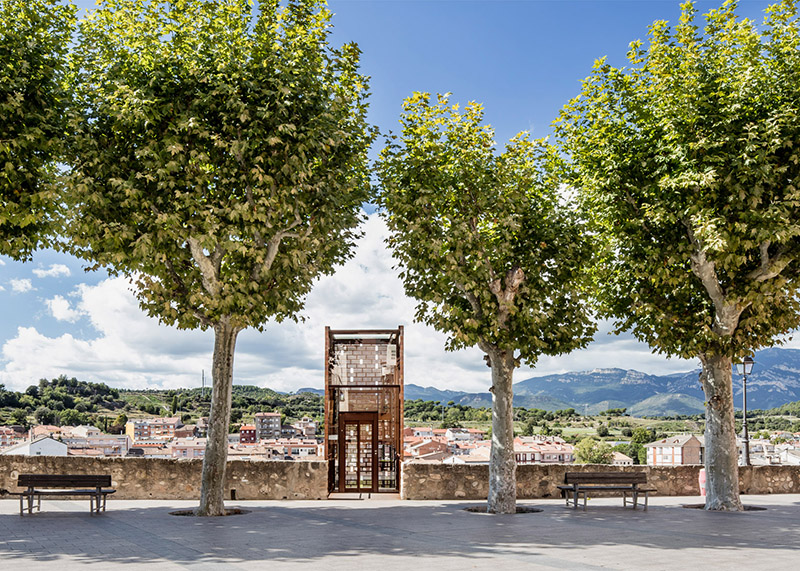
It’s just a box you step into, and a vertical corridor you travel within. In the photo above, it’s like a dimly lit portal peeking up from some other, deeper district of the city.

Yet the ease of connection, and the use of subtle materials to realize it, are immensely exciting for some reason, as if we are all ever just one quick design gesture away from linking parts of the world in ways they never had been previously.

Just build an elevator: a pop-up vertical corridor delivering ascension where you’d least expected it.

[Image: Photo by Adrià Goula, courtesy of Carles Enrich].

In any case, read more about the project over at the architect’s own website, or at ArchDaily, where I first saw the project, and check out the previous post for another elevator, while you’re at it.

Lift

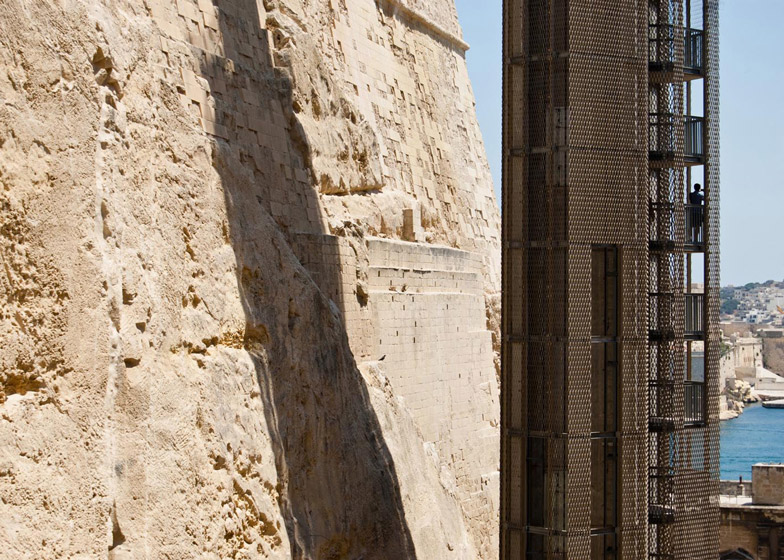
[Image: The “Barakka Lift” in Malta; photo by Sean Mallia, courtesy of Architecture Project].

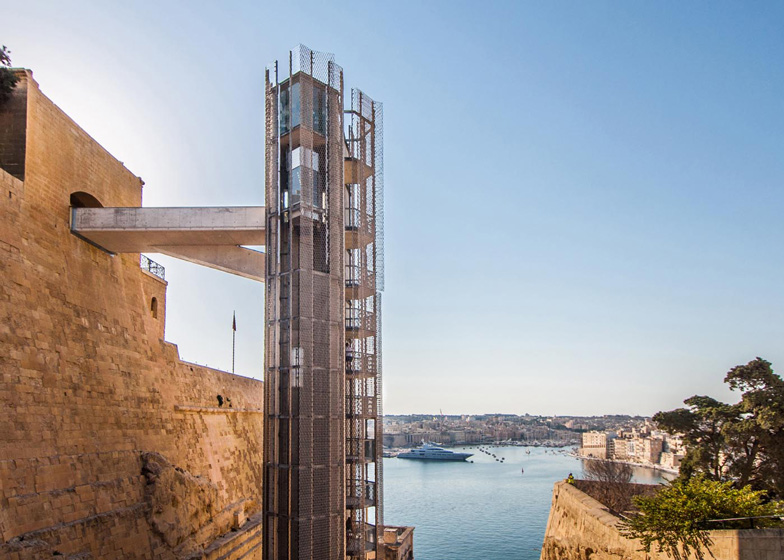
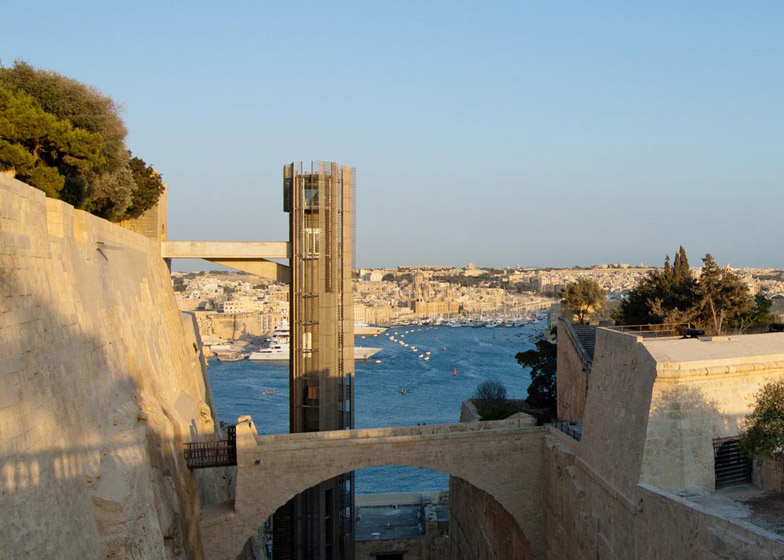
The forthcoming (i.e. next) post will retroactively serve as an otherwise arbitrary excuse for posting this project, one of my favorites of the last few years, a kind of castellated prosthetic elevator on the island of Malta by Architecture Project.

[Image: The “Barakka Lift” in Malta; photo by Sean Mallia, courtesy of Architecture Project].

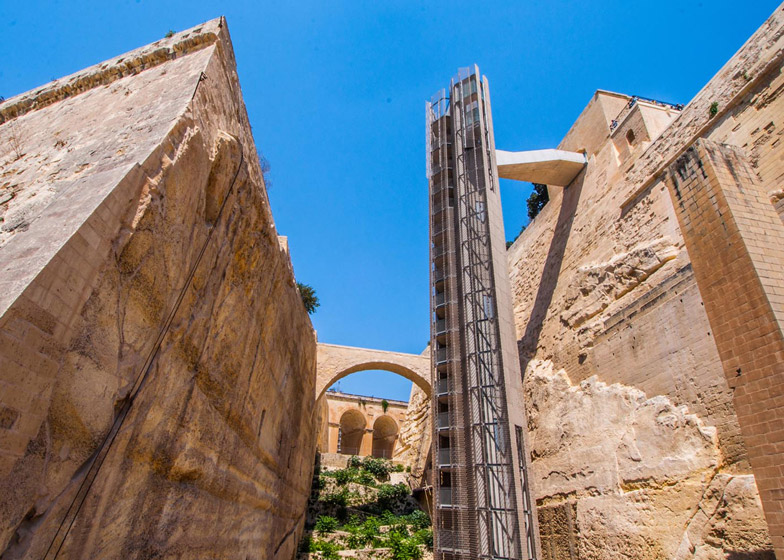
The twenty-story outdoor elevator “required a certain rigour to resolve the dichotomy between the strong historic nature of the site and the demands for better access placed upon it by cultural and economic considerations,” resulting in the choice of blunt industrial materials and stylized perforations.

[Image: Photo by Sean Mallia, courtesy of Architecture Project].

As the architects describe it:

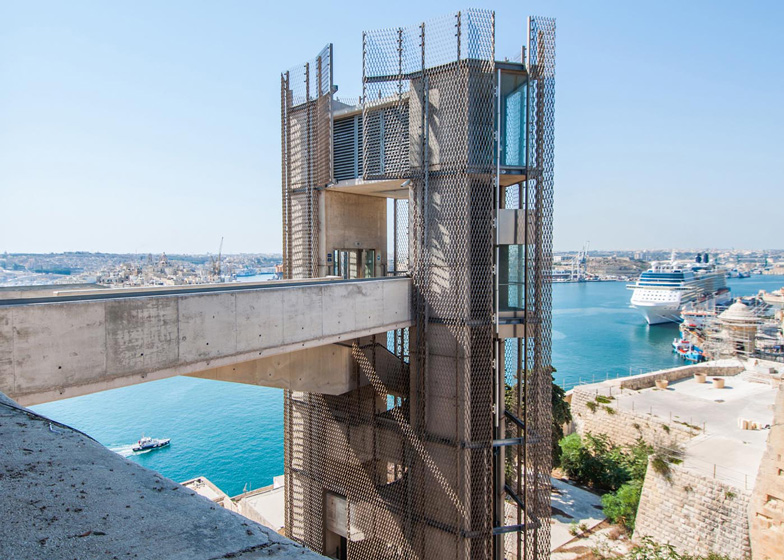
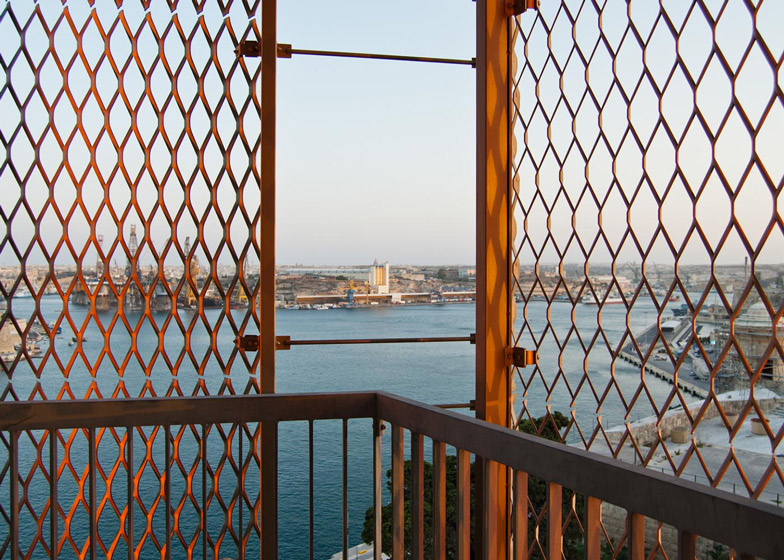
The geometric qualities of the plan echo the angular forms of the bastion walls, and the corrugated edges of the aluminium skin help modulate light as it hits the structure, emphasizing its verticality. The mesh masks the glazed lift carriages, recalling the forms of the original cage lifts, whilst providing shade and protection to passengers as they travel between the city of Valletta and the Mediterranean Sea.

Personally, I love the idea of what is, in effect, a kind of bolt-on castle, combining the language of one era—the Plug-In Cities of Archigram, say—with the aesthetics of the Knights of Malta.

[Image: Photo by Luis Rodríguez López, courtesy of Architecture Project].

In fact, it’s almost tempting to write a design brief explicitly calling for new hybridizations of these approaches: modular, prefab construction… combined with Romanesque fortification.

[Image: Photo by Sean Mallia, courtesy of Architecture Project].

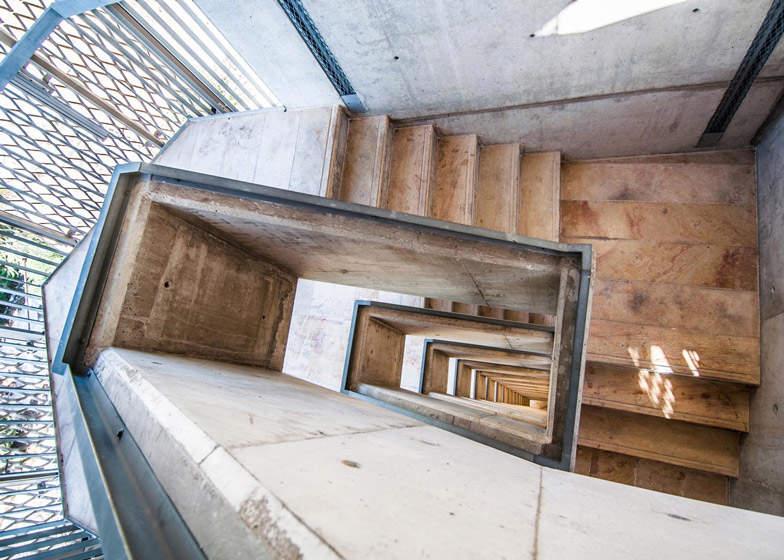
An emergency stairwell spirals down between the two parallel elevator shafts, which “also reduces the visual weight of the lift structure itself and accentuates the vertical proportions of the structure,” the architects suggest and contributes to perforating the outside surface beyond merely the presence of chainlink.

[Image: Photo by Luis Rodríguez López, courtesy of Architecture Project].

In any case, it’s not a new project—like me, you probably saw this on Dezeen way back in 2013—but I was just glad to have a random excuse to post it.

[Image: Photo by Luis Rodríguez López, courtesy of Architecture Project].

Another elevator post coming soon

Then we descend

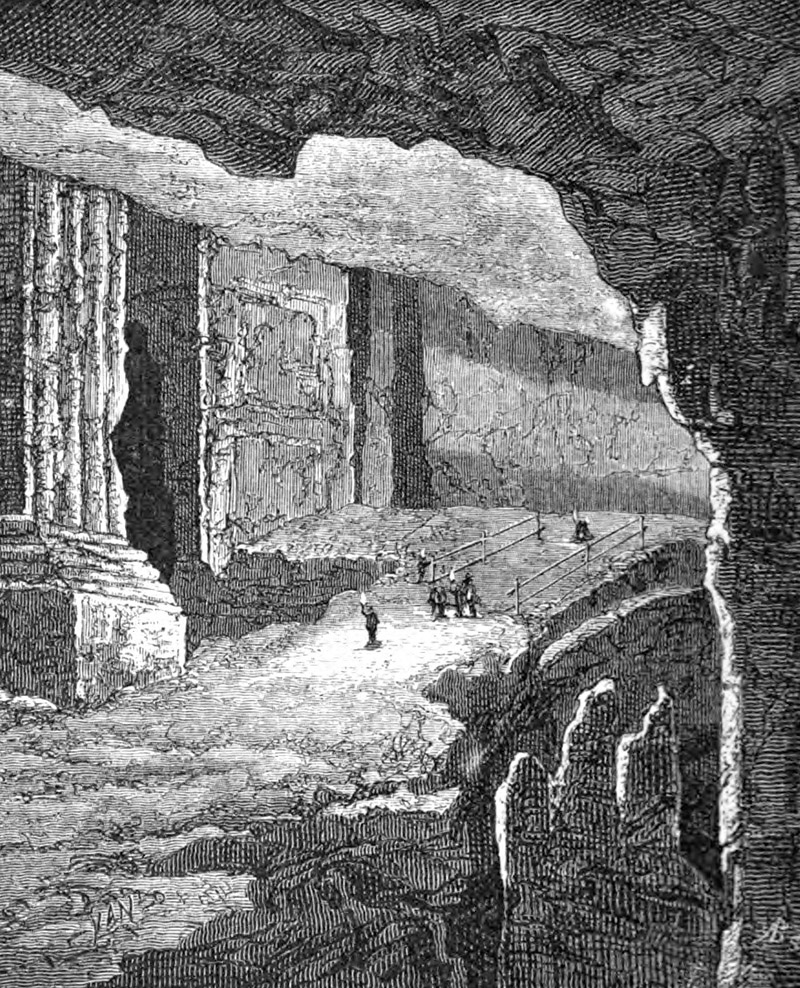
[Image: Descending into Mammoth Cave, from Beneath the surface; or, the wonders of the underground world by W.H. Davenport Adams].

By way of JF Ptak Science Books, I found myself reading through an old book called Beneath the surface; or, the wonders of the underground world by W.H. Davenport Adams this weekend, a travelogue from 1876 exploring subterranean landscapes around the world, including what is now Mammoth Cave National Park.

“Then we descend,” Adams writes upon his arrival at the cave, “by a small pathway excavated among the rocks, until we discover, in the sides of the mountain, and at the bottom of a funnel-shaped cavity, overgrown with verdure, an opening so low and narrow that two people can with difficulty enter at once.”

Slipping through, they pass into “a labyrinth of caves” consisting of seemingly endless sloping rooms, shafts, and corridors.

As my own phrasing there indicates, these spaces are described by way of architectural analogy: as naves and vestibules, chambers and rotundas. In fact, their perceived architectural characteristics are highlighted even on the acoustic level. One cave, for example, is a place “where the voice resounds and, lingering, reverberates, like the strain of an organ through dim cathedral aisles.”

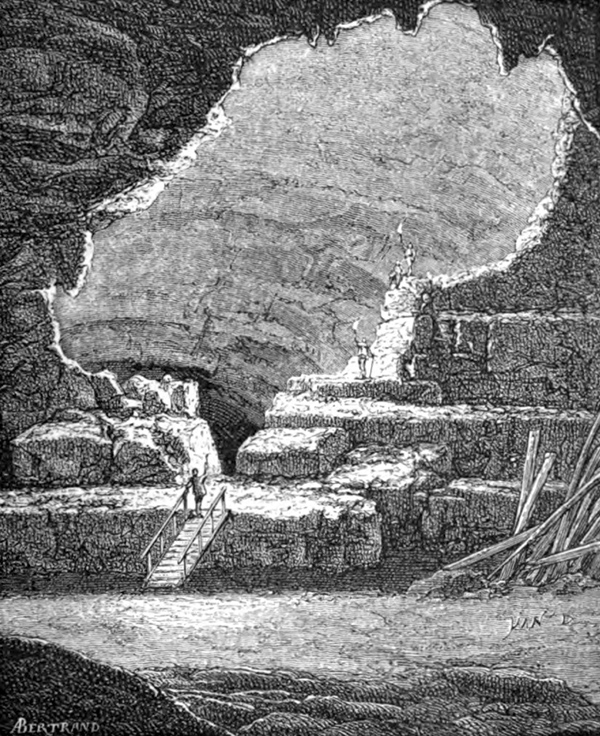
[Image: A room in Mammoth Cave known as “The Maelstrom,” from Beneath the surface; or, the wonders of the underground world by W.H. Davenport Adams].

Continuing on their downward trek, Adams & Co. soon wander into “a chamber nearly 320 feet in circuit, whose roof rises like the stand of an immense nave. Its form, its grandeur, its magnitude (it could accommodate five thousand persons), and the strange architectural-like stalactites which embellish it, have procured it the name of the Gothic Church.”

Indeed, standing amidst this ersatz cathedral, and “thanks to the power of imagination, and the varying influence of the light, we here distinguish all the details of a medieval nave, pillars, and columns, and corbels and ogives.”

Among many things, what interests me here is how the interior of the earth is seen as if through the haze of a projection, with architectural forms emerging where, in fact, only inhuman geological processes at work—but also, in the opposite direction, the implied observation here that, in an age of masonry construction, architecture and geology were, in effect, natural cousins, lending themselves to mutual comparison far more easily than in today’s time of glass and steel construction.

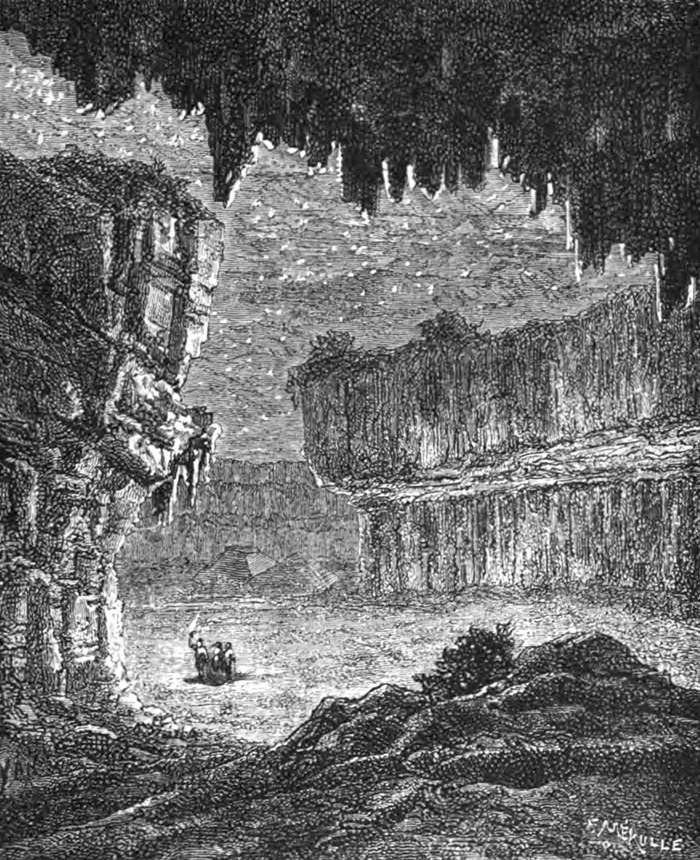
[Image: A vast underground room filled with “a silent, terrible solitude,” from Beneath the surface; or, the wonders of the underground world by W.H. Davenport Adams].

To put this another way, many streets in Manhattan are often quite appropriately described as “canyons,” not only due to their perceived depth—that is, given the towering buildings on either side, as if pedestrians merely wander at the bottom of artificial slot canyons—but also due to the geological materials those buildings were made from.

However, following widespread transformations in global building construction, our buildings today are now more likely to be reflective—even dangerously so—or partially transparent, whether this is due to the use of glass curtain walls or shadow-annihilating polished titanium, with the effect that our urban environment is no longer particularly well-served by geological analogy.

In any case, the book’s flirtation with an architectural vocabulary is gradually abandoned as Adams and his colleagues venture deeper into the planet. They eventually find themselves standing somewhat uncomfortably surrounded by a “phantasmagoria” of black gypsum walls, all “covered with sparkling crystallizations,” in a vast room whose belittling proportions inspire feelings not of grandeur and religiosity but a kind of exhausted desolation.

Here, Adams writes, “you think yourself on one of those dead and naked planets, where mineral nature reigns in the bosom of a silent, terrible solitude; on some earth never warmed by the sun, and which is animated by no kind of life.”

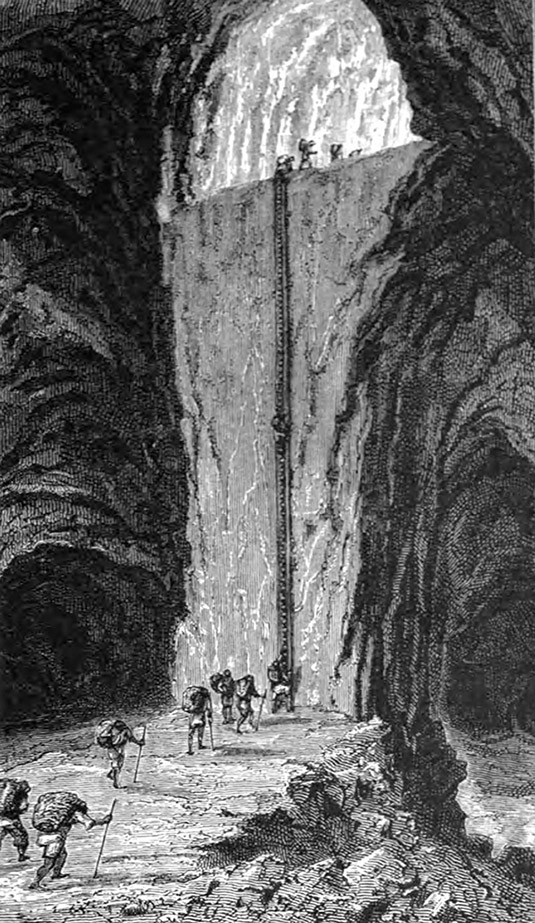
[Image: An unfortunately rather low-res image from Beneath the surface; or, the wonders of the underground world by W.H. Davenport Adams].

The rest of the book—including the image seen immediately above this sentence—ventures elsewhere, into silver mines and glacial caves, even briefly passing by way of underground “artificial ice caves” for the premodern production and storage of ice.

I’m just a sucker for subterranea. Check it out if any of this sounds up your alley, and click through the archives of JF Ptak Science Books while you’re at it.

L.A.T.B.D.

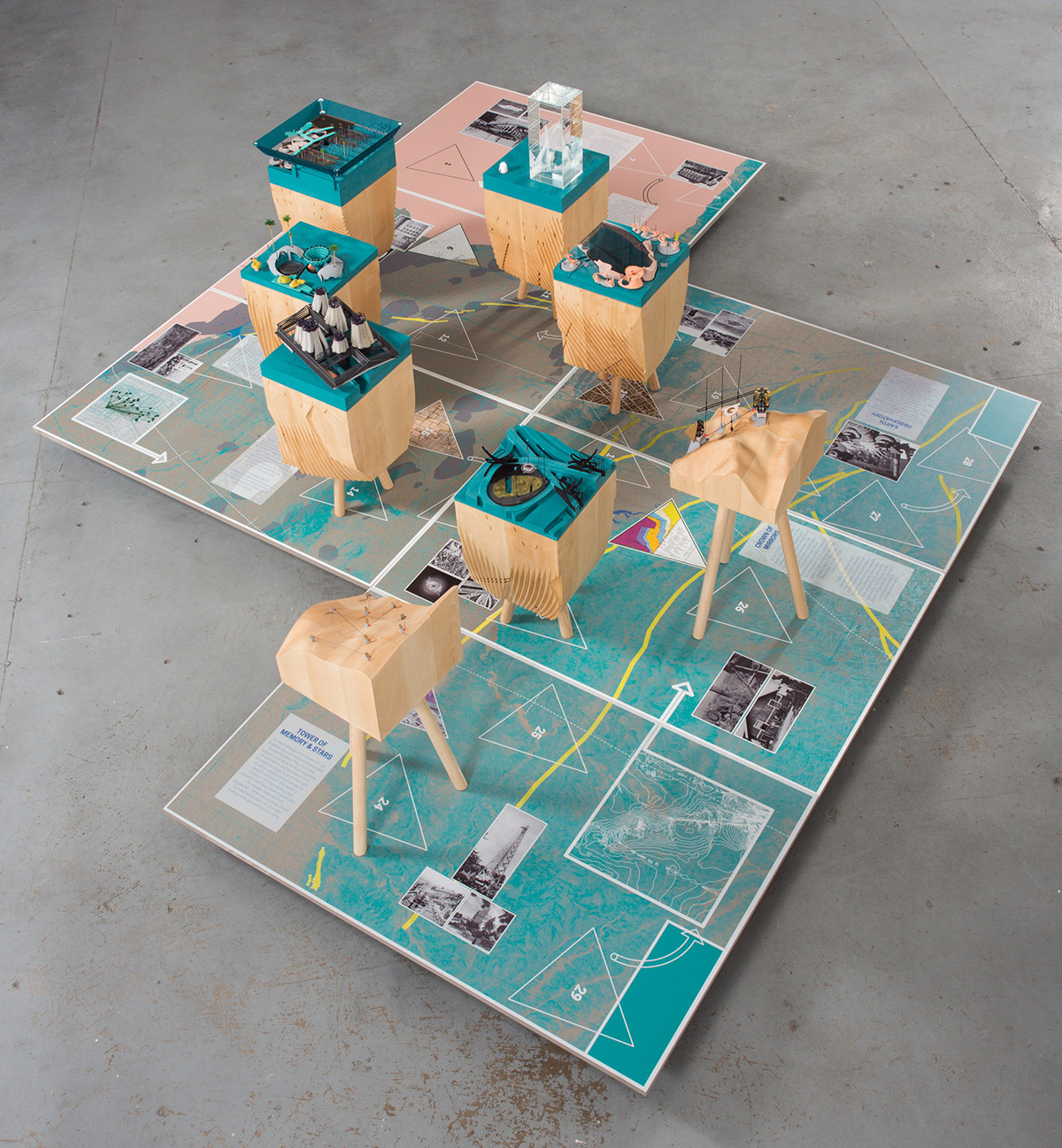
[Image: L.A.T.B.D. by Smout Allen for USC Libraries; photo by Stonehouse Photographic].

I wanted to give a quick heads up that a new collaborative exhibition will be opening to the public later today in the Doheny Memorial Library at USC here in Los Angeles, featuring work by myself and Smout Allen.

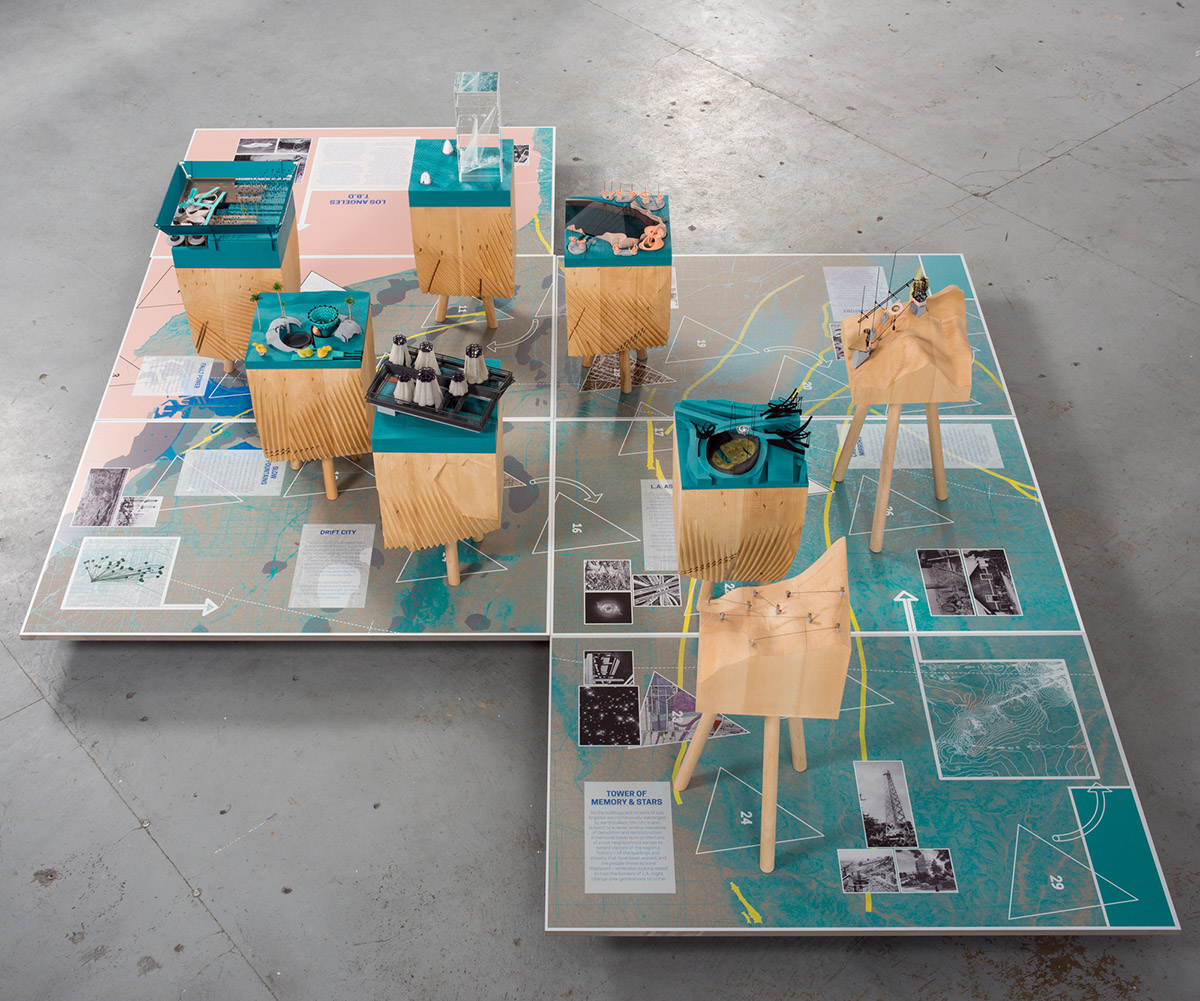
Called L.A.T.B.D., the project looks at diverse narrative, scientific, architectural, and landscape futures of Los Angeles. It is a city always yet to be determined—or L.A., T.B.D.

The exhibition actually comes at the very end of the 2015 USC Libraries Discovery Fellowship, which I’ve had the honor of holding this year, the challenge of which was to use the archival holdings of USC as a springboard for looking forward toward whatever Los Angeles might become.

Like plotting a ballistic trajectory, if we know where L.A. has been—if we can see the ingredients of its past, from its prehuman landscapes to the 2012 procession of the Space Shuttle—can we determine where the city might be, 10, 20, 100 years from now?

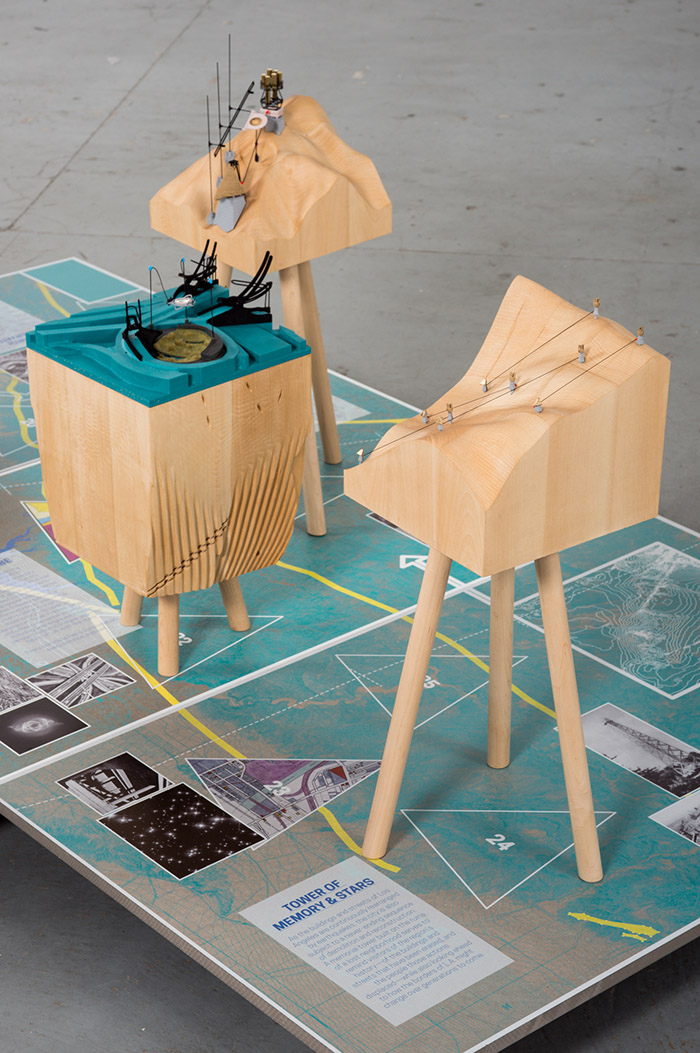
[Image: L.A.T.B.D. by Smout Allen for USC Libraries; photo by Stonehouse Photographic].

The overall curatorial idea was that, hidden within USC’s impressive and seemingly endless archival holdings, there might be glimpses of an L.A. yet to come, and that a project such as this should find a way of bringing that future version of the city into focus.

However, not one for prediction or prescriptive visions of tomorrow, I wanted this to be far more open-ended than that. We thus developed several parallel lines of materials for the show.

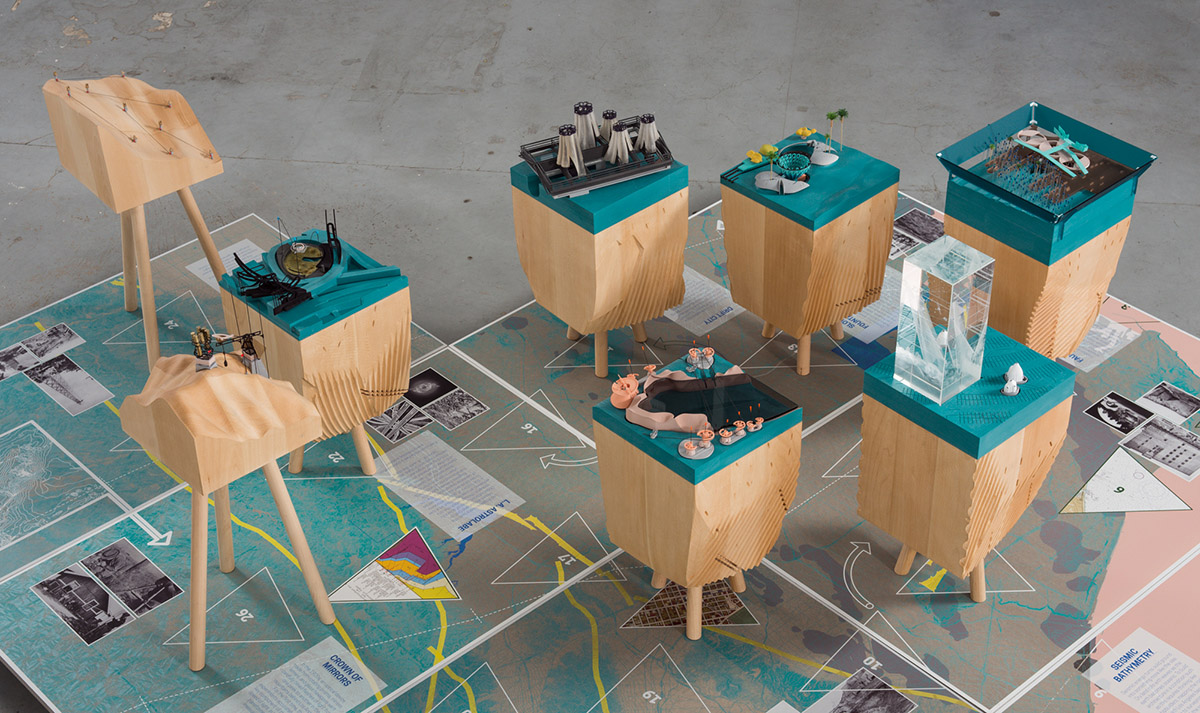
[Image: L.A.T.B.D. by Smout Allen for USC Libraries; photo by Stonehouse Photographic].

One, of course, are a series of gorgeous models designed and fabricated by Smout Allen, showing various hypothetical scenarios for the future city. In one, huge pendulums have been installed beneath the streets to act as seismic counterweights, protecting the city from earthquakes.

In another, the titanic forces released by plate tectonics can be captured by a new kind of power station, converting those otherwise threatening movements of the earth into a source of renewable energy.

In yet another, the city’s freeway system has been converted into a kind of immersive astronomical device, to help train the eyes of this city of stars on an older and more important firmament above.

This work also served as a direct source for the related project we did for this year’s inaugural Chicago Architecture Biennial.

[Image: L.A.T.B.D. by Smout Allen for USC Libraries; photo by Stonehouse Photographic].

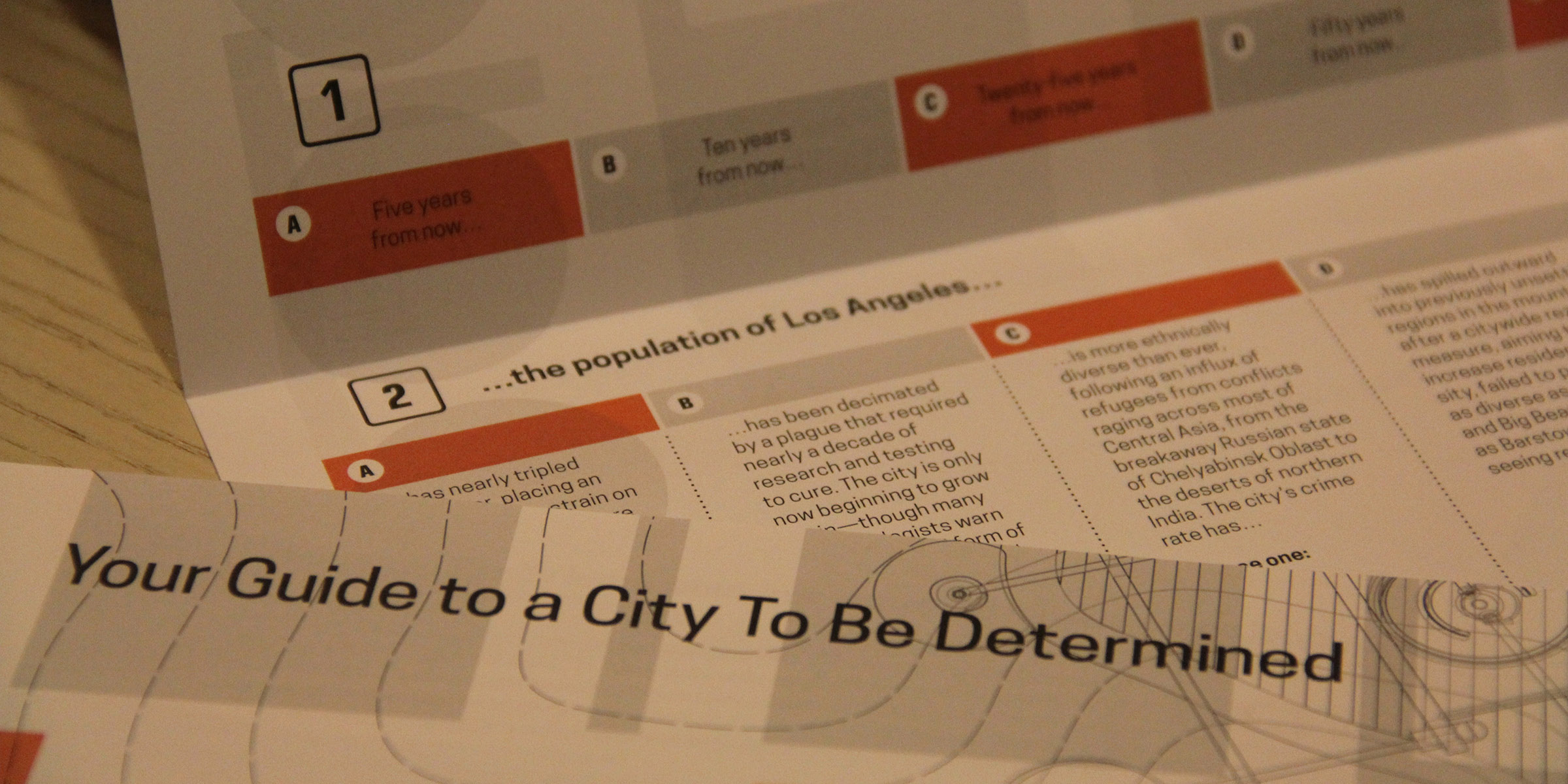
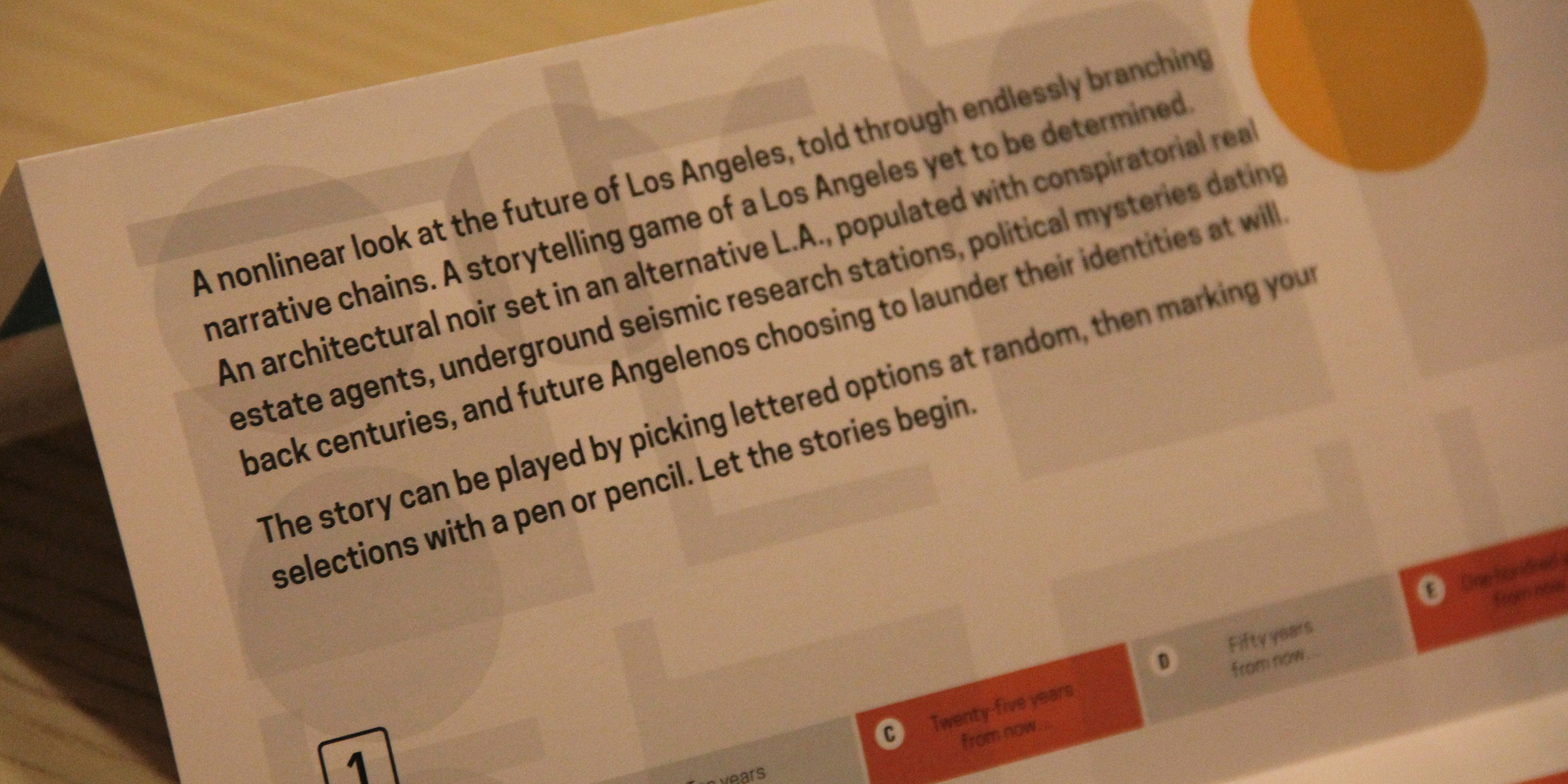
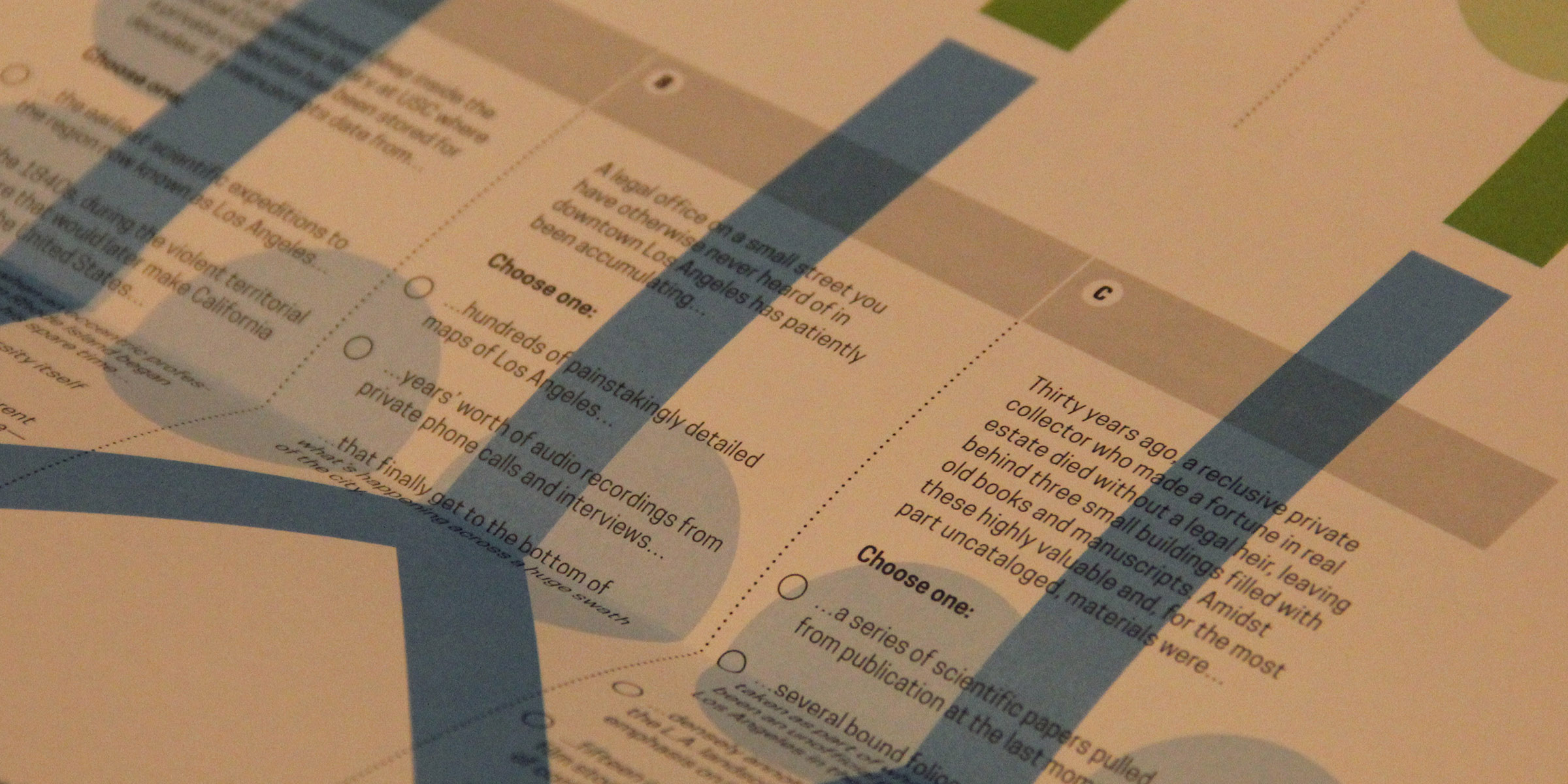
Another key part of the L.A.T.B.D. exhibition is an interactive text that allows visitors to, in a sense, choose their own future for the metropolis. This text combines a small-scale look at what sort of Los Angeles might yet greet our unborn descendants—complete with neighborhoods flooded by sea-level rise, widespread demographic shifts, and corrupt political machinations—with a subtext of noir or urban mystery.

Put another way, if this is a city known for its conspiracies and crimes—whether it’s Chinatown, O.J. Simpson, bank heists, or the novels of James Ellroy—can we use that same narrative register to explore the city’s future infrastructure?

[Images: L.A.T.B.D.‘s accompanying exhibition text, designed by David Mellen Design; terrible photos by Geoff Manaugh].

I started referring to this as a kind of architectural or infrastructural noir, and I’ve come to really like the phrase: the accompanying exhibition text is thus not at all what you’d expect to see in a typical gallery setting, but instead tells an endlessly branching “noir” about the next Los Angeles—by, in some ways, revealing what Los Angeles really was, all along.

[Image: L.A.T.B.D.‘s accompanying exhibition text, designed by David Mellen Design; terrible photo by Geoff Manaugh].

Finally, the exhibition includes a series of historical artifacts from the USC Libraries holdings, from old scientific reports to transportation policy papers, from obsolete urban predictions from the 1980s to board games set in a premodern L.A.

Here, working with designer David Mellen, we had a lot of fun, deliberately crossing and recrossing the line between fiction and reality: that is, not every artifact you see in the exhibition should be trusted, and things might not always be what they seem.

There’s much more to say about the exhibition, but I wanted to get a quick post up before the show opens later this afternoon. There is a reception tonight at 5:30pm in the library, or consider stopping by on Saturday, October 17, from noon to 1pm, to talk to myself and Smout Allen about the project. Saturday’s event is part of the “Archives Bazaar.”

L.A.T.B.D. was made possible by support from the USC Libraries Discovery Fellowship, the Bartlett School of Architecture, UCL, and the British Council. Special thanks are owed to Dean Catherine Quinlan; to Jeff Watson; to the USC Libraries staff; and to Harry Grocott, Doug Miller, and Sandra Youkhana.

Occult Infrastructure and the “Funerary Teleportation Grid” of Greater London

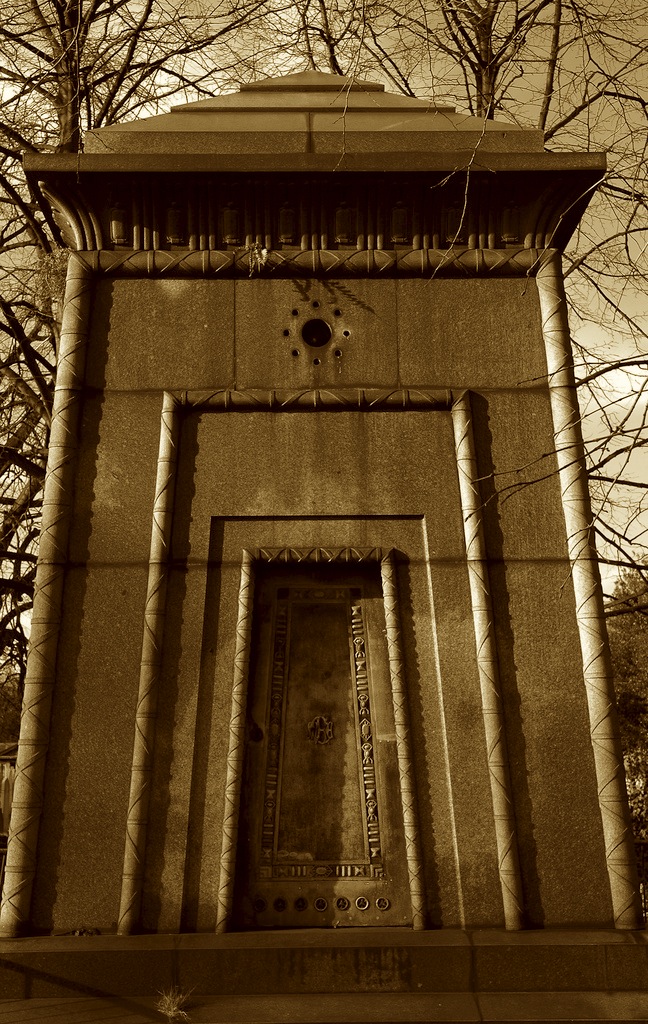
Speaking of cracks in space-time, an urban legend I love is the one about a tomb in Brompton Cemetery, London, allegedly designed by Egyptologist Joseph Bonomi and rumored to be a time machine.

[Image: Via The Clerkenwell Kid].

A sadly now-defunct blog called The Clerkenwell Kid is a great resource for this. There, we read that Bonomi “traded as an archaeological artist but is thought to have been a tomb raider”:

He is also generally considered to have been the designer of the Egyptian styled “Courtoy” tomb in Brompton cemetery which was ostensibly intended to be the final resting place of “three spinsters”. An interesting legend has grown up around this mausoleum because it is the only one in the cemetery for which there is no record of construction. This, together with Bonomi’s obsession with the afterlife (reflected in the hieroglyphs on the tomb), have been held by some to be evidence that it is not a tomb at all but a time machine and that the three spinsters, if they existed at all, were in fact his time travelling sponsors.

The correct question to ask here is not: is this true? Is this tomb really a time machine? The correct question to ask here is: how freaking cool is this?

The Clerkenwell Kid then goes one better, however, claiming that this urban legend is wrong—because it isn’t ambitious enough.

In fact, we’re told, the tomb was actually one of five such chambers, designed and constructed by Bonomi in an occult conspiracy with his colleague, Samuel Alfred Warner.

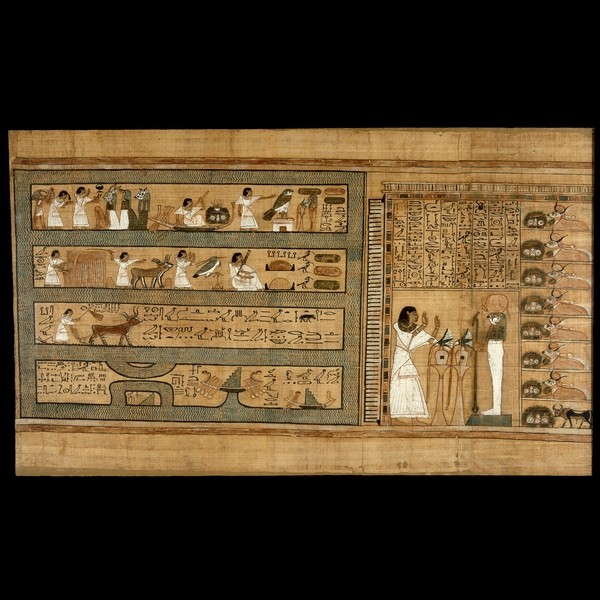
[Image: An otherwise unrelated photo of the Egyptian Book of the Dead, courtesy of the British Museum].

“Amongst several other inventions,” the Kid tells us, “Warner claimed to have developed a mysterious missile capable of destroying ships from a distance”:

The Royal Navy were convinced enough by his demonstrations to pay him to develop this new weaponry but proved unable to reproduce his results independently. This was because what Warner had allegedly discovered (with the help of ancient knowledge gained by Bonomi in Egypt) was an occult way of “teleporting” a bomb a short distance—I suppose you could call it a “psychic torpedo.”

Again, the interest for me here is not whether or not people actually were teleporting themselves—let alone submarine torpedoes!—back and forth through time using Egyptological monuments hidden in London cemeteries.

The interest for me, instead, is at least two-fold: one, how awesome a story this is, and how much I want to tell everyone about it, and, two, how urban infrastructure always seems to inspire, catalyze, or emblematically come to represent these sorts of unexpected narrative investments.

We could say it’s the paranoia of infrastructure: the belief that there is always a bigger story we don’t know, or that someone deliberately isn’t telling us, about how our cities came to be the way they are today. We see this in everything from the water-theft politics of Chinatown to the high-speed rail conspiracies of True Detective Season 2, to this teleportation chamber disguised in plain sight in Brompton Cemetery.

The fact that this story has an atmosphere of the occult only makes literal the notion that the real histories of our cities, the true tales of backstage deals, hidden interests, and untold corruption that made them what they are, have been purposefully obscured from us—they have been occulted—by mysterious figures who prefer we don’t know.

It’s as if narrative paranoia is the default note of infrastructural investigation.

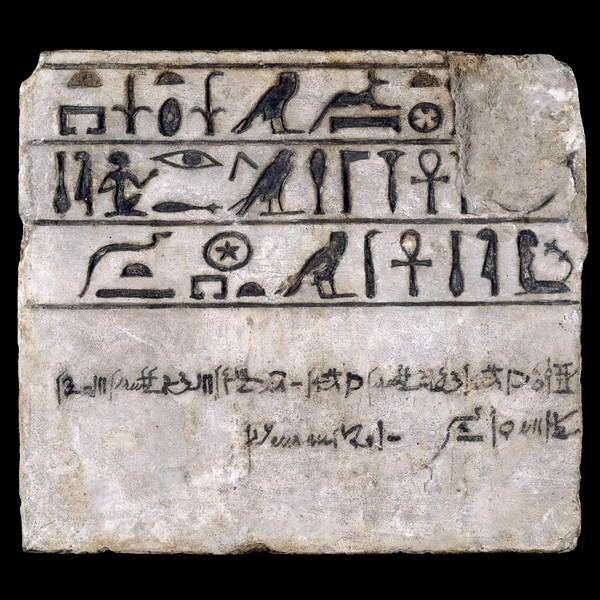
[Image: An otherwise unrelated photo of a “Stela fragment of Horiaa,” courtesy of the British Museum].

In any case, The Clerkenwell Kid keeps upping the ante. Remember those five teleportation chambers? Well, there were actually seven!

In dark collaboration, this legend goes, Bonomi and Warner set about constructing “a transportation grid around London” that would “reduce the time taken to travel the large distances of the vast, congested metropolis. To this end they built seven Egyptian teleportation chambers in the most suitable places they could find—in each of the seven new cemeteries that had been built in the capital from 1839.”

The Kid has a great phrase for this, referring to it as “the London funerary teleportation grid.” Surrounding the city like a seven-pointed star, these tombs formed a kind of mortuarial diagram—an urban-scale morbid force-field—that could zap people back and forth through Greenwich space-time.

It’s worth pointing out, however, that the rumors continue, leaking beyond the borders of Old Blighty, to suggest that there is yet another such transportation monument—but it’s over the English Channel, in Paris.

Even within the complicated mythology of these urban legends, this Parisian tomb is an outlier, but it brings with it an interesting plot development. That is, under the cover of developing something like a primitive military radar system that could protect the English Channel from foreign invasion, occult architects and Egyptologists were actually bilking the defense establishment to amass funds and construct this teleportation grid, scattered throughout the war-shadowed cemeteries of western Europe.

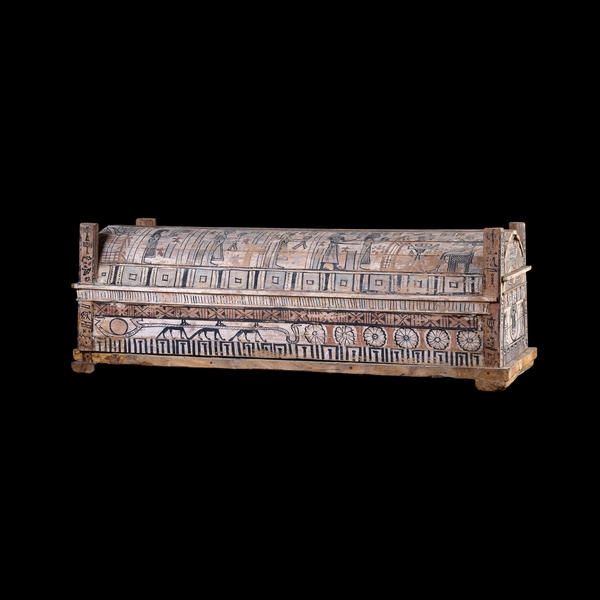
[Image: An otherwise unrelated photo of the “Coffin of Tpaeus,” courtesy of the British Museum].

Now all we need to do is uncover an undocumented Egyptian tomb somewhere in a rainy Swiss mountain churchyard or in the fog-shrouded hills outside Turin, perhaps designed by a bastard child of Bonomi, and we can help keep this urban legend alive…

Until then, for more information check out these three posts over at The Clerkenwell Kid.

A Crack in Space-Time

This is purely promotional, but I wanted to mention that I am up in San Francisco for two nights to speak as part of Pop-Up Magazine, a live-event offshoot of the new publication California Sunday; I’m joining a stellar group of other writers, photographers, broadcasters, artists, animators, and more, to talk about one of the stranger and more architecturally interesting figures from my book A Burglar’s Guide to the City, which comes out in April.

I don’t want to say much more about the story I’ll be telling, but it involves endlessly recommitting the same burglary over and over again, falling through “a crack in space-time,” living inside the walls of a Toys“R”Us—and it’s all true.

Tickets are still available for a few of the cities, over on the Pop-Up Magazine website, as we will be leaving San Francisco for a national tour through Portland, Seattle, Chicago, and Brooklyn. Stop by, if you can, and say hello!

Human Chess

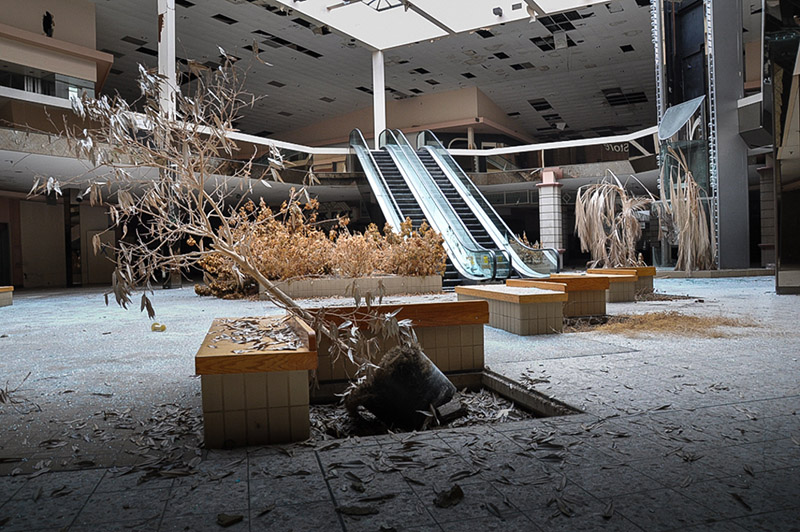
[Image: Photo by Seph Lawless, from his book Autopsy of America].

Many of the ideas being proposed these days for housing international refugees, including families fleeing from the war in Syria, are beginning to sound less like genuine examples of humanitarian outreach and more like a strange new form of hide-and-seek, a bizarre ploy at stashing live human beings in ever-more resourceful locations, like searching for a clever new place beneath your back stairs to store excess home goods.

Three stories, in particular, seem to stand out for this—coming across not as real solutions to human tragedy but as a kind of abstract mathematical exercise.

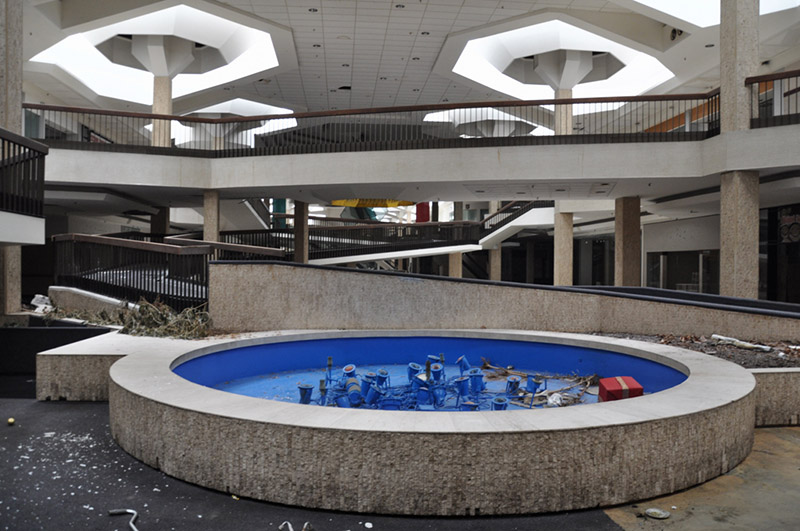
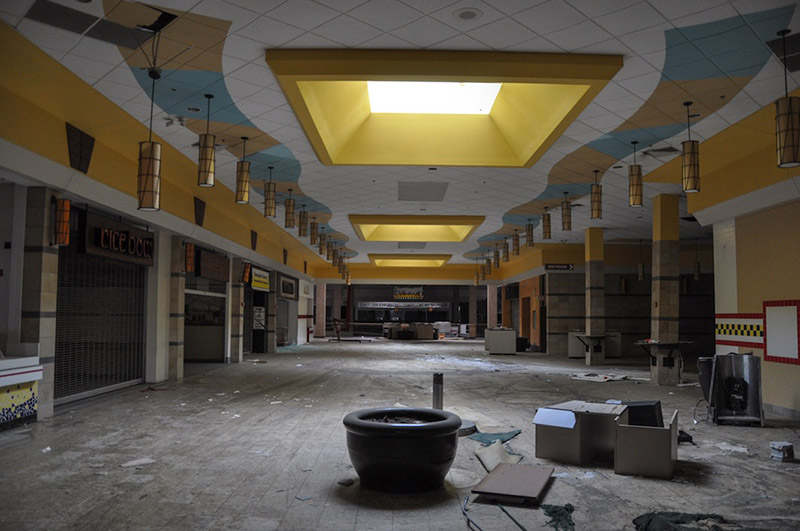
A notable example of this came last year, in the summer of 2014, when FEMA was allegedly looking into housing migrant children—that is, “unaccompanied minors” from countries outside the United States—inside abandoned shopping malls and empty big box stores.

As The New Republic reported at the time, FEMA was searching for examples of an “‘office space, warehouse, big box store, shopping mall with interior concourse, event venues, hotel or dorms, aircraft hangers [sic]’—provided that they are vacant and able to be leased.”

The strange dystopia of this—cramming literally thousands of children who are, at least temporarily, orphans, into derelict shopping malls, empty hotels, and disused office complexes—outweighs the potential cleverness of finding, hidden in plain sight, an architectural resource ripe for humanitarian reuse.
[Image: Photo by Seph Lawless, from his book Autopsy of America].

As FEMA themselves make clear, such facilities are only useful if they are already outfitted with showers and bathrooms, among other bare necessities; retrofitting them for this purpose, while knowing that the day you need to put those showers to use might never arrive, would be both financially improbable and ominously permanent.

More optimistically, however, consider the case of dual-use infrastructure as put to use during events of mass quarantine. As Georges Benjamin, executive director of the American Public Health Association, explained in a joint interview with BLDGBLOG and Edible Geography back in 2009, large architectural complexes not only can be designed for these sorts of secondary uses, but it’s actually a very good idea to do so.

While Benjamin’s primary example in that interview was a sports stadium outfitted for secondary use as a quarantine ward or post-earthquake gathering place, you could quite easily imagine entire shopping malls being designed such that they could be repurposed, with minor fuss, as de facto community centers following major events of social upheaval.

After all, many of today’s malls, schools, airports, and office complexes already contain—or even double as—tornado shelters. Surely, FEMA’s proposal is just a more ambitious continuation of this idea, scaling it up to the point that housing 500 children in an abandoned Circuit City would actually make architectural sense? If successful, it would give the idea of “big box reuse” a whole new valance.

Yet the reality of this threatens to be far less polished than such a speculative vision might otherwise suggest.

Indeed, it’s hard to shake the feeling that this could become a clear case of good architectural intentions gone surreally awry. We might well create one of the emptiest childhood experiences imaginable, a Ballardian architectural prism through which eventually tens of thousands of “unaccompanied minors” would be filtered into something vaguely resembling adulthood. Unaccompanied minors, raised by abandoned malls.
[Image: Photo by Seph Lawless, from his book Autopsy of America].

In any case, the ill-conceived plans don’t end there.

As the Syrian refugee crisis accelerated over the past two months, the idea of housing refugees on Svalbard—a sparsely populated archipelago north of the Arctic Circle, known not for its strong sociopolitical infrastructure but for its polar bears—was suggested by Norwegian politicians.

Exactly how Svalbard would be transformed overnight into a land of economic opportunity was not discussed as part of the plan—although, unbelievably, coal mining was suggested as one possible route toward assimilation and success.

Moving broken families from the Middle East to what is, in effect, the North Pole so that they can mine coal there in an impossibly remote frozen landscape surrounded by polar bears sounds like something Josef Stalin would have come up with, lending even more of an air of unexpected inhumanity to these so-called “plans.”

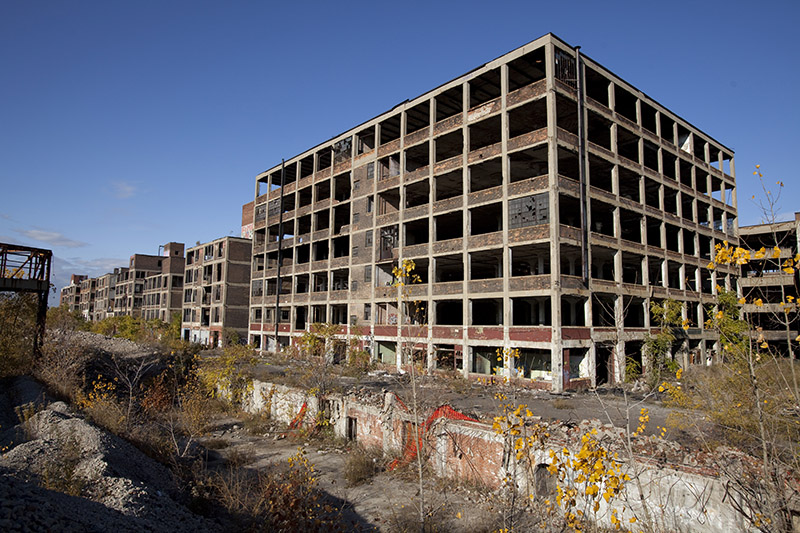
But a third option, while seeming at first to be the most sensible example of this sub-genre of human chess, is possibly the strangest. “Let The Syrians Settle Detroit,” an op-ed for The New York Times suggested last month. The underlying logic is sound: the city’s population has plummeted, there is already a strong Muslim community in Michigan, and refugees very often exhibit strong entrepreneurial tendencies.

So far, so good.
[Image: Abandoned Packard plant in Detroit, via Wikipedia].

On the other hand, if Detroit’s only problem was population, then other people would already be moving back to fill that city’s wide-open economic niches; in fact, this has been the purported goal of many recent programs aimed at inspiring millennial artists and entrepreneurs to move there from overpriced cities such as San Francisco and Brooklyn and “revitalize” the region, an aim not without its own complex racial and political complications.

Worse, though, Detroit was not carefully moth-balled and set aside with packing tape for future generations simply to move in and reclaim it. It’s not a turn-key urban fantasy lying in wait for someone to come back, flip a switch, and turn the lights—and the police, and the fire departments, and the healthcare—back on. Its infrastructure is in decline; its streetlights and even its water supply are gradually being shut off; its houses are being torn down by the hundreds.

Randomly settling 50,000 Syrian refugees there straight from a war zone would mean depositing people in a condition of notoriously rapid urban decline, without any real cultural or economic context in which to orient themselves.

My own suggestion here is not in any way that a war zone in the Middle East would be preferable to living in Detroit—although it is worth noting that the premise of this program is precisely that only people fleeing war would want to live there.

However, people aren’t just game pieces you move from one place to another, swept up by your own architectural cleverness. If they were, well, then let’s put refugees on abandoned oil rigs in the Gulf of Mexico, or move them all to Centralia, gas masks thrown in for free. Let’s settle them in abandoned trailers as fracking “man camps” go empty.

Realizing that something is currently uninhabited does not mean that you can just fill it with human beings and expect a new society to take root. This is a geometric exercise—an experiment in space-packing—not a humanitarian plan.

Finding new homes—whether or not this “solves” the underlying geopolitical problem—is morally and economically necessary, and it will benefit everyone; but turning involuntary mass migration into a new form of architectural science fiction is not the way to go.

Subterranean Saxophony

[Image: Photo by Steve Stills, courtesy of the Guardian].

Over in London later today, the Guardian explains, composer Iain Chambers will premiere a new piece of music written for an unusual urban venue: “the caverns that contain the counterweights of [London’s Tower Bridge] when it’s raised.”

The space itself has “the acoustics of a small cathedral,” Sinclair told the newspaper, citing John Cage as an influence and urging readers “to listen to environmental sounds and treat them as music,” whether it’s the rumble of a bridge being raised or the sounds of boats on the river.

In fact, Chambers will be performing one of Cage’s pieces during the show tonight—but, alas, I suspect it is not this one:

It is rumored that the final, dying words of composer John Cage were: “Make sure they play my London piece… You have to hear my London piece…” He was referring, many now believe, to a piece written for the subterranean saxophony of London’s sewers.

Read much more at the Guardian—or, even better, stop by tonight for a live performance.

(Spotted via @nicolatwilley).

Forest Megaphone

[Image: Photo by Tõnu Tunnel].

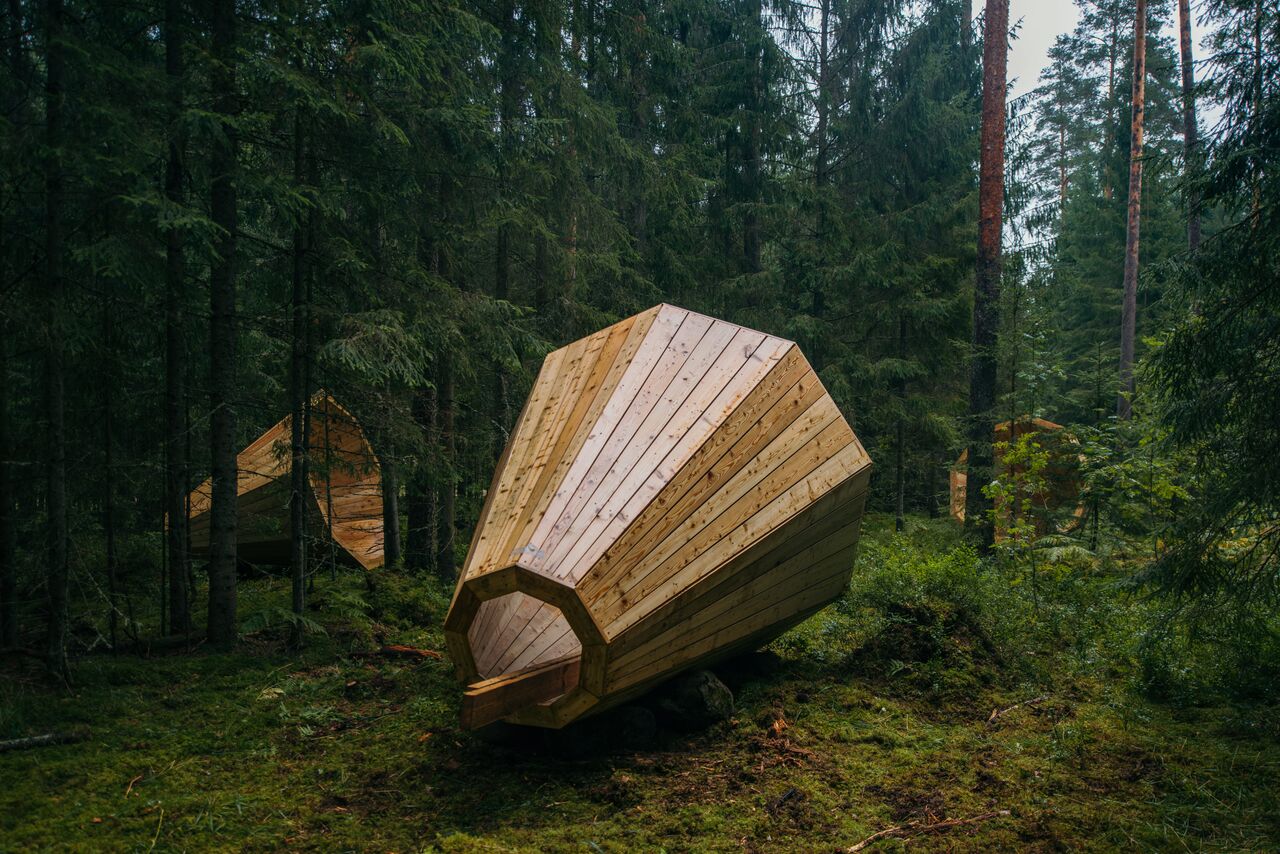
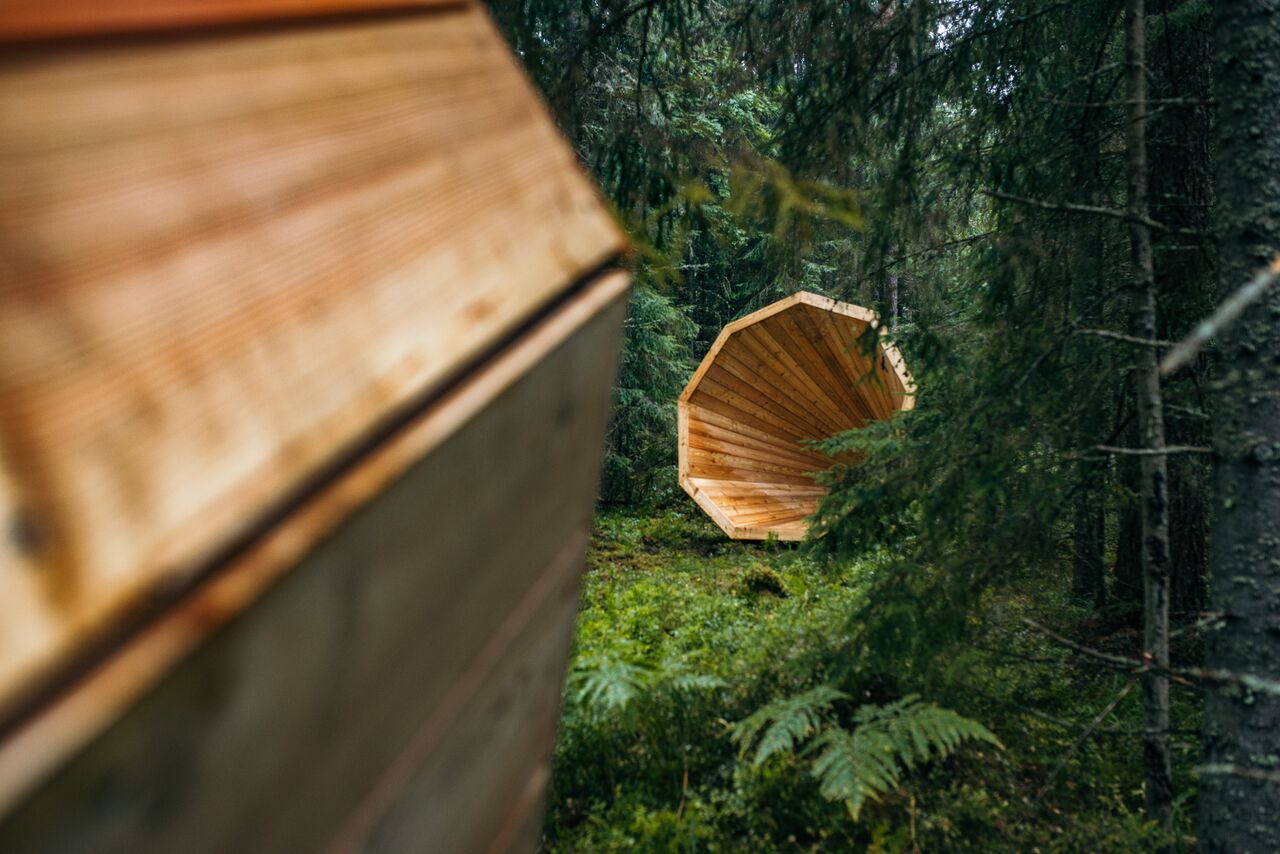
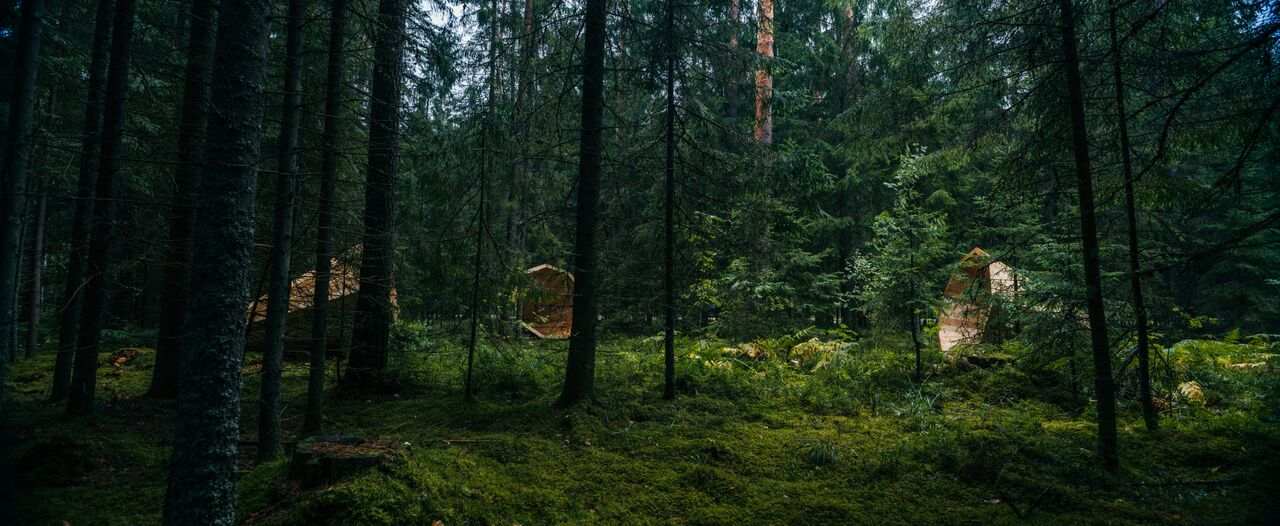
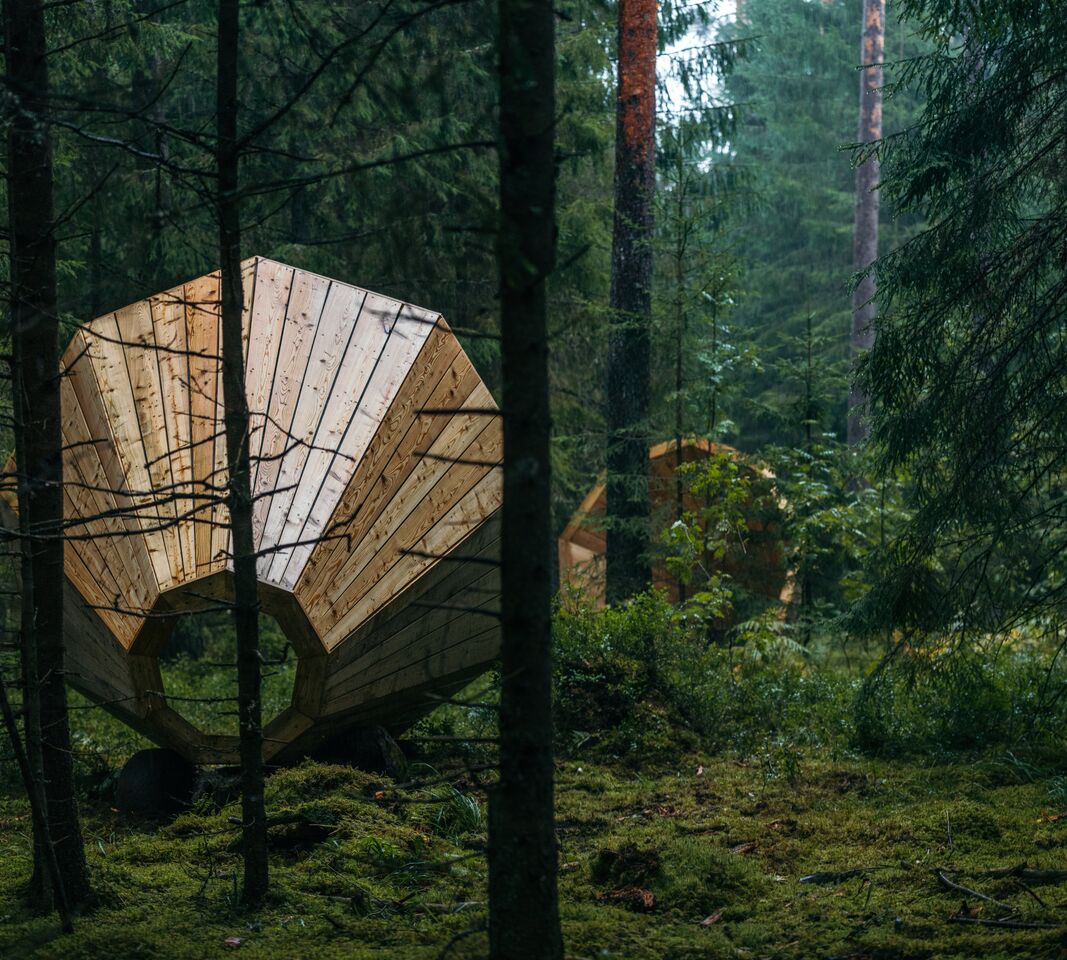
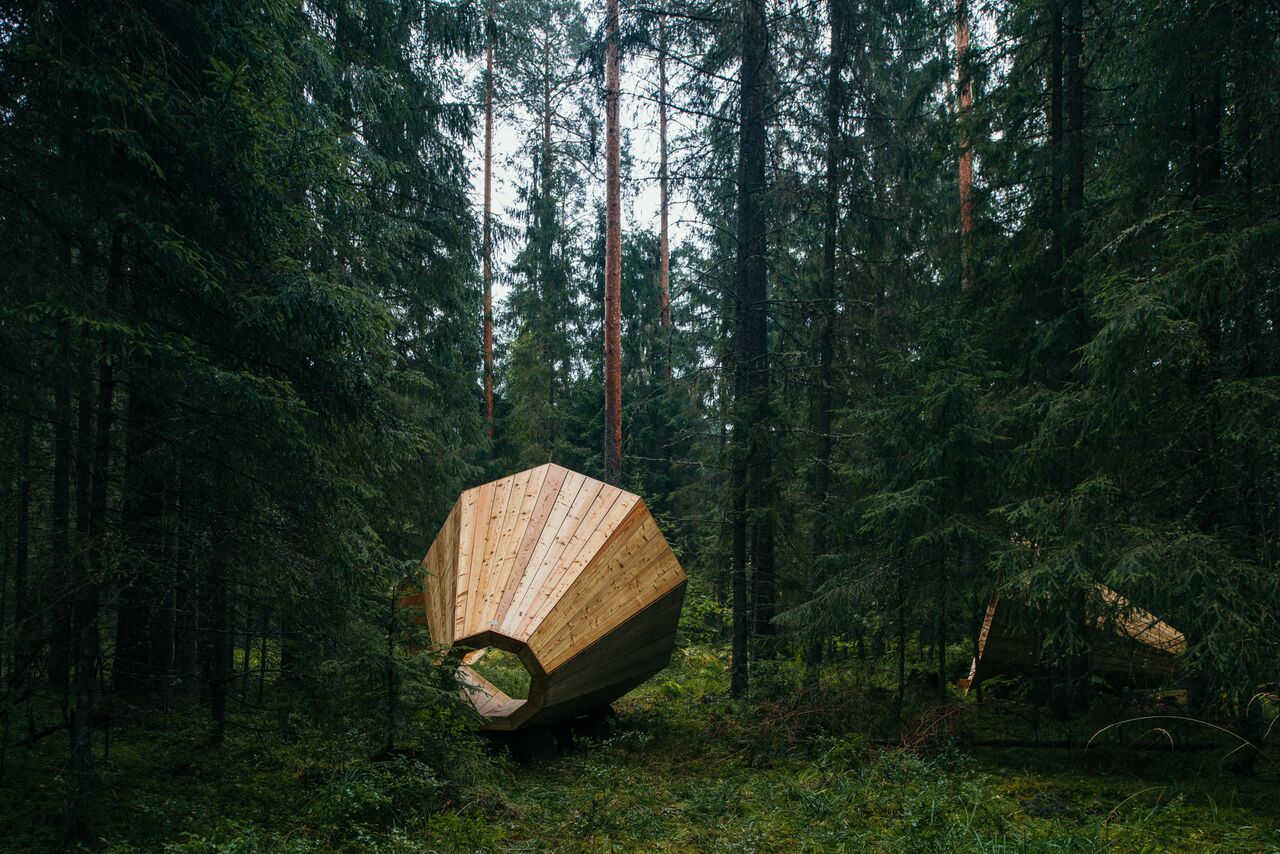
These architectural objects are “gigantic wooden megaphones” for the forest, part of an acoustic installation in Estonia’s gorgeous Pähni Nature Centre for amplifying the sounds of the landscape.

[Image: Photo by Tõnu Tunnel].

“According to interior architect Hannes Praks,” we read in a newly published press release, “who leads the Interior Architecture Department of the [Estonian Academy of Arts] that initiated the installation project, the three-metre diameter megaphones will operate as a ‘bandstand’ for the forest around the installation, amplifying the sounds of nature.”

The actual design is by a student named Birgit Õigus.

[Image: Photo by Tõnu Tunnel].

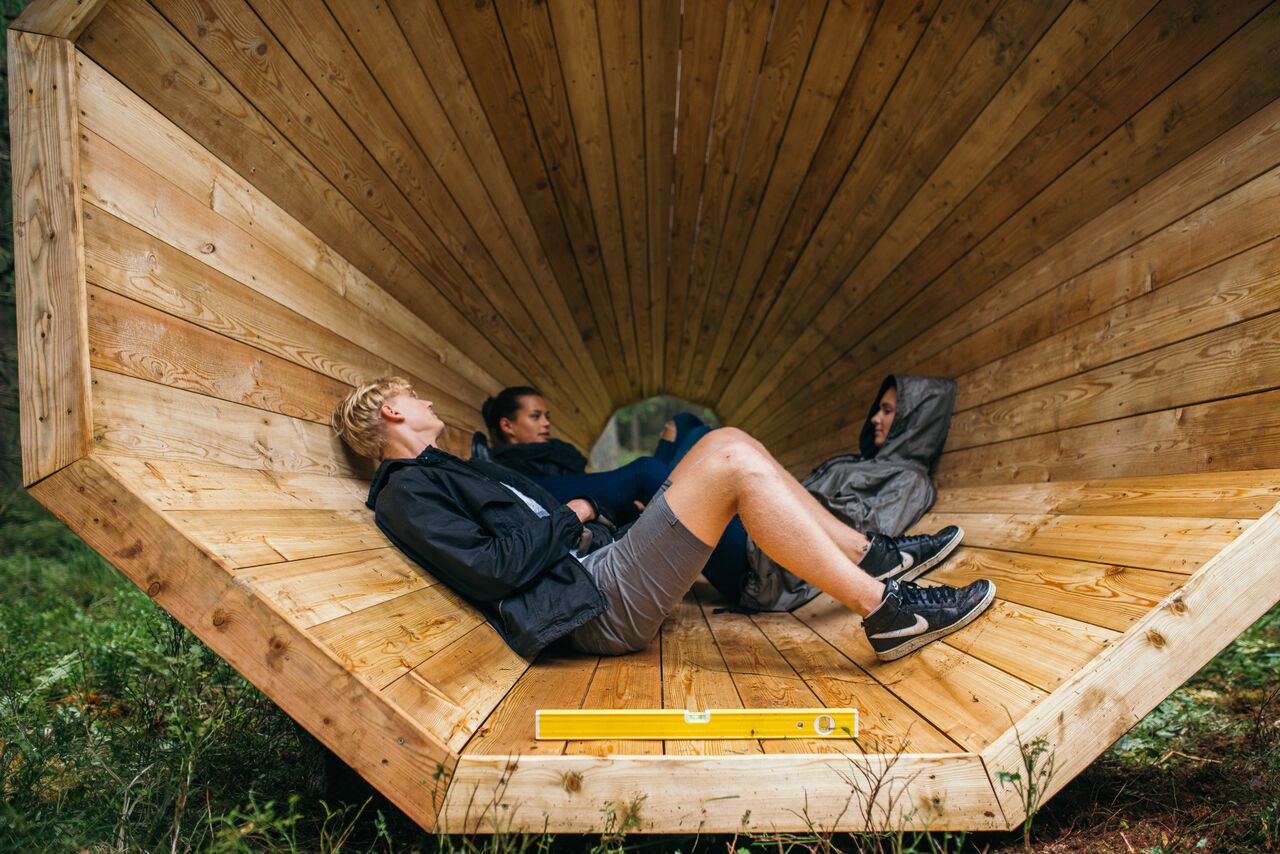
Part building, part furniture, part recreational folly, they’re meant to focus visitor attention on the smallest acoustic details of the site—rainfall, branches brushing against one another in the breeze, distant footsteps, thunder.

[Image: Photos by Tõnu Tunnel].

Sit in them, read books, whisper to friends, listen to birds.

[Image: Photo by Tõnu Tunnel].

Not having visited these in person, I can’t speak to their performance—i.e. whether they function as planned—and the relatively orderly placement of each structure in the woods might very well lead to some unfortunately conservative acoustic effects.

[Image: Photo by Tõnu Tunnel].

Nonetheless, it’s a great idea for a project, and the geometric simplicity of the stained timber frame is compelling.

[Image: Photo by Tõnu Tunnel].

Of course, these bring to mind the so-called “acoustic mirrors” of coastal Britain that we looked at here more than a decade ago.

[Image: Photo by Tõnu Tunnel].

In turn, makes me wonder how these forest megaphones might appear six or seven decades from now, when small groups of hikers stumble upon the moss-covered forms of this old acoustic infrastructure, trying to determine amongst themselves if the strange audio effects and interrupted echoes they notice still filtering through the wooden forms are a curious accident or an engineered goal.

[Image: Photo by Tõnu Tunnel].

Water & Power

[Image: Via the Library of Congress].

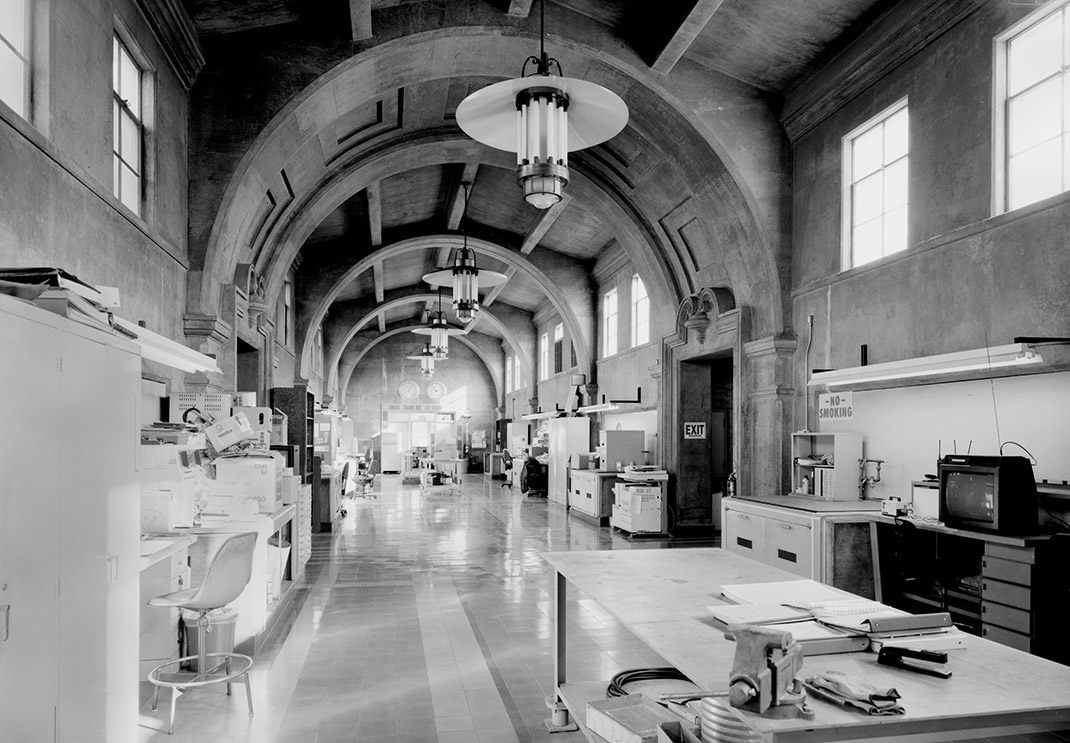
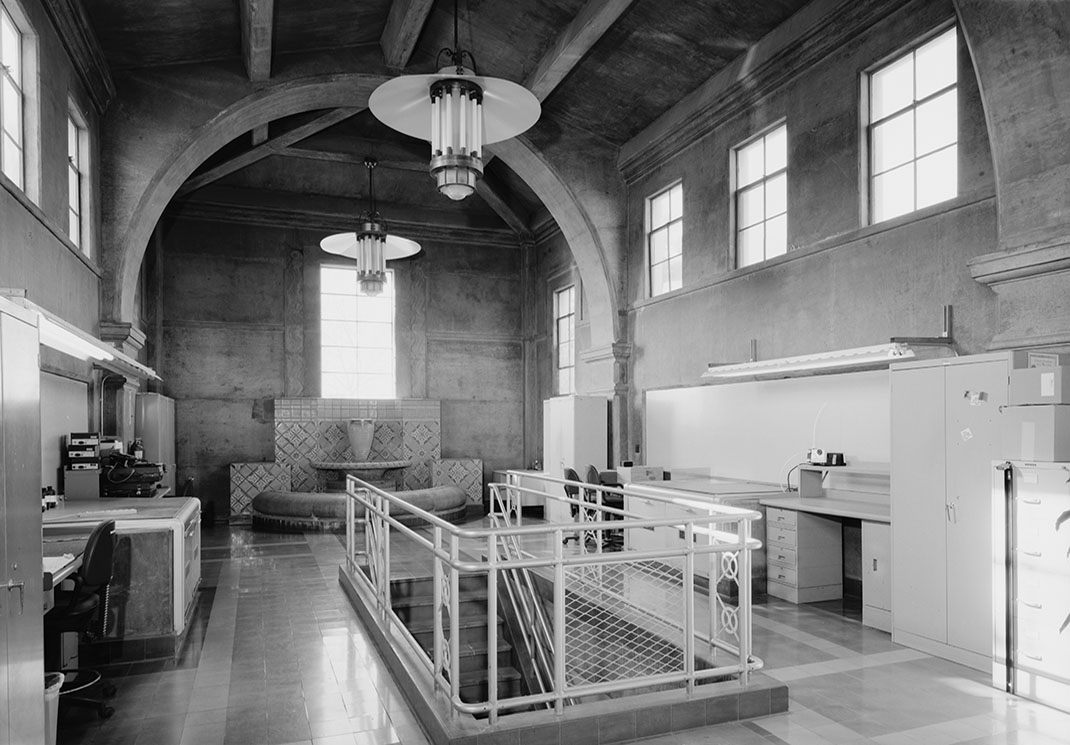
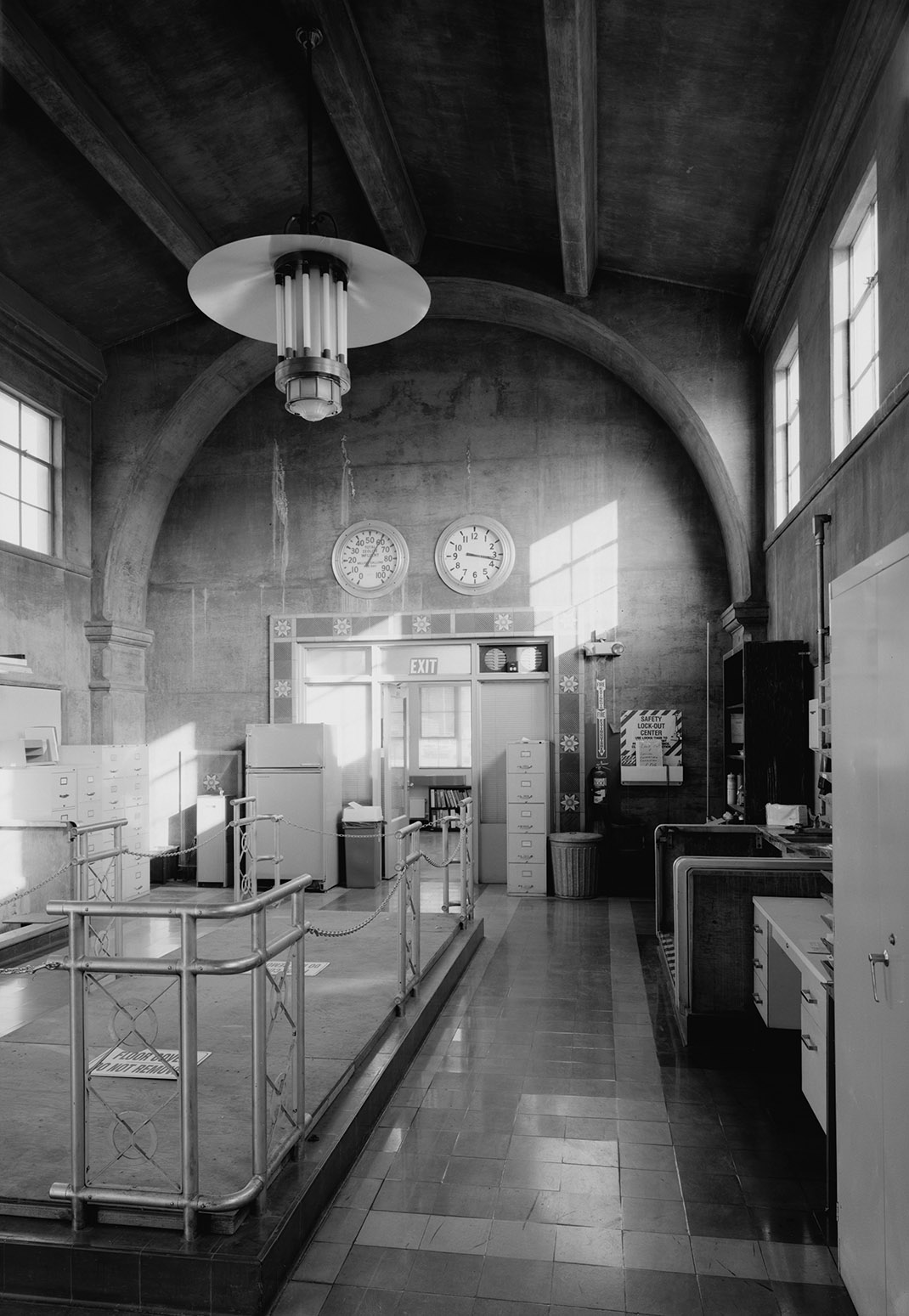
While going through a bunch of old photos of Los Angeles on the Library of Congress website for a project I’m doing at USC this year, I was amazed by these interior shots of the F. E. Weymouth Filtration Plant at 700 North Moreno Avenue in L.A.

Despite being designed for the administration of an urban water-processing site, the interiors seem to play with some strange, Blade Runner-like variation on Byzantine modernism, where federalist detailing meets a hydrological Babylon.

[Image: Via the Library of Congress].

As the open plan interior of a contemporary home, this place would almost undoubtedly show up on every design website today—imagine a better railing on the central staircase, a galley kitchen on one side, a bed lit by retro-styled fluorescent tubes at the far end, some bold moments of color—but it’s just a piece of everyday municipal infrastructure.

[Image: Via the Library of Congress].

In any case, continuing the vaguely sci-fi feel, there is even a tiled fountain—a Mediterranean concession to the building’s role in water filtration—on one wall, emphasized by these amazing lighting features, yet it looks more like a film set, both ancient and futuristic.

[Image: Via the Library of Congress].

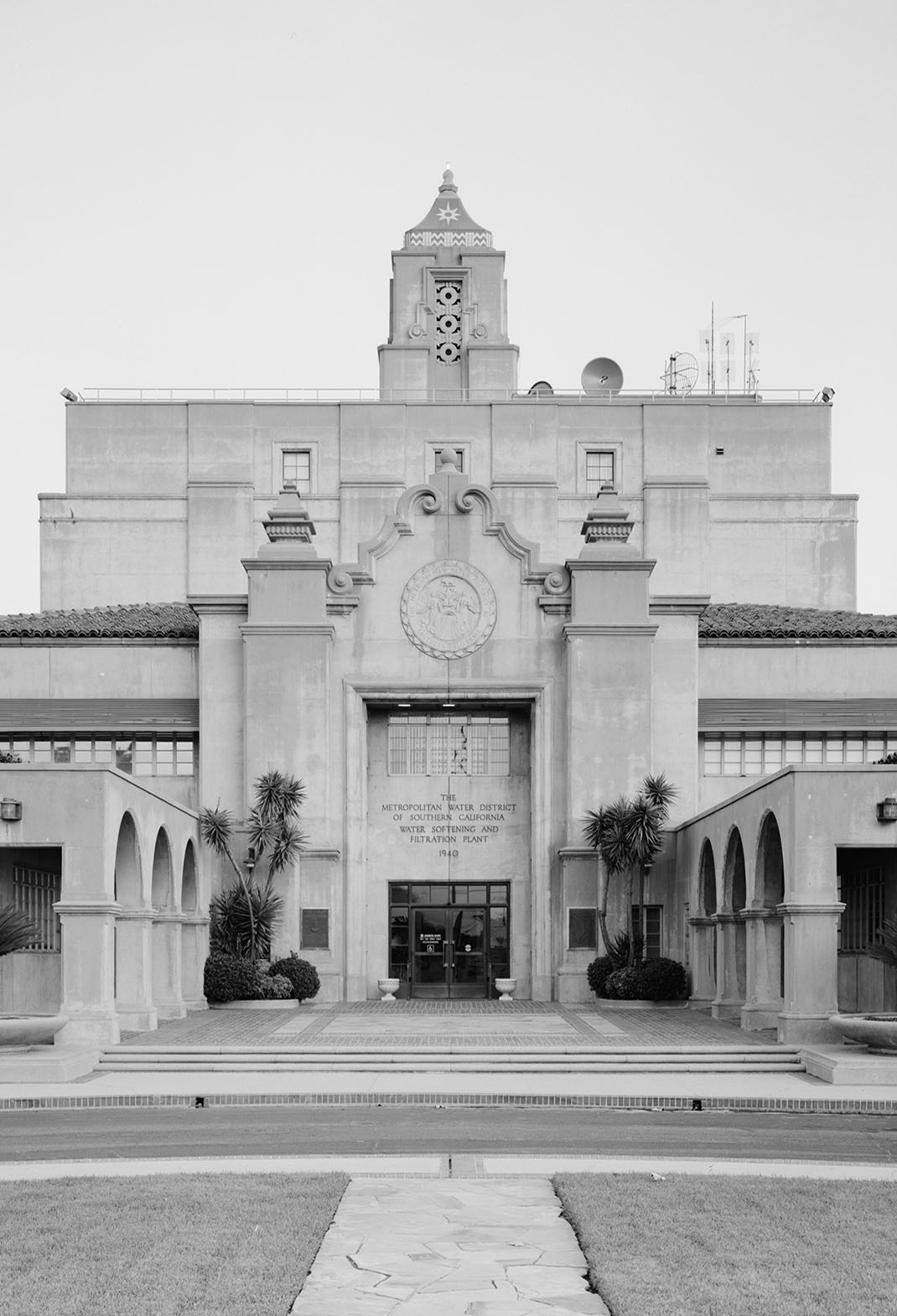
Alas, I’m not a huge fan of the exterior, although it is, in fact, a fairly amazing example of municipal design gone more sacred than profane. But an equally streamlined modernism in keeping with those interiors would have made this place totally otherworldly.

[Image: From the Library of Congress].

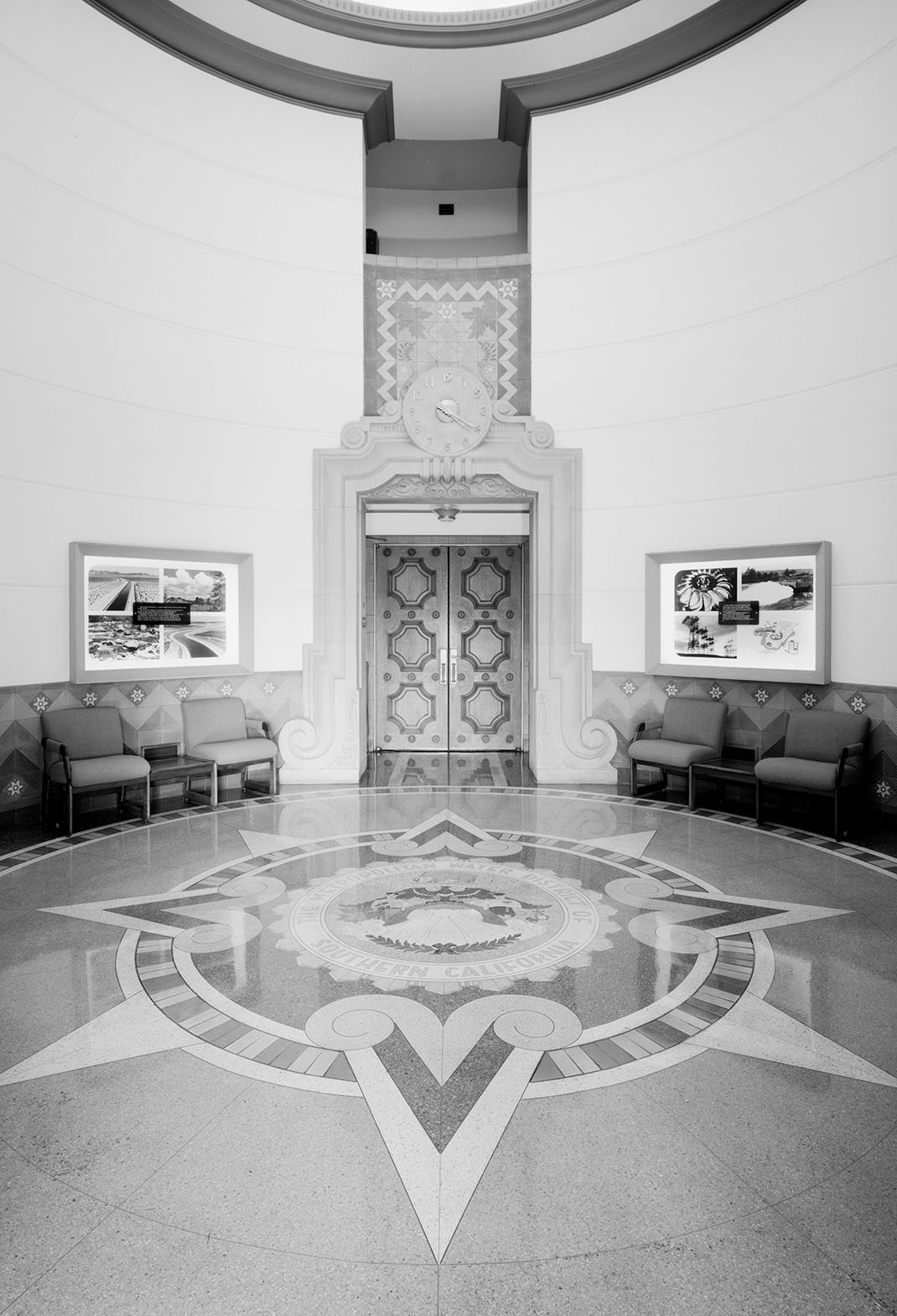
Finally, the marbled lobbies continue the surreal mix-up of styles, eras, and materials with something that could perhaps be described as Aztec corporatism with its huge graphic seal and other geometric motifs.

[Image: From the Library of Congress].

For shots of the actual waterworks, click through to the Library of Congress.

Books Received

I haven’t done one of these in a long, long time… Here are twenty-seven new or recent books, ranging from true crime to science fiction, architecture to media theory, for your back-to-school or end-of-summer reading pleasure.

* * *

1) The Cartel by Don Winslow (Alfred A. Knopf)

The Cartel is technically a sequel to The Power of the Dog, but the storyline stands on its own even without prior knowledge of the characters. Here, DEA agent Art Keller must track down—again—a man named Adán Barrera, the leader of a notorious Mexican drug cartel, an organization whose sheer brutality and unsettling ubiquitousness author Don Winslow does not shy away from depicting.

What will probably interest BLDGBLOG readers—in addition to the incredible coincidence of The Cartel‘s publication during the same week that drug lord “Chapo” Guzmán escaped from his prison in Mexico—is Winslow’s exploration of the cartel itself as a self-contained political structure, a kind of sovereignty without borders, operating through a combination of violence and logistics, with few limitations, all over the world.

I had the pleasure of seeing Winslow speak at an event last month at Bookcourt in Brooklyn, where his descriptions of cartel activities offered a kind of diagonal perspective on their operations. Winslow memorably pointed out how farmers in the Sinaloa region of Mexico had been swept up into the cartel’s infinitely flexible method of production, and that, despite any ensuing role growing and harvesting marijuana or even poppies, the cartel offered them new jobs in logistics, not agriculture. “They didn’t want to be farmers,” Winslow said at Bookcourt, “they wanted to be FedEx.”

2) ZeroZeroZero by Roberto Saviano, trans. Virginia Jewiss (Penguin)

Roberto Saviano’s Gomorrah is something of a modern classic in terms of its documentation of organized crime in Italy. A fantastic book, Gomorrah depicts what is, in essence, a parallel state operating side by side with the Italian government. In the process, Saviano’s reporting suggests that sufficiently organized criminal activity is all but indistinguishable from a nation-state, even taking on the tasks of waste disposal, transportation, and de facto taxation, with a tragic aura of incompetence and corruption.

ZeroZeroZero pairs well with Winslow’s novel, as it offers the drug trade as a prism or lens through which to see the world. This is the book’s very premise: “Look at cocaine and all you see is powder,” the cover says. “Look through cocaine and you see the world.” Saviano begins his nested stories of the modern drug trade with an unnamed police officer in New York City, but soon follows cocaine’s narcotic tentacles around the world, from Miami to Colombia, Sinaloa to Spain, by way of drug-smuggling submarines and cargo ships, AK-47s and bullet-proof cars.

As with Winslow’s novel, the interest of the book is not only in getting a glimpse of this stranger, much darker world existing alongside or beneath ours; it’s in the fact that this world has such very real territory, with brute-force powers rivaling municipal governments and nation-states, and that the more intensely authorities might try to stomp it out, the larger and more sinister it grows.

3) Ghost Fleet: A Novel of the Next World War by Peter Singer and August Cole (Eamon Dolan/Houghton Mifflin Harcourt)

I’ve followed Peter Singer’s work with great interest for nearly a decade now, ever since the publication of his book Corporate Warriors, and I was thus intrigued to see that he and fellow war technology theorist August Cole had teamed up to write a novel. While Ghost Fleet is not a book to pick up if you are looking for strong character development, it is exactly the book to pick up if you want to see how a decade’s worth of research into new or speculative military technologies can be assimilated and compiled into a work of near-future fiction.

The basic plot of Ghost Fleet is that a non-nuclear naval and cyber world war has broken out between the United States and China, its battlefields ranging from Hawaii and the broader Pacific to the anti-gravitational heights of near-Earth orbit. I got to see Singer and Cole both speak last month at New America NYC, where they discussed the novel’s depiction of multinational corporations in a future theater of war; the prospect of weaponized logistics chains; whose side our new class of billionaires might take in a global conflict; and even the fate of sovereignty in Greenland. Both authors have pointed out in interviews that they hoped to write the Red Storm Rising of our time: a kind of geopolitical beach read.

Cleverly, the book includes hundreds of footnotes and citations for all of its references to things such as railguns, microdrones, adaptive camouflage, satellite warfare, nuclear submarine detection, and more; this has the effect of making Ghost Fleet feel like reading a more exciting, distorted-mirror version of the daily news and—even better—it has the reverse effect of making the daily news feel like an outtake from Ghost Fleet.

4) Future Crimes by Marc Goodman (Doubleday)

Ghost Fleet pairs very well with Marc Goodman’s excellent, highly recommended book Future Crimes. Goodman’s book should be required reading for anyone using the internet today, let alone anyone interested in the dark side of technological innovation. Expect to learn more about GPS hacking, “burglary 2.0,” mass identity theft, online drug markets, even assassination via medical prosthetics.

5) Aurora by Kim Stanley Robinson (Orbit)

Long-time readers of BLDGBLOG might remember my interview with novelist Kim Stanley Robinson, in which Robinson talked about offworld utopias, the politics of sustainability, the future of California, and more. Robinson is back with Aurora, a new novel about a massively intergenerational group of human explorer-refugees, passengers aboard a semi-sentient interstellar ship headed toward a distant planet where human life might be sustainable.

The book is not optimistic. Its portrayal of characters driven half-mad with desperation and a realization of doom, of a planet and its crypto-ecosystem that seems intent on rejecting the colonists, and of an on-board computer system that eventually wakes up into full narrative consciousness does not reveal confidence that humans will ever find another planet to call home.

6) The Meaning of Liberty Beyond Earth edited by Charles S. Cockell (Springer)

This makes for an odder pairing than the previous ones, but Charles S. Cockell’s edited volume on The Meaning of Liberty Beyond Earth is an interesting companion to set alongside much of contemporary science fiction (including, I should note, Ghost Fleet).

Described as a book that “takes the discussion of liberty into the extraterrestrial environment,” it includes papers on offworld sovereignty, what territory means in space, private corporate enterprise as a possible model for future space-states, and the governmental bodies or institutions that might serve to regulate this emerging sphere. From the book:

As more national governments develop expansive space programmes and more private companies design and build spaceships with the capacity to launch satellites, robots and humans into space, the number of organisations in space is growing. With this expansion comes the inevitable consequence of an expanding number of interests to protect and so with that, the chance for a clash of ownership, rules and regulations which together define the environment for individual freedom.

The The Meaning of Liberty Beyond Earth includes two pieces authored or co-authored by scifi novelist Stephen Baxter.

7) The Conflict Shoreline: Colonialism as Climate Change in the Negev Desert by Eyal Weizman and Fazal Sheikh (Cabinet Books)

Inspired by aerial images of the Negev Desert taken by photographer Fazal Sheikh, architect and forensic historian Eyal Weizman wanted to understand something that Sheikh had documented: the ghostly remains of old villages, communal graveyards, and farm houses that could be seen in the ground, almost but not quite erased from the landscape, yet that also did not appear on official Israeli state maps.

This led Weizman to write what is, in effect, an extended essay on the role of agriculture, state archival policies, regional maps, desertification, and climate change in a politically motivated attempt to remove from the landscape any trace of pre-Israeli settlement. As Sheikh’s photos showed, what appears to be bare desert—an inhospitable wasteland outside of human civilization—reveals, when seen from above, the structural outlines of earlier inhabitants.

Together with archaeological evidence, old land deeds, and British military surveillance photos from WWI, this has led to court cases over land ownership and even citizenship. One such court case—a man named Nuri Al-‘Uqbi suing for recognition of his family’s land claim—forms the narrative and legal backbone of Weizman’s essay.

8) KL: A History of the Nazi Concentration Camps by Nikolaus Wachsmann (FSG)

Nikolaus Wachsmann’s KL: A History of the Nazi Concentration Camps is a history of the concentration camps, but as organizational entities, where administration itself becomes a source of dehumanization and brutality. Wachsmann shows how the camp system grew from an archipelago of smaller units to the international scale of the Holocaust, with camps operating throughout Europe, their functions—from daily work schedules to mass executions—systematized and closely reported. There was ultimately no shortage of documentation, despite efforts to destroy records or downplay the system’s horrific extent, and the book itself includes some 200 pages of notes, sources, and appendices.

9) Brodsky & Utkin by Alexander Brodsky and Ilya Utkin (Princeton Architectural Press)

The “paper architecture” of Alexander Brodsky and Ilya Utkin has been reprinted in a new edition by Princeton Architectural Press. Flooded cities of pillars, glass towers, arching landforms across sprawling supergrids, infinite rooms repeated across pyramids, domes, and antenna-covered housing blocks, they are equal parts Giovanni Battista Piranesi, Modernist allegory, and Soviet bloc existentialism, their projects are as much psychological fables as they are architectural proposals.

[Image: From Brodsky & Utkin by Alexander Brodsky and Ilya Utkin (Princeton Architectural Press)].

10) African Modernism: The Architecture of Independence—Ghana, Senegal, Côte d’Ivoire, Kenya, Zambia edited by Manuel Herz et al. with photographs by Iwan Baan and Alexia Webster (Park Books)

Manuel Herz has quietly made a name for himself studying, in admirably granular detail, architectural design and production in Africa, whether that means looking at the spatial effects of migration in Nairobi, Kenya, or the complex interplay between formal and informal settlement practices in the refugee camps of Western Africa, as in his excellent book From Camp to City.

African Modernism is a massive book—it is nearly 700 pages in length and more than a foot tall—that takes as its focus post-independence urban design and architecture in Ghana, Senegal, Côte d’Ivoire, Kenya, and Zambia. As Herz writes in his introductory essay, “In our general perception the African continent stands for suffering and misery. It also remains a mystery as its histories, cultures, traditions, languages, politics and economies remain outside of our framework of reference. The continent is usually seen as a single entity without differentiation and without consideration of its fifty-four countries and the vast differences among its gigantic territory and diverse cultures.”

The resulting project is thus an attempt to address this strange blindness toward African urbanism, cataloging and—at least through publication—helping to preserve buildings all but never documented in contemporary architectural publications. Finally, there is also a political goal, which is to place Modern architecture in its appropriate historical context, “looking at the conscious and deliberate role architecture played in the formation of national states, with all the contradictions, dilemmas and problems this implies.”

11) War Plan Red: The United States’ Secret Plan to Invade Canada and Canada’s Secret Plan to Invade the United States by Kevin Lippert (Princeton Architectural Press)

While, at first glance, the story told in Kevin Lippert’s War Plan Red seems like what might happen if someone rewrote Dr. Strangelove as an episode of South Park, the mutual invasion plans it details between the United States and Canada comes with a dark humor that veers more toward tragedy. That two democracies with a shared 4,000-mile land border would go through the trouble of cooking up elaborately farcical battle strategies for partially consuming one another’s border states says a lot about the militarized distrust and paranoia that scripted the Cold War. Lippert’s book includes the actual war plans, as well as their historical context.

To a certain extent, this pairs well with another title from Princeton Architectural Press, Tom Vanderbilt’s engaging Survival City: Adventures Among the Ruins of Atomic America (republished a few years ago in a paperback edition from the University of Chicago Press).

12) Equilateral by Ken Kalfus (Bloomsbury)

The plot of Equilateral is seemingly tailor-made for BLDGBLOG readers: a fever-wracked British astronomer at the height of 19th-century colonialism forces tens of thousands of Egyptians to build an enormous equilateral triangle in the Sahara Desert. Its explicit design goal is to be so big that the resulting figure, when set aflame with gasoline, will be visible from Mars. Indeed, the astronomer’s goal is to communicate, through Pythagorean geometry, with the intelligent beings he believes to exist on the Red Planet, and to do so even while he can barely speak with—and arrogantly refuses to recognize intelligence in—the Egyptian workers he has all but enslaved to build this misguided megastructure.

Incredibly, this story was inspired by a real-life plan devised by a man named Joseph Johann von Littrow, to build a flaming geometric sign in the Sahara as a means of communicating with other planets.

Kalfus does an excellent job mocking the racist overtones of the astronomer’s project without becoming didactic or politically heavy-handed, and he even allows moments of genuine wonder into the text, as the possibility of extraplanetary intelligence is debated amongst the novel’s European intelligentsia. It probably goes without saying that all does not end well for the equilateral triangle, a kind of 19th-century SETI project in the desert.

13) Station Eleven by Emily St. John Mandel (Vintage)

The end of the world has never been so hot. Whether it’s The Walking Dead, The Hunger Games, or Peter Heller’s recent, great book The Dog Stars, watching things fall apart is now a billion-dollar industry. As that intro might indicate, I went into Station Eleven with a healthy dose of skepticism, but ended up reading the whole thing in one sitting.

Far from a work of popular survivalist fiction, its end-times narrative is often only lightly applied. Against the backdrop of a near-universally fatal flu outbreak, author Emily St. John Mandel instead focuses her attention not on fire and apocalypse—although there are the requisite ruined airports and scenes set on the feral edges of a depopulated Toronto—but rather on the lives of a core group of characters whose goals, relationships, and interpersonal conflicts are left abruptly unresolved when the disease begins to spread.

The book thus has a disarmingly quiet air of reflective melancholy, enlivened by voluminous flashbacks to the characters’ pre-flu days, as it moves inevitably forward with a sense that, no matter how much we might believe otherwise, we all live amidst unfinished business. We will all have decisions to regret—and people to miss—when the end of things finally arrives.

14) Consumed by David Cronenberg (Scribner)

Legendary film director David Cronenberg has tried his hand at literary fiction—or, more accurately, at a genre-crossing murder mystery that owes much to William Gibson, Alfred Hitchcock, and Cronenberg’s own film work. The plot of Consumed involves a North Korean kidnapping plot, avant-garde filmmakers, bizarre sexual practices, anthropological fieldwork as reconceived in an age of VICE, and a grotesque use of 3D printers that many of today’s “design fiction” aficionados should find both creatively macabre and technically compelling.

15) Fourth of July Creek by Smith Henderson (Ecco)

I was drawn to Fourth of July Creek almost entirely on the strength and enthusiasm of a blurb from novelist Jeff VanderMeer, and I was glad to have followed his advice. While the bulk of the novel falls outside what I might call BLDGBLOG territory, its Cormac McCarthy-like exploration of off-the-grid survivalists in the vast National Forests of the U.S. is in fitting with this site’s interest in human beings forced to negotiate, and establish the barest toeholds of religious belief or culture, in the face of extreme environments.

One particularly haunting scene involves the eruption of Mount St. Helens and a hardcore survivalist who, isolated away from media in his forest homestead, is convinced the horrible, blinding rain of ash and fire is actually the opening salvo of a nuclear exchange with the Soviet Union.

16) Crooked by Austin Grossman (Mulholland Books)

Crooked could be thought of as Mike Mignola’s B.P.R.D. transplanted into the heart of 20th-century U.S. presidential history, with Richard Milhous Nixon presented as a not necessarily willing participant in the battle of ancient magic normally referred to as the Cold War. Of course, if the B.P.R.D. reference doesn’t do anything for you, just imagine H.P. Lovecraft re-writing the history of the Watergate break-in, and you can begin to picture what unfolds in Austin Grossman’s novel.

While I agree with other critics that too much action occurs off-stage—gigantic creatures emerge from the snow-covered forests of eastern Russia, but only in whispered reports Nixon receives from White House aides—it’s nonetheless an enjoyably nuts and well-written book that takes occult conspiracy theories about U.S. governmental power and turns them up to eleven.

17) Inside the Machine: Art and Invention in the Electronic Age by Megan Prelinger (W.W. Norton)

Inside the Machine is about what author Megan Prelinger calls “the enormous electronic infrastructures and networks that shape our world today [yet] remain hidden from our sight.” More than that, though, Prelinger looks at the ads, artworks, and cinematic representations that helped 20th-century popular culture visualize the world of the electron. Human nervous systems, player pianos, printable circuit boards, Cold War radar systems, and even an “unsettlingly alert” 1950s thinking machine called “the Perceptron,” all come together with full-color reproductions of amazing, often inadvertently amusing period art.

18) Rust: The Longest War by Jonathan Waldman (Simon & Schuster)

Rust, Jonathan Waldman’s long look at the material effects of corrosion, strongly bears the literary influence of John McPhee. From innovations in canned foods to the super-sized national campaign to preserve—and more or less entirely rebuild—the Statue of Liberty, Waldman uses the threat of corrosion as something more like a psychological metaphor for the people he profiles, including industrial consultants and art photographers (with an unexpected dose of LeVar Burton thrown in for good measure).

19) Soldier Girls: The Battles of Three Women at Home and at War by Helen Thorpe (Scribner)

As Helen Thorpe wrote in a recent op-ed for The New York Times, “Women are the fastest growing group of veterans treated by the V.A., and projections show that women will make up over 16 percent of the country’s veterans by midcentury.” Her new book Soldier Girls looks at three women from very different personal and political backgrounds both during their times of military service and after. The result is an excellent look at the under-documented experiences of women in the U.S. military, including the physical risks and gendered stereotypes they all but constantly and frustratingly face.

20) Savage Harvest: A Tale of Cannibals, Colonialism, and Michael Rockefeller’s Tragic Quest by Carl Hoffman (William Morrow)

If you’ve ever visited the Metropolitan Museum of Art and stared in awe at the incredible collection of objects from Oceania, Carl Hoffman’s Savage Harvest fills in the necessary backstory for understanding how those works got there. It was not just a story of underpaid local artisans—although it was this. It was a story of cultural misunderstanding and, ultimately, cannibalism, as collector Michael Rockefeller, son of the New York State governor and scion of the wealthiest families in the world, failed to understand the remote and extremely isolated island world he, in retrospect, blindly stumbled into.

Author Carl Hoffman front-loads the book with a gruesome scene of cannibalism, but its shock dissipates as the book shifts focus to tell the larger story, even more tragic story of a tribe knocked about from confrontation to confrontation by an ever-increasing onslaught of globalized outsiders who made little effort to understand the tightly organized world their presence so violently interrupted.

21) St. Marks Is Dead: The Many Lives of America’s Hippest Street by Ada Calhoun (W.W. Norton)

Ada Calhoun’s book about “America’s hippest street” is due out later this fall. It describes the long transformation of a legendary East Village street, from its earliest days as part of the Stuyvesant family farm to a maze of booze-smuggling tunnels in the age of Prohibition, and from a smoke-hazed world of Beat cafes and punk rock bars to the depressing smear of Chipotle wrappers, European tourists, and ill-considered tramp stamps that it is today. The book’s interest is not in its condemnation of the new St. Mark’s, however, but in the deep history of a single street that Calhoun has managed to shape from long walks through the city’s past.

22) The Marvelous Clouds: Toward a Philosophy of Elemental Media by John Durham Peters (University of Chicago Press)

John Durham Peters asks whether animals, too, have media—or even are media, their bodies communicative vessels relaying and interpreting information through the basic elements of sea, fire, earth, and air. I first came across The Marvelous Clouds through an interview Peters did with the Los Angeles Review of Books, which is worth reading before embarking upon the book itself.

The latter is not strictly speaking a work of media theory or of natural history, but an inspired combination of the two—however, it is also very much an academic work. What I mean by that is simply that I have become so used to reading journalistic nonfiction these days that I kept waiting for Peters to go out into the field, boarding a boat with marine biologists or visiting an avian research lab for some intriguing character studies and a scene of reflective first-person experience; instead, he stays on campus, quoting Immanuel Kant and Martin Heidegger.

This could very well only be a problem when seen through the lens of my own particular expectations, of course; but I do genuinely long for more academic theoretical writing that is not afraid of becoming expeditionary, so to speak, testing its hypotheses not by quoting things you’ve probably already read in grad school but by introducing readers to relevant new worlds they are otherwise unlikely to visit.

Or, to put this another way: get John Durham Peters aboard a deepsea submarine somewhere, pinging abyssal plains or peering up through echoes at thinning polar ice caps, or drop him off in the canopy of a rain forest research station, studying pheromonal discourse networks sensible only to insects; add some Friedrich Kittler and I would read that book in a heartbeat.

23) TechGnosis: Myth, Magic, and Mysticism in the Age of Information by Erik Davis (North Atlantic Books)

This 2015 reprint of Erik Davis‘s cult classic TechGnosis comes with the refreshing realization that his work is more relevant today, not less. A startling and altogether off-kilter look at esoteric religious beliefs, vernacular folklore, what Davis calls “gnostic science fictions,” and today’s digital technology, it’s something like a bolt of lightning across the sky of today’s tedious tech writing, a world of circular reporting more concerned with product reviews than in discussing why technology exists—and what it’s doing to us—in the first place.

As the book’s own description explains, TechGnosis “uncovers startling connections between such seemingly disparate topics as electricity and alchemy; online roleplaying games and religious and occult practices; virtual reality and gnostic mythology; programming languages and Kabbalah. The final chapters address the apocalyptic dreams that haunt technology, providing vital historical context as well as new ways to think about a future defined by the mutant intermingling of mind and machine, nightmare and fantasy,” and, despite its (deliberately?) dated cover re-design, the book, originally published back in 1998, still feels fresh.

24) Vision Anew: The Lens and Screen Arts edited by Adam Bell and Charles H. Traub (University of California Press)

Vision Anew tries to assess what is happening to photography—not just technically but also historically and metaphorically—as the technology through which it operates rapidly shifts to digital. It is moving from chemistry to data, we might say. An edited compilation—co-edited by an old friend of mine from high school, in fact—it includes an all-star list of writers, from Walter Murch to Trevor Paglen, Rebecca Solnit to Ai Weiwei and László Moholy-Nagy.

25) Combat-Ready Kitchen: How the U.S. Military Shapes the Way You Eat by Anastacia Marx de Salcedo (Current)

I originally spotted this book after my wife reviewed it for Popular Science, where she describes Combat-Ready Kitchen as a look at how “the needs of the military play an outsized role in shaping the food industry’s research agenda, resulting in the proliferation of products that are optimized for portability, convenience, shelf-life, and mass appeal, rather than health, taste, or environmental sustainability.”

As the book’s subtitle also makes clear, author Anastacia Marx de Salcedo hopes to reveal how the needs and expectations of military R&D continually trump other health concerns or even public interest when it comes to food science and product development in the United States. More interestingly, though, Marx de Salcedo shows that everyday food products such as Cheetos and granola bars have military origins, as if the battlefields of the 20th and 21st centuries extend even to our supermarket shelves and our dinner plates.

26) Drone by Adam Rothstein (Bloomsbury)

27) Waste by Brian Thill (Bloomsbury)

The new series Object Lessons from Bloomsbury is an inspired one. It is also ambitious: with twenty-six titles and counting, each small book takes one object and dissects it relentlessly, revealing the constellation of economic forces and historical interests that have caused it to exist. The titles I’ve included here—Drone and Waste—are only two of the ones I’d suspect have the most interest for readers of this site, but forthcoming looks at the Shopping Mall, the Doorknob, and the Phone Booth, among others, all look promising.

Drone—for which I also supplied a back-cover blurb—is simultaneously a concise and a refreshingly widescreen look at autonomous machine systems and uncrewed aircraft, detailing not just their military role today but their algorithmic and even philosophical origins. The drone is now a ubiquitous, near-mythological presence in contemporary society, but author Adam Rothstein takes a step back from current events to ask, in a sense, what do drones want?

Meanwhile, Waste is as much an anthropology of excess production—or what it means to have so much stuff that vast quantities of it can be reclassified as without practical use, or as waste—as it is a look at the cultural, environmental, and landscape-scale effects of easily discarded materials.

* * *

All Books Received: August 2015, September 2013, December 2012, June 2012, December 2010 (“Climate Futures List”), May 2010, May 2009, and March 2009.