Spatial Gameplay in Full-Court 3D

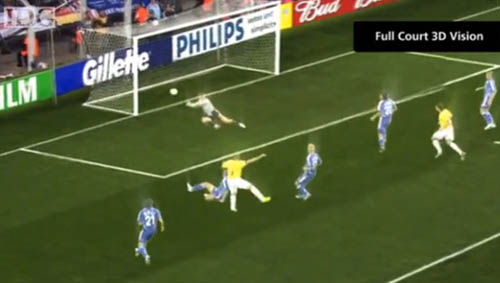
Japan is distinguishing its bid to host the 2022 World Cup with a plan to broadcast the entire thing as a life-size hologram.

[Image: Courtesy of the Japan Football Association/CNN].

“Japanese organizers say each game will be filmed by 200 high definition cameras, which will use ‘freeviewpoint’ technology to allow fans to see the action unfold from a player’s eye view—the kind of images until now only seen in video games,” CNN reports.

[Image: Courtesy of the Japan Football Association/CNN].

British football theorist Jonathan Wilson puts an interestingly spatial spin on the idea: “Speaking as a tactics geek,” he said to CNN, “the problem watching games on television is it’s very hard to see the shape of the teams, so if you’re trying to assess the way the game’s going, if you’re trying to assess the space, how a team’s shape’s doing and their defense and organization, then this will clearly be beneficial.”

Watching a sport becomes a new form of spatial immersion into strategic game geometries.

[Image: Courtesy of the Japan Football Association/CNN].

Of course, there’s open disbelief that Japan can actually deliver on this promise—it is proposing something based on technology that does not quite exist yet, on the optimistic assumption that all technical problems will be worked out in 12 years’ time.

But the idea of real-time, life-size event-holograms being beamed around the world as a spatial replacement for TV imagery is stunning.

(Thanks to Judson Hornfeck for the tip!)

First-Strike Reforestation

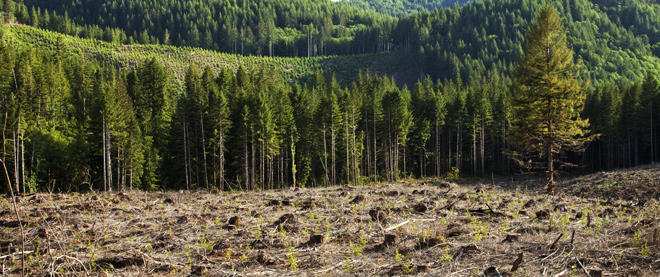
Earlier this month, Macleans looked at the idea of “aerial reforestation,” or the large-scale dropping of tree seedlings using decommissioned military aircraft. Of course, we looked at this same plan many, many years ago—and it turns out the same guy is behind this latest round of journalistic interest.

[Image: Courtesy of Getty Images/Macleans].

Moshe Alamaro, still affiliated with MIT, had previously been pushing his plan for “using a small fertilizing plane to drop saplings in plastic pods one at a time from a hopper,” Macleans explains. The biodegradable canisters would then have “hit the ground at 200 m.p.h.,” MIT explained back in 1997, “and imbed themselves in the soil. Then the canisters decompose and the young trees take root. A large aircraft could drop as many as 100,000 saplings in a single flight: Alamaro’s system could plant as many as a million trees in one day.”

But, Macleans points out, “it wasn’t very fruitful—most pods hit debris during pilot tests and failed to actually take root.”

The idea has thus now been “upgraded,” using different technical means “to create new forests on empty landscapes.”

The process Alamaro advocates places trees in metal pods that rot on contact with the ground, instead of the low-tech and less sturdy plastic version. He says the process can be adapted to plant shrubs, and would work best in places with clear, loose soil, such as sub-desert parts of the Middle East, or newly habitable Arctic tundra opened up by global warming. “What is needed is government policy to use old military aircraft,” he says, adding that thousands are in hangars across the globe. Although the original pitch failed, Alamaro says the growing carbon market is creating new interest, and he hopes to find funding for a large-scale pilot project soon. Once Alamaro gets planes in the air, the last step, says [Dennis Bendickson, professor of forestry], will be to simply “get people out of the way.”

In this context, it’s difficult to resist pointing out Iceland’s own soil-bombing campaign: “Iceland is big and sparsely populated,” the BBC reported in 2005. “There are few roads. So, Icelanders decided to ‘bomb their own country’,” dropping special mixtures of fertiliser and seeds “from a WWII DC 3 Dakota”—carpet-bombing subarctic desert in an attempt to make that emptiness flower.

I feel compelled here to point out a brief scene from the film Hellboy 2, in which we see a “forest god” killed in the streets of Brooklyn (roughly 2:36 in this clip); his green and bubbling blood blooms instantly into a carpet of soft roots and lichen, splashing onto the roofs of cars, sending seedpods from wildflowers and pollinating plants down in drifts along the New York sidewalks. Should a substance that fertile be developed in real life, Alamaro’s—and Iceland’s—plans could be realized in the blink of an eye.

In any case, will Alamaro finally succeed? Will we see whole new woodsy landscapes grow in the wake of sustained rural bombing campaigns—druidic warfare—cryptoforests spreading out from craters and abandoned fields far below? Will we launch seed grenades from sapling artillery, plant improvised explosive devices packed dense with forest nutrients?

(Story found via @treestrategist).

Stratigraphies of Infestation

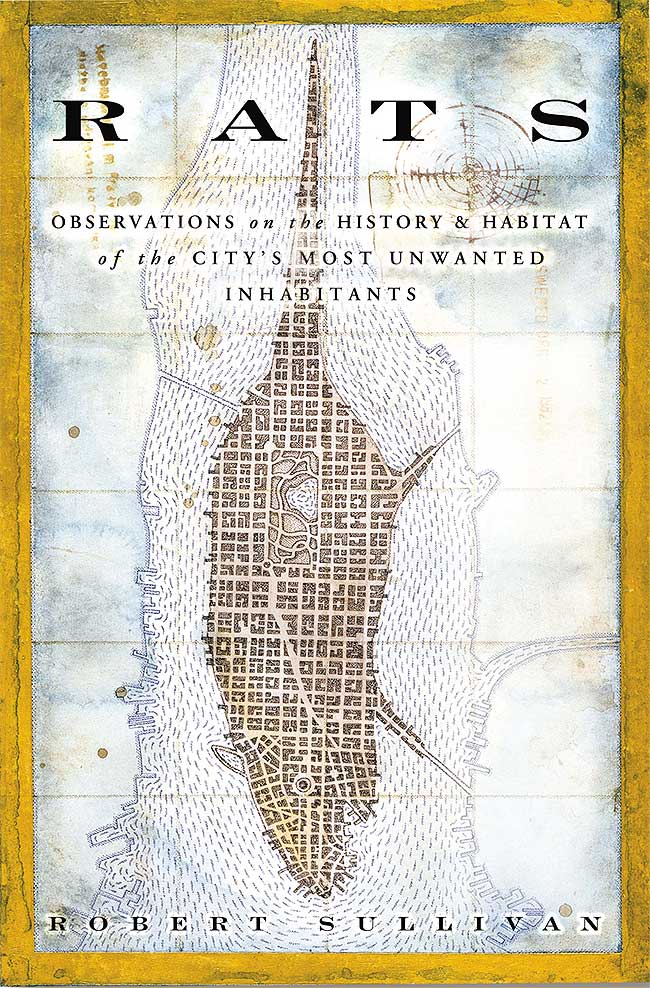
In his book Rats, Robert Sullivan—an author whose work we previously reviewed here—offers a glimpse of how the city is seen through the eyes of the pest-control industry.

[Image: Rats by Robert Sullivan].

Effective rodent control requires a very specific kind of spatial knowledge, Sullivan suggests, one that often eludes architects and city planners.

Sullivan quotes one rat-control professional, for instance, who “foresees a day when he will be hired to analyze a building’s weaknesses, vis-à-vis pests and rodents… ‘They design buildings to support pigeons and for infiltration by rodents because they don’t think about it. Grand Central Station, right? They just renovated it, right? Who knows what they spend on that, right? You know how much they spend on pest control? You know how much they budgeted? Nothing. I did all the extra work there, but they had to pay us out of the emergency budget.'”

Pest control here becomes an explicitly architectural problem, something you can design both for and against. Imagine an entire degree program in infestation-resistant urban design.

Sullivan points out that a massive, urban-scale architectural intervention, in the form of a quarantine wall fortifying all of New York City against rats, was once tentatively planned: “There was a time in New York, in the 1920s,” he writes, “when scientists proposed a great wall along the waterfront to shut out rats completely, to seal out rats and, thus, forever end rat fear. Eventually, though, the idea was deemed implausible and abandoned: rats will always get through.”

But it’s the particular subset of urban knowledge that has been actively cultivated within the pest control industry that fascinates me here. Sullivan spends a bit of time with a man named Larry Adams, a municipal rodent control expert. “If you hang around Larry long enough,” Sullivan says, “you realize that he sees the city in a way that most people don’t—in layers.” And what follows is well worth quoting in full:

He sees the parks and the streets and then he sees the subways and the sewers and even the old tunnels underneath the sewers. He sees the city that is on the maps and the city that was on the maps—the city’s past, the city of hidden speakeasies and ancient tunnels, the inklings of old streams and hills.
“People don’t realize the subterranean conditions out there,” he likes to say. “People don’t realize the levels. People don’t realize that we got things down there from the Revolution. A lot of people don’t realize that there’s just layers of settlers here, that things just get bricked off, covered up and all. They’re not accessible to people, but they are to rats. And they have rats down there that have maybe never seen the surface. If they did, then they’d run people out. Like in the movies. You see, we only see the tail end of it. And we only see the weak rats, the ones that get forced out to look for food.”

The book’s wealth of rat-catching anecdotes are often unbelievable. “More than anything,” Sullivan reflects, “I have learned from exterminators that history is crucial in effective rat analysis.”

In fact, history is everything when it comes to looking at rats—though it is not the history that you generally read; it is the unwritten history. Rats wind up in the disused vaults, in long underground tunnels that aren’t necessarily going anywhere; they wind up in places that are neglected and overlooked, places with a story that has been forgotten for one reason or another. And to find a rat, a lot of times you have to look at what a place was. One exterminator I know tells the story of a job on the Lower East Side in an old building where rats kept appearing, nesting, multiplying, no matter how many were killed. The exterminator searched and searched. At last, he found an old tunnel covered by floorboards, a passageway that headed toward the East River. The tunnel was full of rats. Later, he discovered that the building had housed a speakeasy during Prohibition.

Or this disconcerting image of an infested basement that was never fully demolished—it was simply forgotten, walled off beneath the surface of the city. Here, Sullivan visits an abandoned lot with a rat-catching expert named Isaac, writing that, “just before we drove off, two men walked by and stopped at the fence; they looked into the abandoned lot and spoke with Isaac in Spanish.”

They told Isaac that they remembered when the lot was the site of an old wooden house that had become abandoned and filled with rats. They remembered the house being demolished and partially buried—the basement was still there, they said. They pointed to the ground, saying that the old home was still beneath it, still rat-infested.

What a perfectly haunting line: They pointed to the ground, saying that the old home was still beneath it, still rat-infested. (And if anyone out there has read The Rats by James Herbert, you might remember that the novel begins with a vaguely similar urban image).

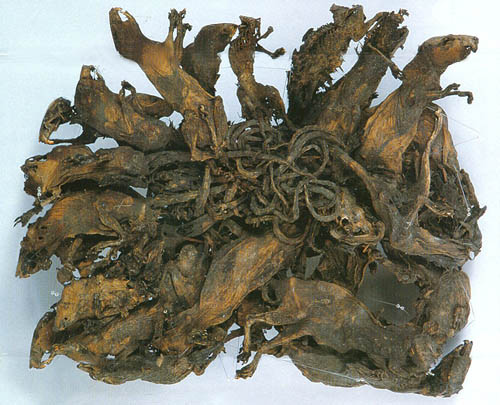
[Image: A “rat king,” via Wikimedia].

Speaking later with Mike, another rat-control expert, Sullivan learns how the stratigraphy of the city takes shape in the mind of the exterminator: “I was getting ready to leave—Mike was just too busy. But then Mike was reminded of an aspect of the nature of rats in the city, and as he put down the phone, he said, ‘You know, I heard there are three layers of sewer lines.’ He counted them off on his fingers. ‘There are the ones from the 1800s, the ones from the 1700s, and the ones they don’t have maps for anymore. Once in a while, they use that old line, when they’re doing construction or something, and you read in the papers that there are hundreds of rats coming up. Well, those rats that are in the third line, they haven’t even seen man before.’”

These stratigraphies of infestation are wonderfully horrifying—but also perfectly and immediately available to the architect and urban planner as practical design challenges. How does one deal with “what was on the maps,” as Sullivan phrases it, while at the same time designing a pest-unfriendly metropolis?

Taking as their design target rats and other “unwanted inhabitants” of the city, as Sullivan phrases it, what inspired collaborations could we develop amongst public health inspectors, urban ecologists, pesticide manufacturers, historical cartographers, city archivists, materials scientists (Sullivan writes, for instance, that Larry Adams, mentioned earlier, has actually developed his own special mix of rat-resistant concrete: “With his expertise, Larry has developed his own rat-eradication techniques, such as concrete mixed with broken glass to keep the rats from gnawing through the concrete. ‘Sometimes, they’ll still cut through before the concrete hardens. So sometimes, I use glass and industrial-strength steel wool and put it in with the concrete and make one big goop with it’”), and, of course, architects and planners? How realistic—let alone ethical—a design challenge is the rodent-free metropolis?

City of Holes

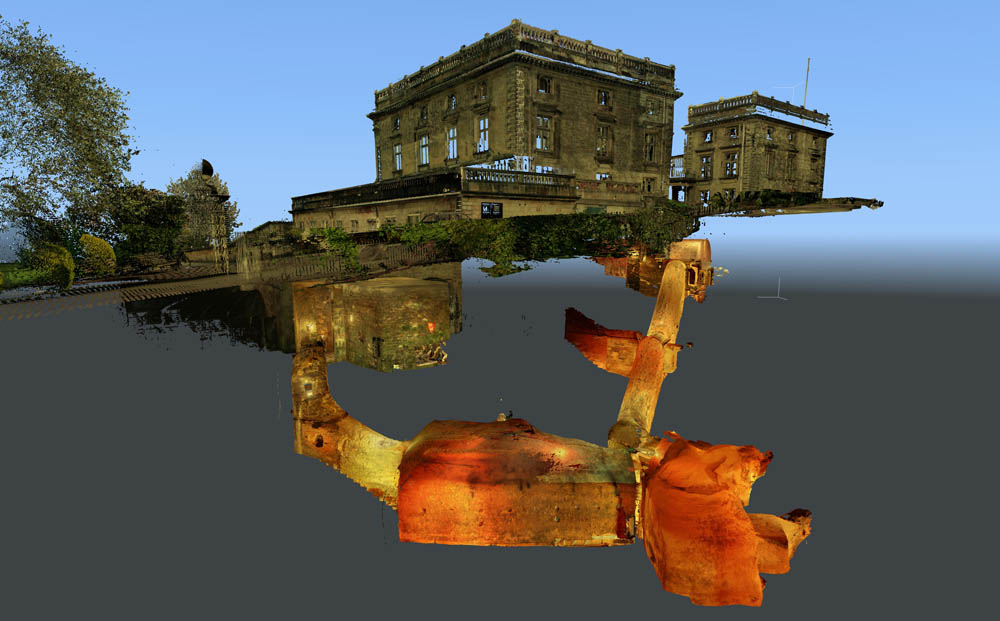
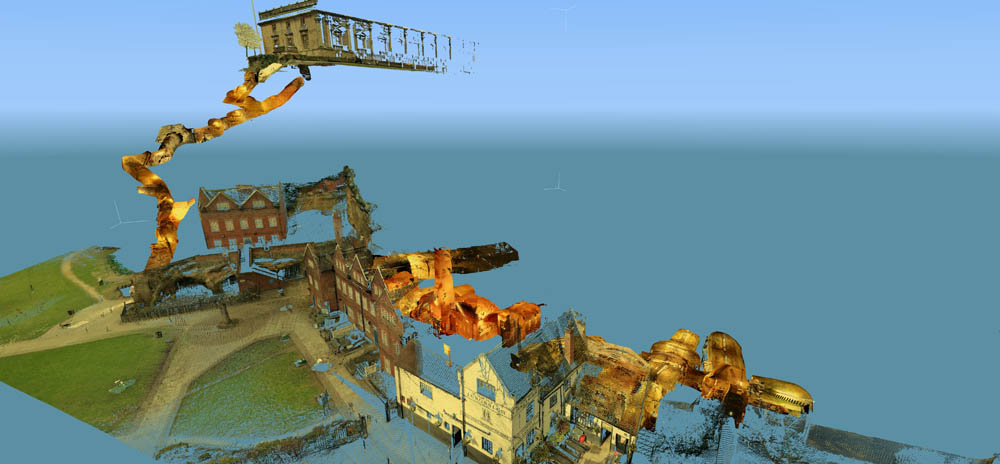
[Image: Courtesy of the Nottingham Caves Survey].

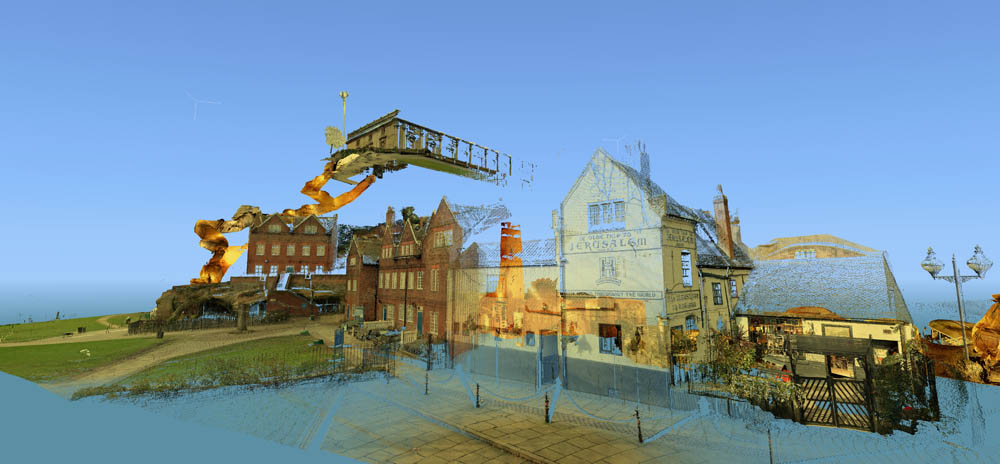
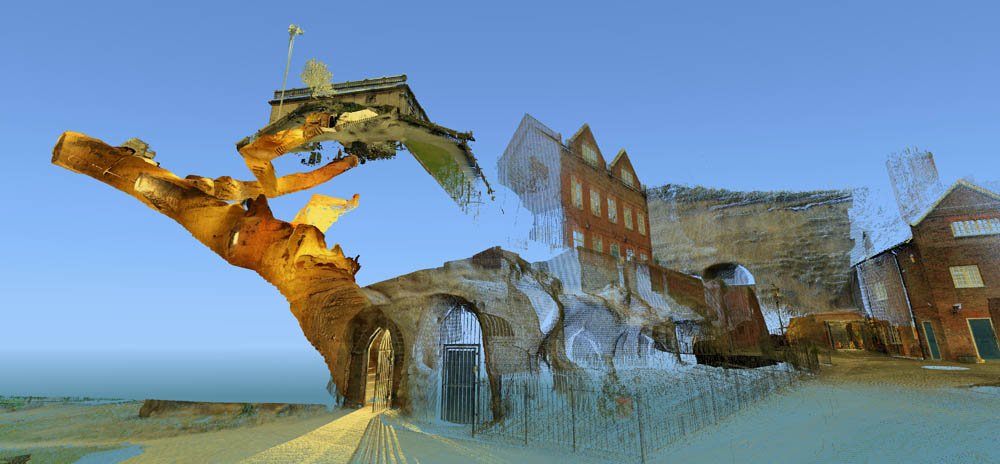
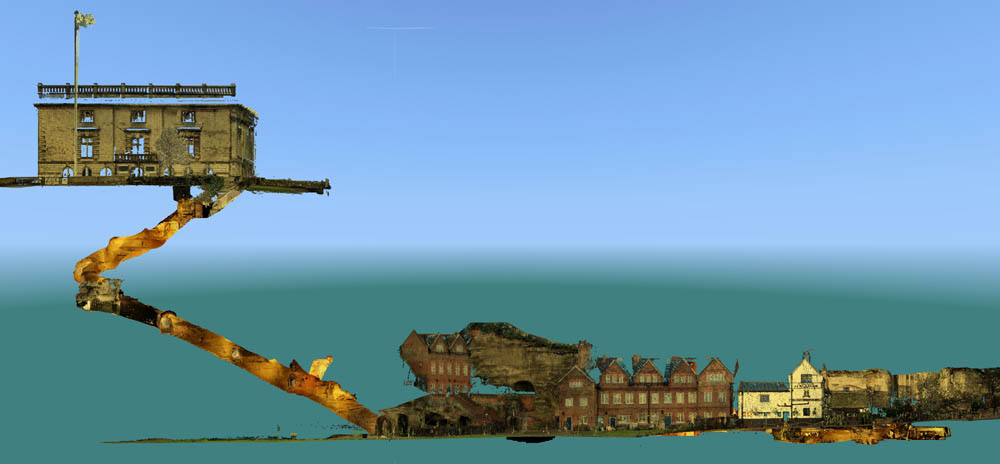
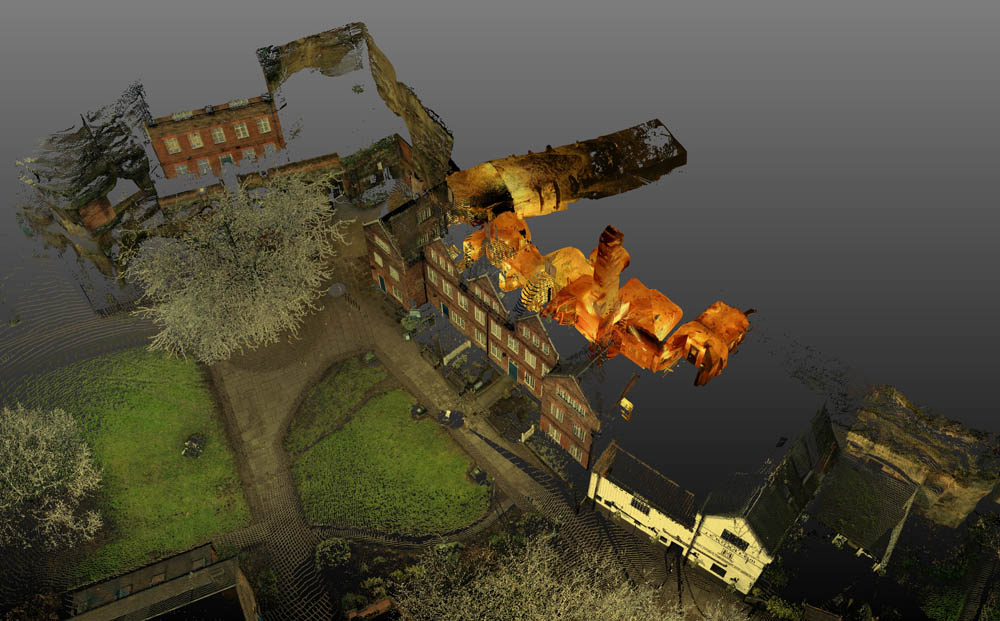
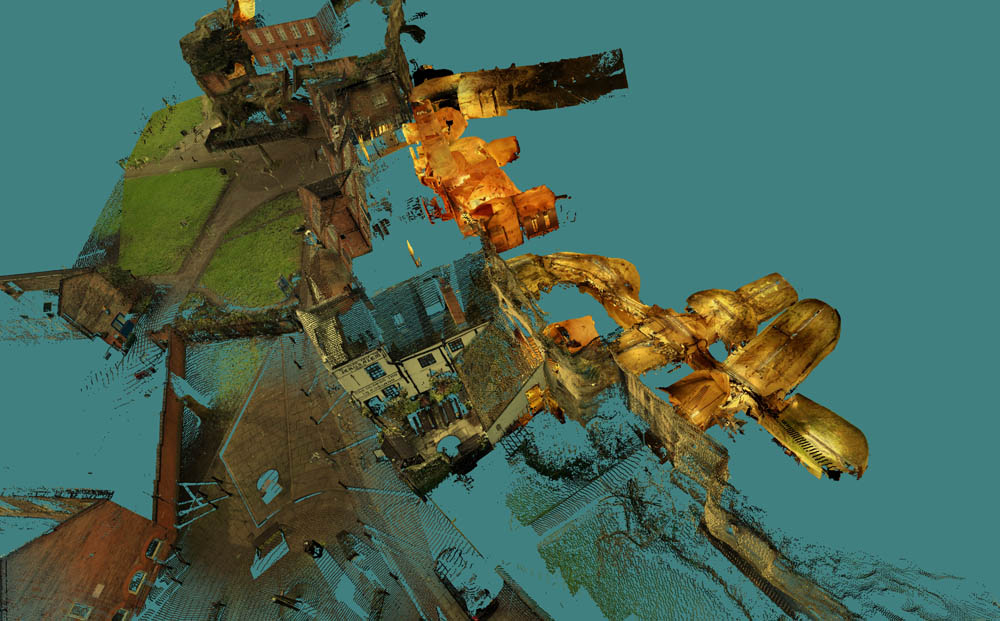
Some new images of the ongoing laser-scan project taking place in the caves beneath Nottingham, England, have been released. “The Nottingham Caves Survey is in the process of recording all of Nottingham’s 450+ sandstone caves,” the organizers explain.

From malting caves and circular kilns to a 19th-century underground butcher, via the Shire Hall and, of course, Mortimer’s Hole, it’s intoxicating to imagine a city whose most exciting discoveries lie somewhere far below its own streets and urban surfaces, in a delirious sprawl of artificially enlarged sandstone caves.

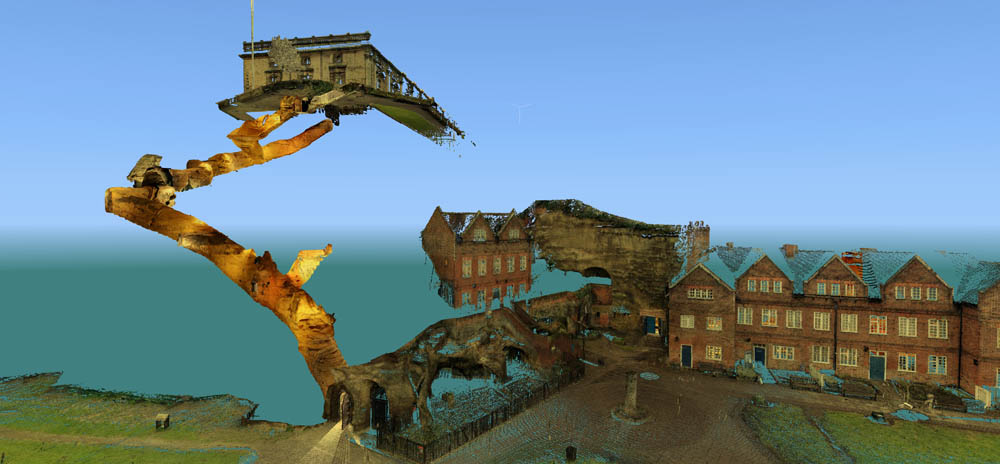
[Images: Courtesy of the Nottingham Caves Survey].

Check out this video, below, which is basically just a fly-and-walk-through of the resulting scans.

Like the short film La Subterranea, which we screened a few years back at the Silver Lake Film Fest, the video suggests a fundamentally porous urban world in which, as Alex Trevi writes, “day and night, laser scanners that have gone mobile will be deployed into these voids, and bit by pinprick bit, these labyrinths that once confounded, concealed and even consumed trespassers with their disorienting mazes will resolve into total comprehensibility. Every detail will be known to you.”

The city, CAT-scanned, becomes a labyrinth of complete transparency.

Imagine, for instance, a city consumed by its own archaeology—a hole complex of obsessive-compulsive excavation—where the streets are just the thinnest of bridges spanning a sponge-like void below.

[Images: Courtesy of the Nottingham Caves Survey].

For more, check out the site of the Nottingham Caves Survey, which has link after link after link to explore; perhaps start with their Cave Map and move onward from there.

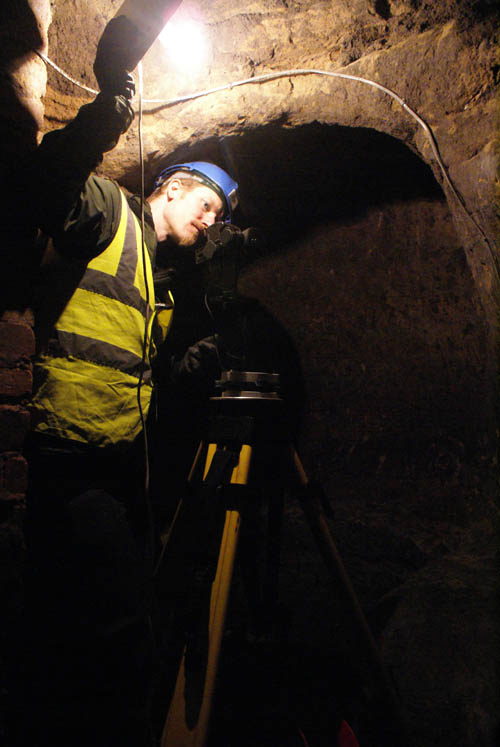
[Image: The scanner at work; courtesy of the Nottingham Caves Survey].

All in all, this might be the best advertisement for a city—intentional or not—that I’ve ever seen: drawing people to visit based on quasi-holographic laser scans of that city’s underground history.

(Via Archaeology News).

The Reforestation of the Thames Estuary

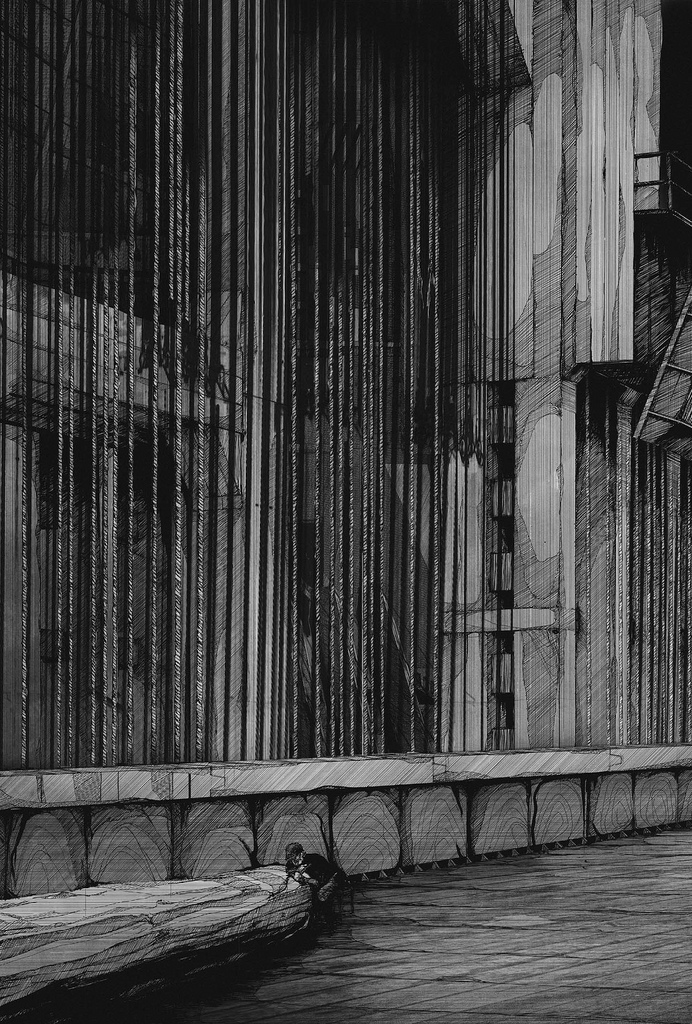
[Image: “The Dormant Workshop” by Tom Noonan, courtesy of the architect].

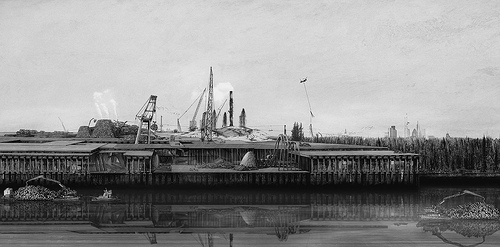
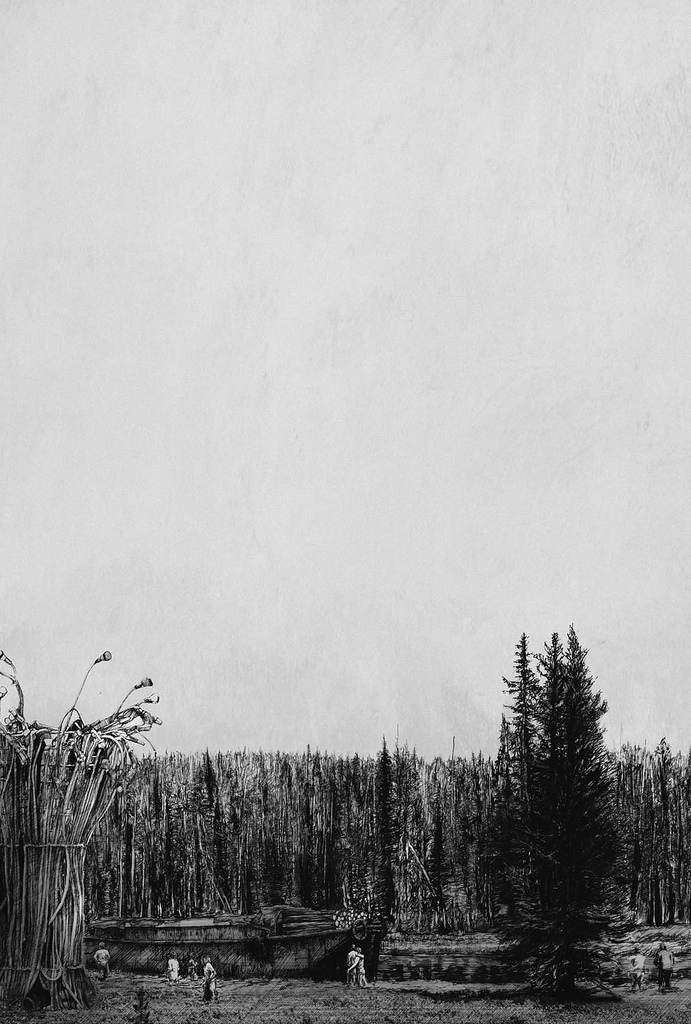
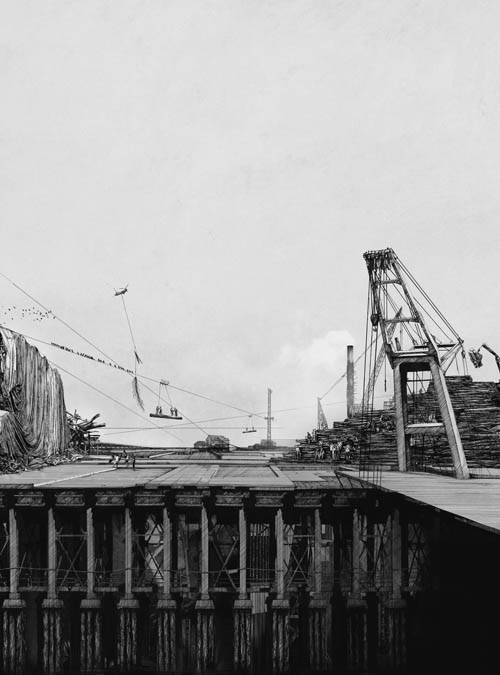
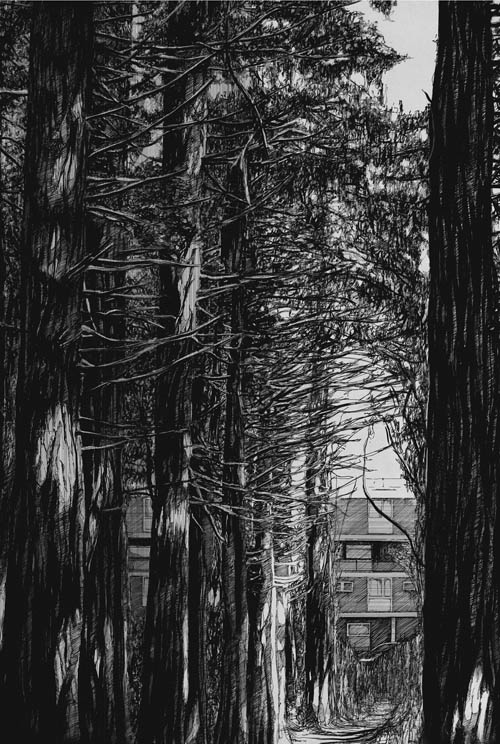
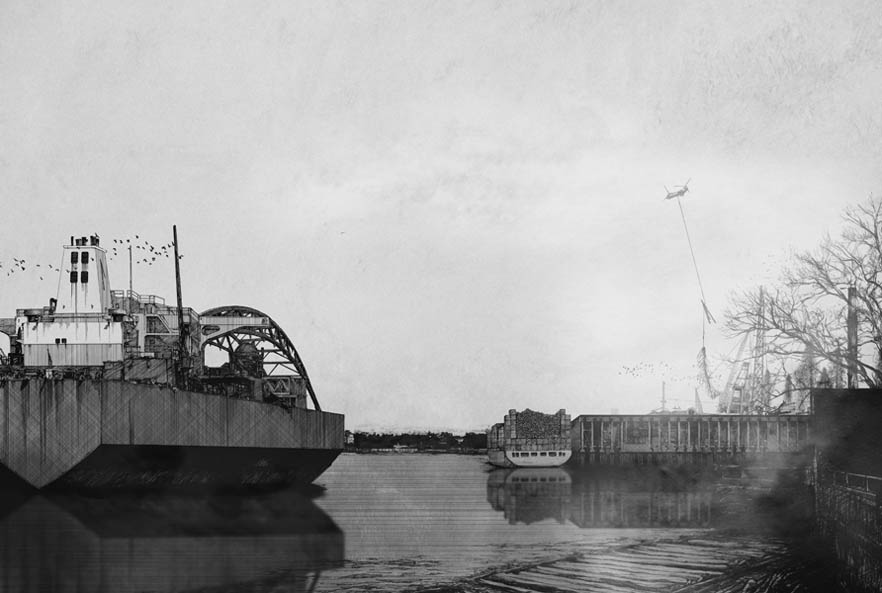
While studying at the Bartlett School of Architecture in London, recent graduate Tom Noonan produced a series of variably-sized hand-drawings to illustrate a fictional reforestation of the Thames estuary.

[Image: “Log Harvest 2041” by Tom Noonan, courtesy of the architect].

Stewarding, but also openly capitalizing on, this return of woodsy nature is the John Evelyn Institute of Arboreal Science, an imaginary trade organization (of which we will read more, below).

[Image: “Reforestation of the Thames Estuary” by Tom Noonan, courtesy of the architect].

The urban scenario thus outlined—imagining a “future timber and plantation industry” stretching “throughout London, and beyond”—is like something out of Roger Deakin’s extraordinary book Wildwood: A Journey Through Trees (previously described here) or even After London by Richard Jeffreys.

In that latter book, Jeffreys describes a thoroughly post-human London, as the ruined city is reconquered by forests, mudflats, aquatic grasses, and wild animals: “From an elevation, therefore,” Jeffreys writes, “there was nothing visible but endless forest and marsh. On the level ground and plains the view was limited to a short distance, because of the thickets and the saplings which had now become young trees… By degrees the trees of the vale seemed as it were to invade and march up the hills, and, as we see in our time, in many places the downs are hidden altogether with a stunted kind of forest.”

Noonan, in a clearly more domesticated sense—and it would have been interesting to see a more ambitious reforestation of all of southeast England in these images—has illustrated an economically useful version of Jeffreys’s eco-prophetic tale.

[Image: “Lecture Preparations” by Tom Noonan, courtesy of the architect].

From Noonan’s own project description:

The reforestation of the Thames Estuary sees the transformation of a city and its environment, in a future where timber is to become the City’s main building resource. Forests and plantations established around the Thames Estuary provide the source for the world’s only truly renewable building material. The river Thames once again becomes a working river, transporting timber throughout the city.

It is within these economic circumstances that the John Evelyn Institute of Arboreal Science can establish itself, Noonan suggests:

The John Evelyn Institute of Arboreal Scienc eat Deptford is the hub of this new industry. It is a centre for the development and promotion of the use of timber in the construction of London’s future architecture. Its primary aim is to reintroduce wood as a prominent material in construction. Through research, exploration and experimentation the Institute attempts to raise the visibility of wood for architects, engineers, the rest of the construction industry and public alike. Alongside programmes of education and learning, the landscape of the Institute houses the infrastructure required for the timber industry.

They are similar to an organization like a cross between TRADA and the Wooodland Trust, say.

[Image: “Urban Nature” by Tom Noonan, courtesy of the architect].

And the Institute requires, of course, its own architectural HQ.

[Image: “Timber Craft Workshop” by Tom Noonan, courtesy of the architect].

Noonan provides that, as well. He describes the Institute as “a landscape connecting Deptford with the river,” not quite a building at all. It is an “architecture that does not conform to the urban timeframe. Rather, its form and occupation is dependent on the cycles of nature.”

The architecture is created slowly—its first years devoid of great activity, as plantations mature. The undercroft of the landscape is used for education and administration. The landscape above becomes an extension of the river bank, returning the privatised spaces of the Thames to the public realm. Gaps and cuts into the landscape offer glimpses into the monumental storage halls and workshops below, which eagerly anticipate the first log harvest. 2041 sees the arrival of the first harvest. The landscape and river burst in a flurry of theatrical activity, reminiscent of centuries before. As the plantations grow and spread, new architectures, infrastructures and environments arise throughout London and the banks of the Thames, and beyond.

The drawings are extraordinary, and worth exploring in more detail, and—while Noonan’s vision of London transformed into a working forest plantation would have benefitted from some additional documentation, such as maps*—it is a delirious one.

[Image: “Thames Revival” by Tom Noonan, courtesy of the architect].

Considering the ongoing overdose of urban agriculture imagery passing through the architecture world these days, it is refreshing simply to see someone hit a slightly different note: to explore urban forestry in an aesthetically powerful way and to envision a world in which the future structural promise of cultivated plantlife comes to shape the city.

*I wrote this without realizing that the package of images sent to me did not include the entire project—which comes complete with maps.

Buy a Map

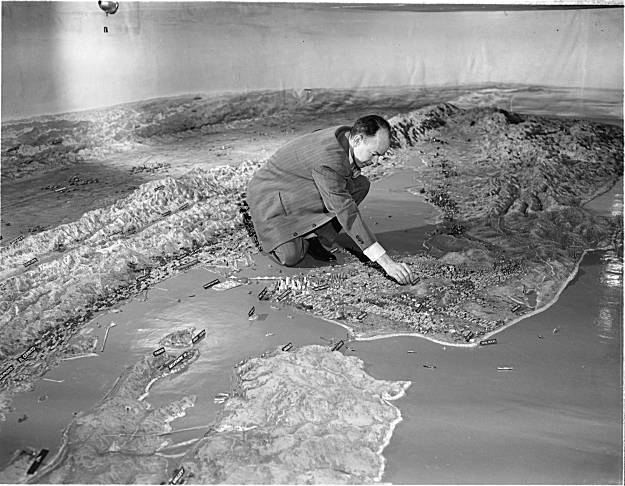
[Image: Photo by Barney Peterson, courtesy of the San Francisco Chronicle].

Something I meant to post three few weeks ago, before October became the Great Lost Month of constant busyness and over-commitment, is the story of a 70-ton relief map of California, unseen by the public for half a century, that has been re-discovered in San Francisco, sitting in “an undisclosed location on the city’s waterfront.”

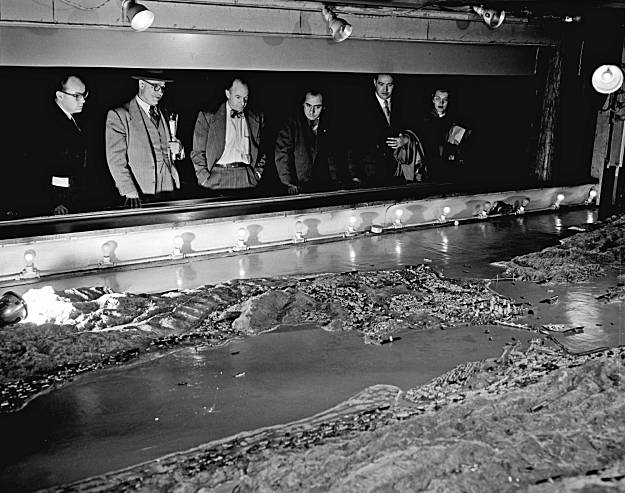
[Image: Photo by Barney Peterson, courtesy of the San Francisco Chronicle].

In its time, the map was considered far too marvelous for simply cutting up and storing—but that’s exactly what’s happened to it.

It was as long as two football fields and showed California in all its splendor, from Oregon to Mexico, with snow-capped mountains, national parks, redwood forests, a glorious coastline, orchards and miniature cities basking in the sun. It was made of plaster, wire, paint, and bits of rock and sand. In the summer of 1924, Scientific American magazine said it was the largest map in the world.

However, we read, “The problem with the map is simple: it is huge and would cost a lot of money to move, restore and display it. The last estimate was in the range of $500,000. And that was 30 years ago. It is a classic white elephant, too valuable to scrap, but too expensive to keep.”

And, today, it’s not going anywhere: “The Port of San Francisco has no plans to be anything but stewards of its storage, and no one else has come forward in half a century to rescue the map.” If you have half-a-million dollars or so, and heavy moving equipment at your disposal, then perhaps it could soon be yours.

(Thanks to Steve Silberman for the link. In the archives: San Francisco Bay Hydrological Model; Buy a Torpedo-Testing Facility, Buy a Fort, Buy a Church, and Buy a Silk Mill].

Softcore

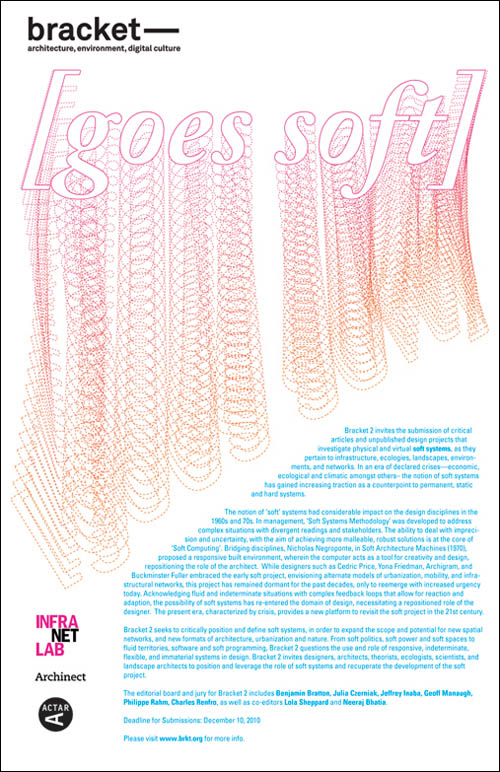
Just a quick reminder that you have till December 10 to submit to Bracket 2, published by Actar, Archinect, and InfraNet Lab:

Bracket 2 invites the submission of critical articles and unpublished design projects that investigate physical and virtual soft systems, as they pertain to infrastructure, ecologies, landscapes, environments, and networks… Bracket 2 seeks to critically position and define soft systems, in order to expand the scope and potential for new spatial networks, and new formats of architecture, urbanization and nature. From soft politics, soft power and soft spaces to fluid territories, software and soft programming, Bracket 2 questions the use and role of responsive, indeterminate, flexible, and immaterial systems in design. Bracket 2 invites designers, architects, theorists, ecologists, scientists, and landscape architects to position and leverage the role of soft systems and recuperate the development of the soft project.

Check out InfraNet Lab and the Bracket website for more info. Keep your eye out, as well, for InfraNet Lab‘s forthcoming Pamphlet Architecture installment, Coupling: Strategies for Infrastructural Opportunism.

The Museum of Speculative Archaeological Devices

Perhaps a short list of speculative mechanisms for future archaeological research would be interesting to produce.

[Image: A toy antique oscilloscope by Andrew Smith, courtesy of Gadget Master and otherwise unrelated to this post].

Ground-scanners, Transparent-Earth (PDF) eyeglasses, metal detectors, 4D earth-modeling environments used to visualize abandoned settlements, and giant magnets that pull buried cities from the earth.

Autonomous LIDAR drones over the jungles of South America. Fast, cheap, and out of control portable muon arrays. Driverless ground-penetrating radar trucks roving through the British landscape.

Or we could install upside-down periscopes on the sidewalks of NYC so pedestrians can peer into subterranean infrastructure, exploring subways, cellars, and buried streams. Franchise this to London, Istanbul, and Jerusalem, scanning back and forth through ruined foundations.

Holograph-bombs—ArchaeoGrenades™—that spark into life when you throw them, World of Warcraft-style, out into the landscape, and the blue-flickering ancient walls of missing buildings come to life like an old TV channel, hazy and distorted above the ground. Mechanisms of ancient light unfold to reveal lost architecture in the earth.

[Image: An LED cube by Pic Projects, otherwise unrelated to this post].

Or there could be football-field-sized milling machines that re-cut and sculpt muddy landscapes into the cities and towns that once stood above them. A peat-bog miller. Leave it operating for several years and it reconstructs whole Iron Age villages in situ.

Simultaneous milling/scanning devices that bring into being the very structures they claim to study. Ancient fortifications 3D-printed in realtime as you scan unreachable sites beneath your city’s streets.

Deep-earth projection equipment that impregnates the earth’s crust with holograms of missing cities, outlining three-dimensional sites a mile below ground; dazed miners stumble upon the shining walls of imaginary buildings like a laser show in the rocks around them.

Or a distributed iPhone app for registering and recording previously undiscovered archaeological sites (through gravitational anomalies, perhaps, or minor compass swerves caused by old iron nails, lost swords, and medieval dining tools embedded in the ground). Like SETI, but archaeological and directed back into the earth. As Steven Glaser writes in the PDF linked above, “We can image deep space and the formation of stars, but at present we have great difficulty imaging even tens of meters into the earth. We want to develop the Hubble into, not away from, the earth.”

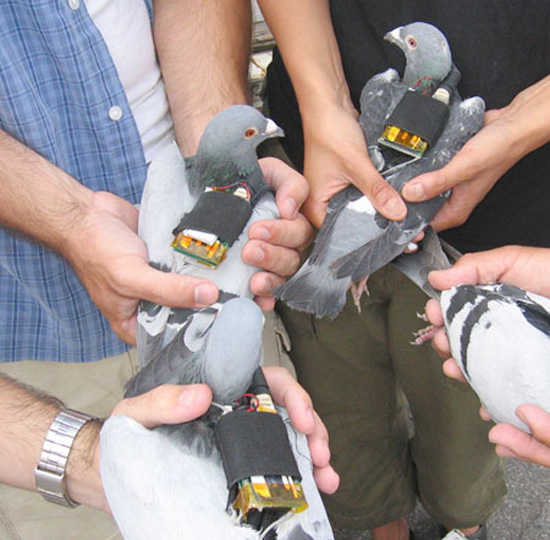
Artificially geomagnetized flocks of migratory birds, like “GPS pigeons,” used as distributed earth-anomaly detectors in the name of experimental archaeology.

[Image: “GPS pigeons” by Beatriz da Costa, courtesy of Pruned].

So perhaps there could be two simultaneous goals here: to produce a list of such devices—impossible tools of future excavation—but also to design a museum for housing them.

What might a museum of speculative archaeological devices look like? A Mercer Museum for experimental excavation?

(Thanks to Rob Holmes and Alex Trevi for engaging with some of these ideas over email).

Acoustic Forestry

[Image: From Acoustic Botany by David Benqué].

We saw David Benqué’s Fabulous Fabbers project here on BLDGBLOG a few months ago, but his more recent work, Acoustic Botany, deserves similar attention.

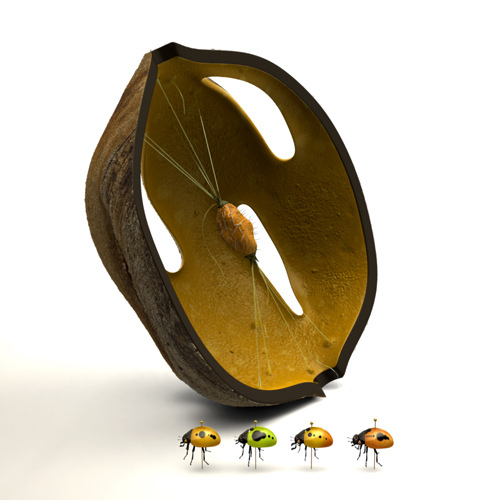
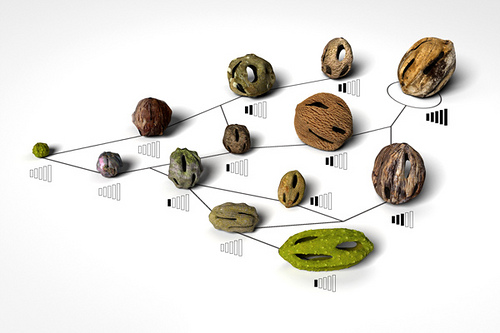
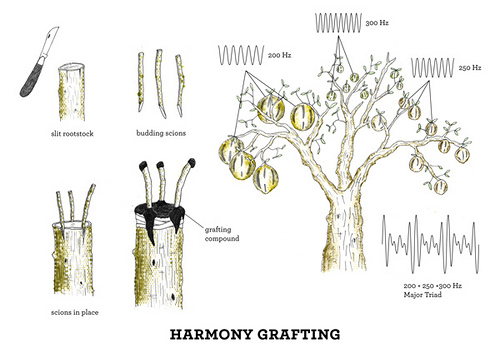
Acoustic Botany uses genetically modified plants to produce a “fantastical acoustic garden,” where sounds literally grow on trees. “Desired traits such as volume, timbre and harmony are acquired through selective breeding techniques,” the artist explains.

[Image: From Acoustic Botany by David Benqué].

As Benqué writes:

The debate around Genetic Engineering is currently centered around vital issues such as food, healthcare and the environment. However, we have been shaping nature for thousands of years, not only to suit our needs, but our most irrational desires. Beautiful flowers, mind altering weeds and crabs shaped like human faces all thrive on these desires, giving them an evolutionary advantage. By presenting a fantastical acoustic garden, a controlled ecosystem of entertainment, I aim to explore our cultural and aesthetic relationship to nature, and to question its future in the age of Synthetic Biology.

There are thus “singing flowers,” “modified agrobacteria” that ingeniously take “sugars and nutrients from the host plant to encourage the growth of parasitic galls and fill them with gas to produce sound,” and “string-nut bugs” that have been “engineered to chew in rhythm” inside hollow gourds.

[Image: From Acoustic Botany by David Benqué].

The symphonic range of sounds is then fine-tuned and modulated inside an acoustic lab using specialized equipment; out in the field, this takes the form of pruning trees into living chords, so that “harmonic note combinations” can bloom on a single branch.

Upscaling this to the level of all-out acoustic forestry would be an extraordinary thing to hear.

[Image: From Acoustic Botany by David Benqué].

I’m reminded of at least two quick things here:

1) Several years ago in the excellent British music magazine The Wire, there was an article about Brian Eno and “generative music,” in which the acoustic nature of backyard gardens was described quite beautifully based on the seasonal popping of seedpods, the rustle of leaf-covered fronds in evening breezes, and even, if I remember correctly, the specific insects that such plants might attract and support. Does anyone reading this have experience with planting a backyard garden based on its future acoustics?

2) Alex Metcalf’s Tree Listening project (which I have also covered elsewhere). “The installation,” Metcalf writes, “allows you to listen to the water moving up inside the tree through the Xylem tubes from the roots to the leaves.” Headphones hang down from the tree’s canopy like botanical iPods, and you put them on to lose yourself in arboreal surroundsound. Imagine a shortwave radio that allows you to tune not into distant stations sparkling with disembodied sounds and buzzing voices from the other side of the world, but into the syrupy tides of trees spiked with microphones in forests and sacred groves on every continent.

More images of Benqué’s project can be seen on the artist’s website.

(Spotted on Core77, thanks to a tweet from @soundscrapers).

The Meadowlands

I’ve just finished reading The Meadowlands: Wilderness Adventures on the Edge of a City by Robert Sullivan, a book perfectly discussed in the visual context of Meadowlands, a collection of photographs by Joshua Lutz (for which Sullivan actually wrote an introduction).
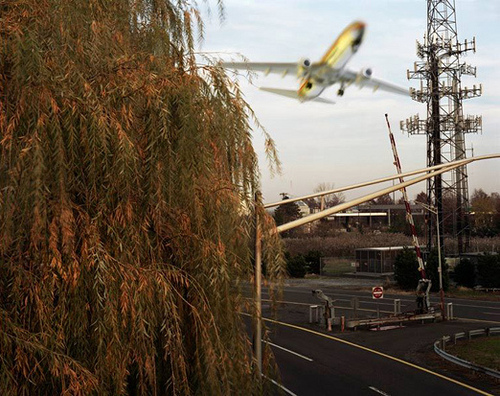
[Image: From Meadowlands by Joshua Lutz].

“Just five miles west of New York City,” the back cover of Sullivan’s book reads, are the Meadowlands: “this vilified, half-developed, half-untamed, much dumped-on, and sometimes odiferous tract of swampland is home to rare birds and missing bodies, tranquil marshes and a major sports arena, burning garbage dumps and corporate headquarters, the remains of the original Penn Station, and maybe, just maybe, of the late Jimmy Hoffa.” It is “mysterious ground that is not yet guidebooked,” Sullivan writes inside, “where European landscape painters once set up their easels to paint the quiet tidal estuaries and old cedar swamps,” but where, now, “there are real hills in the Meadowlands and there are garbage hills. The real hills are outnumbered by the garbage hills.”

Lutz’s book describes the region as a “32-square-mile stretch of sweeping wilderness that evokes morbid fantasies of Mafia hits and buried remains.” As Lutz explained in a 2008 interview with Photoshelter, “When I first saw the Meadowlands I was completely blown away at this vast open space with the Manhattan skyline in the distance. It was this space that existed between spaces, somewhere between urban and suburban all the while made up of swamps, towns and intersecting highways. None of it made any sense to me, still doesn’t.”

All told, the area has become, Sullivan writes, “through negligence, through exploitation, and through its own chaotic persistence, explorable again.”
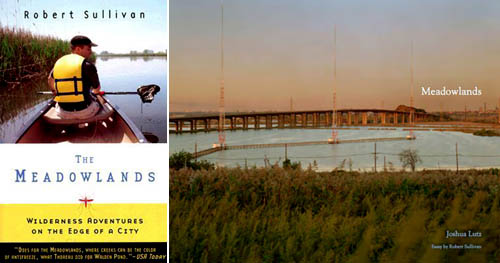
[Images: The Meadowlands: Wilderness Adventures on the Edge of a City by Robert Sullivan and Meadowlands by Joshua Lutz].

To write his book, Sullivan went on a series of explorations through the Meadowlands, including by canoe and in the company of a former police detective.

While there are definitely some moments of rhetorical over-kill, the book is so filled with interesting details that it proved very hard to stop reading; in between learning about the “discharged liquefied animal remains” that were dumped into the region’s streams and rivers, or the “major pet company and Meadowlands development firm” that “drove so many steel girders into the ground that people joked Secaucus would become a new magnetic pole,” or even the old—and, unfortunately, forgotten—mine shafts that began swallowing a development called the Schuyler Condominiums, Sullivan’s book, like any good and truly local history, builds to a level of narrative portraiture that is as braided and fractally involuted as the wetlands it documents.
[Image: From Meadowlands by Joshua Lutz].

For instance, Sullivan discovers a flooded radio transmission room, “its giant antenna felled in the water like a child’s broken toy,” as well as “little islands, composed wholly of reeds,” one of which, in the middle of soggy nowhere and accessible only by boat, was “surrounded by bright yellow police emergency tape: CAUTION, the tape said.”

Relating the litany of pollutions that exist in the swamps, he guides the reader’s eye toward ponds of cyanide, truckloads of “unregulated medical waste,” and soil so thoroughly contaminated with mercury that, “as recently as 1980, it was possible to dig a hole in the ground and watch it fill with balls of shiny silvery stuff.”

This might even have affected the New York Giants football team after they moved into Meadowlands Stadium: “In the mid-1980s, playing football in the Meadowlands meant possibly risking your life, because shortly after the stadium opened players for the Giants began developing cancer… ‘Players complained of occasionally foul-smelling water, and the high incidence of leukemia in adjacent Rutherford…'” No official medical link was either admitted or found. Indeed, certain streams are really a kind of “garbage juice”—an “espresso of refuse,” as Sullivan nauseatingly describes it.

In many places, the so-called ground is, in fact, trash—so much so that “underground fires are still common today… you can see little black holes where the hills have recently burped hot gases or fire… huge underground plumes of carbon dioxide and of warm moist methane, giant stillborn tropical winds that seep through the ground to feed the Meadowlands’ fires, or creep up into the atmosphere,” forming a particularly Dantean local climatology of reeking crosswinds. One of these fires “burned for fifteen years.”
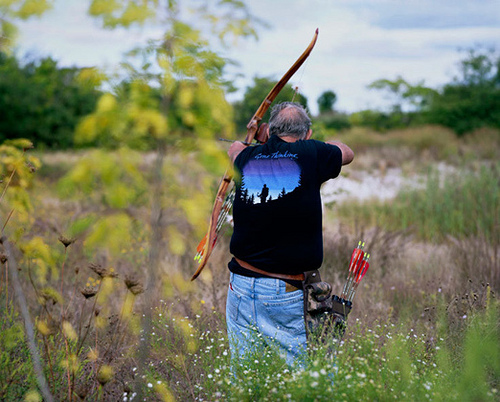
[Image: Bow-hunting amidst the reeds, from Meadowlands by Joshua Lutz].

The Meadowlands are, after all, a massive dump, more landfill than landscape. The effect, though, is a kind of new picturesque, an engineered sublime of artificial hills, deltaic chemical accumulants, cheap hotels overlooking it all on the periphery, and even entire lost buildings buried beneath three centuries of dumping. “If you put a shovel anywhere into the ground and dig just about anywhere in the Meadowlands,” Sullivan writes, “it won’t be long until you hit rubble from a building that was once somewhere else.”

In Kearny, one old dump contains pieces of what was once Europe. In 1941, under the auspices of the Lend-Lease Act, shipments of defense equipment went from the United States to Great Britain by boat. On their return trip, the boats used rubble from London bombings as ballast. William Keegan, a Kearny dump owner, contracted to accept the ballast. As a result, some of the hills of the Kearny Meadows are London Hills.

This is actually also true for New York’s FDR Drive, which is partially constructed on British war ruins used as fill.
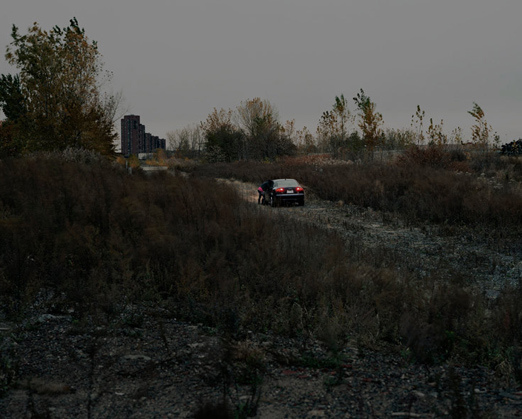
[Image: An awesomely sinister photo from Meadowlands by Joshua Lutz].

There is an amazing chapter about mosquito control in the region, something I want to return to in a future post someday; another about treasure hunters on a quest for Revolutionary War-era gold and silver; and another about the construction of the hulking and monumental Pulaski Skyway. Before that oddly tunnel-like, 3.5-mile, elevated roadway was built, “ferries and sailboats took passengers from New York to Newark via Jersey City,” but, like something out of a Terry Gilliam film, “it was not unusual for papers to report that a ship making the trip had been blown out to sea and never been seen again.”

I could go on and on. There is even an entire subplot in which Sullivan hunts down the buried remains of New York’s Penn Station.

I want to end, though, with something said by the retired police detective who takes Sullivan under his wing on a series of driving tours toward the end of the book. When Sullivan asks the former investigator if he misses his job, the response is intelligent, thoughtful, and extraordinary. I’ll quote it in full:

“I miss it to this day, to this minute,” he said. “And do you know why? Because it takes you a long time to accumulate the knowledge.”
He pointed out the car. “Like for instance,” he continued, “look over there at that building, that warehouse. See how one door is open and one door looks like it’s closed up. Now, what I’ll do is store that. Keep it in my head. And see that sign over there in front of that building? You remember that. You remember that because you may need it someday. It may be useful. You accumulate the knowledge. Do you see what I mean? And then all of a sudden you’re supposed to just stop.”
He shook his head and started the car moving again, driving slowly up out of the swamp, up the hill. “The thing is, you just can’t,” he said.

This hermeneutic attention to everyday details—through which open warehouse doors or unusually parked cars all become raw data accumulated over decades for use in some later, possibly never-to-occur narrative dissection—is exactly the task not only of the detective but of the writer, and of anyone who would attempt to study an existing landscape in order to uncover its most unexpected and far-reaching implications.

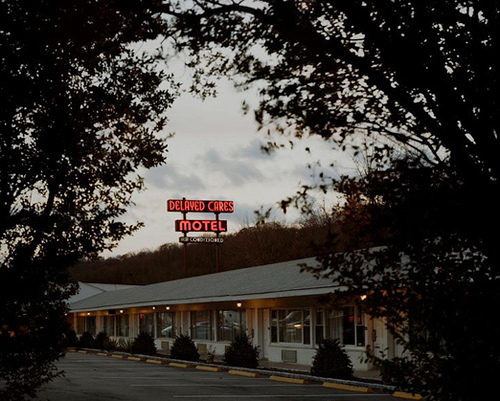
In any case, together with Lutz’s photos of the region and its very particular anthropology—which Lutz discusses in an interview with Conscientious, remarking that the Meadowlands are “an astonishing mixture of towns, swamps, trains, motels and an amazing array of bisecting highways all trying to keep you out”—both books have been invigorating encounters over the past week or two, and each is worth checking out if you get the chance.

Crypto-Forestry and the Return of the Repressed

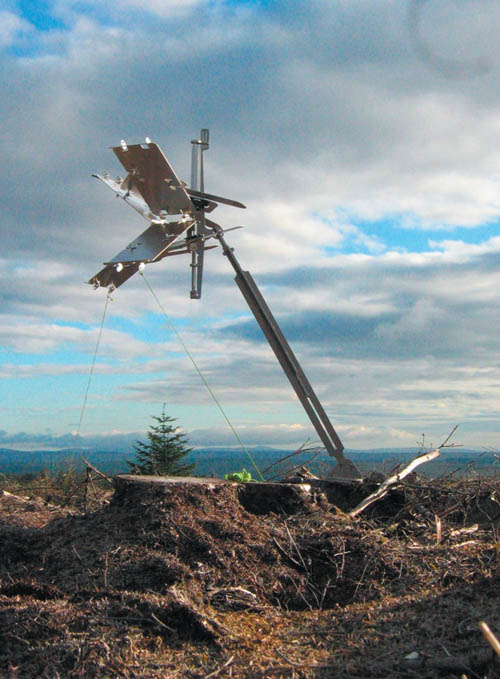
[Image: My own “crypto-forest of Utrecht,” via Google Maps].

While we’re on the subject of PrimatePoetics!, I’m intrigued by their “CryptoForests of Utrechtseries, which kicked off back in October 2009. It’s an ongoing exploration of botanical landscapes in and around Utrecht, Netherlands, that have sprung back from aggressive anthropological intervention. Weed patches in which the earliest emergent traces of a thicket can be found; clusters of trees growing semi-feral on the edges of railroad yards; forgotten courtyards sprouting with random saplings unplanted by any hand: these are all crypto-forests.

Each example of this type of landscape, PrimatePoetics! explains, is “almost entirely hidden from view and very few people know about it.” Each is “a forest grown in the shadow of neglect, private ownership and municipal refusal.” Each is a landscape that has been “left to fallow” but then spurts back in spikes of weedy regrowth, becoming “unnoteworthy from all angles, but pretty large when you are inside it.”

All of them together would make an amazing travel guide or landscape pamphlet—a short tour through minor quasi-forests around the city of Utrecht (or elsewhere). I’m tempted to launch a global “crypto-forestry” group on Flickr for documenting exactly this sort of thing—in fact, I’ve gone ahead and done so. Feel free to contribute, if you’re in the mood, burgeoning scholars of urban weeds. Photographic documents of minor landscapes on the rebound; urban forests in their earliest, stunted stage; insurgent fringes of suburbia coming back to vitality; derelict groves extending underground roots. The return of the botanical repressed.