It Came From Below

Formless and ancient things from the depths of our planet move beneath Los Angeles, unexpectedly setting fire to sidewalks and burning whole businesses to the ground. Welcome to urban life atop a still-active oil field.

This post was originally published on The Daily Beast.

Sliding around beneath the surface of Los Angeles is something dark, primordial, and without clear form. It seeps up into the city from below through even the smallest cracks and drains. Infernal, it can cause fires and explosions; toxic, it can debilitate, poison, and kill.

Near downtown Los Angeles, at 14th Place and Hill Street, a small extraction firm called the St. James Oil Corporation runs an active oil well. In 2006, the firm presided over a routine steam-injection procedure known as “well stimulation.” The purpose was simple: a careful and sustained application of steam would heat up, liquefy, and thus make available for easier harvesting some of the thick petroleum deposits, or heavy oil, beneath the neighborhood.

But things didn’t quite go as planned. As explained by the Center for Land Use Interpretation—a local non-profit group dedicated to documenting and analyzing land usage throughout the United States—“the subterranean pressure forced oily ooze and smells out of the ground,” causing a nauseating “goo” to bubble over “into storm drains, streets, and basements” as far as two blocks away.

The sudden appearance of this black tide beneath the neighborhood even destabilized the nearby road surface, leading to its emergency closure, and 130 people had to be evacuated. It took weeks to pump these toxic petroleum byproducts out of the basements and to resurface the street; the firm itself was later sued by the city.

While this was an industrial accident, hydrocarbons are, in fact, almost constantly breaking through the surface of Los Angeles, both in liquid and gaseous form. These are commonly known as seeps, and the most famous example is also an international tourist attraction: the La Brea Tar Pits, with its family-friendly museum on Wilshire Boulevard.

The “tar” here is actually liquid asphalt or pitch, and it is one of many reasons why humans settled the region in the first place. Useful both for waterproofing and for its flammability, this sticky substance has been exploited by humans in the region for literally thousands of years—and it has also given L.A. some of its most impressive paleontological finds.

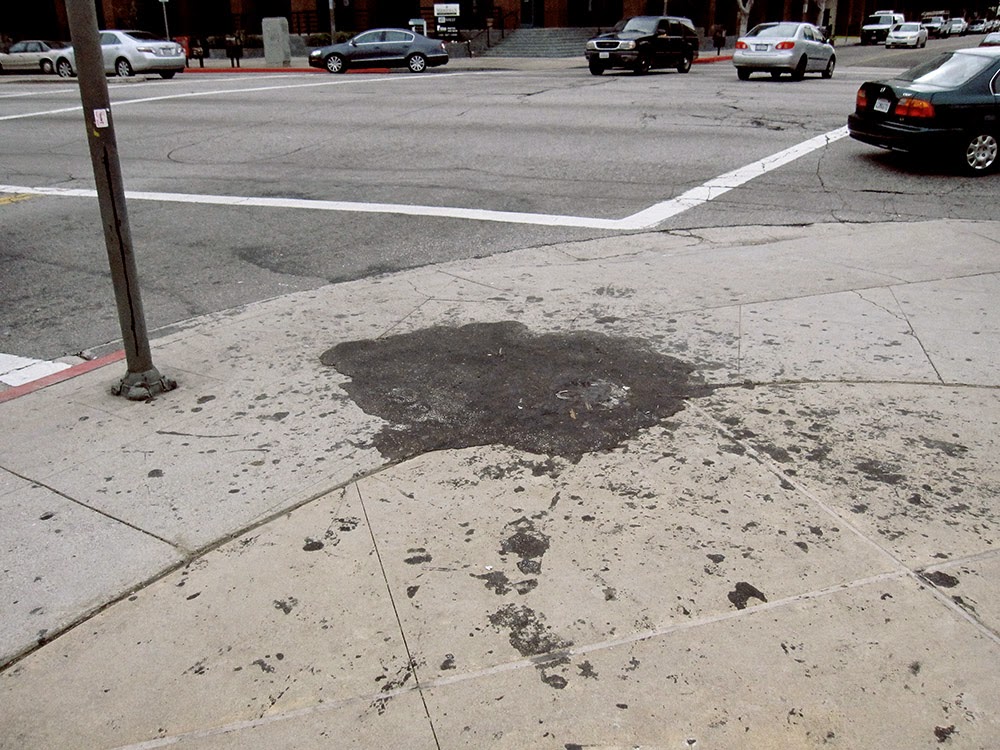
[Image: Tar pushes up through cracks in the sidewalk on Wilshire Boulevard, near the La Brea Tar Pits; photo by Geoff Manaugh].

In other words, precisely because they are so dangerous, the tar pits are a veritable archive of extinct species; these include mastodons, saber-toothed tigers, and dire wolves, examples of which have been found fatally mired in the black mess seeping up from the deep. Groups of these now long-dead creatures once wandered across an otherworldly landscape of earthquakes and extinct volcanoes, an active terrain pockmarked with eerie bubbling cauldrons of flammable liquid asphalt.

What’s so interesting about contemporary life in Southern California is that this surreal, prehistoric landscape never really went anywhere: it’s simply been relegated to the background, invisibly buried beneath strip malls, car dealerships, and sushi restaurants. Every natural tar seep and artificial oil well here can be seen as an encounter with this older, stranger world trying to break back through into our present experience.

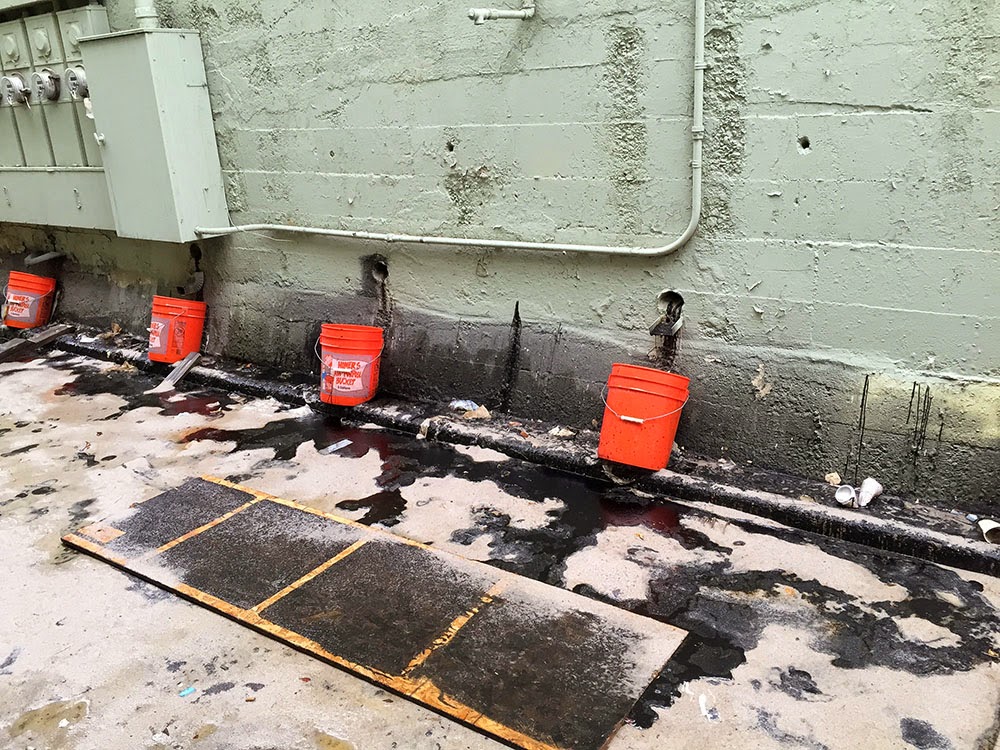
What humans choose to do with this primordial stuff leaking through the cracks can often be almost comical. Architect Ben Loescher, who has given tours of the region’s oil infrastructure for the Center for Land Use Interpretation, points out that many buildings near Lafayette Park must contend with a constant upwelling of asphalt. He sent me a photograph showing a line of orange utility buckets arranged as an ingenious but absurd stopgap measure against the endless and unstoppable goo.

[Image: A makeshift system for capturing the near-constant tar and liquid asphalt leaking up from below a building near Lafayette Park; photo by Ben Loescher].

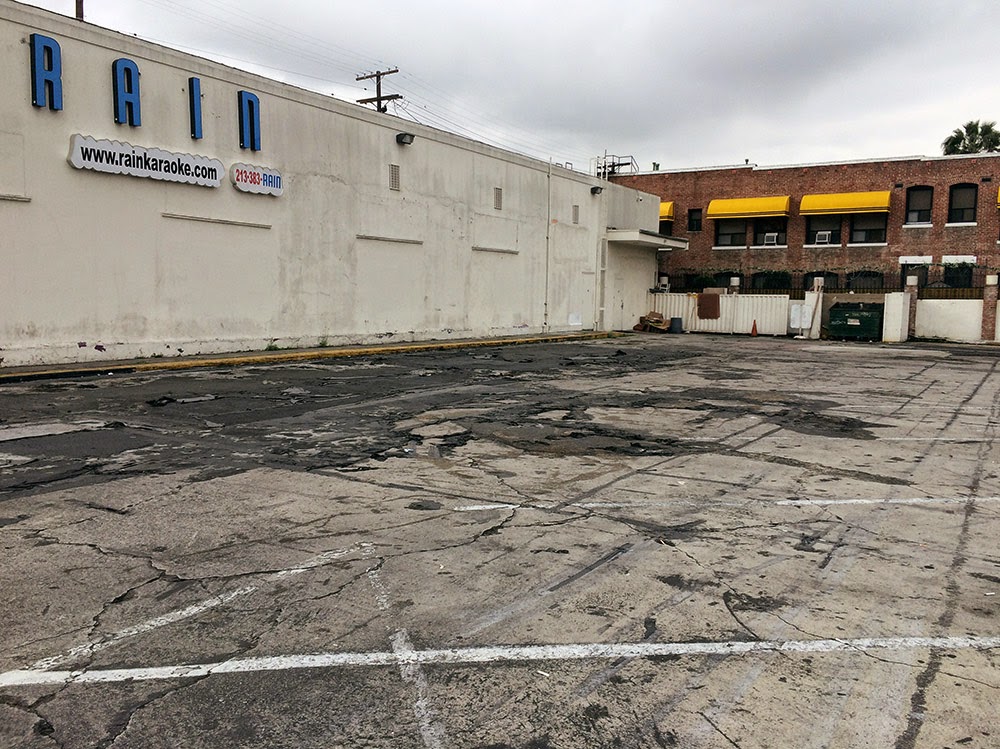
Nearby, Loescher added, parking lots are a great place to see the onslaught. Many are constantly but slowly flooding with tar and asphalt, to the point that one lot—run by a karaoke club—is struck so badly that the tar is actually visible on Google Maps. “That parking lot is riddled with seeps, as well. When it gets hot, the parking lot sort of re-asphalts itself,” Loescher explains, “and they have to put down tarps on top of it so the cars don’t get stuck.” A much larger gravel lot across the street also exhibits multiple sites of seepage, as if pixelating from below with black matter.

Loescher emphasized that these sites are by no means limited to the La Brea Tar Pits. They can be found throughout the Los Angeles basin, beneath sidewalks, yard, parking lots, and even in people’s basements. To exaggerate for dramatic effect, it’s as if the premise of The Blob was at least partially inspired by a true story—one that has been taking place for hundreds of thousands of years throughout Southern California, and that involves, instead of a visitor from space, something ancient and pre-human forcing its way up from below.

[Image: Liquid asphalt leaking upward into the parking lot of a Los Angeles karaoke club; photo by Geoff Manaugh].

In a short book called Making Time: Essays on the Nature of Los Angeles, writer William L. Fox explores the remnant gas leaks and oil seeps of the city. At times, it reads as if he is describing the backdrop of a Hieronymus Bosch painting. Such is the strange and permanent apocalypse of 21st-century L.A.

Fox writes, for example, that “a methane vent opened up in the middle of Fairfax Street” back in 1985, and that it “burned uncontrollably for days before it could be put out.” At night, it was a world lit by flames. Astonishingly, he adds, in 1962 “a Hawthorne woman had a fire under her house—a house with no basement. She located the source of the problem when she went outside and touched a match to a crack in the sidewalk: A flame ran down to it.”

This city where sidewalks burn and sewers fill with oily ooze is a city built here almost specifically for that very reason; Los Angeles, in many ways, is a settlement founded on petroleum byproducts, and the oil industry for which the city was once known never actually left. It just got better at hiding itself.

It is already well known that there are oilrigs disguised in plain sight all over the city. The odd-looking tower behind Beverly Hills High School, for example, is actually a camouflaged oilrig; an active oil field runs beneath the classrooms and athletic fields. Even stranger, the enormous synagogue at Pico and Doheny is not a synagogue at all, but a movable drilling tower designed to look like a house of worship, as if bizarre ceremonies for conjuring a literal black mass out of the bowels of the Earth take place here, hidden from view. If you zoom in on Google Maps, you can just make out the jumbles of industrial machinery tucked away inside.

However, amidst all of this still-functional oil infrastructure, there are ruins: abandoned wells, capped drill sites, and derelict pumping stations that have effectively been erased from public awareness. These, too, play a role in the city’s subterranean fires and its poisonous breakouts of black ooze.

As Fox explains in Making Time, a labyrinth of aging pipelines and forgotten wells crisscrosses the city. He explains that the Salt Lake Oil Field—which underlies the La Brea Tar Pits, sprawls below an outdoor shopping center known as The Grove, and continues deep into the surrounding neighborhoods—once contained as many as 1,500 operative oil wells. However, most of these “have long since been abandoned and are virtually invisible,” he writes, and, alarmingly, “roughly 300 are unaccounted for.”

These “unaccounted for” oil wells are out of sight and out of mind—but it should not be assumed that they are safely or permanently capped. Indeed, the Salt Lake Oil Field actually “appears to be repressurizing with oil and water,” like an underground blister come back to life, Fox writes. This only raises the stakes of “a hazard already complicated by the lack of knowledge about the exact location of all the wells on the property.” Only 10 years ago, for example, “an orphaned well in Huntington Beach blew out in a gusher forty feet high, spraying oil and methane over one-half square mile, a hazardous-waste problem that will become more common.”

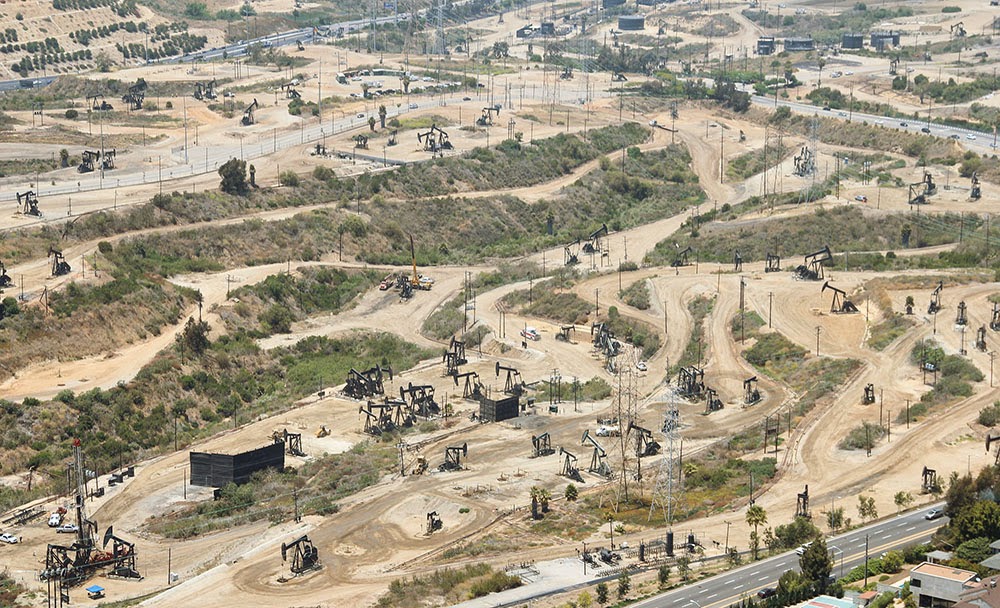
[Image: The Baldwin Hills old field; photo by Geoff Manaugh].

Due to its centrality, the Salt Lake field plays an outsized role in terms of strange petroleum events in the city. The Salt Lake was behind the multiday methane fire in the middle of Fairfax Avenue, for example, and behind arguably the most well known and certainly most destructive reminder of the city’s subterranean presence.

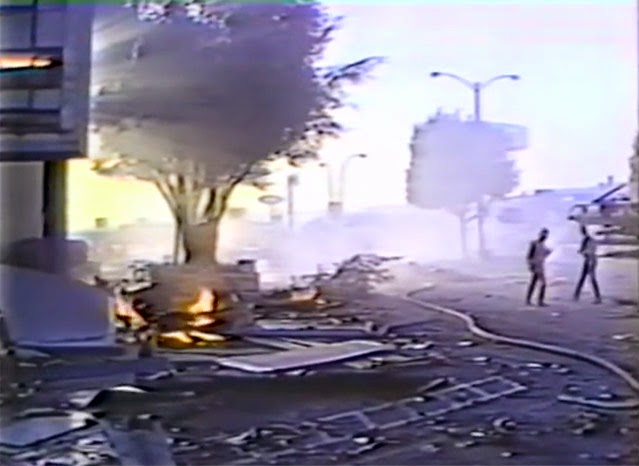
In 1989, in a busy strip mall at Fairfax and 3rd Street, a Ross Dress for Less began to fill with methane gas leaking up from a large pocket connected to the oil field below. Somehow, it had broken through the natural clay boundary that should have held it in place, and the methane thus easily seeped up into the storage rooms, closets, and retail galleries of the discount clothing giant.

Before long, the methane ignited and the entire store blew up.

[Image: Screen grab from YouTube].

This was by no means an insubstantial explosion—you should watch the aftermath on YouTube—as the entire façade of the building was blown to pieces, the roof collapsed, and dozens of people were disfigured by the detonation.

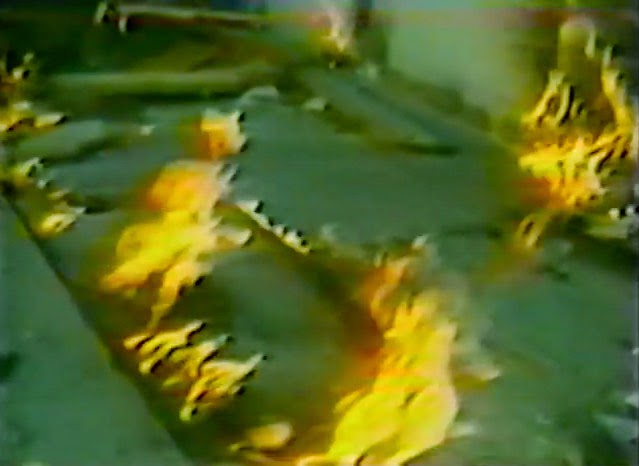
The resulting fires burned for hours. Small fires roared out of nearby sewer grates, and red and orange flames flickered out of even the tiniest cracks in the sidewalk, like some weird vision of Hell burning through the discount blouses and cheap drywall of this obliterated shopping center.

[Image: Flames burn through cracks in the sidewalk; screen grab from YouTube].

While reporting the tragedy, a local newscaster worryingly informed his viewers that it was simply “too early to tell where or when [the methane] might surface again”—in other words, that there could very well be further explosions. This paranoia—that there is something down there, some inhuman Leviathan stirring beneath the city, and that no one really knows when and where it will strike next—continues to this day.

Even at the time of the explosion, the possibility that city workers might inadvertently drill into a methane pocket beneath the neighborhood became one of the chief reasons for blocking the construction of a new subway line in the area. This same fear has recently resurfaced as the number one excuse for blocking a proposed subway through Beverly Hills.

Back in 2012, local parents released a video urging the city to stop the expansion of subterranean public transit through their neighborhood, concerned that it would cause Beverly Hills High School to explode. (The fact that stopping the subway would also keep certain economic undesirables out of their streets and shopping districts was just a fringe benefit.)

In any case, the narrative resonance of all this is impossible to deny. Formless and ancient things from the depths of our planet move beneath the city, unexpectedly setting fire to sidewalks and burning whole businesses to the ground. Taken out of context, this could be the plot of a new horror film—but it’s just urban life atop a still-active oil field.

As Matthew Coolidge, director of the Center for Land Use Interpretation, explained it to me, the city “is really just a giant scab of petroleum-fueled activities,” an impermanently sealed cap atop this buried monstrosity.

It is worth considering, then, next time you step over a patch of tar on the sidewalk, that the black gloom still bubbling up into people’s yards and basements, still re-asphalting empty gravel parking lots, is actually an encounter with something undeniably old and elementally powerful.

In this sense, Los Angeles is more than just a city; it is a kind of interface between a petrochemical lifestyle of cars and freeways and the dark force that literally fuels it, a subterranean presence that predates us all by millions of years and that continues to wander freely beneath L.A.’s tangled streets and buildings.

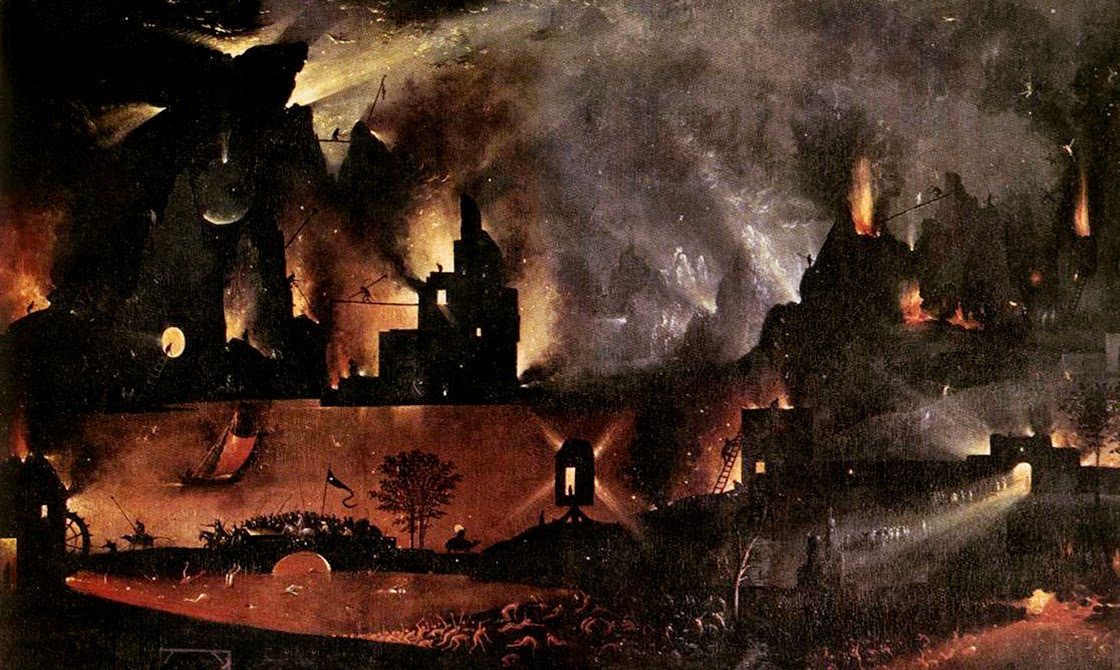
(Note: This piece was originally published on The Daily Beast. I have also written about the La Brea Tar Pits and William L. Fox’s book in Landscape Futures. Opening image: a close-up of Hell, from “The Garden of Earthly Delights” by Hieronymous Bosch, Museo del Prado, Madrid, Spain).

American Mine

[Image: “American Mine (Carlin, Nevada 2, 2007)” by David Maisel].

The following essay was previously published under the title “Infinite Exchange” in Black Maps by David Maisel (Steidl), as well as in Cabinet Magazine #50.

1.
In a 2011 paper on the medical effects of scurvy, author Jason C. Anthony offers a remarkable detail about human bodies and the long-term presence of wounds.

“Without vitamin C,” Anthony writes, “we cannot produce collagen, an essential component of bones, cartilage, tendons and other connective tissues. Collagen binds our wounds, but that binding is replaced continually throughout our lives. Thus in advanced scurvy”—reached when the body has gone too long without vitamin C—“old wounds long thought healed will magically, painfully reappear.”

In a sense, there is no such thing as healing. From paper cuts to surgical scars, our bodies are catalogues of wounds: imperfectly locked doors quietly waiting, sooner or later, to spring back open.
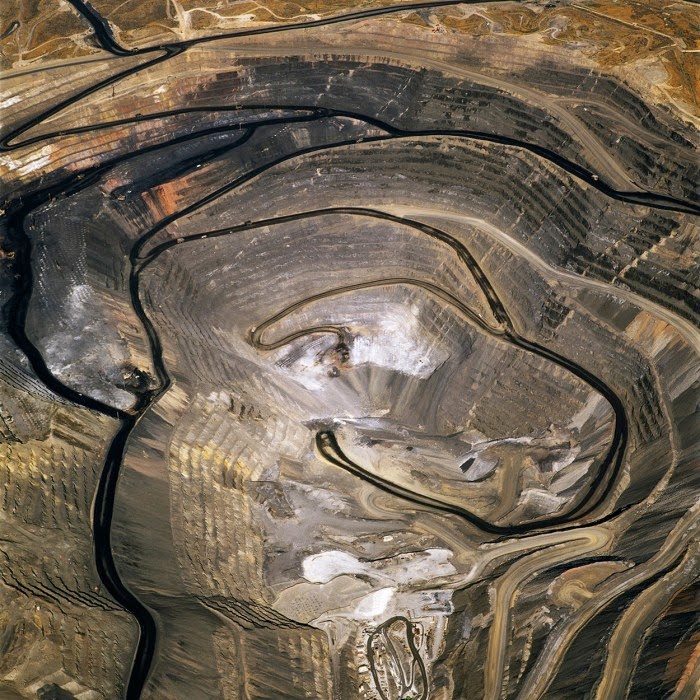
[Image: “American Mine (Carlin, Nevada 5, 2007)” by David Maisel].

2.
The Carlin Trend was discovered in north-central Nevada, near the town of Elko, in 1962. Some fifty years later, at this time of writing, it remains one of the world’s largest actively mined deposits of gold ore. In fact, the region has become something of a category-maker in the gold industry today, which describes analogous landscapes and ore bodies as “Carlin-type” deposits. The Carlin Trend is a standard, in other words: a referent against which others are both literally and rhetorically measured.

The trend’s discovery and subsequent exploitation—and the extraordinary negative landforms that have resulted from its exhumation—has been a story of nineteenth-century U.S. mining laws, legally dubious provisions governing public land, extraction industry multinationals, advanced geological modeling software, specialty equipment few people can name let alone operate, and genetically modified bacteria mixed into vats of gold-harvesting slurry.
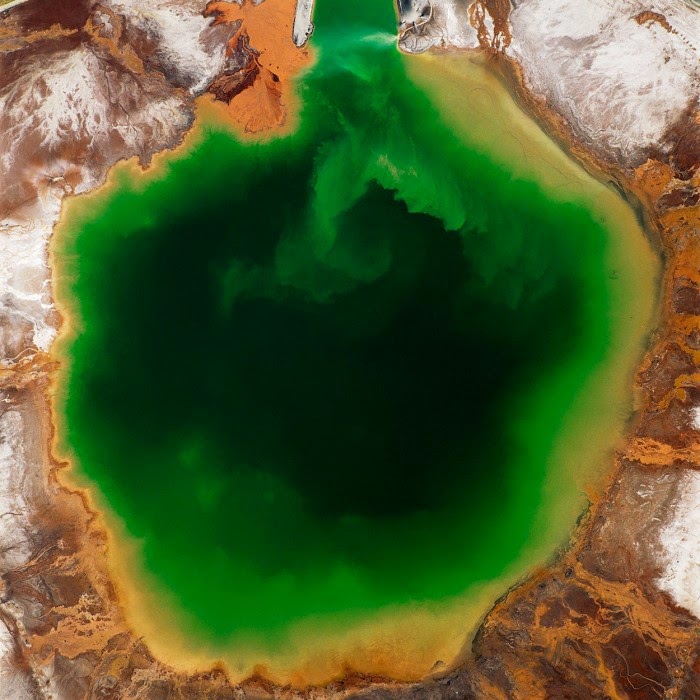
[Image: “American Mine (Carlin, Nevada 1, 2007)” by David Maisel].

Writing in 1989, John Seabrook of The New Yorker pointed out that, in the previous eight years alone, more gold had been mined from the Carlin Trend “than came out of any of the bonanzas that feature so prominently in our national mythology, including the California bonanza of 1849.” That’s because gold in the region is all but ubiquitous, peppered and snaked throughout Nevada:

There is gold in the Battle Mountain Formation, the range that runs southeast of town; gold in the alluvium to the west; gold in the Black Rock Desert to the northwest; gold in the Sheep Creek Range and in the Tuscarora Mountains to the northeast. The Tuscaroras are especially rich. Along the Carlin Trend, a forty-mile stretch of this range, are twelve deposits. Some people believe that a much richer swatch of ore, a deposit to rival South Africa’s Gold Reef, runs unbroken under the Carlin Trend, perhaps three thousand feet down—more than three times as deep as the deepest mines there now go.

“Some people believe”: more is hidden in the apparent neutrality of Seabrook’s phrase than we might at first suspect. Mining for gold—the actual, violent excision of waste rock from the earth, searching for ore—is never a question of finding a perfect, shiny lump of solid metal and carefully, surgically removing it from the planet. Gold is diffuse. It is now more often mined as particles, not blocks or even nuggets. Like glitter, it is scattered throughout the rocks around it.

In fact, the presence of gold, in many cases, can only be inferred. The angle at which local rock strata dip back into the planet, the direction water flows through the landscape, or the complex of other minerals and crystals locked in the rocks underground: these all, to varying degrees, act as telltale signatures for the famously coy king of metals.
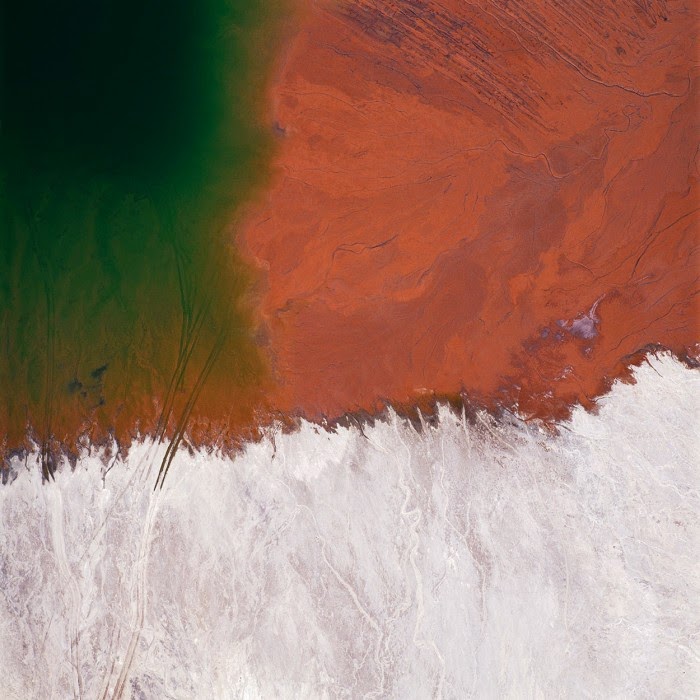
[Image: “American Mine (Carlin, Nevada 18, 2007)” by David Maisel].

Looking for these signatures entails a peculiar mix of local folklore and verified science, and the hunt—sometimes life-consuming, sometimes maddening—for signs is exhaustively documented by what Seabrook calls “prospecting paraphernalia: geological reports, assay figures, maps, contracts, aerial photographs, electromagnetic surveys, gravitometer readings, lawsuits, letters from people who think they have gold on their property, letters from people who know people who have gold on their property.”

Gold is less discovered, we might say, than interpreted.

The Carlin Trend has thus served as a test site, now in its fifty-first year, for various interpretive techniques, both scientific and superstitious. Specialty journals refer to the region’s “geochemical patterns”—only fragments of which are available to them to analyze for “the characteristics, signatures, and genesis of Nevada’s world-class gold systems”—the idea being that these might be found again elsewhere and thus be more instantly recognizable. Geologists track concentrations, contours, “metal zones,” and mineralized fractures; they build models of “stacked geochemical anomalies” in the earth below, hoping to piece together an accurate model of the gold ore’s location.
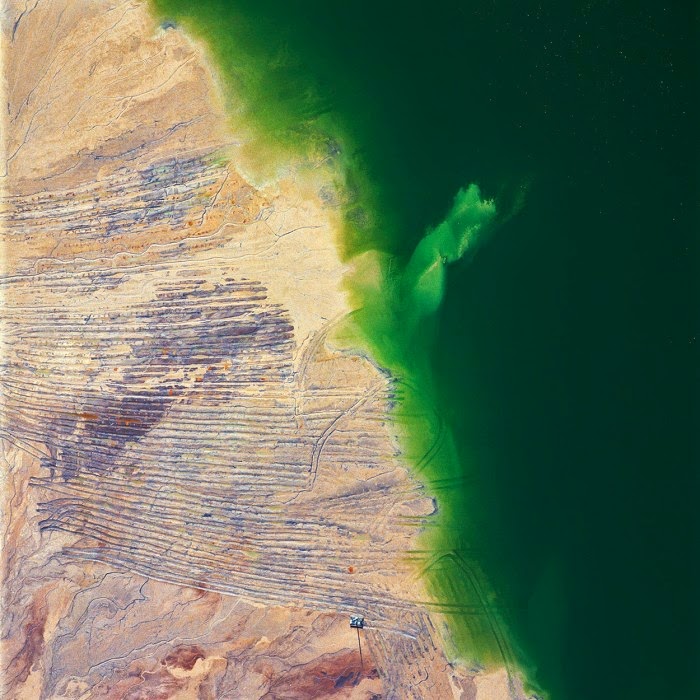
[Image: “American Mine (Carlin, Nevada 8, 2007)” by David Maisel].

Where the gold came from in the first place is yet another interpretive preoccupation. A paper—forthrightly titled “Is the Ancestral Yellowstone Hotspot Responsible for the Tertiary ‘Carlin’ Mineralization in the Great Basin of Nevada?”—suggests that the gold of the Carlin Trend is actually a thermal after-effect, or geochemical ghost, of the still-nomadic Yellowstone hotspot that once pulsed and geysered beneath Nevada.

The language used to describe these deposits is often extraordinary. We read, for instance, that discontinuous ore bodies apparently produced at different “stages of mineralization” in the earth’s history might, in fact, be “part of a single event that evolved chemically through time.” That is, one state-sized geological event—with titanic embryos merging and splitting inside the earth—delicately infused into the landscape from below as slow pulses of mineral-rich magmatic fluid freeze into spidery veins of precious metal. Or we read about “anomaly-related mineral assemblages,” millions of years’ worth of “mineralizing events,” and “geochemical halos in this part of the Carlin Trend.” Industrial descriptions of the earth’s interior lend an unexpected poetry to the act of mining.

Another way of saying all this is that mind-bogglingly large terrestrial events, occurring invisibly below ground in rock formations we can only measure indirectly—scanning the earth for hidden signatures—produce ore bodies, the excavation, dismemberment, and eventual global distribution of which shapes human economic history in turn.
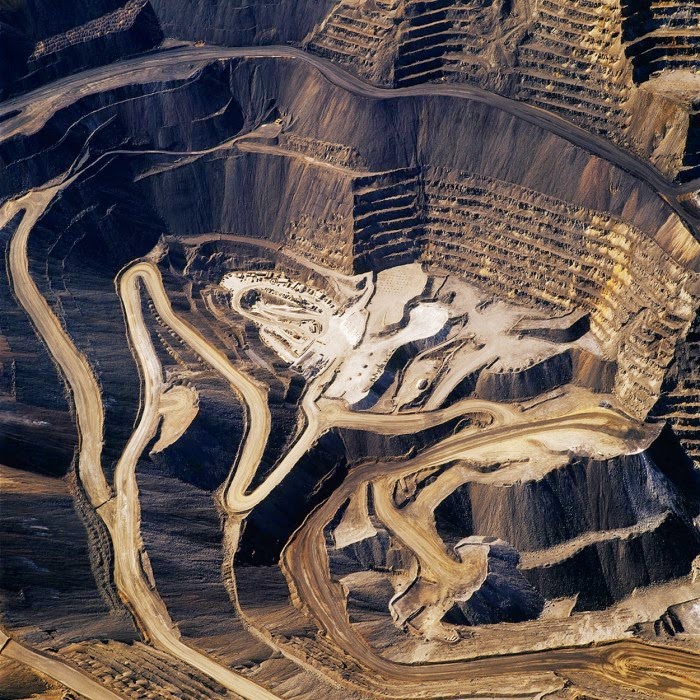
[Image: “American Mine (Carlin, Nevada 10, 2007)” by David Maisel].

In any case, the form of a gold deposit itself must be mapped and clarified before excavation can begin. The shape of the ensuing pit is not the result of frantic, directionless digging, but of a carefully controlled design process. The word “design” is used deliberately here, even if the shape of the pit is orchestrated not by aesthetics but by the needs of financial rationality. Using proprietary graphics software—similar in function to visual effects programs used in film, gaming, and architecture—the ore body is predictively 3D-modeled.

Mining, at this point, becomes less an act of extraction than of physical verification: machines and their profit-minded operators pursue the outlines of a virtual form by gradually expanding the mine’s target zones, in effect checking to see if the geologists’ models were right.

As architect Liam Young suggested in a recent interview, conducted after he returned from leading a group of design students on a research trip to the gold mines of Western Australia,

mining engineers are basically designers. They develop all these fragmentary data into models, which become the design of the pit itself. … But then what happens is, based on gold prices, the pit model changes. In other words, if the gold price or the mineral price is higher, then the pit gets wider as it becomes cost-effective to mine areas of lower concentration. This happens nearly in real time—the speed of the machines digging the pit can change over the course of the day based on the price of gold, so the geometry of the pit is utterly parametric, modeling these distant financial calculations.

In essence, Young suggests, mining engineers produce and explore speculative models of gold distribution in the rocks below ground. Using surprisingly low-res data taken from seismic tests and weighing that data against equipment availability, labor costs, and, most importantly, the internationally recognized price of gold, the extraordinary ballet of machines can begin.

This then becomes predictive on a much larger scale, as well. By constantly refining their models of how exactly gold forms in the first place, and where and how it can be mined most effectively, geologists can understand where—and, to some extent, predict when—future ore bodies might accumulate. Interestingly, these future deposits will appear on a timescale that far exceeds human civilization—so, while human miners most likely won’t be around to exploit them, it’s nonetheless intriguing to know that serpent-like veins of precious metal are incubating in the darkness beneath us.
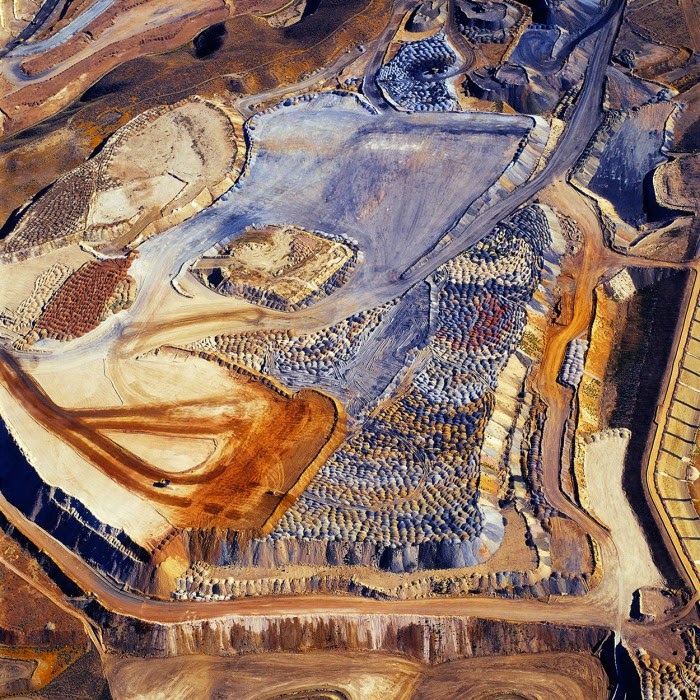
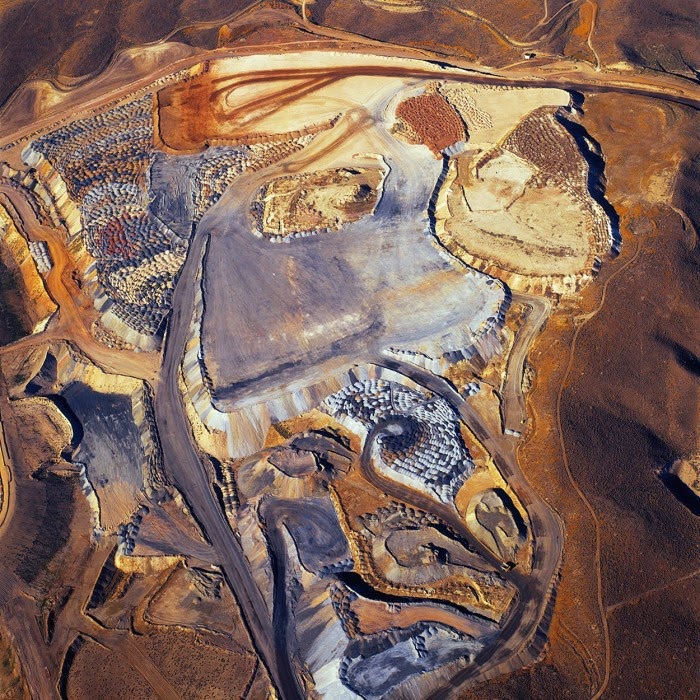
[Images: (top) “American Mine (Carlin, Nevada 12, 2007)“; (bottom) “American Mine (Carlin, Nevada 13, 2007),” by David Maisel].

Here we return to Seabrook, who warns that “there is a good deal of poetry in these figures,” of ounces mined and subterranean veins discovered. “They are based on statistical models, a kind of three-dimensional game of connect the dots played by a computer.”

These are then treated explicitly and formally as works of art: Seabrook points out “a computer-generated three-dimensional picture of the ore body, dry-mounted and framed,” hanging on a geologist’s office wall. Call it the new Subterranean Romantic:

Mining people have a habit of stretching the metaphor when they talk about their ore bodies. They say how beautiful, how satisfying, how tantalizing their ore body is, they make hourglass shapes with their hands, knead with their fingers, smooth with their palms as they talk.

These gorgeous bodies, removed from the earth, leave scars: precisely designed but roughly implemented holes—exit wounds of temporally contingent value—clearly and deliriously visible from above.
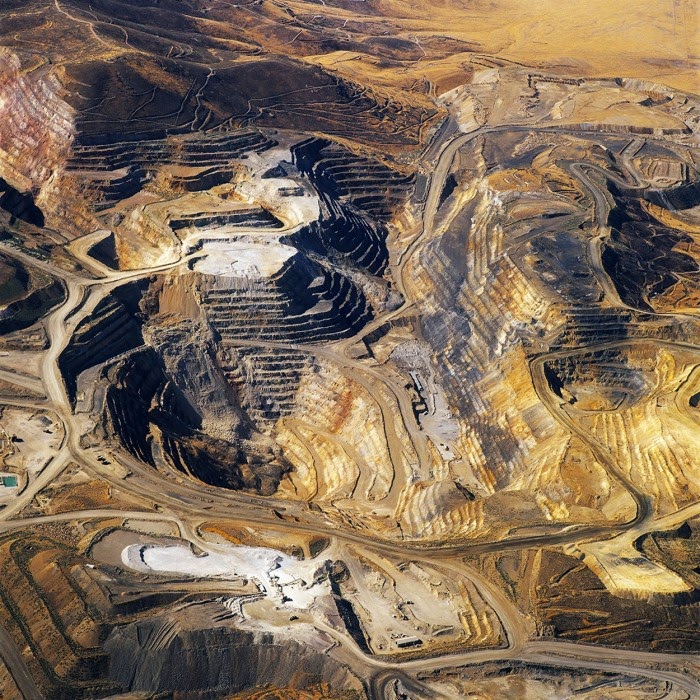
[Images: “American Mine (Carlin, Nevada 12, 2007)” by David Maisel].

3.
The very idea that gold has value is a funny thing. Aside from a few basic industrial uses, gold’s value is almost entirely ornamental—that is, it is agreed upon by financial traders and metals futures markets, even if no actual gold changes hands. Gold comes out of one, very carefully designed hole in the ground—whether in Nevada, South Africa, or Western Australia—only, most likely, to be interred again in another part of the world in a bank vault or federal reserve, where it is precisely gold’s removal from direct exchange that augments its value and its mystery.

Mystery is not used lightly. In his odd but insightful study of the various symbolic entanglements between gold, cocaine, violence, and colonial labor in South America, anthropologist Michael Taussig writes, with suitably mythic overtones: “How perfect is gold, the great shape-changer, the liquid metal, the formless form.”

This “formless form,” however, undergoes a strange—we might say alchemical—transformation, from shining metal to the rarefied super-object known as money. In a long description based on a memoir by Captain Amasa Delano, Taussig recounts the nineteenth-century process of minting coins from gold bullion:

The gold ore was wetted and kneaded by blacks treading on it with their feet on a paved brick surface after which they put mercury on it so as to separate out the gold. Then the metal was heated, becoming red as blood. To get the liquid metal to run from its crucible, the spout was touched with a stick with a piece of cloth around it. When this stick made contact, there was a flash and the metal began to run in a stream not much thicker than a pipe stem. The bars of gold formed were subsequently squeezed flat by rollers until the thickness of a dollar or doubloon, by which time the bars had become sheets four feet long. A powerful press cut coins out from these thin sheets like a cookie cutter, and the pieces were turned to receive a milled edge. Then came the weighing.

For Taussig, this process reveals the machinations “both mysterious and everyday” by which a mineral becomes money—that is, how “gold and silver coins become enchanted, material things, aglow with a power emanating from deep within.” This base matter has been transformed, given exchange-value through formal regularity and sent off to participate in a global system of monetary transactions.

Gold coins are thus but one of the “minutiae in which the supernatural is secularized”: a haunted mineral is pulled from the earth and given an uncanny second life elsewhere.
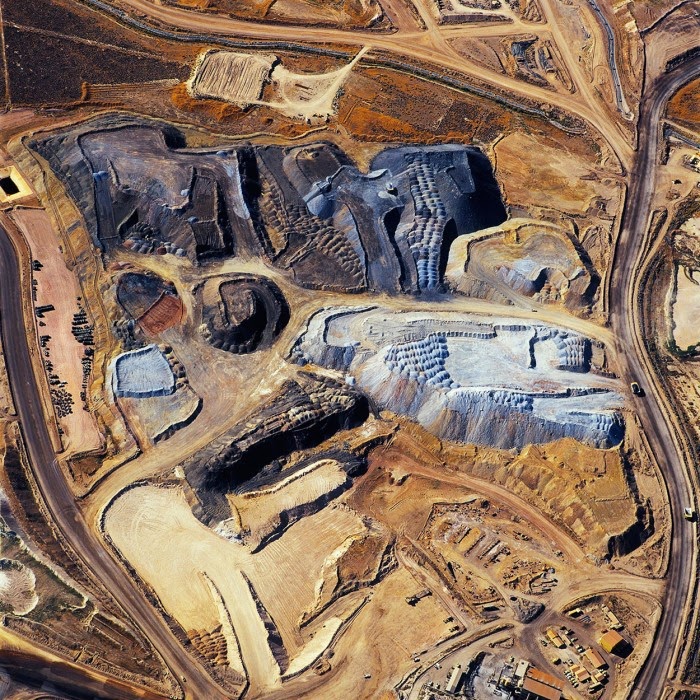
[Image: “American Mine (Carlin, Nevada 22, 2007)” by David Maisel].

The spectral mathematics that can turn reserves of gold into abstract instruments of monetary exchange—into financial products and debt instruments, derivatives and funds—operates through a barely comprehensible carnival of surrogates flashing back and forth through the global marketplace. Until the end of the Bretton Woods system in August 1971, when the US dollar was unilaterally decoupled from the international gold standard, gold served as a reliable, universally recognized equivalent for economic exchange.

Gold, in the words of Jean-Joseph Goux, himself citing Marx, had value precisely because it could so effectively disappear into the “circulation of substitutes.” This is a logic of exchange by which Object A can be traded for Object B, as long as we agree that Object B also refers, off-stage, to something else entirely: some standard or reserve for which it acts as a practical surrogate.

Before 1971, that off-stage presence—that silent original, sleeping in a state of eternal reservation—was gold.
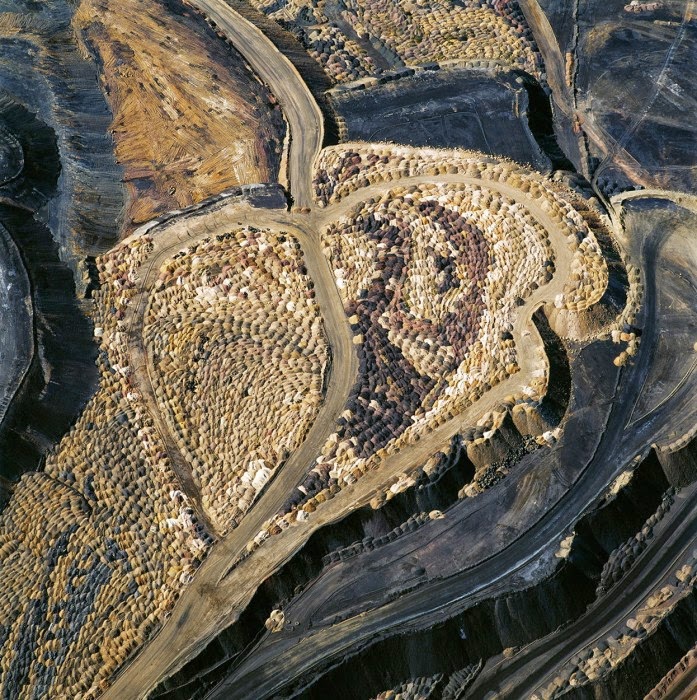
[Image: “American Mine (Carlin, Nevada 20, 2007)” by David Maisel].

To say, then, that there is an “economy” is thus to use shorthand for what Goux describes as “a regulated process of equivalents and substitutions,” whereby stand-ins, equivalents, and acceptable replacements all interact in occulted reference to an absentee original. The natural hard matter of gold, artificially extracted from the earth, thus becomes caught up in a supernatural system of objects: coins, bills, and derivatives—future duplicates and doubles.

In this context, the ongoing attempts to return the United States to the gold standard—by, for instance, perennial Republican presidential candidate Ron Paul—can be seen as an almost folkloristic attempt to put the genie of infinite derivative exchange back in the bottle.

Sites like Nevada’s Carlin Trend thus serve as base points for this process, emitting endless phantasms in an economic fiction of equivalents—derivative products that refer to one another in a superstition of indirect exchange referred to as the economy—to such an extent that we might say these mines can never be refilled. Or, more accurately, they can only be overfilled, stuffed beyond capacity with the carnival of substitutes their hollowing-out has, however inadvertently, unleashed.
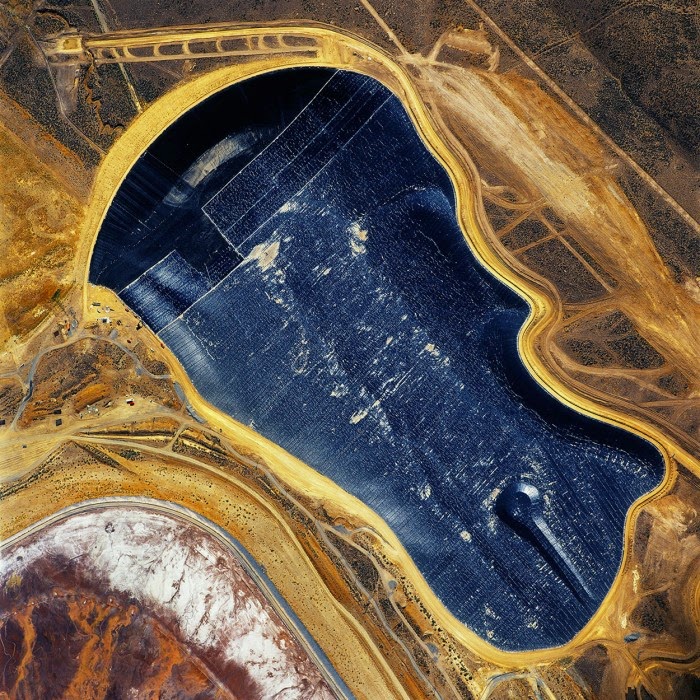
[Image: “American Mine (Carlin, Nevada 7, 2007)” by David Maisel].

4.
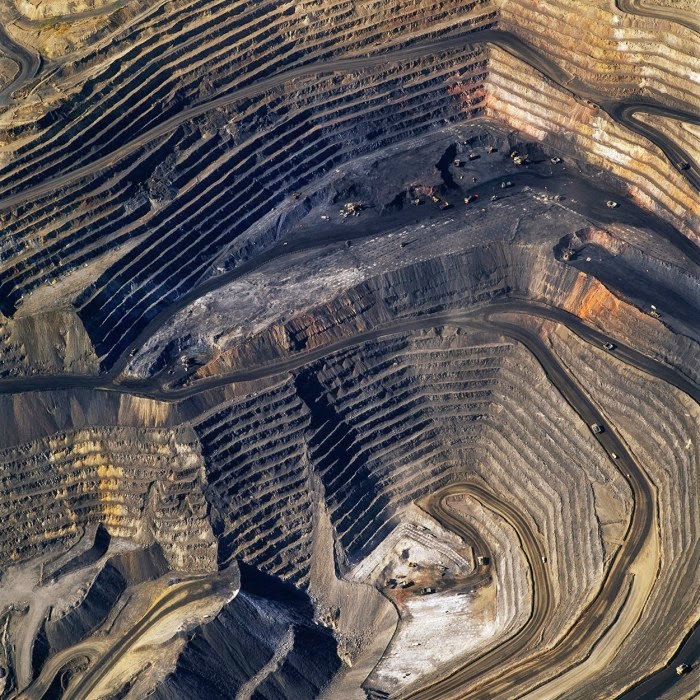
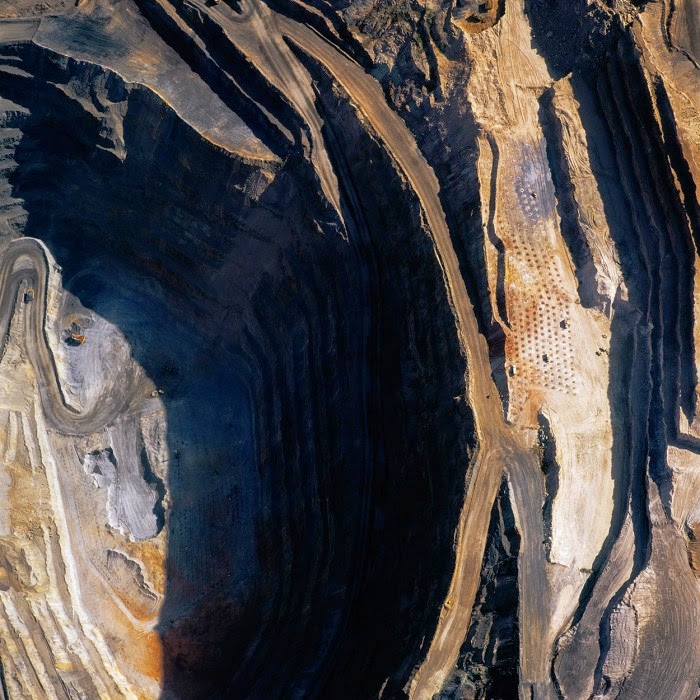
In 2007, David Maisel began work on a group of photographs called “American Mine,” part of a larger and older series known as “The Mining Project.” These images document, in extraordinary abstract swaths of color, the emergent geometries of mines along the Carlin Trend.

Scattered across Maisel’s images is a forensic survey of cuts and incisions—wounds that will outlive us, scars that won’t go away—older surgeries through which modernity has, in effect, been created. The mines of the Carlin Trend remain unhealed—in fact, year on year, they are growing—a raw scurvy of rocks exposed on a scale so monumental that geologists estimate mines, not cities, will be the final trace of humanity left visible in a hundred million years’ time.
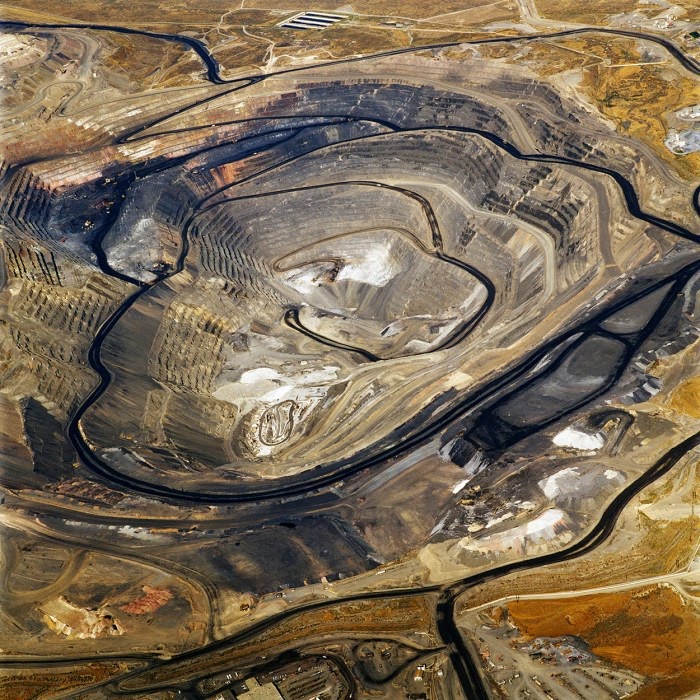
[Image: “American Mine (Carlin, Nevada 17, 2007)” by David Maisel].

Vast terraced bowls step down—and down and, impossibly, further down—tracking dead faults and mineralization fronts on a scale only made clear when we notice 16-ton trucks like specks of dust on canyon walls. Discolored oceans of chemical runoff wash across vehicle tracks with acid tides. Retaining walls and stabilized slopes loom over assembled superscapes of mine detritus, abandoned shells of industrial insects dwarfed by the world they’ve helped create.

In these scenes, geotextile mats have all but replaced the earth’s surface, offering instead a deathless, replicant topography. Artificial hills, each uncannily and exactly like its neighbor, roll from one side of the frame to the other, shifting in tandem with commodities prices, their malleable geography thus forever resistant to mapping. The mines grow and metastasize as voids: storm fronts of negative space exploding with their own slow thunder into the planet.
[Image: “American Mine (Carlin, Nevada 14, 2007)” by David Maisel].

What is of particular interest in Maisel’s “American Mine” series is its revelation of the injuries at the start of the commodity chain: planetary wounds, seemingly beyond the breadth of nature, out of which commodities have been extracted for later exchange.

The production of economically recognizable objects can thus be seen as a kind of terrestrial focusing: out of the chaos of the mine site, with great lakes clouded by geochemical effluent and abstract landforms like ritual mounds from human prehistory, pristine products eventually emerge, assembled from these heavy elements torn so roughly from the ground. Out of the carcinogenic discord of rock dust, circuit boards appear.

In a sense, it is surprising that the computers, phones, batteries, television sets, and other mundane electronics that fill the markets of the world are so free of this fallout, so astringently cleansed of the geological evidence of their own creation. Or perhaps we might say that it is precisely this stripping-away of a product’s elemental birth that gives it its later value and utility. Such products are ironically de-terrestrialized: washed of the very planet from which they came.

• • • 

I owe a huge thank you to David Maisel and editor Alan Rapp for inviting me to participate in the Black Maps book, which is an absolutely gorgeous compendium of Maisel’s work, as well as to Sina Najafi for his editorial feedback before this essay ran in Cabinet Magazine. You can see some photos of Black Maps over at the publisher’s website.

For those of you in Los Angeles, meanwhile, Maisel has a new show opening this spring—on March 26th, 2015—at the Mark Moore Gallery. Check back at this link in the weeks to come for more information.

Finally, if you would like to read some previous posts here on BLDGBLOG about Maisel’s work, don’t miss “The Fall” or “Library of Dust,” among many other short posts; and be sure to read the interview with David Maisel published in The BLDGBLOG Book.

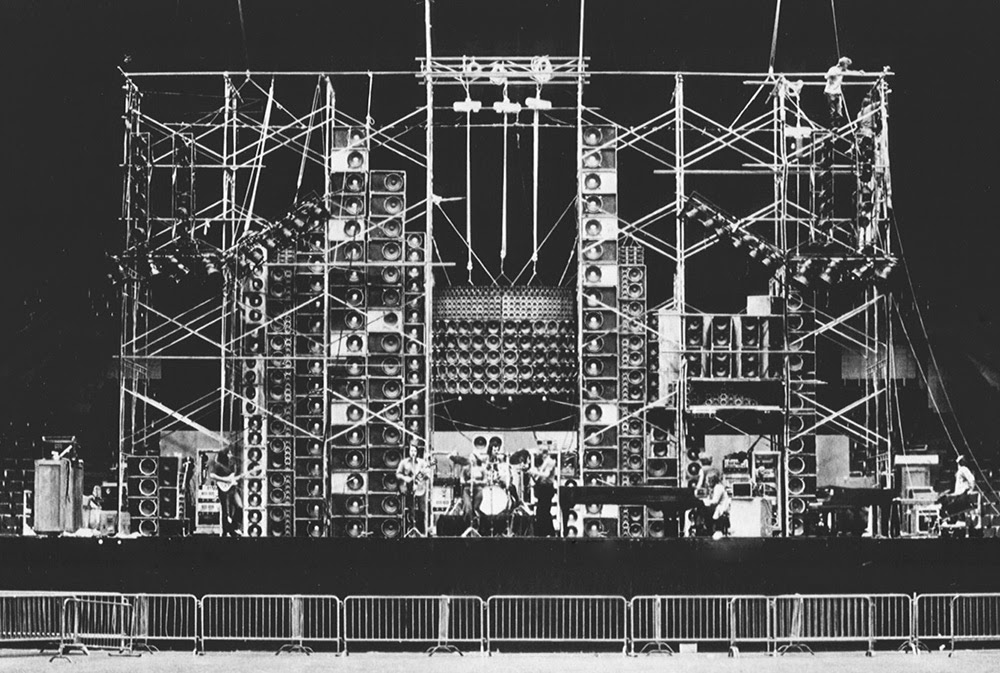
The Moving Mountain, or Terrain as Spectacle

[Image: Courtesy of the Los Angeles Times Photographic Archive, Department of Special Collections, Charles E. Young Research Library, UCLA, via KCET].

Nathan Masters remains one of the more interesting chroniclers of life and landscape in Southern California, as evidenced by his “L.A. as Subject” blog for KCET. I could (and should) just link to all his posts, to be honest—lost hills! buried rivers! conflicting grids!—but last week’s installment, albeit short, was particularly interesting.

“For a few days in late November 1937,” Masters writes, “it was the Southland’s greatest attraction—a landslide in slow motion, 1.5 million tons of an Elysian Park hillside creeping toward the Los Angeles River bed.”

Sensational news reports, printed in papers and broadcast on radio nationwide, described it as a “moving mountain,” and tourists came from afar to witness the geologic curiosity. One Oklahoma City police officer took a leave of absence to watch the slide. Two boys hopped freight trains from New York to see it. Some 10,000 sightseers came by the hour. Spectators pressed against police barricades along Riverside Drive, and enterprising vendors worked the throng like a baseball game, hawking peanuts, popcorn, and soda. Some even sold field glasses.

Even local astronomers showed up, telescopes in tow, in order to study the mobile mass, this blob of geology suddenly making a move into town.

After a catastrophic lurching of the slow-motion mountain, the terrain appeared to come to a standstill. “The next day, an estimated crowd of 500,000 converged on the site, munching on popcorn and hoping the mountain would move again.”

This pent-up dramaturgy of the landscape—the possibility that its newfound agency would continue—crawling, oozing, rolling, forcing its way into public consciousness—remains strong today, even if subsumed into other contexts.

In other words, I’d suggest that many Angelenos are still, in a sense, “munching on popcorn and hoping the [landscape] would move again,” and that this is the dark fascination of seismic instability, of what it means to live in an earthquake zone: that the land itself is active, motivated from within by a kind of a slow-motion sentience, a mineral energy that is as much an invigorating spectacle as it is an existential threat.

Read the rest of Masters’s post over at “L.A. as Subject.”

Algorithms in the Wild

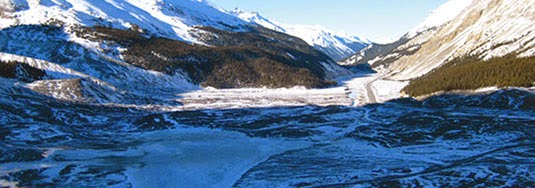
[Image: Jasper National Park, courtesy of Parks Canada].
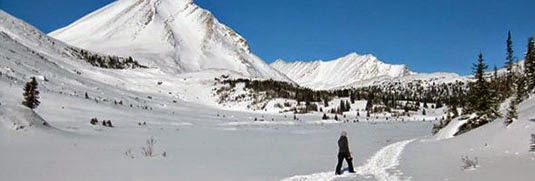
There’s an interesting article over at Highline Magazine about a lost hiker named George Joachim whose subsequent behavior in the landscape was so unexpected that he eluded discovery for ten days.

He was a “behavioral outlier,” we read, and his mathematically unpredictable actions forced a revision of the search algorithms used by Parks Canada for tracking human beings in the wild.

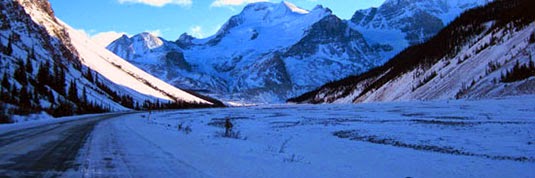
[Image: Jasper National Park, courtesy of Parks Canada].
From the story:

Parks Canada uses a statistical model to help predict where the lost person might be. The model uses data collected from similar lost person cases to learn the size and location of the search area. Combining the experience of the searchers and research on the lost person, the model then suggests the likelihood the person will be in various locations based on how previous people in their situation have behaved.
Joachim unintentionally misled searchers by listing his destination incorrectly in the climber’s registry, and then behaved so unlike other people previously have in his circumstance that he was repeatedly missed in the search. Parks Canada’s search and rescue community considers his case a valuable learning experience and have since tweaked search protocols to account for other behavioral outliers.

Put another way, this hiker exceeded the agent-based mathematical model used to track him. As a result, his searchers were forced to develop what the author calls the “Joachim profile,” a kind of makeshift simulation that, in theory, should have been able to predict where he’d pop up next.

The idea that human movement through the wilderness corresponds—or not, as the case may be—to a mathematical sorting algorithm is fascinating, especially when that model diverges so drastically from what a person really does out there.

In fact, it’s worth speculating that it is precisely in this divergence from accepted mathematical models of landscape use where we can find a truer or more “wild” experience of the terrain—as if certain activities can be so truly “wild” that no known algorithm is capable of describing them.

[Image: Jasper National Park, courtesy of Parks Canada].

In any case, it’s by no means the world’s most gripping story of human survival, but it’s a great example of human landscape expectations and the limits of abstract modeling.

Click over to Highline to read the whole thing.

A Cenotaph for Tailings

[Image: From “Mining Cenotaph” by Alexis Quinteros Salazar; courtesy of the RIBA President’s Medals].

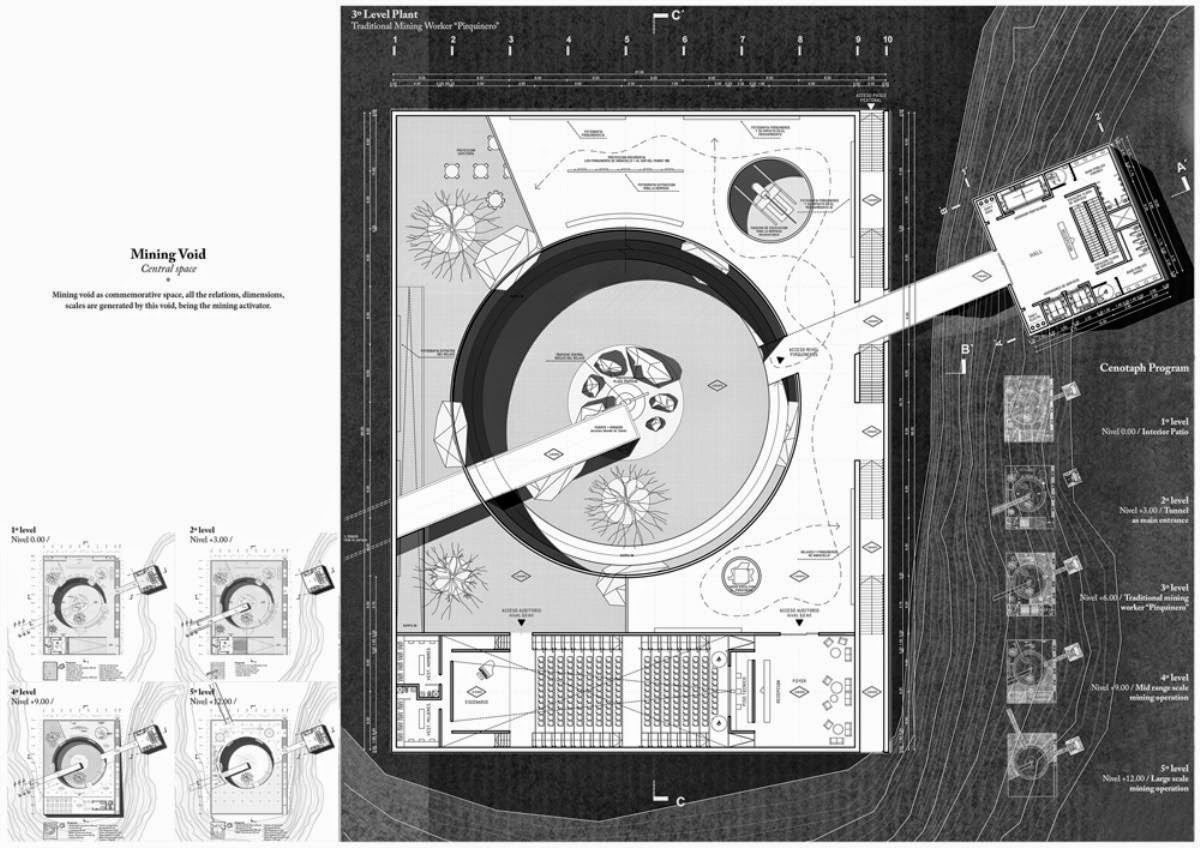
Here’s another project from the RIBA President’s Medals, this one by Alexis Quinteros Salazar, a student at the University of Chile in Santiago.

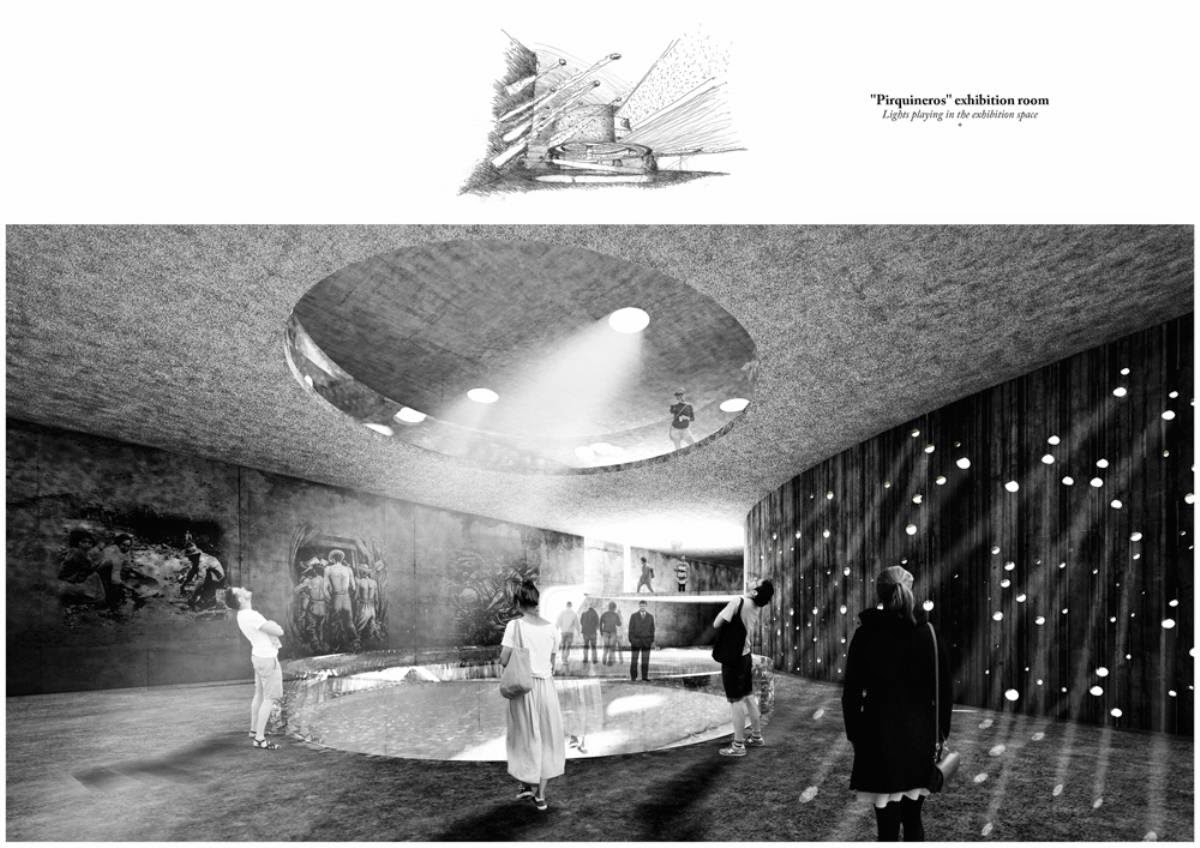
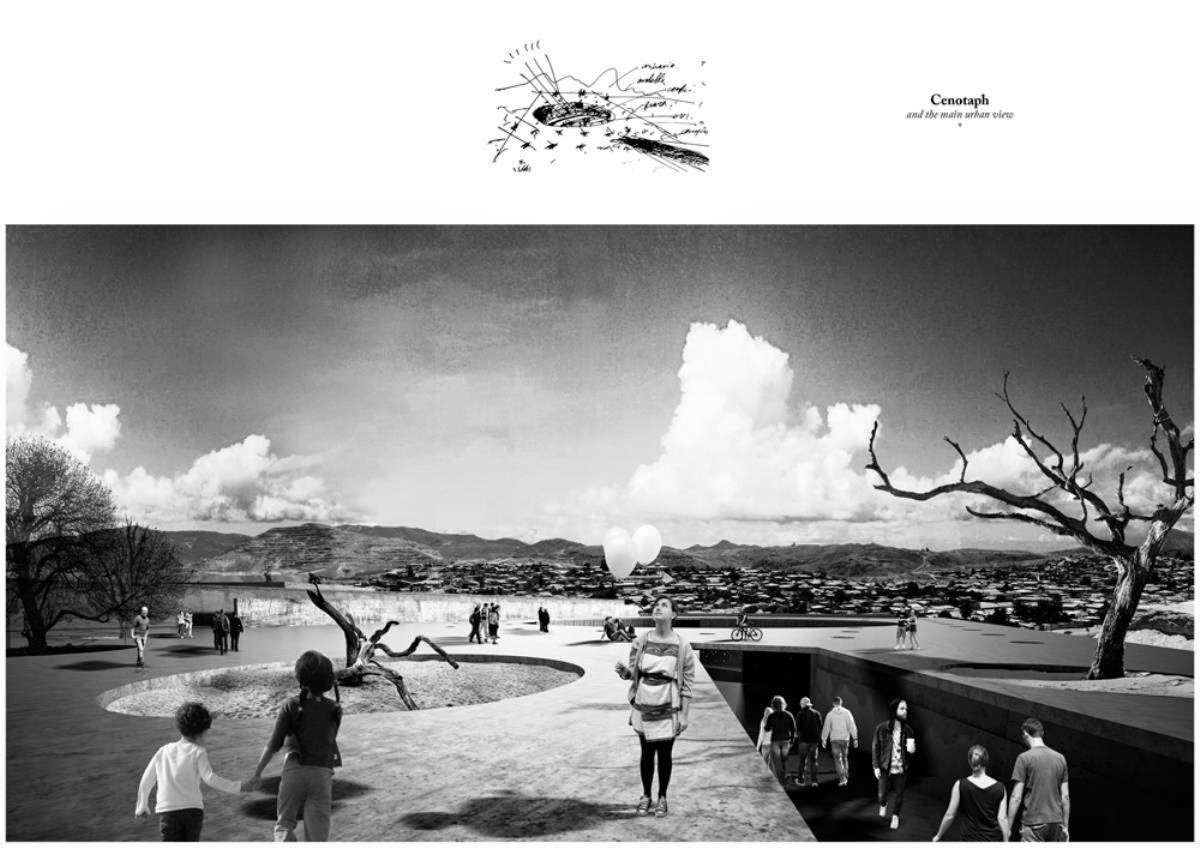
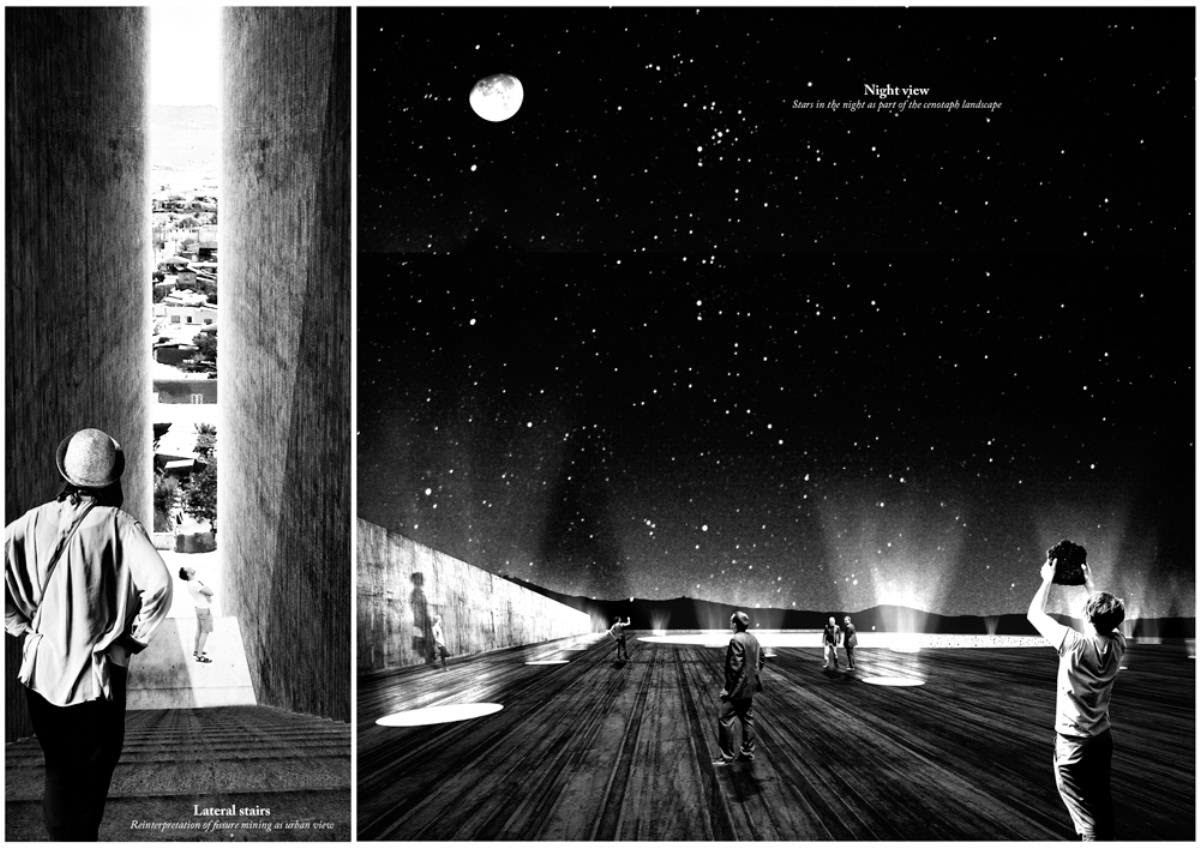
Called “Mining Cenotaph,” it imagines an “occupation” of the tailings piles that have become a toxic urban landmark and a spatial reminder of the region’s economic exploitation.

[Image: From “Mining Cenotaph” by Alexis Quinteros Salazar; courtesy of the RIBA President’s Medals].

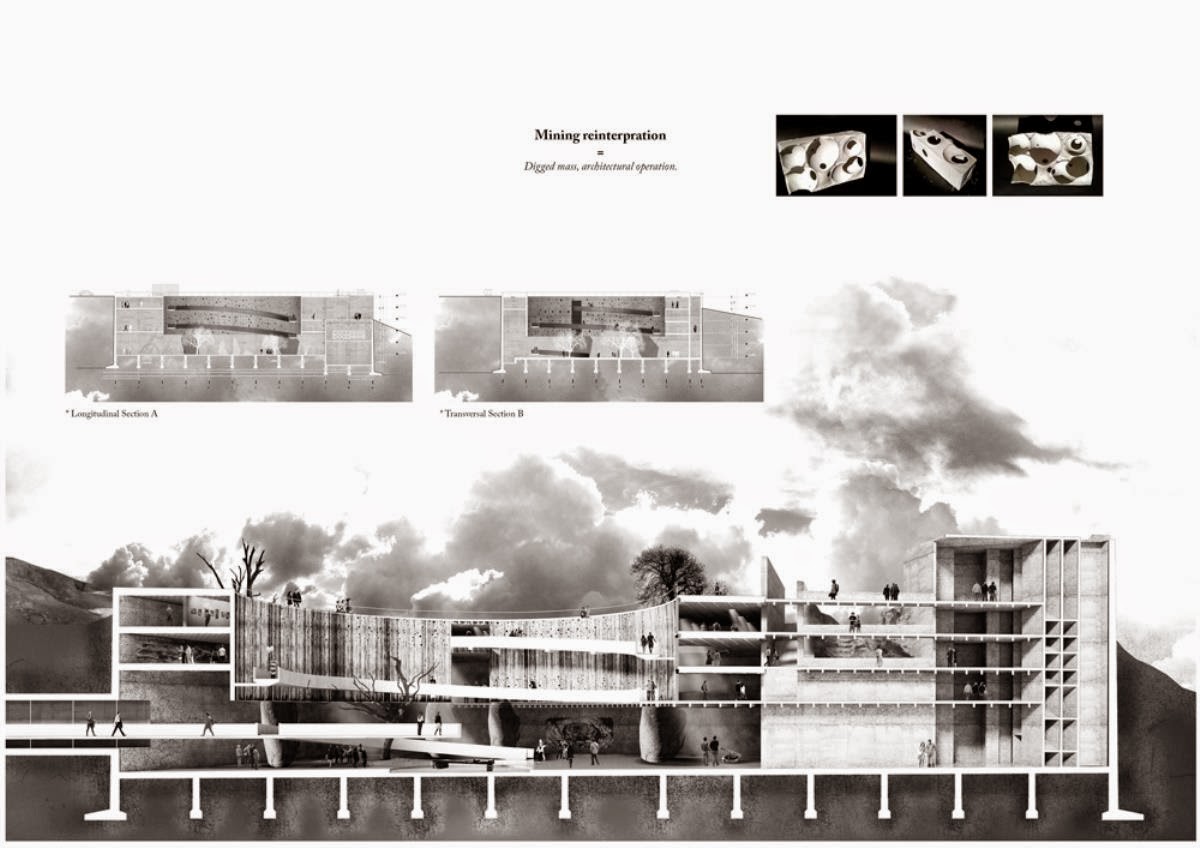
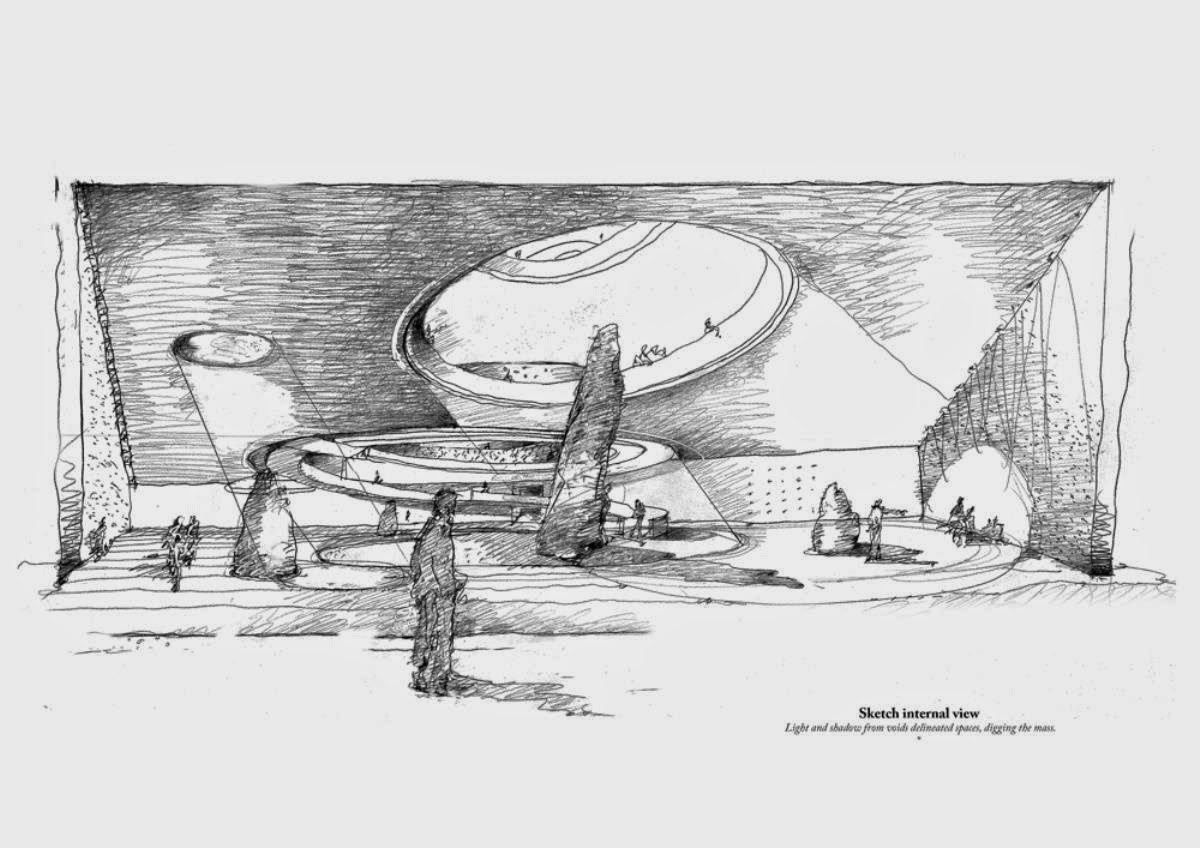
A museum would be carved into the tailings; in Salazar’s words, this would be a “building that captures the history and symbolism behind mining, enhancing and revitalizing a memory that is currently disaggregated and ignored and has a very high touristic potential.”

[Image: From “Mining Cenotaph” by Alexis Quinteros Salazar; courtesy of the RIBA President’s Medals].

In an architectural context such as this, the use of the word “cenotaph” is a pretty clear reference to Étienne-Louis Boullée’s classic speculative project, the “Cenotaph for Newton.” Over multiple generations, that has become something of a prime mover in the history of experimental architectural design.

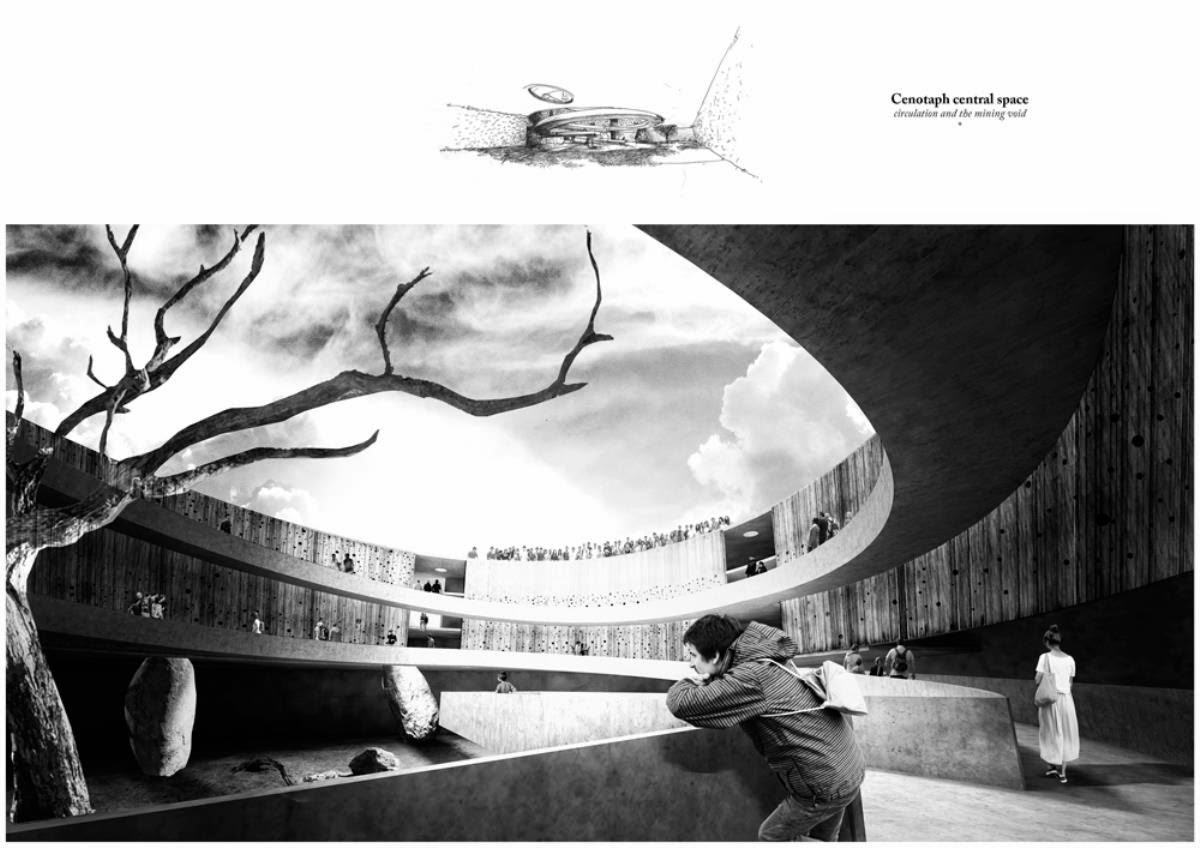
Punctured walls and ceilings bring light into the interior—

[Image: From “Mining Cenotaph” by Alexis Quinteros Salazar; courtesy of the RIBA President’s Medals].

—while the roof is a recreational space for visitors.

Of course, there are a lot of unanswered questions here—including the control of aerosol pollution from the tailings pile itself and that pile’s own long-term structural stability—but the poetic gesture of a public museum grafted into a pile of waste material is worth commending.

[Image: From “Mining Cenotaph” by Alexis Quinteros Salazar; courtesy of the RIBA President’s Medals].

The detail I might like this most is where the structure becomes a kind of inversion of Boullée’s dome, which was pierced to make its huge interior space appear illuminated from above by constellations. Here, instead, it is the perforations in the the rooftop that would glow upward from below, as if in resonance with the night skies high above.

[Image: From “Mining Cenotaph” by Alexis Quinteros Salazar; courtesy of the RIBA President’s Medals].

Salazar’s project brings to mind a few other proposals seen here over the years, including the extraordinary “Memorial to a Buried Village” by Bo Li and Ge Men, as well as Brandon Mosley’s “Mine Plug” (which actually took its name retroactively from that BLDGBLOG post).

Click through to see slightly larger versions of the images over at the RIBA President’s Medals website.

[Image: From “Mining Cenotaph” by Alexis Quinteros Salazar; courtesy of the RIBA President’s Medals].

Finally, don’t miss the Brooklyn food co-op posted earlier, also a recent President’s Medal featured project.

“We don’t have an algorithm for this”

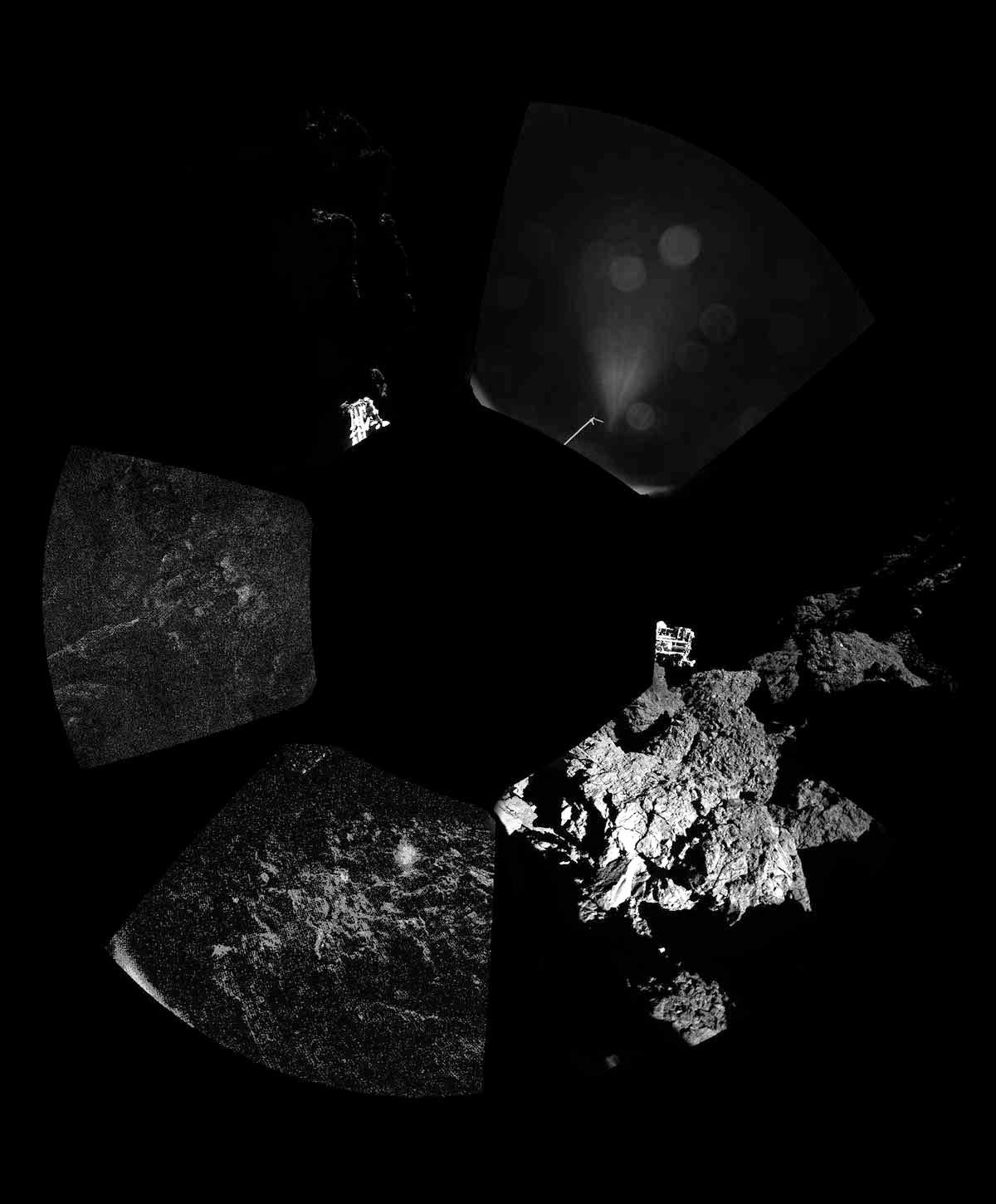
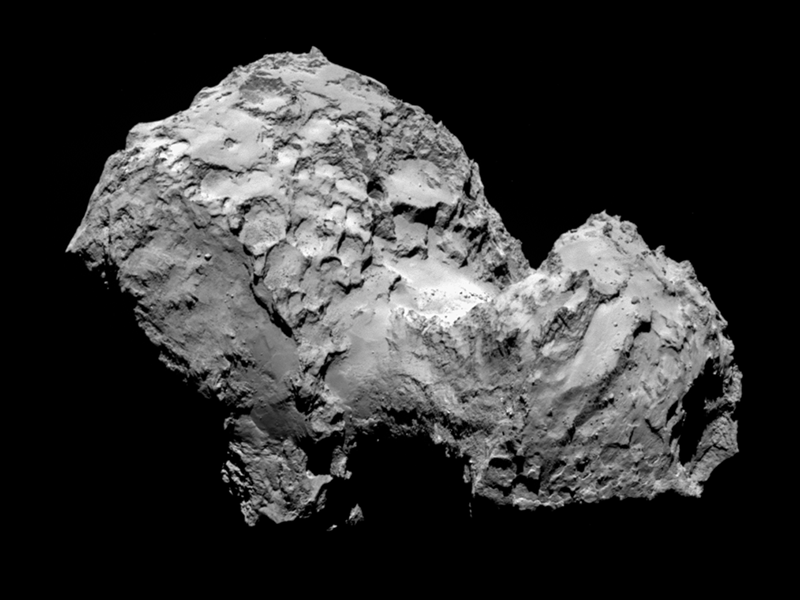
[Image: Comet 67P, via ESA].

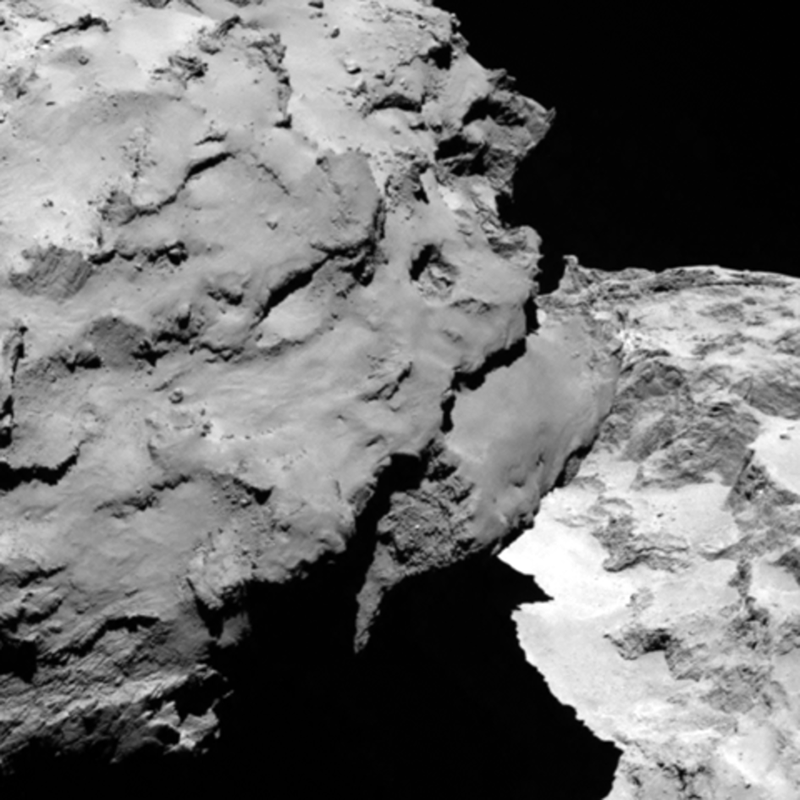
In the story of how European Space Agency researchers are scrambling to locate—and possibly move—the Philae probe, which they successfully landed on Comet 67P two days ago, there’s an interesting comment about computer vision and the perception of exotic landscapes.

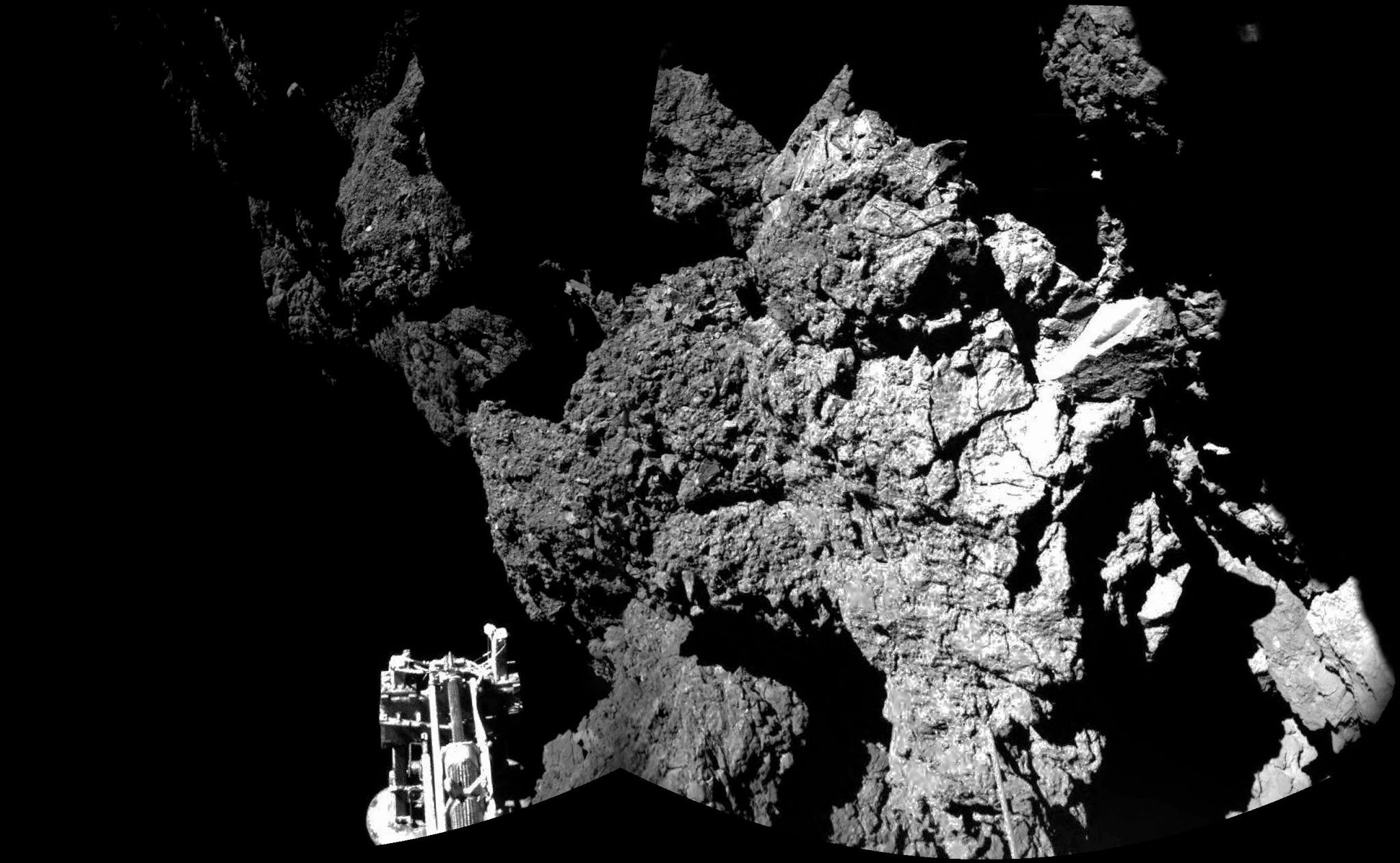
[Image: Comet 67P, via New Scientist].

“We’re working our eyes off,” one of the scientists says to New Scientist, describing how they are personally and individually poring over photographs of the comet.

“It’s an entirely manual process,” New Scientist continues, “because the complex and bizarre landscape of comet 67P defies any kind of automated search. ‘We don’t have an algorithm for this,’ he says.”

We don’t have an algorithm for this.

[Image: The irregular terrain of Comet 67P, via ESA].

It would be interesting to develop a taxonomy of landscapes based on their recognizability to algorithms. This would tell you as much about how computers see the world as it would about the aesthetic assumptions—even the geological biases—of the people who programmed those computers.

Think, for example, of Adam Harvey’s work, asking When Is An Apple No Longer An Apple? That project explored the point at which machine-learning algorithms could no longer distinguish the iconic fruit from a jumble of colorful objects.

Or take Harvey’s more recent CV Dazzle experiment, which looked at how to prevent facial recognition software from identifying a face at all through the clever use of cosmetic camouflage.

However, in the case of Comet 67P and other extreme topographic environments, we would be looking at when a landscape is no longer a landscape, so to speak, at least in terms of the computer-vision algorithms programmed to analyze it.

[Image: Comet 67P, via ESA].

What other landscapes fall within this category—of spatial environments unrecognizable to machines—and what do those spaces reveal about the dimensional prejudices of the algorithm? Light and shadow; depth and range; foreground and background; geometry and complexity.

Bump Adam Harvey’s investigations up to the scale of a landscape, and a million potential design projects beckon. Learning from Comet 67P.

(Earlier on BLDGBLOG: The Comet as Landscape Art).

Touchscreen Landscapes

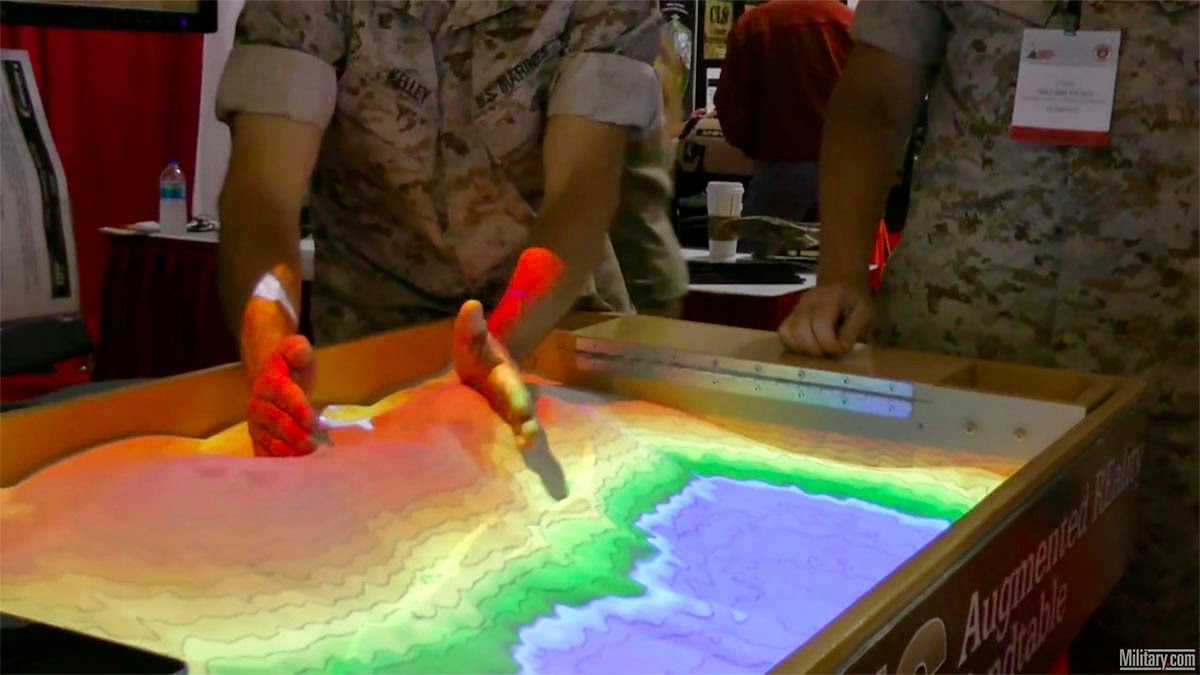
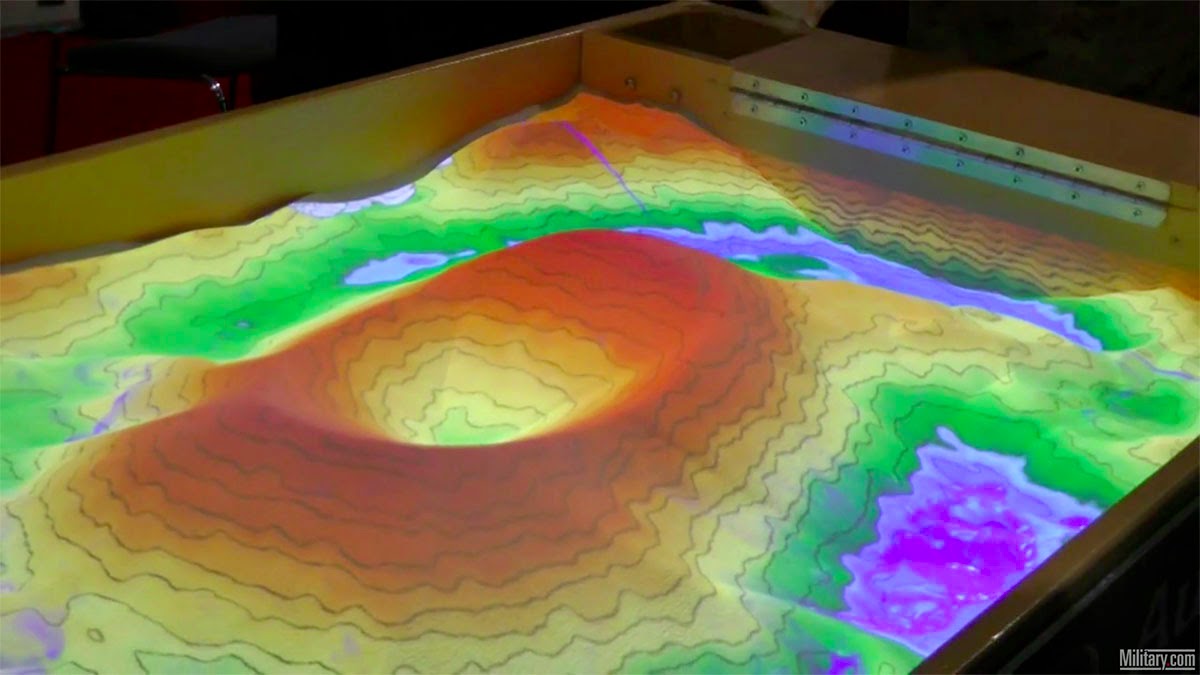
[Image: Screen grab via military.com].

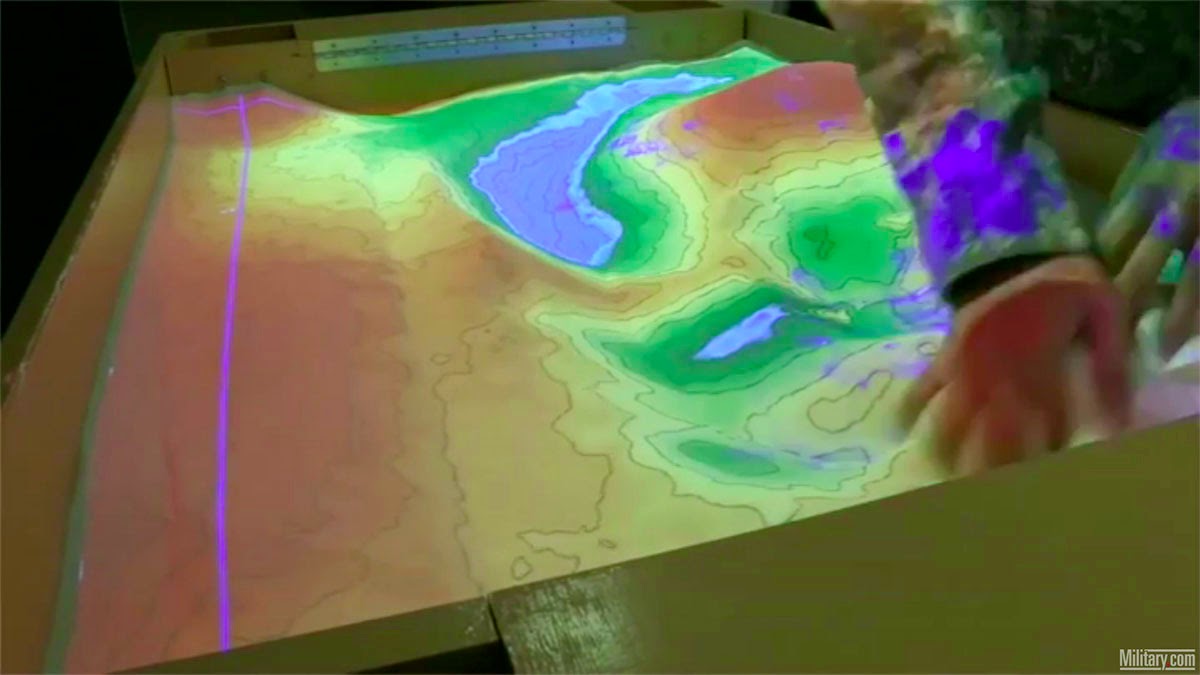
This new, partly digital sand table interface developed for military planning would seem to have some pretty awesome uses in an architecture or landscape design studio.

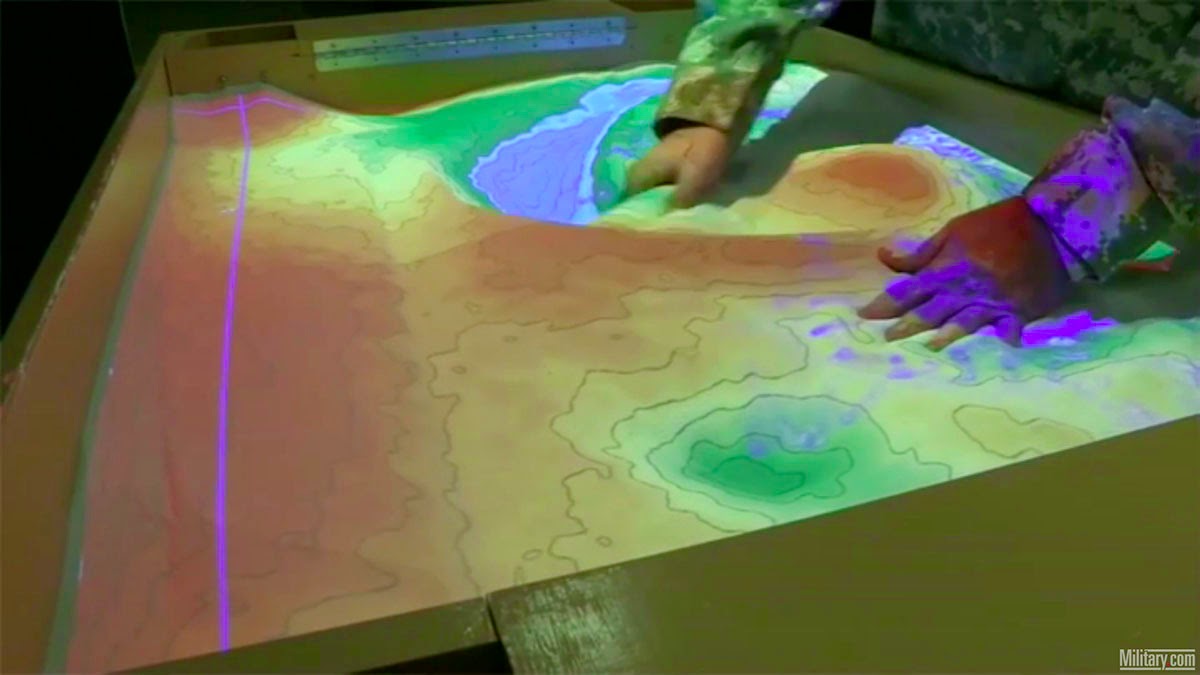
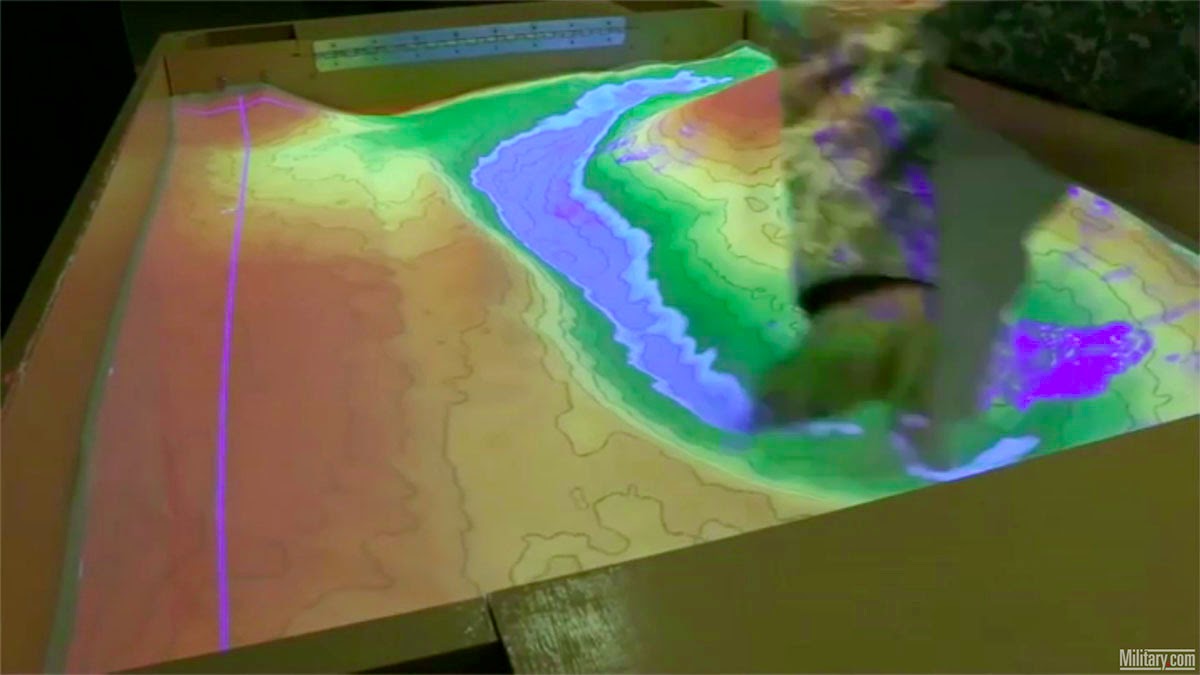
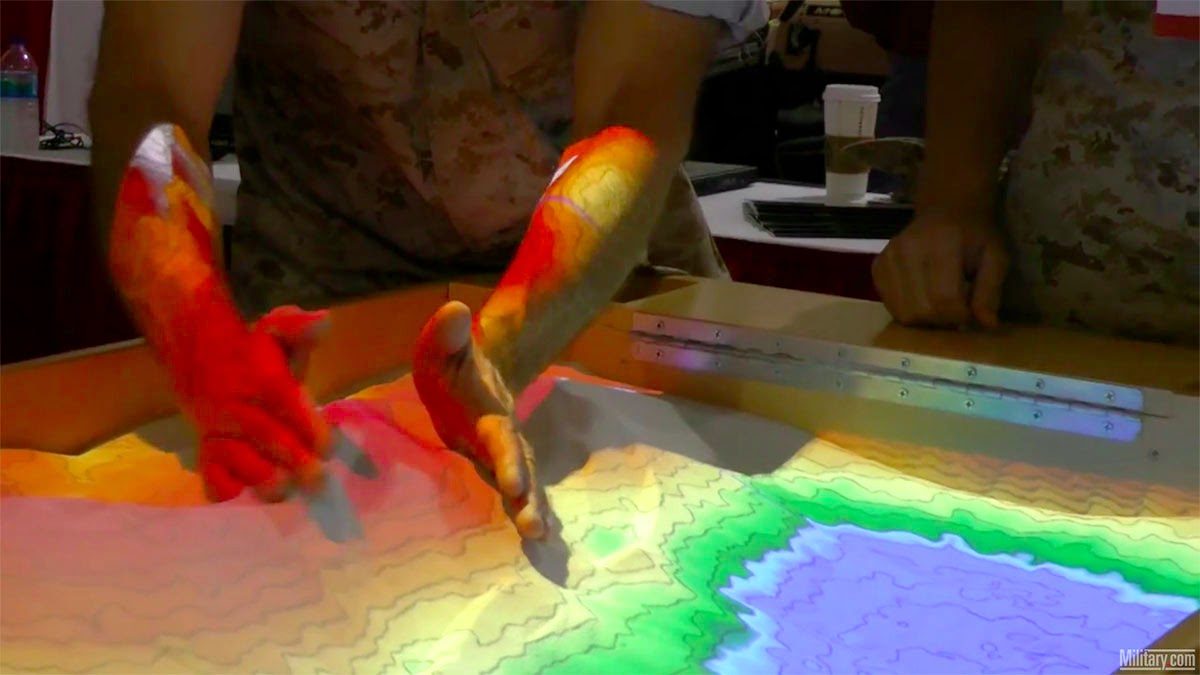
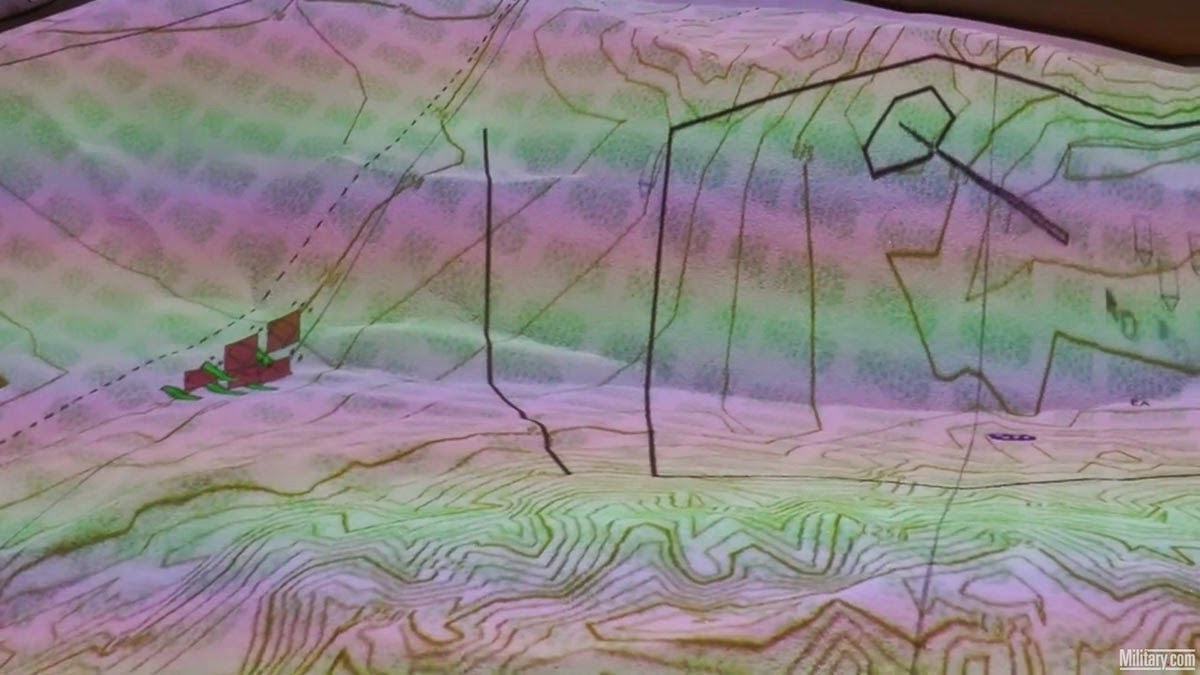
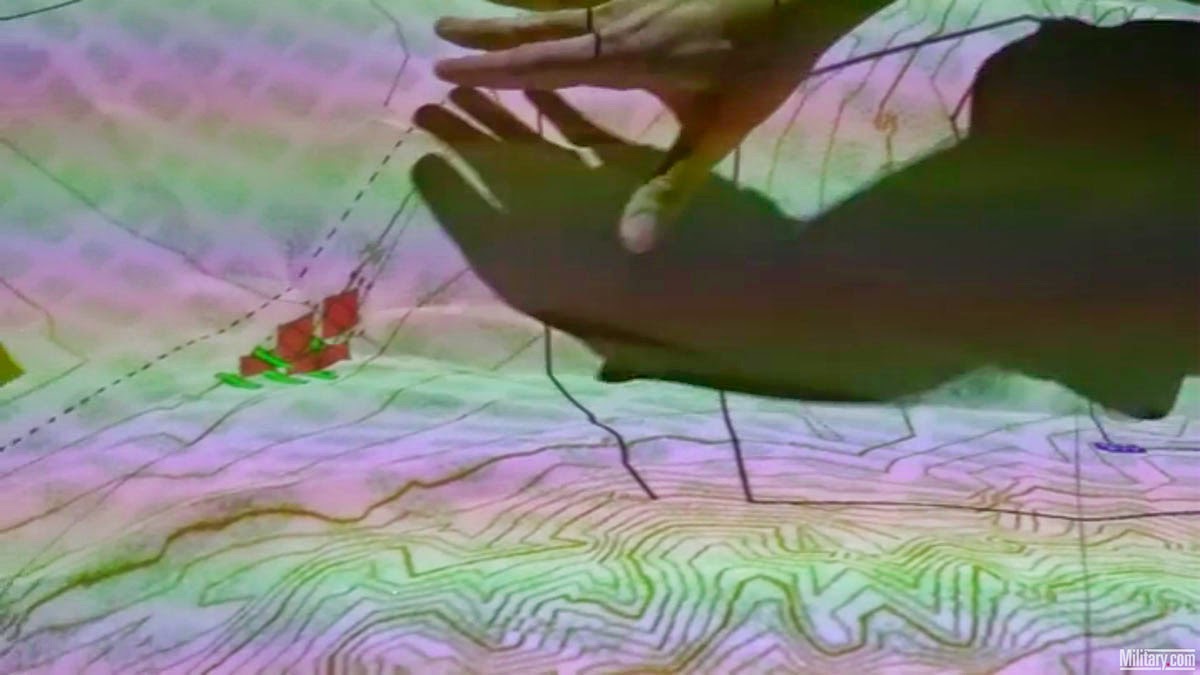
Using 3D terrain data—in the military’s case, gathered in real-time from its planetary network of satellites—and a repurposed Kinect sensor, the system can adapt to hand-sculpted transformations in the sand by projecting new landforms and elevations down onto those newly molded forms.

You can thus carve a river in real-time through the center of the sandbox, and watch as projected water flows in—

[Image: Screen grabs via military.com].

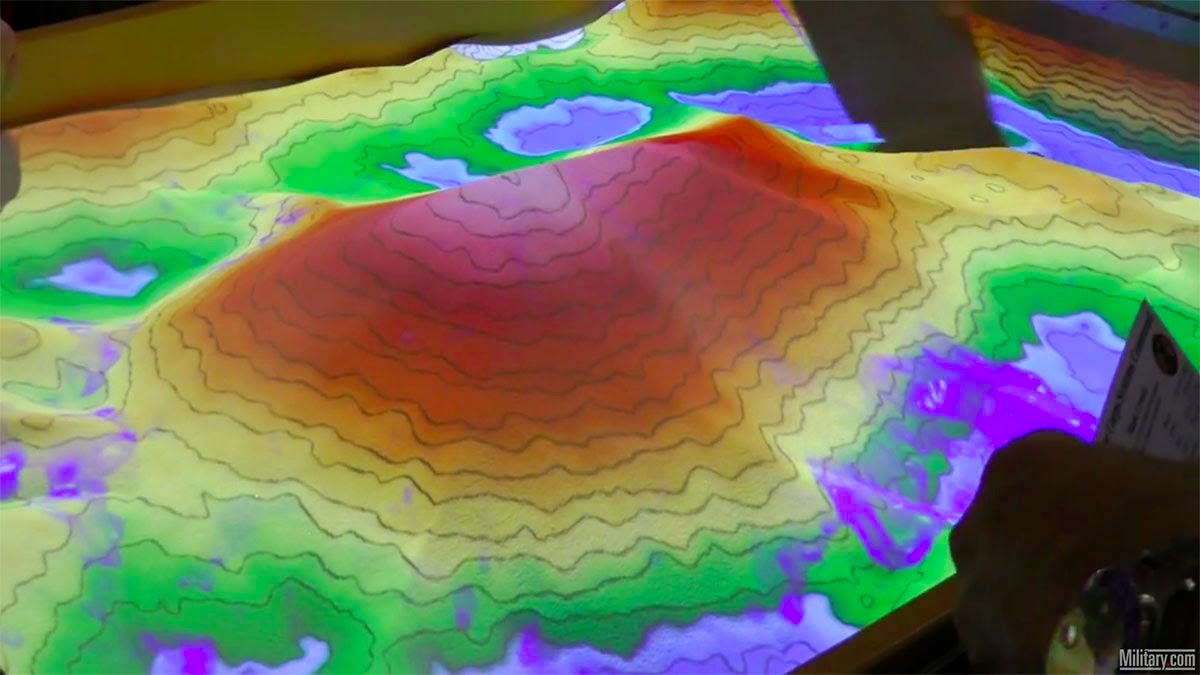
—or you can simply squeeze sand together into new hills, and even make a volcanic crater.

[Image: Screen grabs via military.com].

The idea of projecting adaptive landscape imagery down onto a sandbox is brilliant; being able to interact with both the imagery and the sand itself by way of a Kinect sensor is simply awesome.

Imagine scaling this thing up to the size of a children’s playground, and you’d never see your kids again, lost in a hypnotic topography of Minecraft-like possibilities, or just donate some of these things to a landscape design department and lose several hours (weeks?) of your life, staring ahead in a state of geomorphic Zen at this touchscreen landscape of rolling hills and valleys, with its readymade rivers and a thousand on-demand plateaus.

The military, of course, uses it to track and kill people, filling their sandbox with projections of targeting coordinates and geometric representations of tanks.

[Image: Screen grabs via military.com].

But there’s no reason those coordinates couldn’t instead be the outlines of a chosen site for your proposed architecture project, or why those little clusters of trucks and hidden snipers couldn’t instead be models of new buildings or parks you’re hoping will be constructed.

Watch the original video for more.

The Fall

[Image: David Maisel, from ToledoContemporánea].

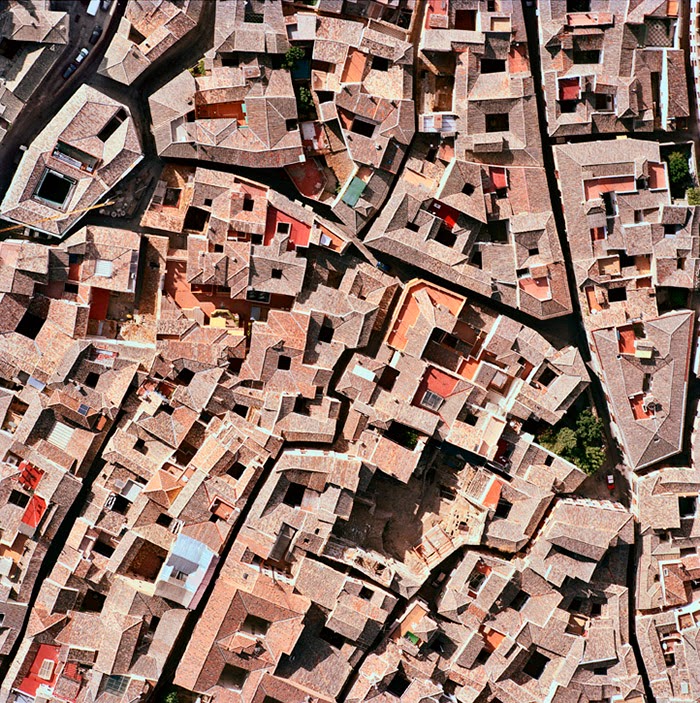
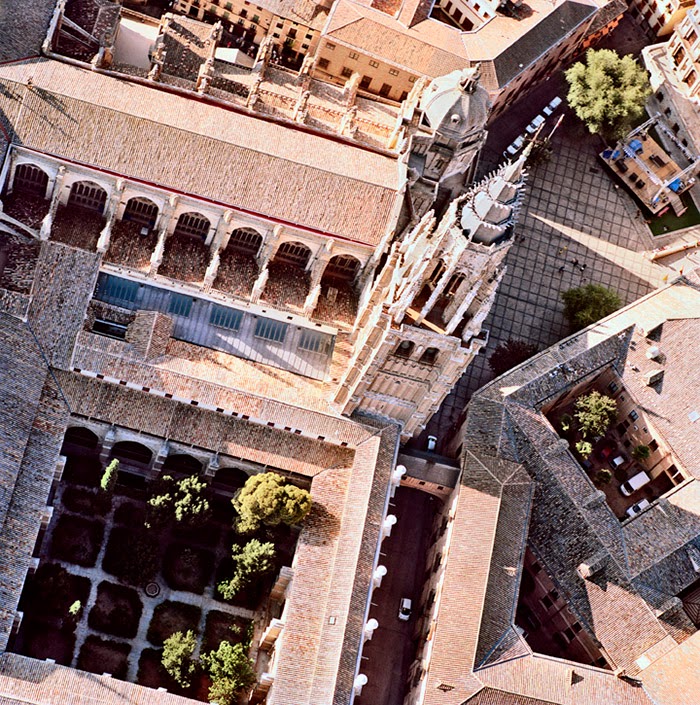
At the end of 2013, photographer David Maisel was commissioned to photograph the city of Toledo, Spain, as part of a group exhibition called ToledoContemporánea, timed for a wider celebration of the 400th birthday of the painter El Greco.

Maisel’s photos offered a kind of aerial portraiture of the city, including its labyrinthine knots of rooftops. But the core of the project consists of disorientingly off-kilter, almost axonometric shots of the city’s historic architecture.

[Image: David Maisel, from ToledoContemporánea].

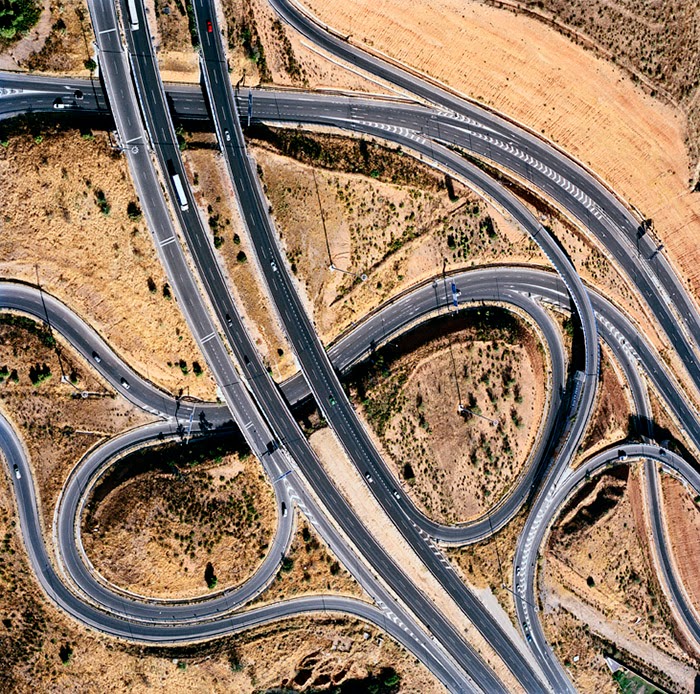
On wider flights beyond the edge of the city, modern swirls of highways are seen coiling through the landscape, like snakes preparing for arrival; in a sense, their geometry mimics—or perhaps mocks—the bewildering whorls of tiny streets and passages seen in the city’s core.

[Image: David Maisel, from ToledoContemporánea].

While he was in the country, however, Maisel took advantage of some extra time and access to a helicopter to explore the landscape between Toledo and Madrid, a short stretch of infrastructural connections, agricultural hinterlands, abandoned suburban developments, and arid hills.

The result was a new series of photos called The Fall.

[Image: David Maisel, from The Fall].

As Maisel writes, The Fall suggests a genre in which “the worlds of painting and photography have merged together,” creating an ironically abstract form of landscape documentation.

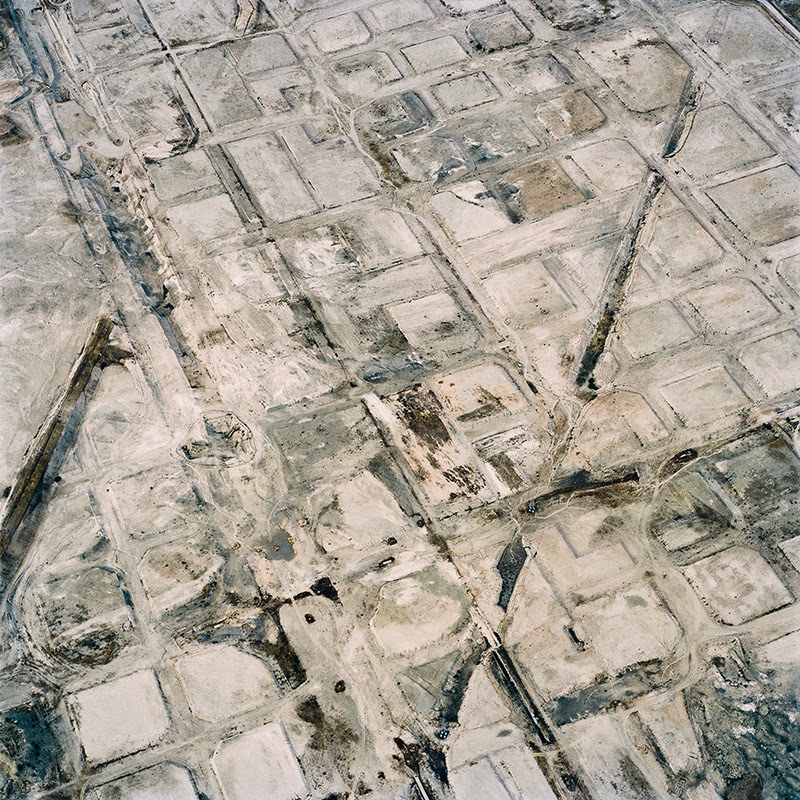
This is most evident in the photos from an area called Vicalvaro on the outskirts of Madrid. As Maisel explains, this is “where construction was halted after the economic collapse of 2008. The abandoned zones appear like the surreal aftermath of a bombed out city or an alien landing field.”

[Images: David Maisel, from The Fall].

But, as seen in Maisel’s photos, they could also just as easily be extreme close-ups of minimalist oil paintings, nearly microscopic zooms into the texture of another method of representation to reveal a different kind of landscape there, one created by pigments and dyes.

[Image: David Maisel, from The Fall].

This is an interrupted landscape, a geography elaborately and expensively prepared for something that has yet to arrive.

However, the dead abstractions of Vicalvaro were only one part of the “three different areas of the Spanish landscape” that Maisel says he set out to see.

[Image: David Maisel, from The Fall].

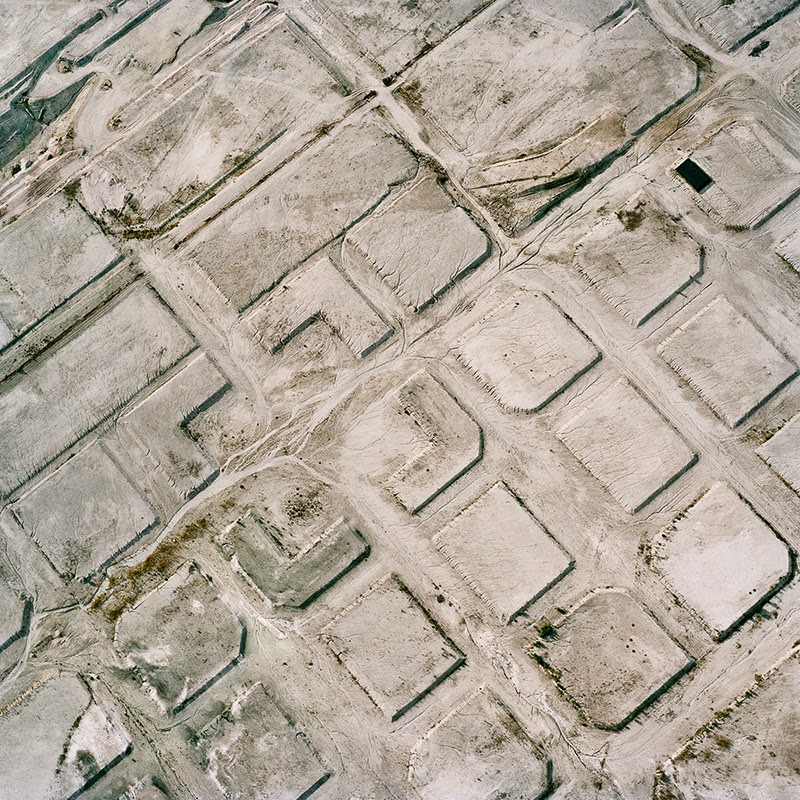
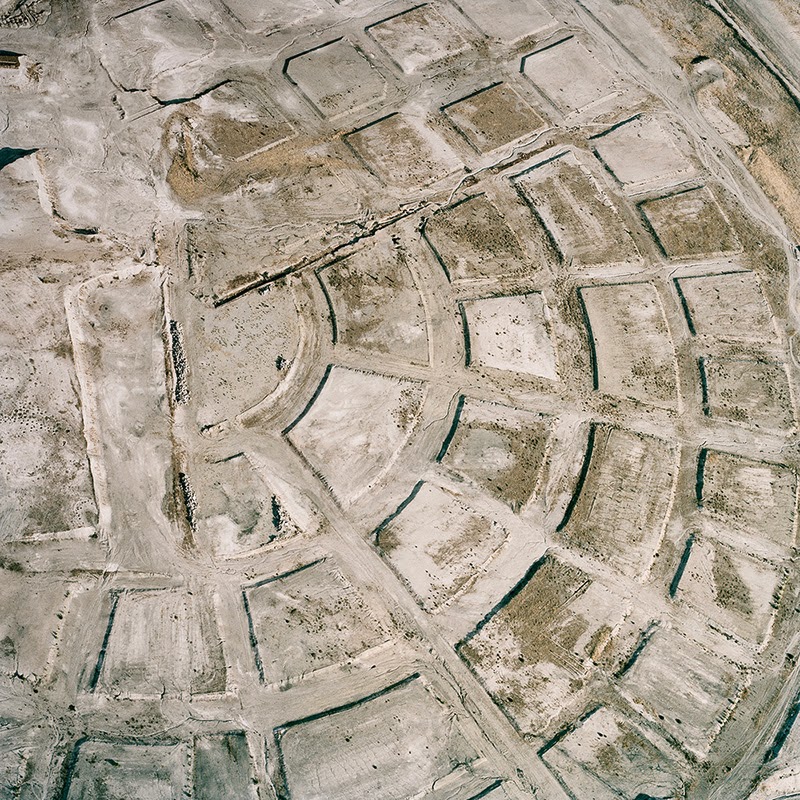
Another landscape type—true to form, considering Maisel’s pre-existing focus on landscapes of industrial use—are borax extraction sites.

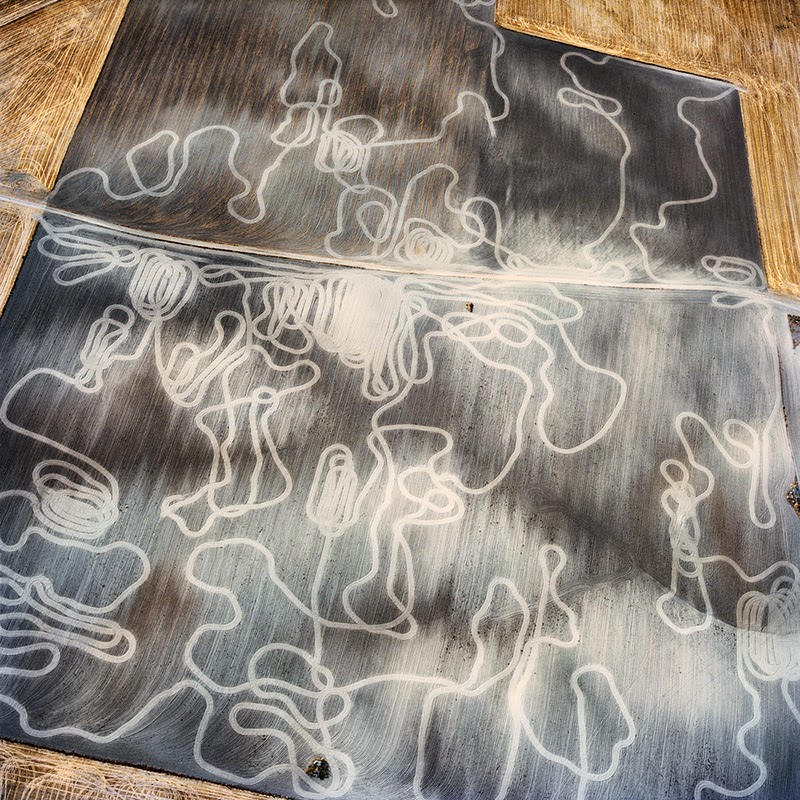
These are “strange, ashen landscapes,” he writes, seen “in a mining and agricultural region of La Mancha. The soil is laden with the mineral borax, which gives a surreal, ashen quality; the landscape shines, almost like a grey sea in a desert.”

They’re like windowpanes—or mercury lakes—reflecting the afternoon light.

[Image: David Maisel, from The Fall].

The surface of the earth becomes weirdly metallic in these shots, just a thin surface scraped away to reveal something seemingly utterly unnatural beneath, as if some divine force has begun etching the earth, scratching and engraving incomprehensible shapes into the planet.

[Images: David Maisel, from The Fall].

In many cases, amidst these grooved and metallized landscapes, gridded blooms of plant life have been introduced both to visually interrupt and physically contain the landscape.

Among other things, their roots help to secure disturbed dirt and soil from blowing away in heavy winds—but they also act to recuperate the terrain aesthetically, as if seeing these robotic fields the color of gunmetal was so philosophically unsettling for local residents that plants had to be brought in to make things seem earthly once again.

What we’re seeing is thus not really arboriculture, but a kind of existential stagecraft, a rigorously constructed landscape whose ironic purpose is to shield us from the true artificiality of our surroundings.

[Images: David Maisel, from The Fall].

In fact, these bring us around nicely to the third landscape type Maisel says he was exploring with these photographs, joining the abandoned developments and borax sites that we’ve already seen, above.

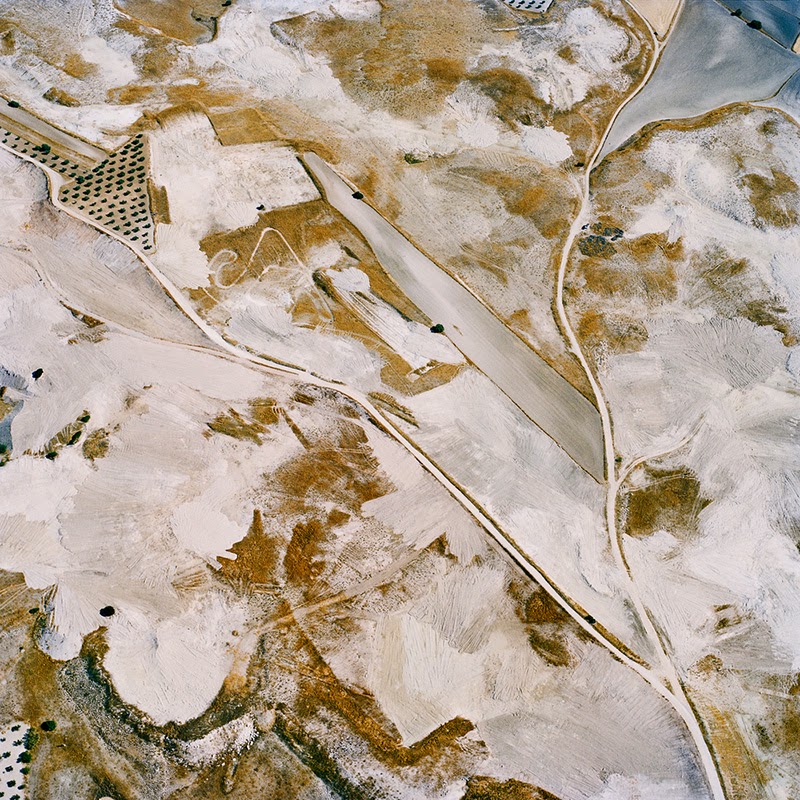
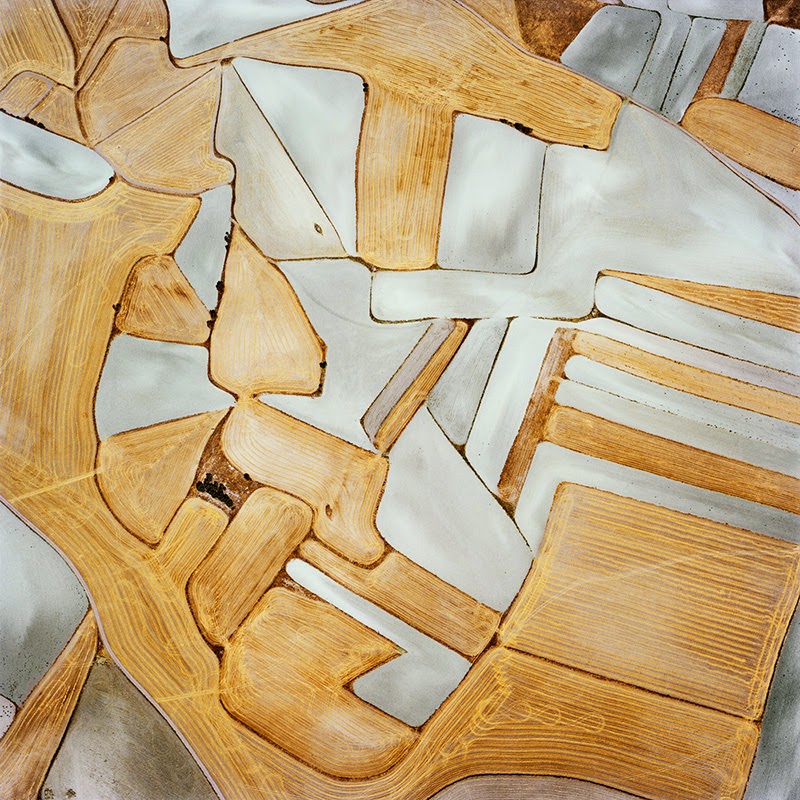
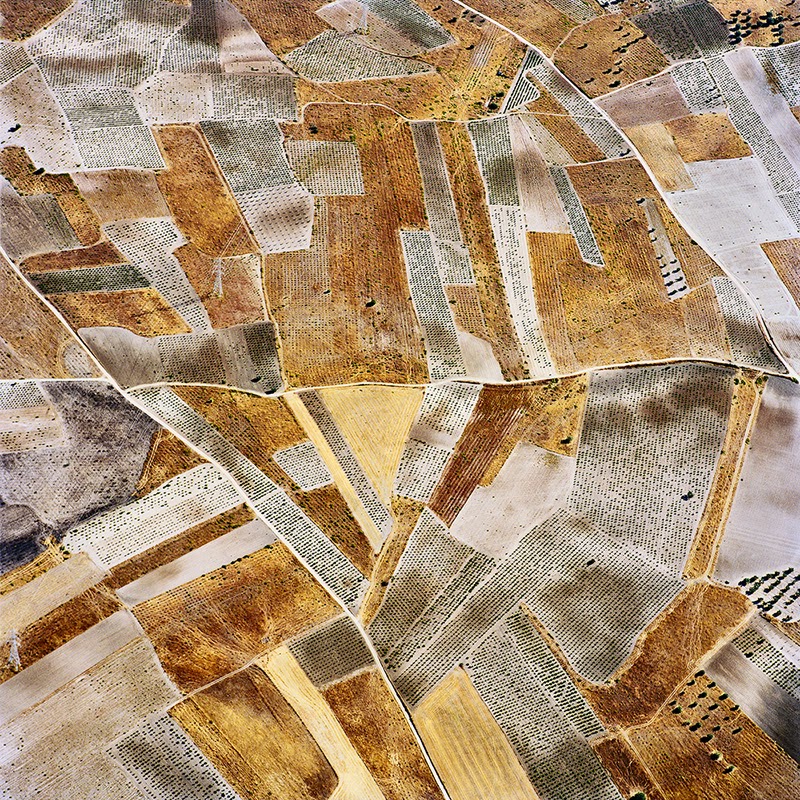
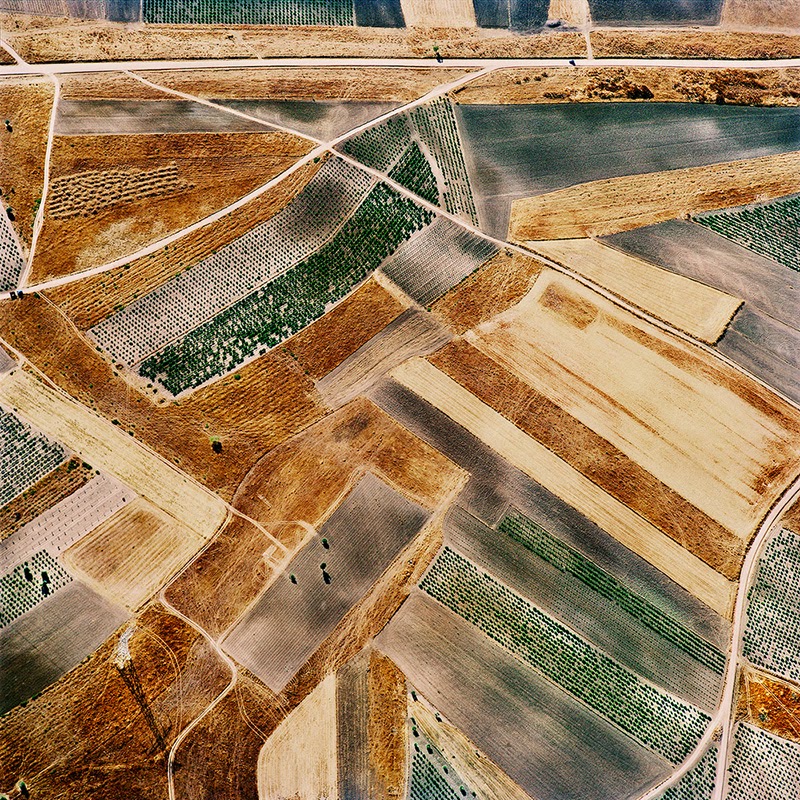
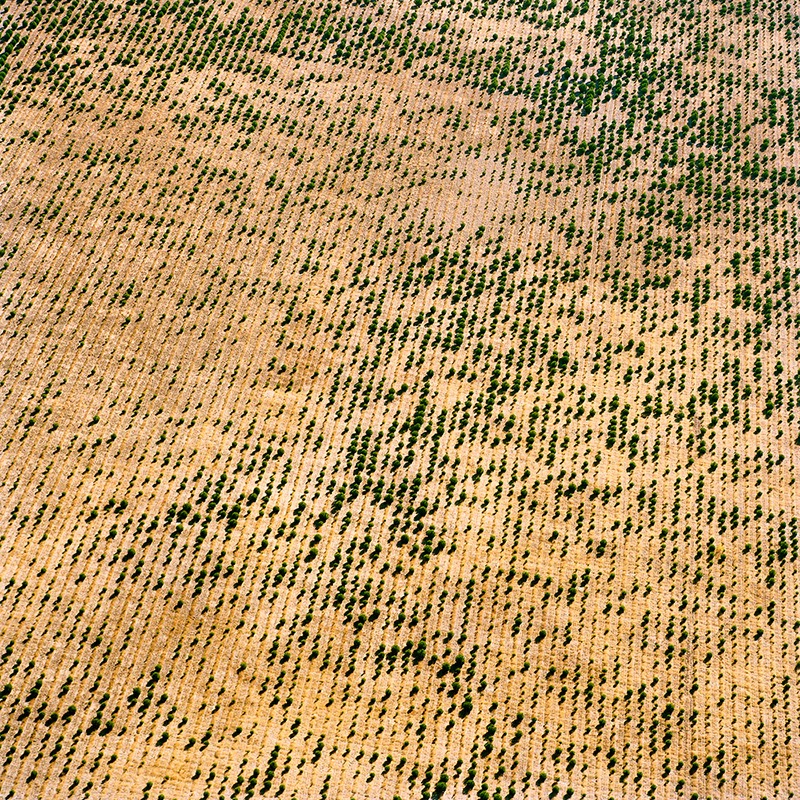
This is Fuensalida, or a region of “croplands in the La Mancha region” that have been “gridded, crosshatched, and abstracted.”

[Images: David Maisel, from The Fall].

Like the exquisite tree farms documented by Dutch photographer Gerco de Ruijter, these rob viewers of any real sense of scale.

What are, in fact, trees appear instead to be small tufts of fabric pushing up through a needlepointing mesh. It could be a carpet interrupted mid-weave, or it could be some worn patch of clothing rubbed raw to reveal the underlying pattern for all to see.

[Images: David Maisel, from The Fall].

But it’s just landscape: the earth reformatted again, made artifactual and strange, carefully touched up for human culture.

This is just a selection of images, however; click through to Maisel’s website to see the full series.

(All images by David Maisel, used with permission. If you like the look of Maisel’s work, considering picking up a copy of The BLDGBLOG Book to read an interview with the photographer).

Cultivating the Map

[Image: “Cultivating the Map” by Danny Wills].
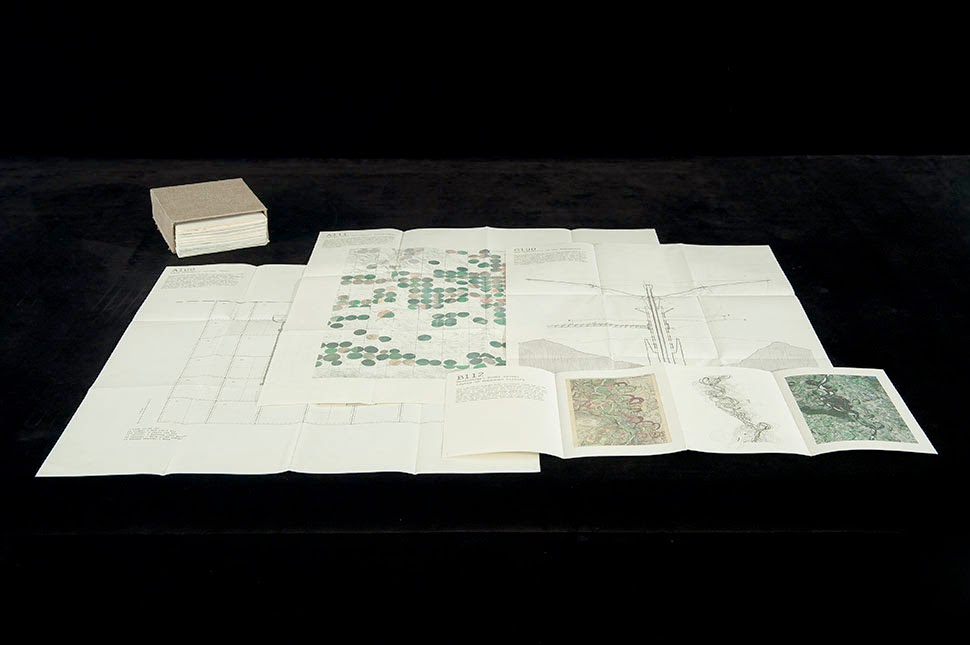
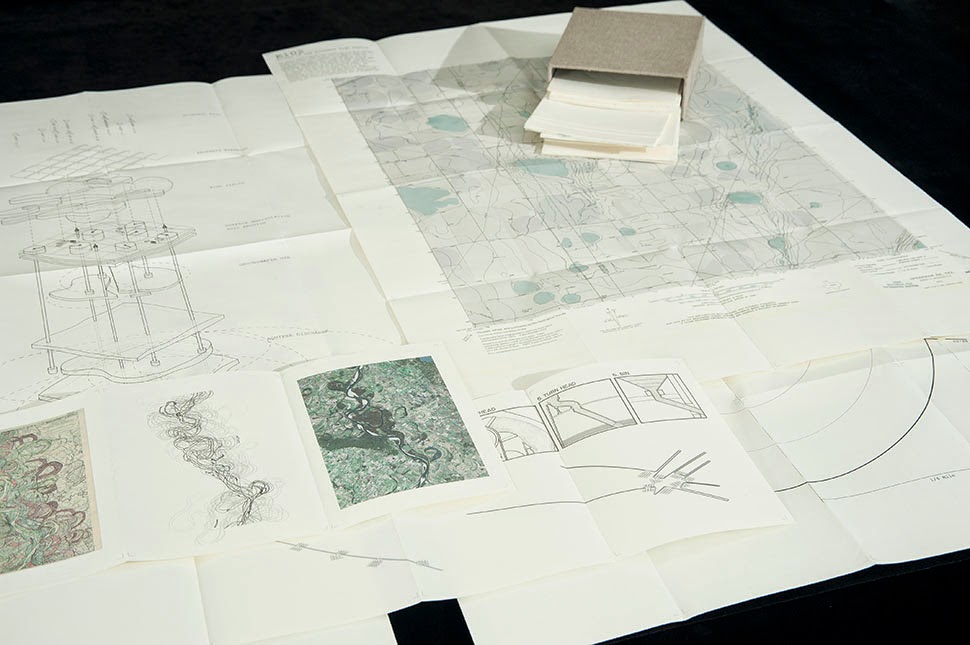
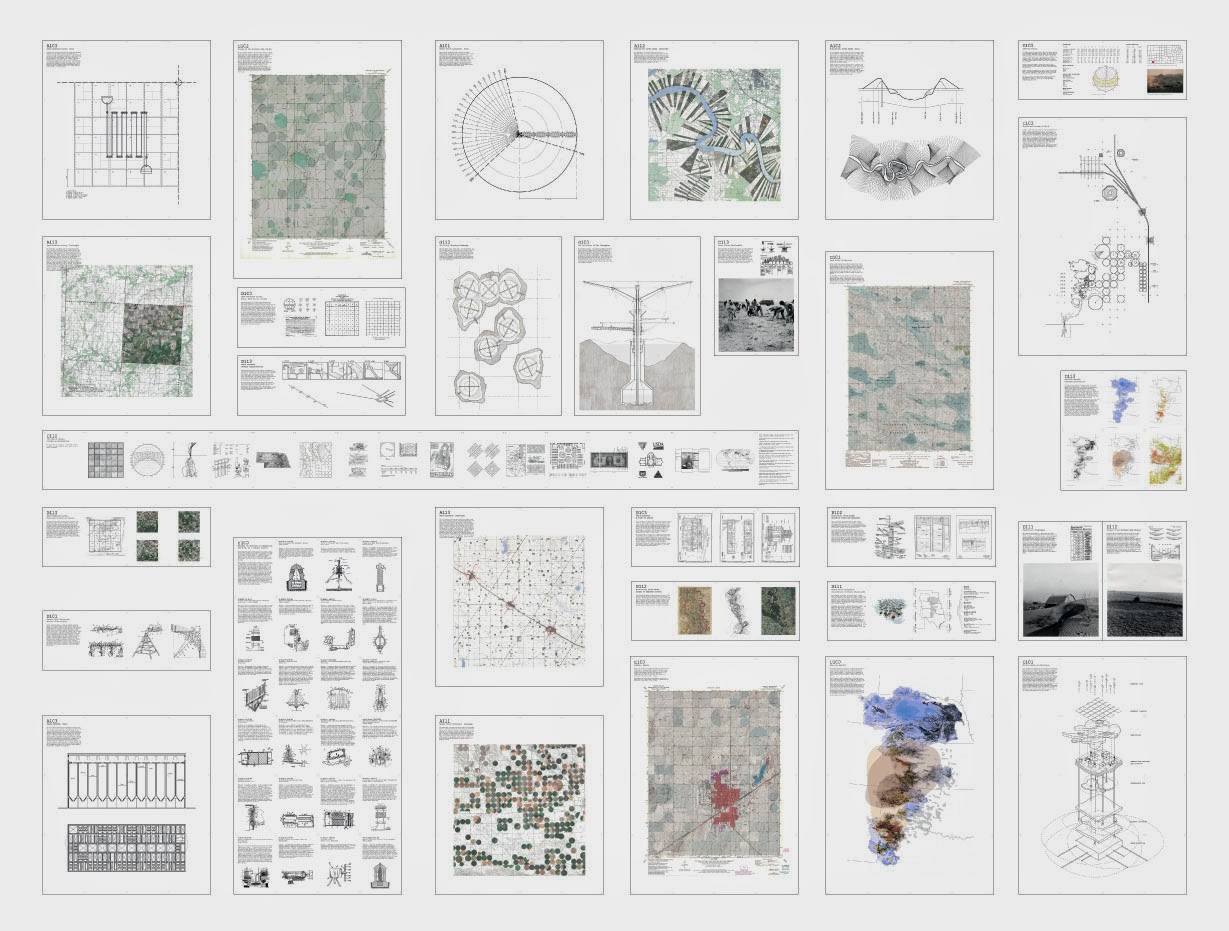
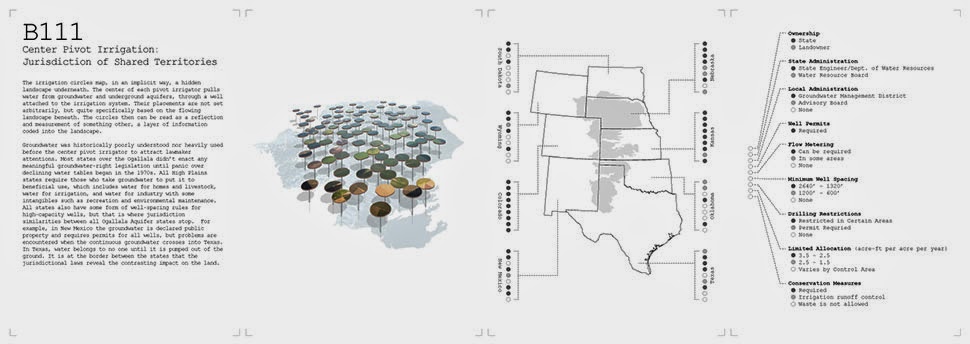
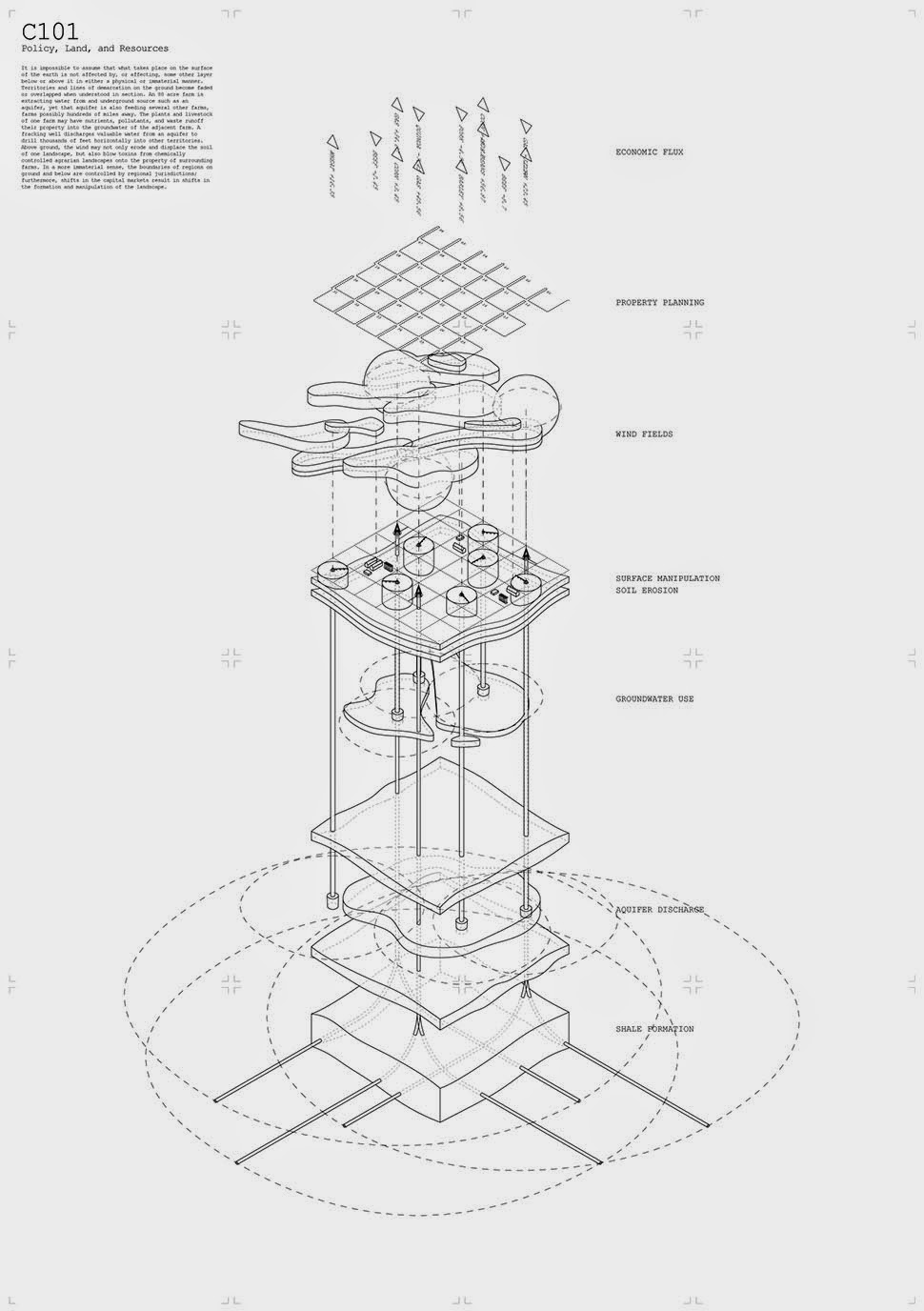
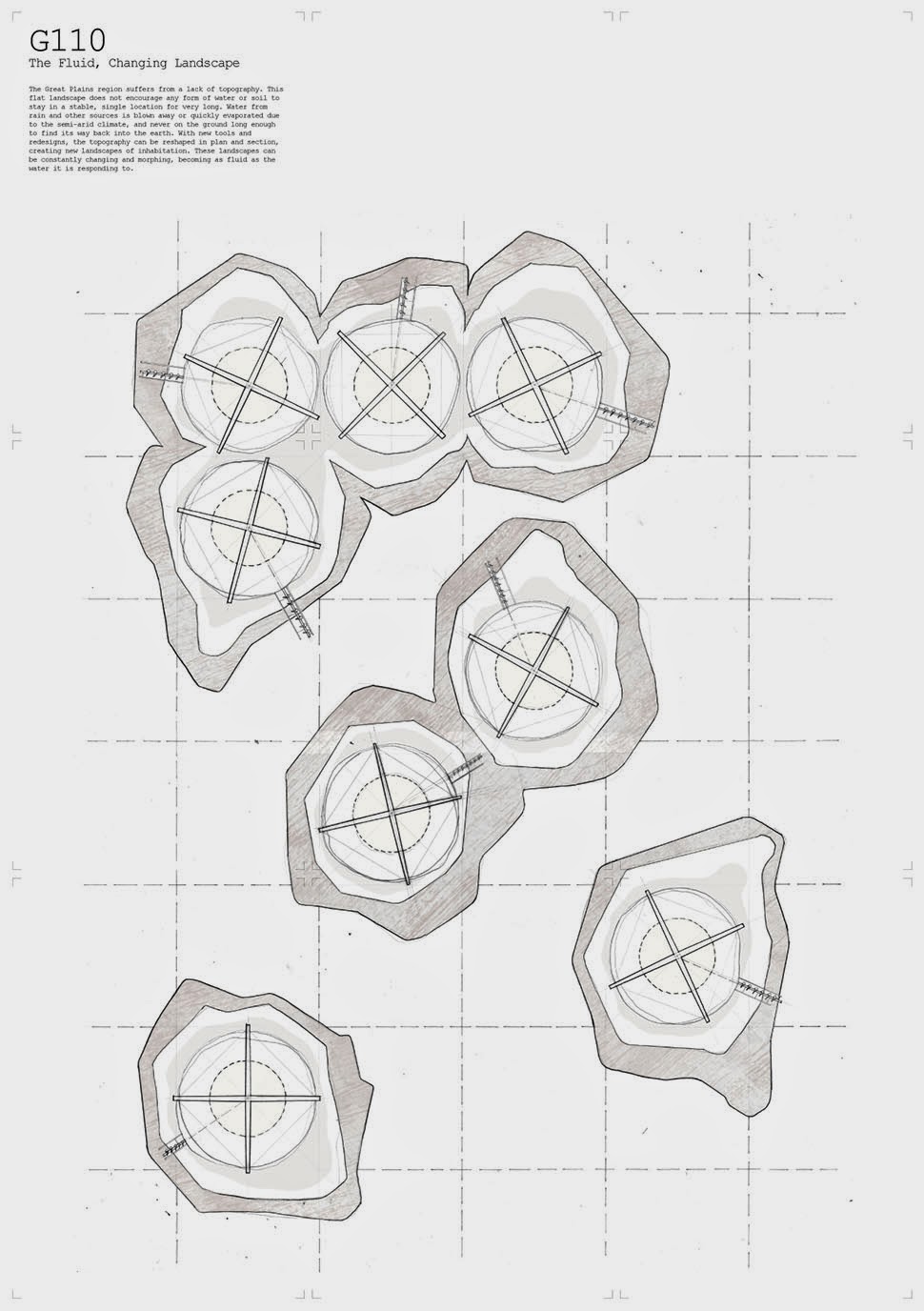
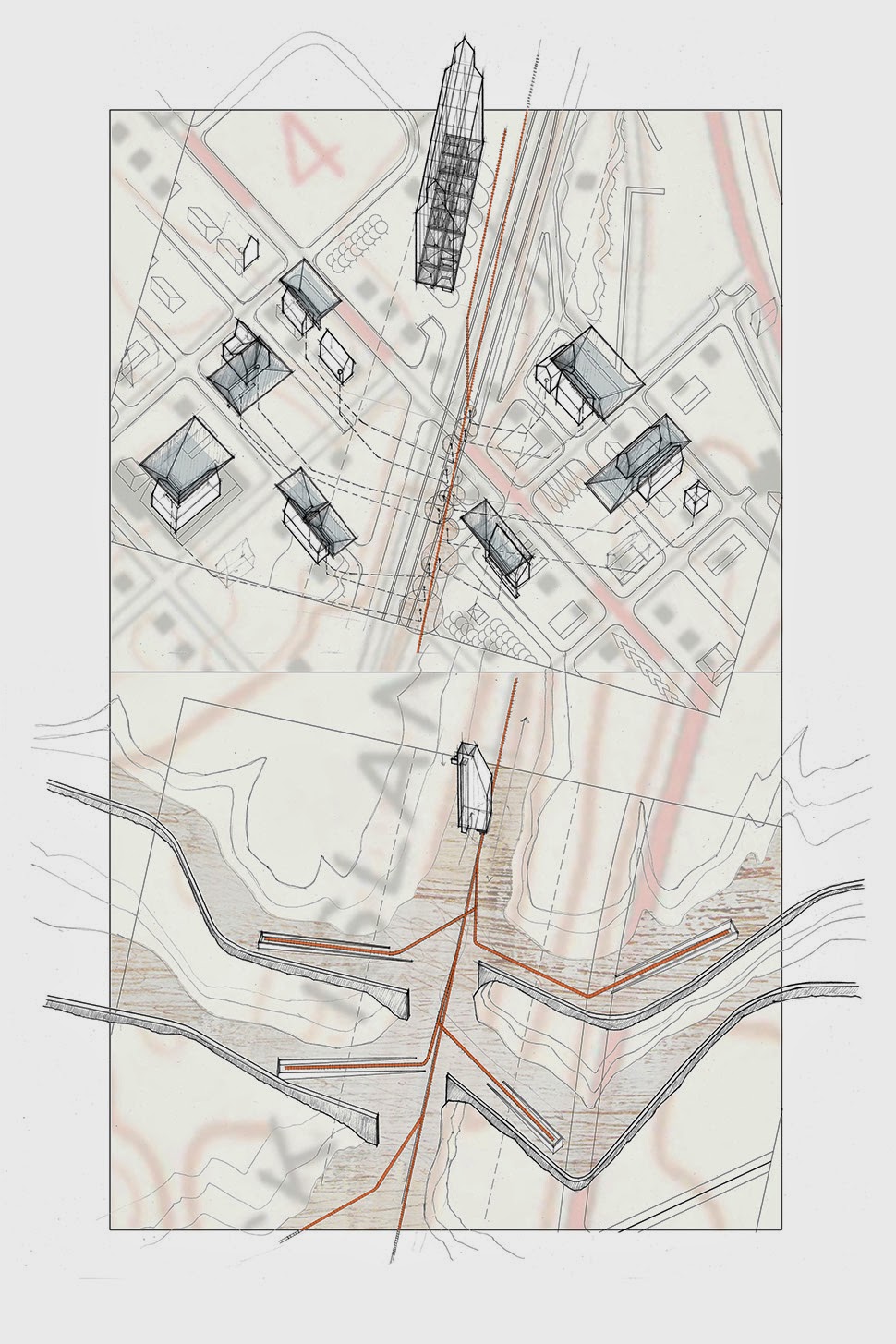
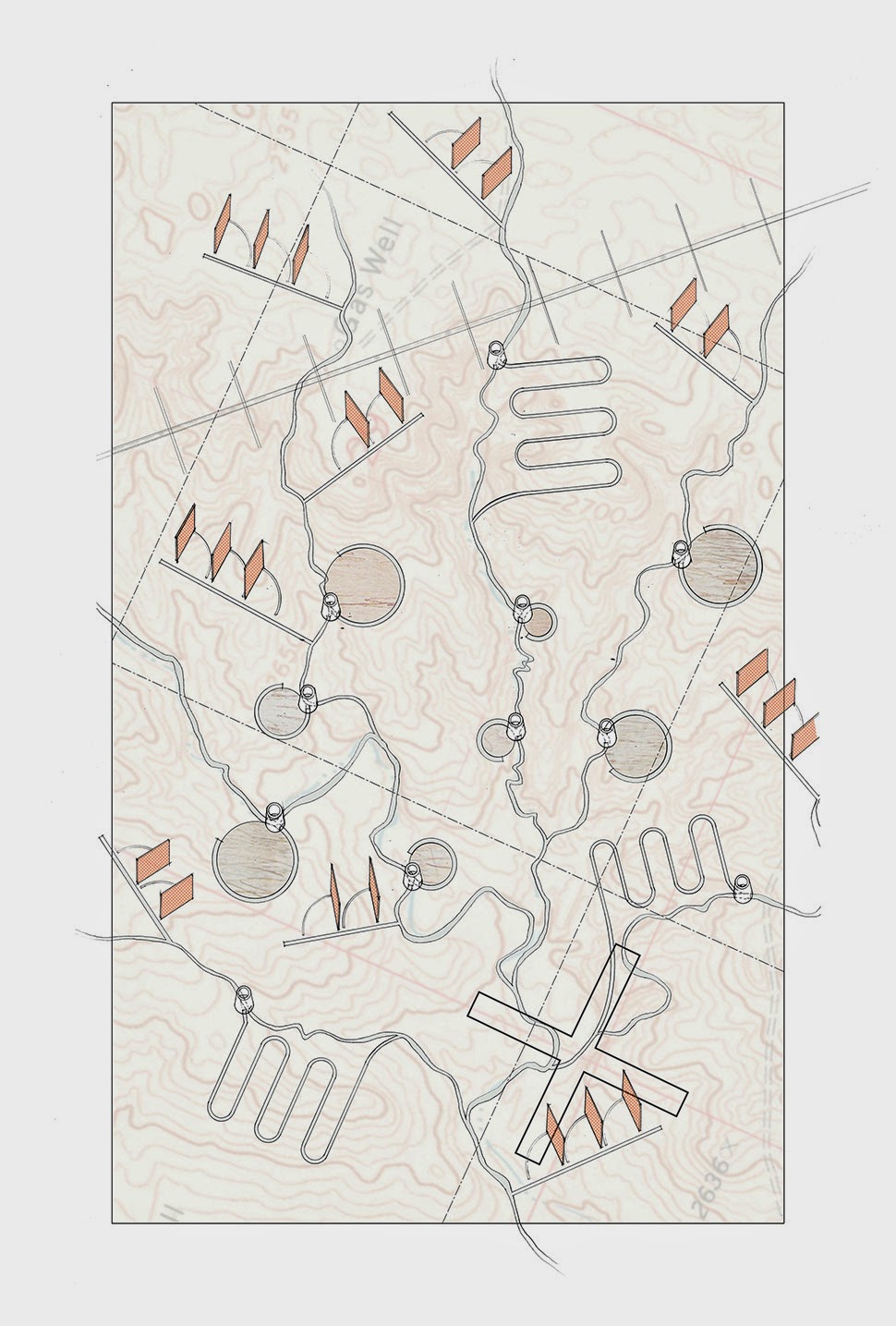
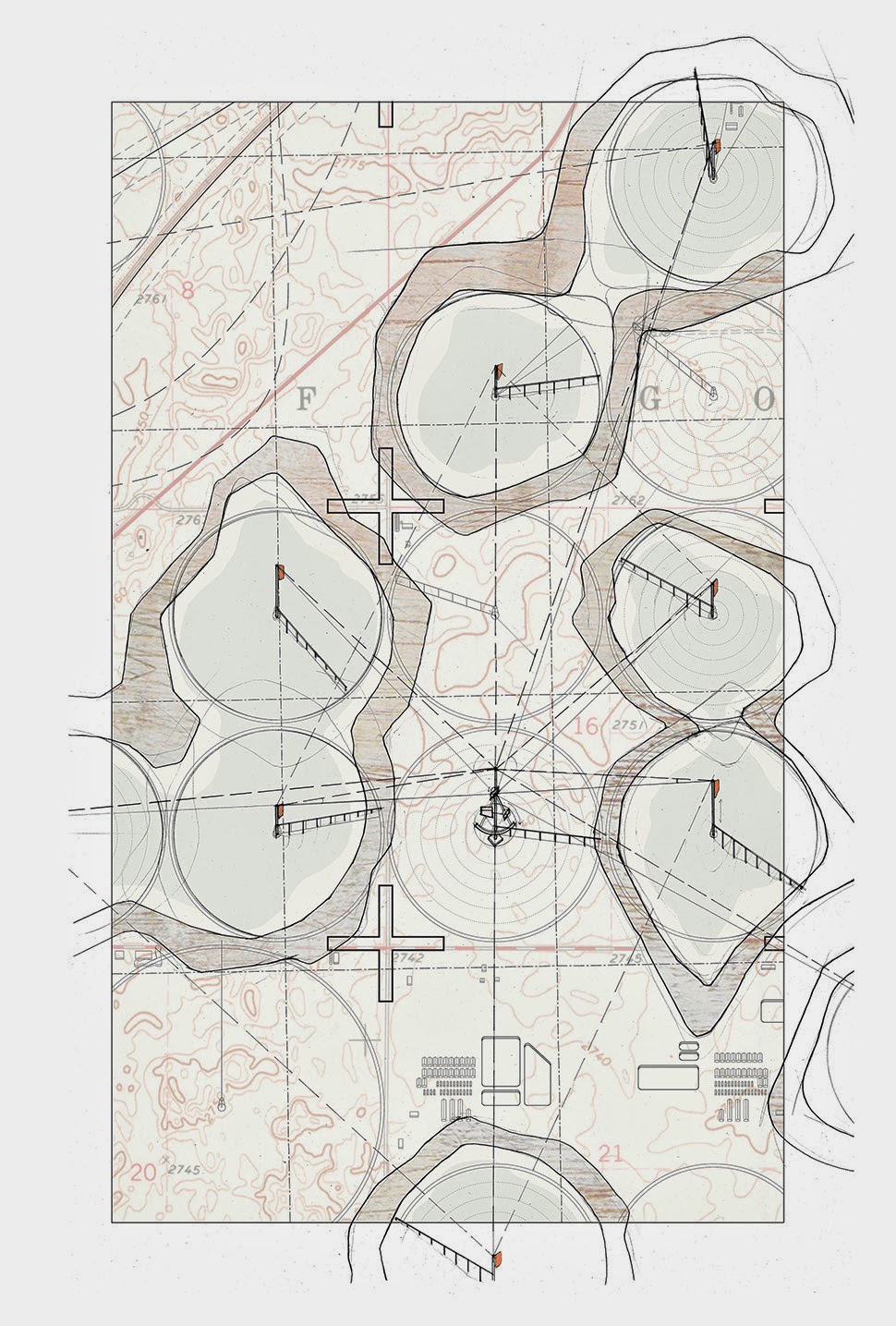
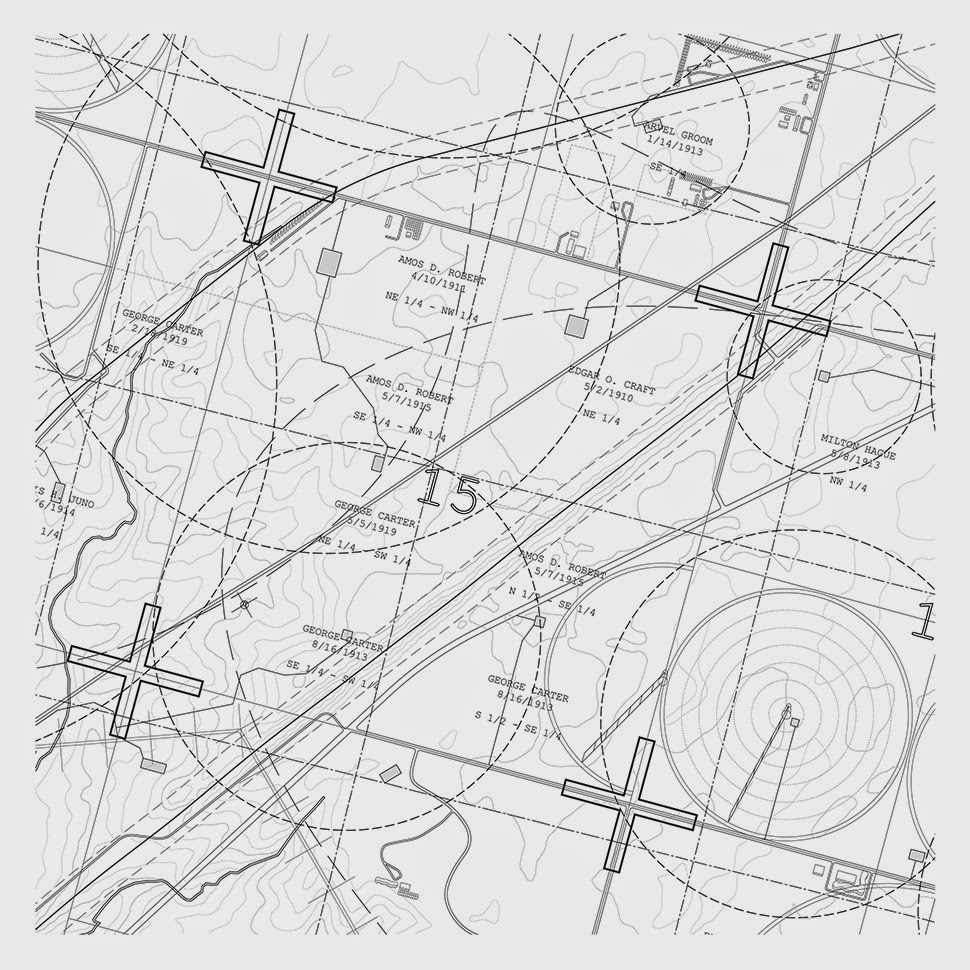
For his final thesis project at the endangered Cooper Union, Danny Wills explored how survey instruments, cartographic tools, and architecture might work together at different scales to transform tracts of land in the geographic center of the United States.

[Images: “Cultivating the Map” by Danny Wills].
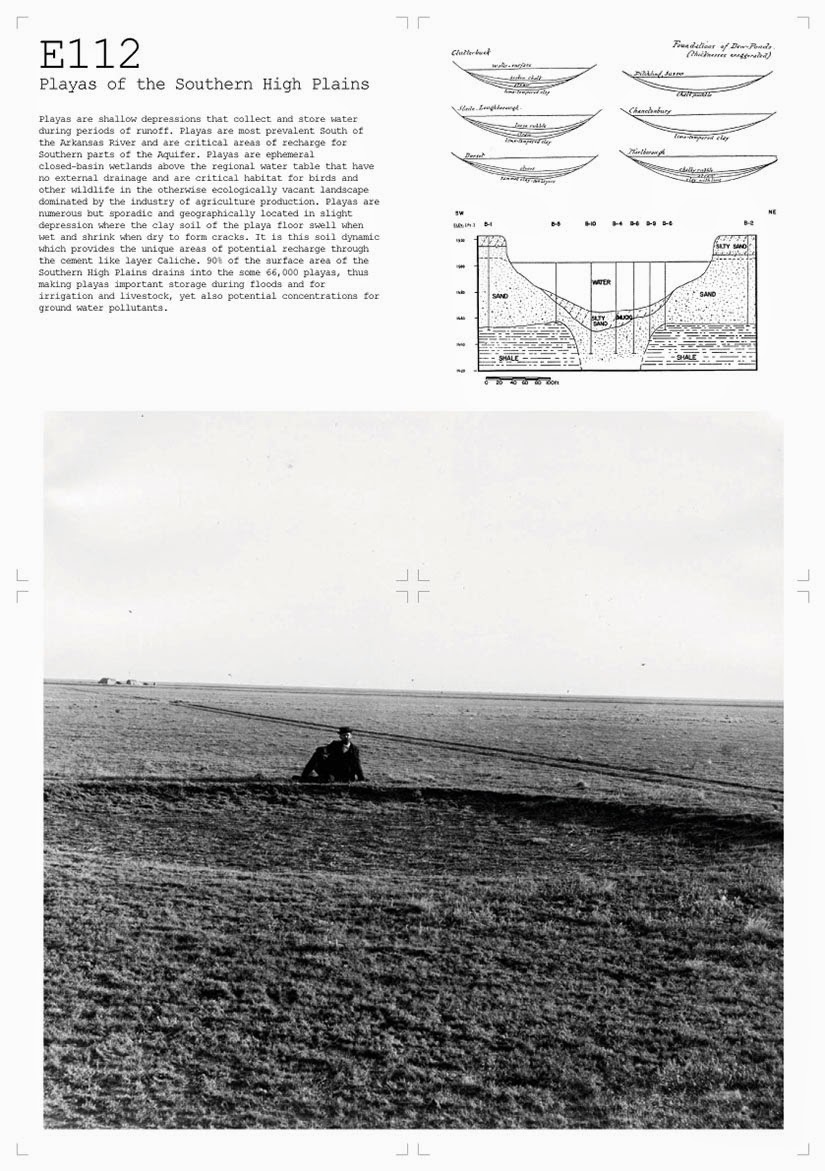
Called “Cultivating the Map,” his project is set in the gridded fields, sand hills, playas, and deep aquifers of the nation’s midland, where agricultural activity has left a variety of influential marks on the region’s landscapes and ecosystems.

[Images: “Cultivating the Map” by Danny Wills].
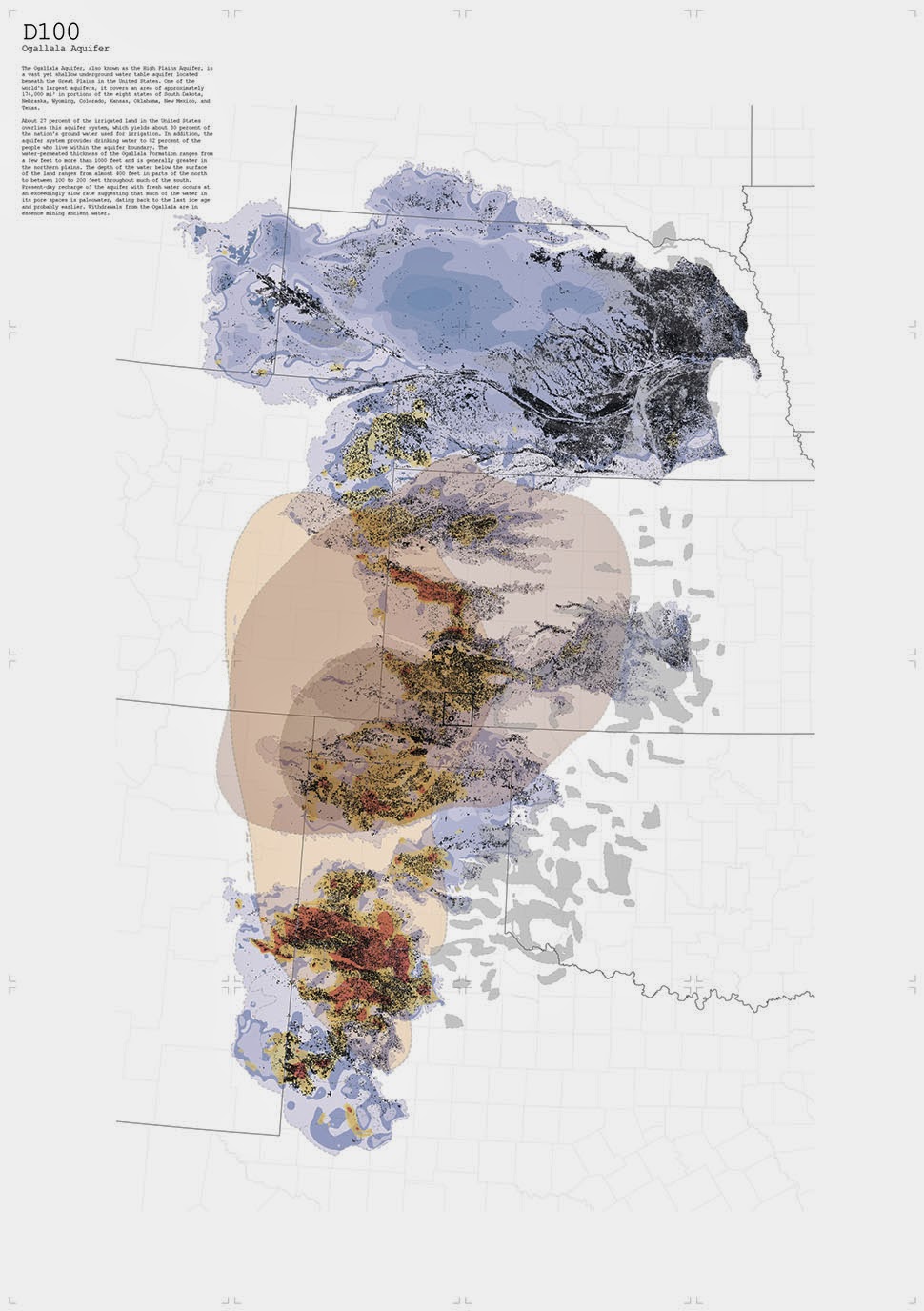
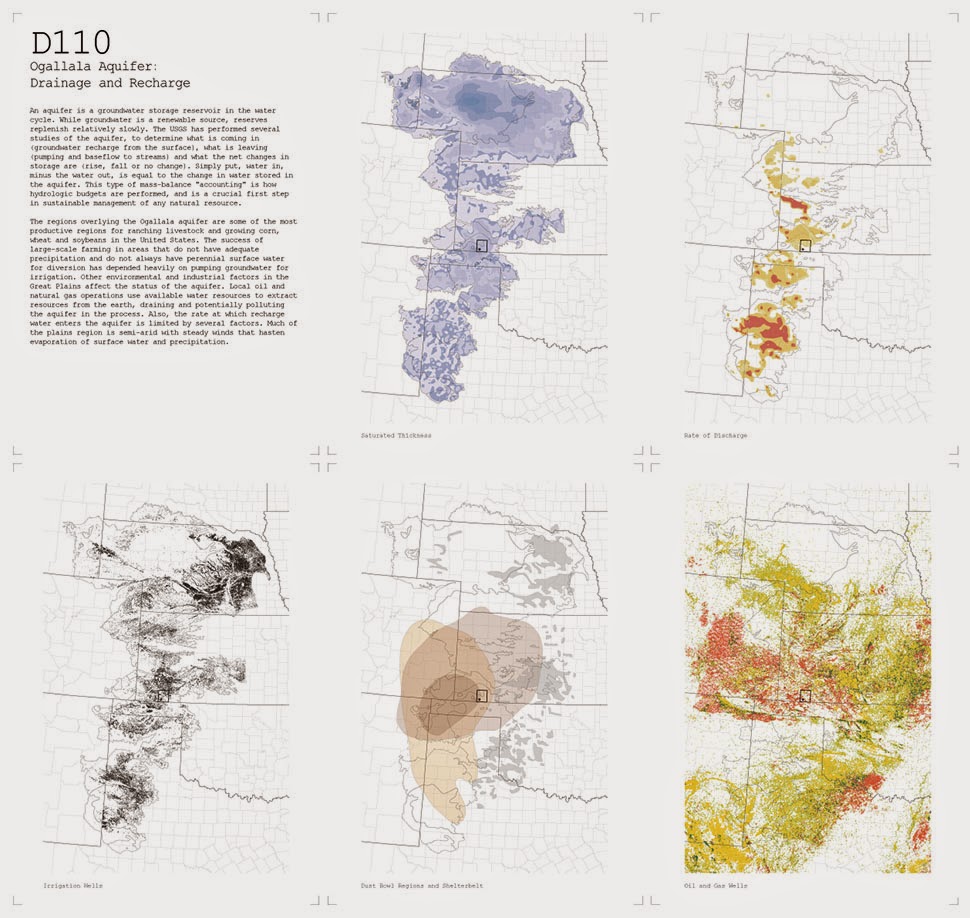
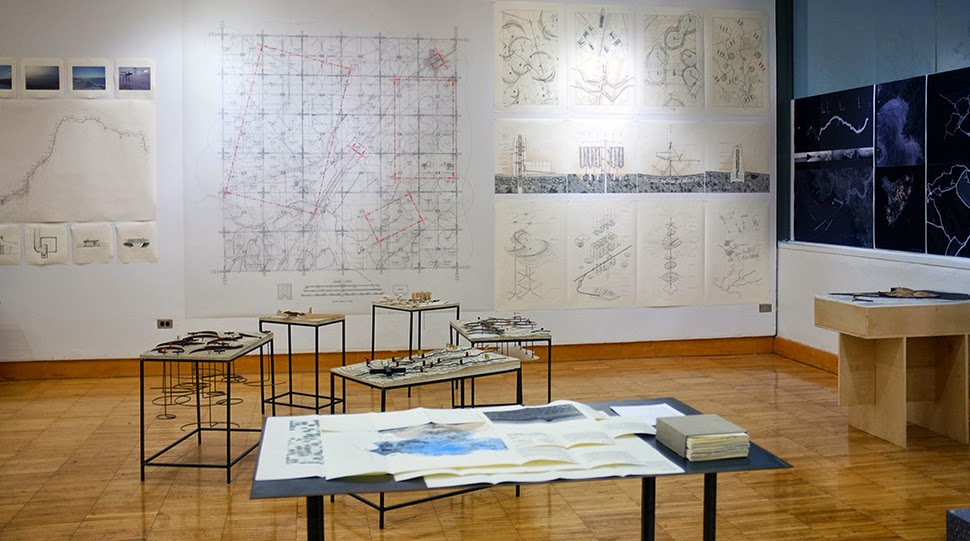
Its final presentation is light on text and heavy on models, maps, and diagrams, yet Wills still manages to communicate the complex spatial effects of very basic physical tools, how things as basic as survey grids and irrigation equipment can bring whole new regimes of territorial management into existence.

It’s as if agriculture is actually a huge mathematical empire in the middle of the country—a rigorously artificial world of furrows, grids, and seasons—dedicated to reorganizing the surface of the planet by way of relatively simple handheld tools and then rigorously perfecting the other-worldly results.

[Images: “Cultivating the Map” by Danny Wills].
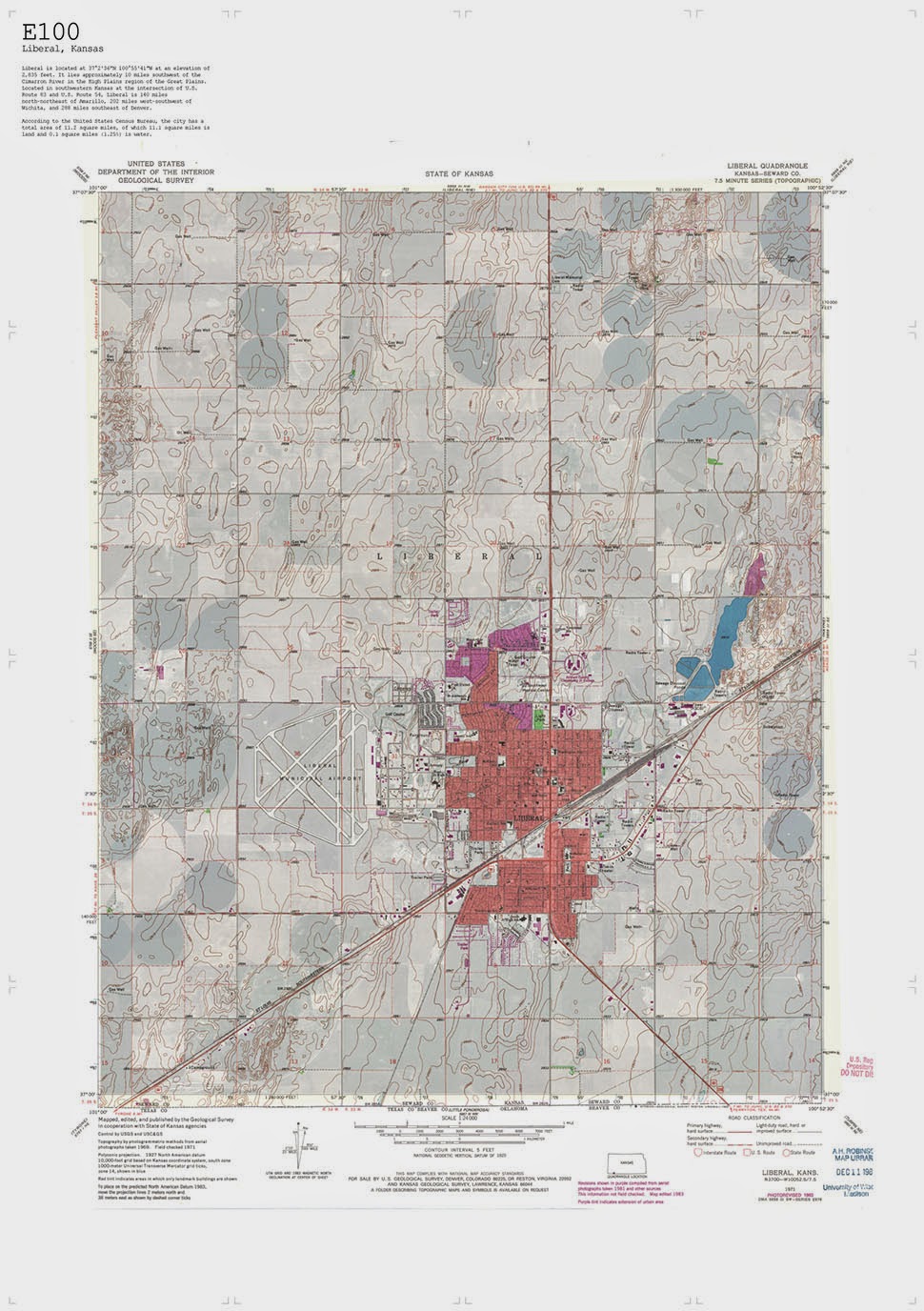
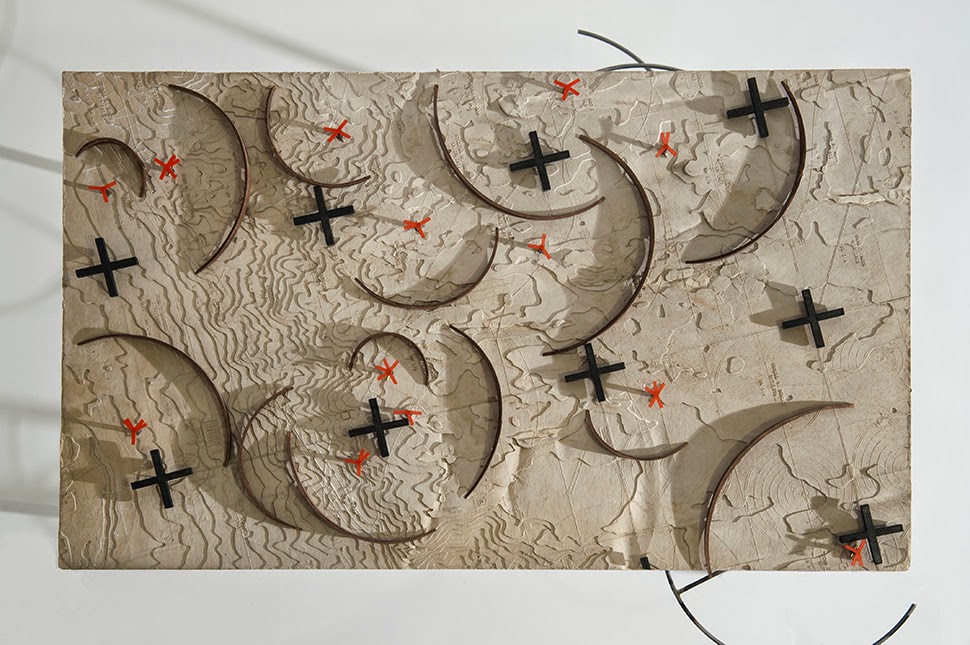
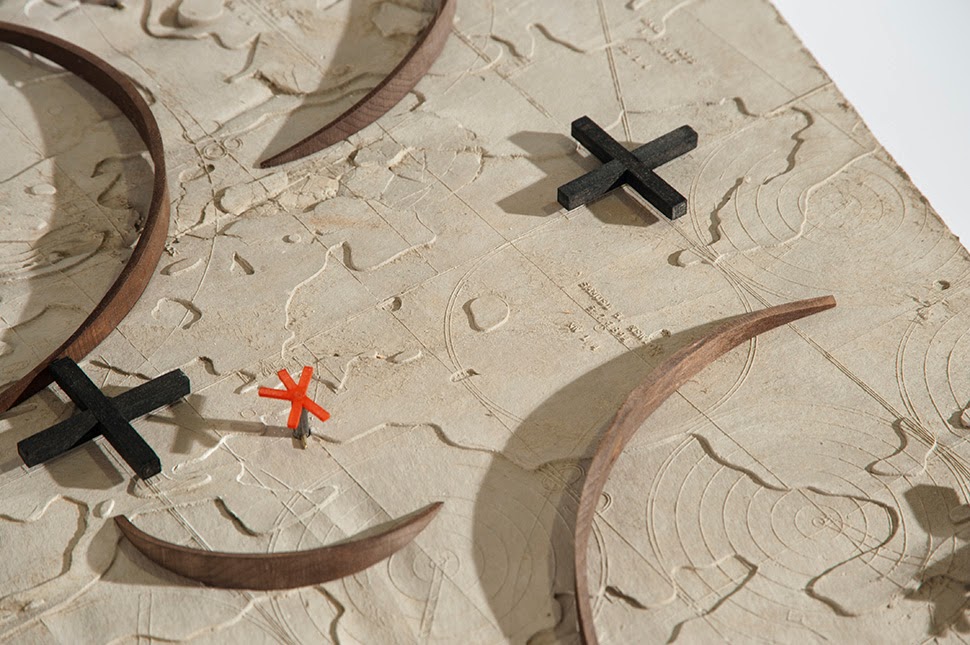
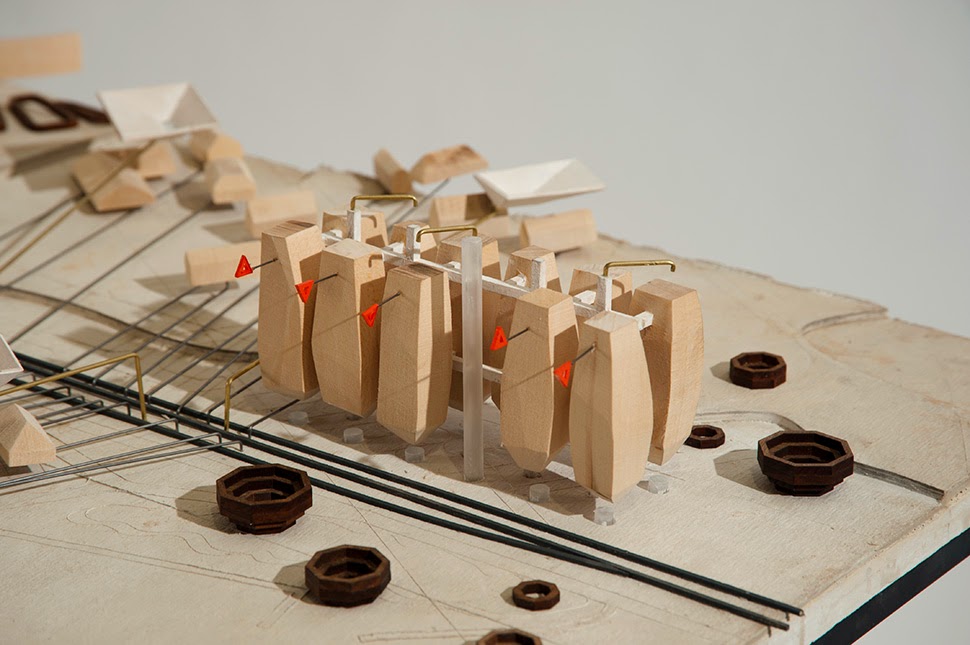
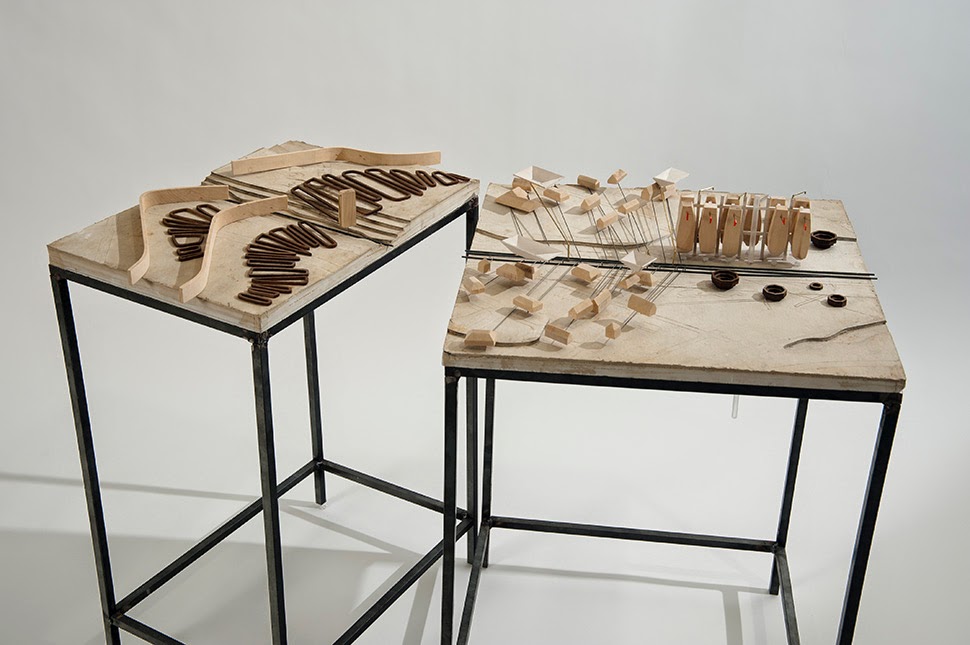
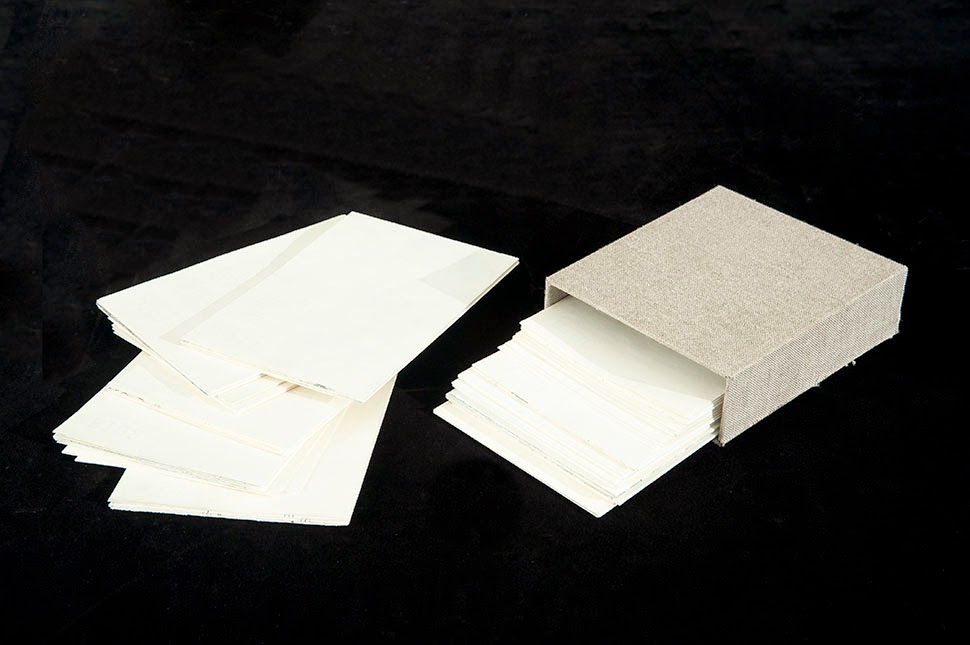
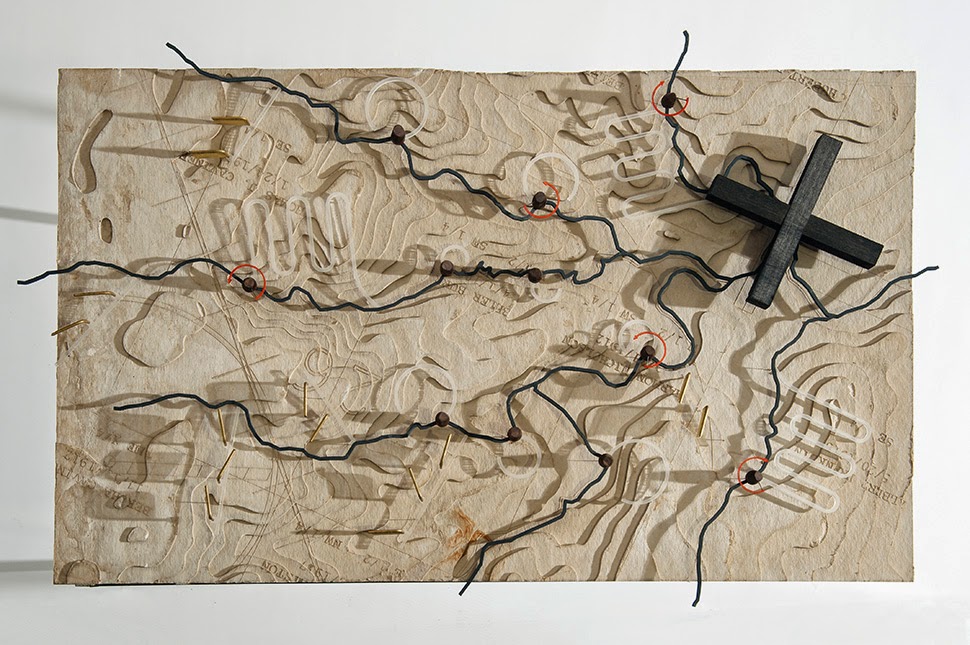
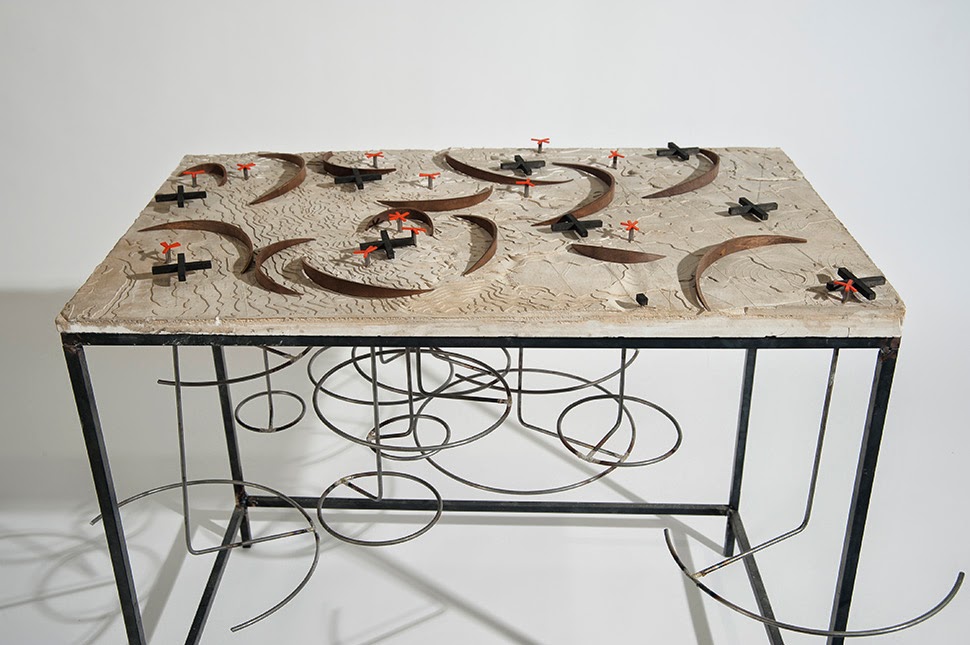
Wills produced quite a lot of material for the project, including a cluster of table-sized landscapes that show these tools and instruments as they might be seen in the field.

[Image: “Cultivating the Map” by Danny Wills].
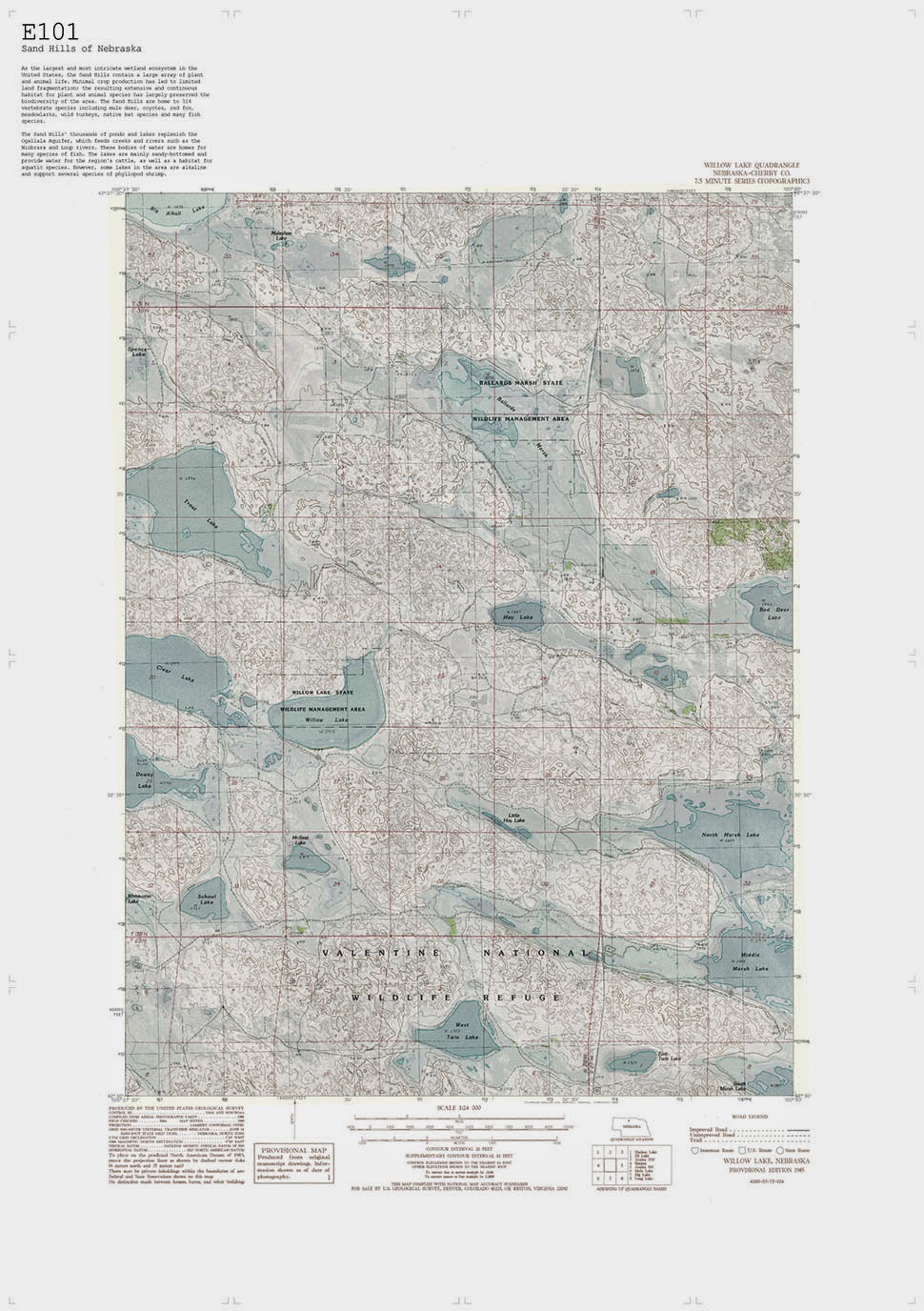
In many ways, parts of the project bring to mind the work of Smout Allen, who also conceive of architecture as just one intermediary spatial product on a scale that goes from the most intricate of handheld mechanisms to super-sized blocks of pure infrastructure.

Imagine Augmented Landscapes transported to the Great Plains and animated by a subtext of hydrological surveying and experimental agriculture. Deep and invisible bodies of water exert slow-motion influence on the fields far above, and “architecture” is really just the medium through which these spatial effects can be cultivated, realized, and distributed.

This, it seems, is the underlying premise of Wills’s project, that architecture is like a valve through which new landscapes pass.

[Images: “Cultivating the Map” by Danny Wills].
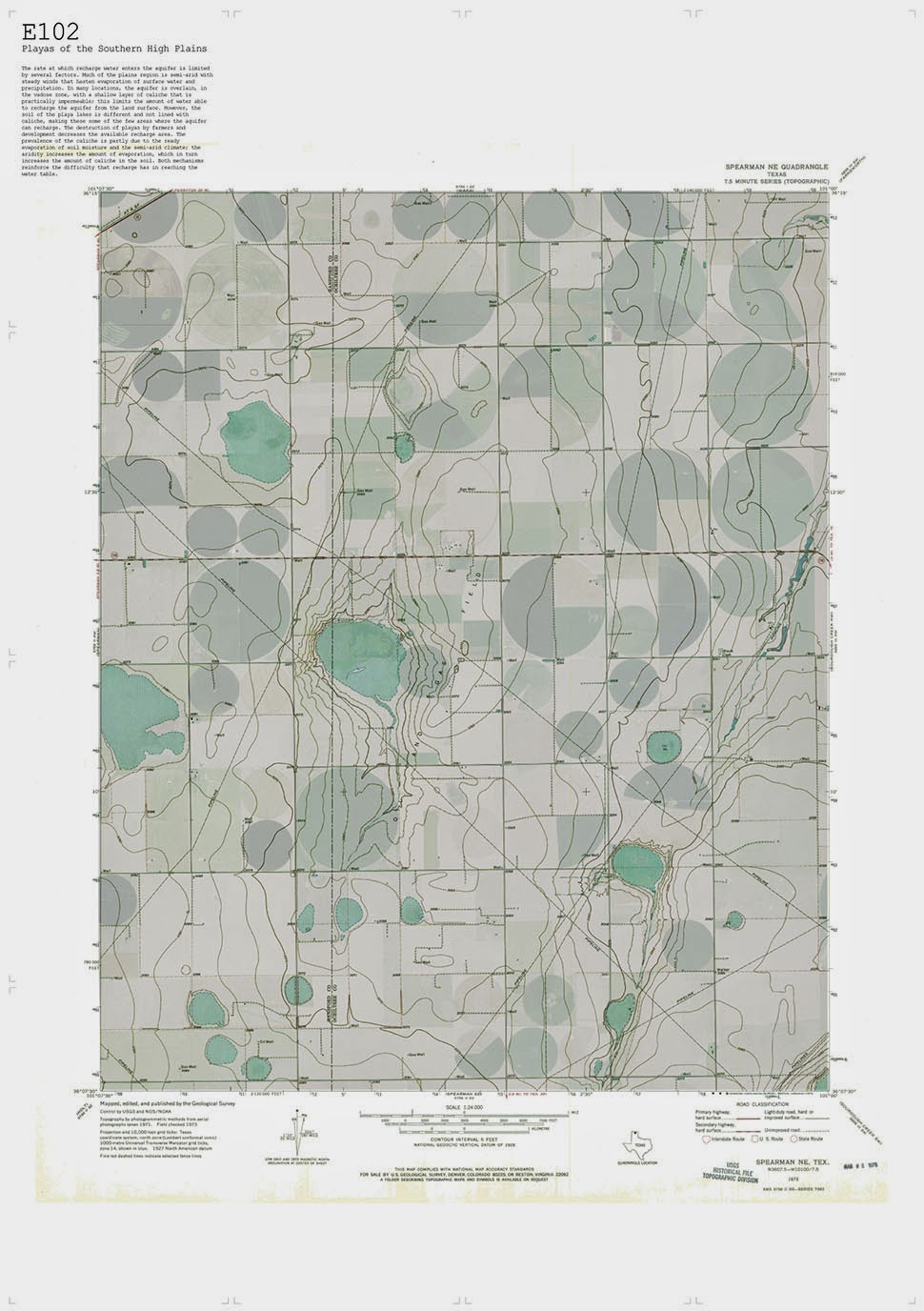
In any case, I’ve included a whole bunch of images here, broadly organized by tool or, perhaps more accurately, by cartographic idea, where the system of projection suggested by Wills’s devices have had some sort of spatial effect on the landscape in which they’re situated.

However, I’ve also been a little loose here, organizing these a bit by visual association, so it’s entirely possible that my ordering of the images has thrown off the actual narrative of the project—in which case, it’s probably best just to check out Wills’s own website if you’re interested in seeing more.

[Images: “Cultivating the Map” by Danny Wills].
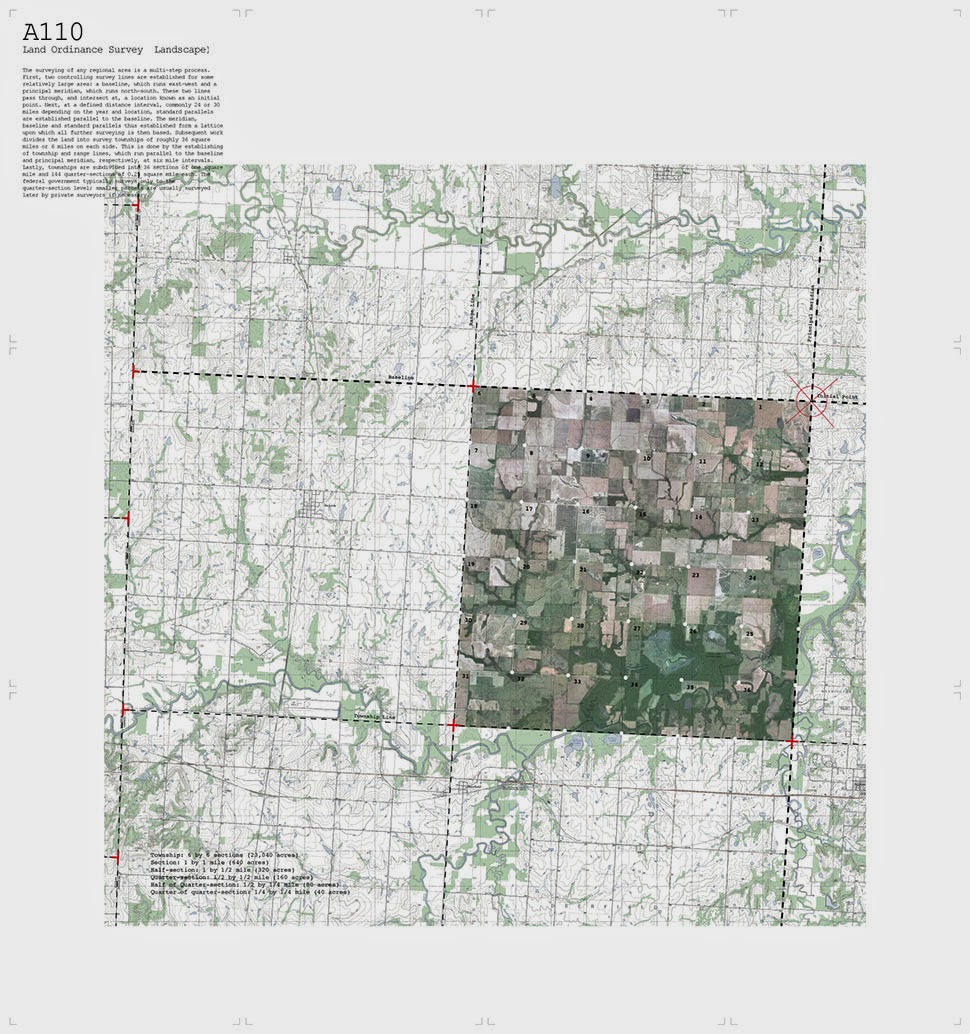
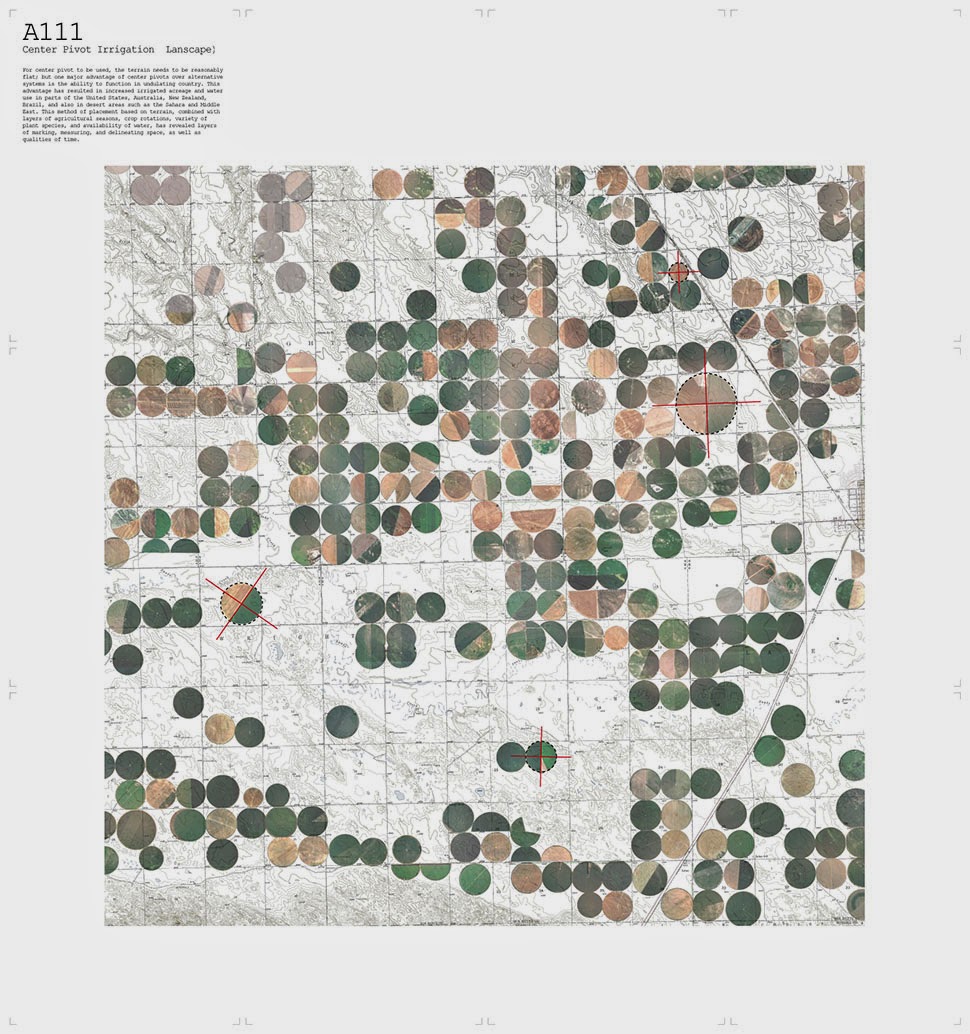
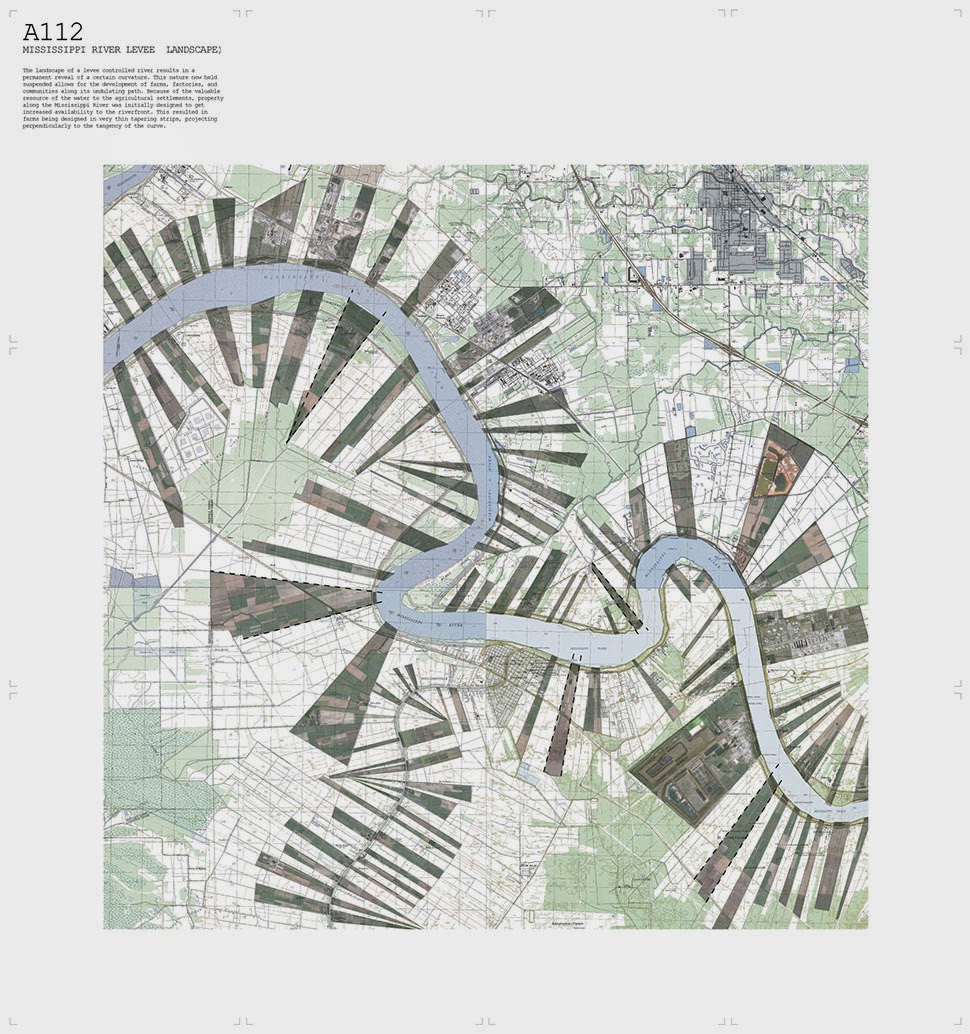
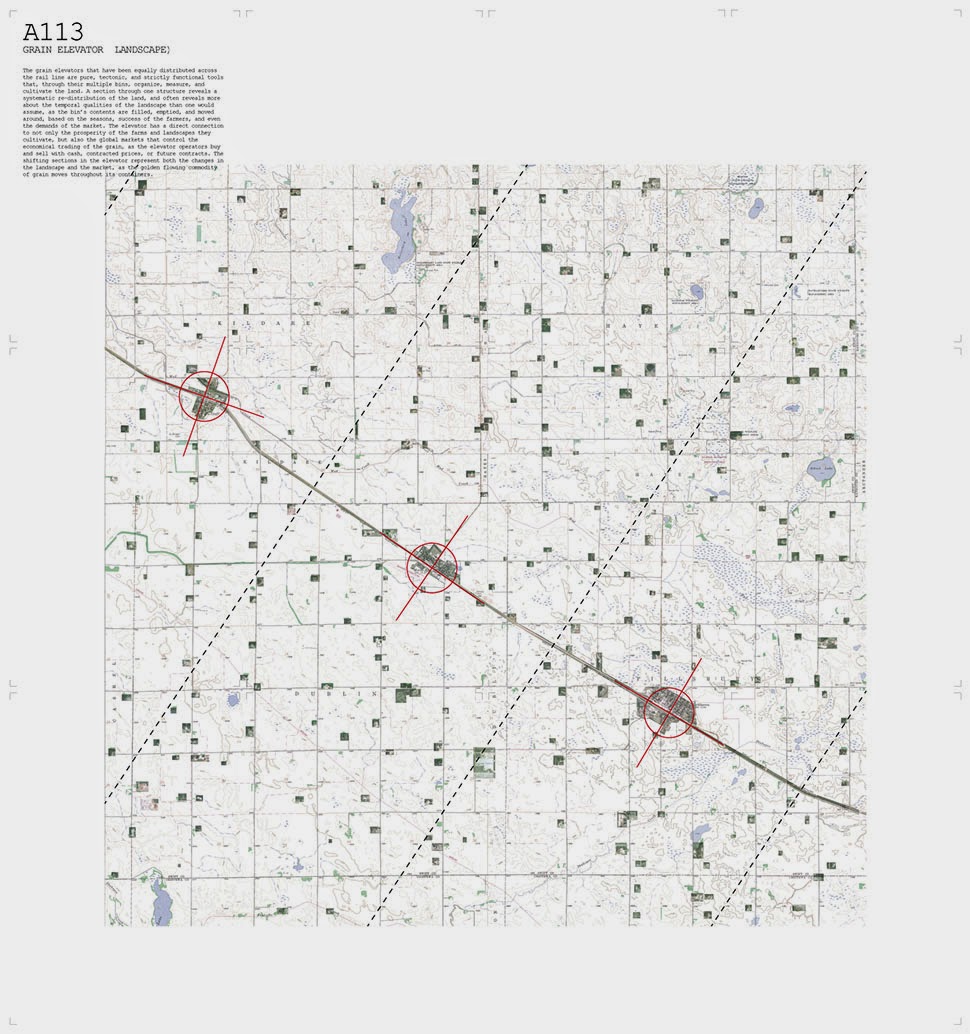
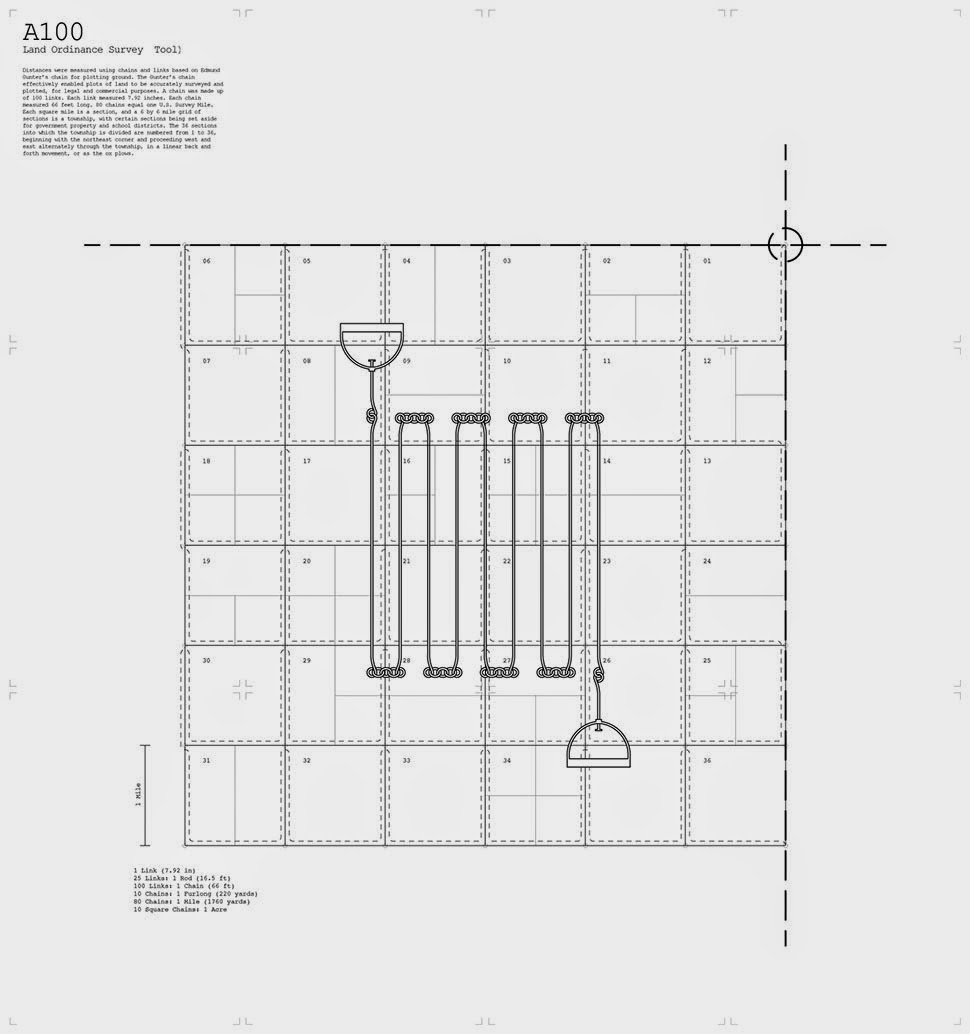
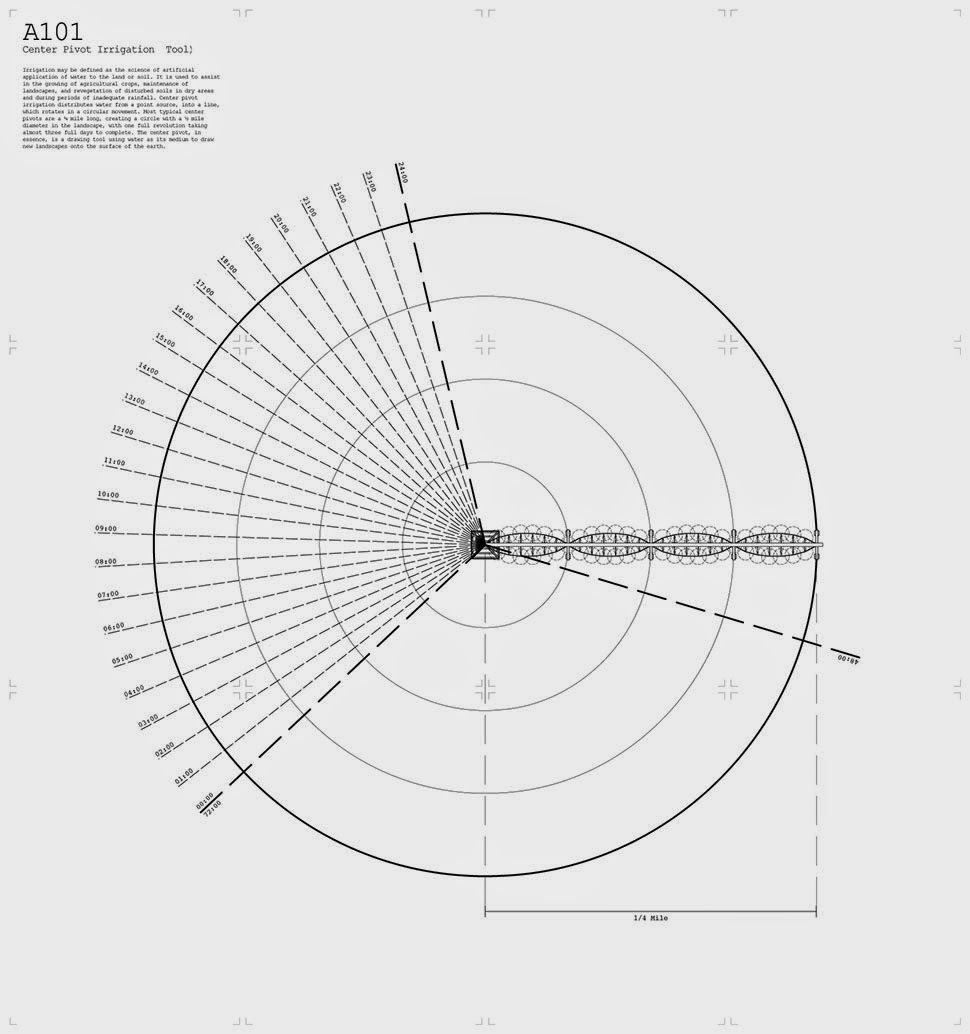
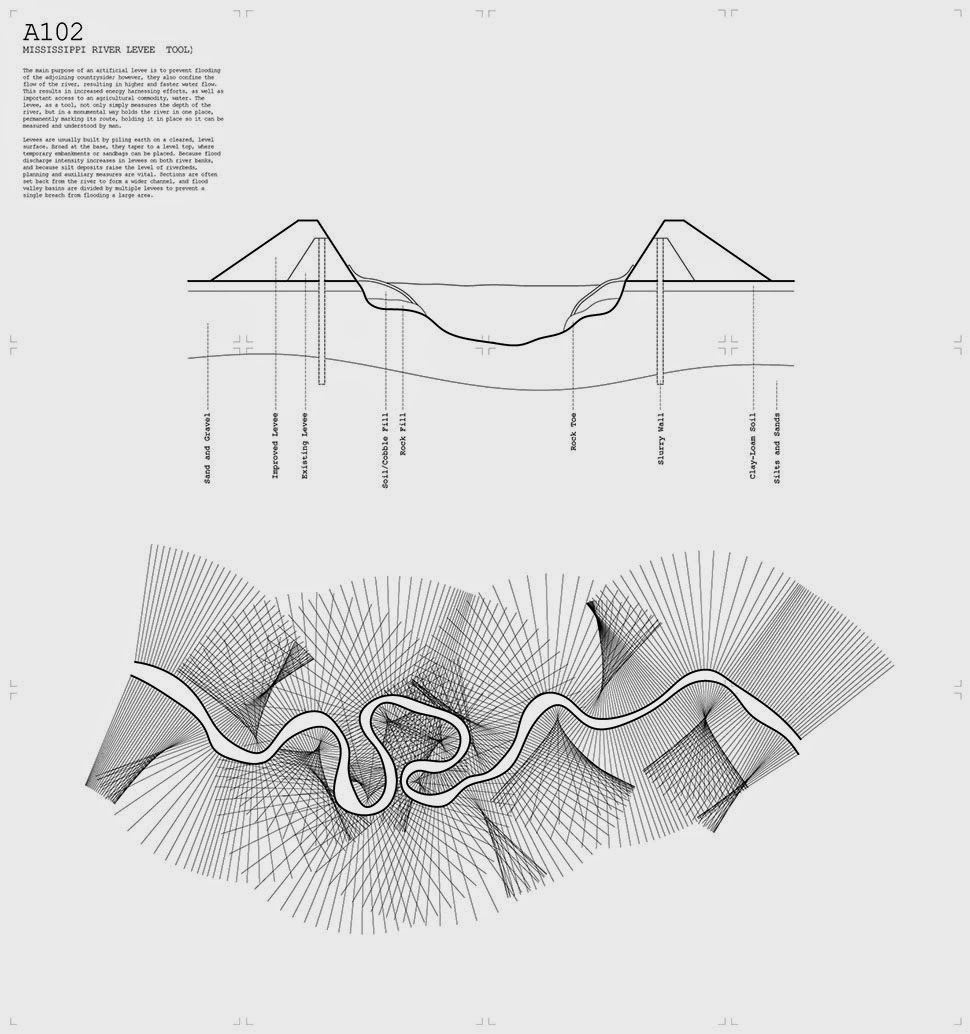
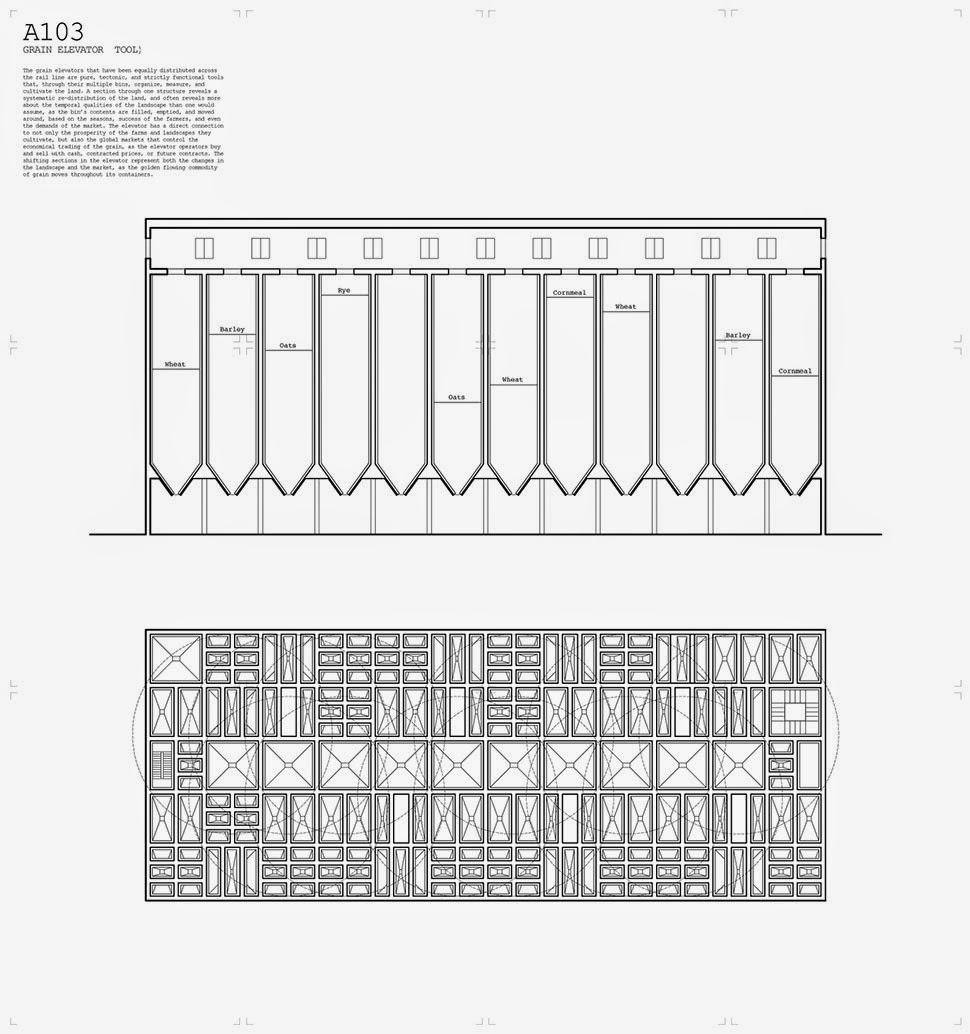
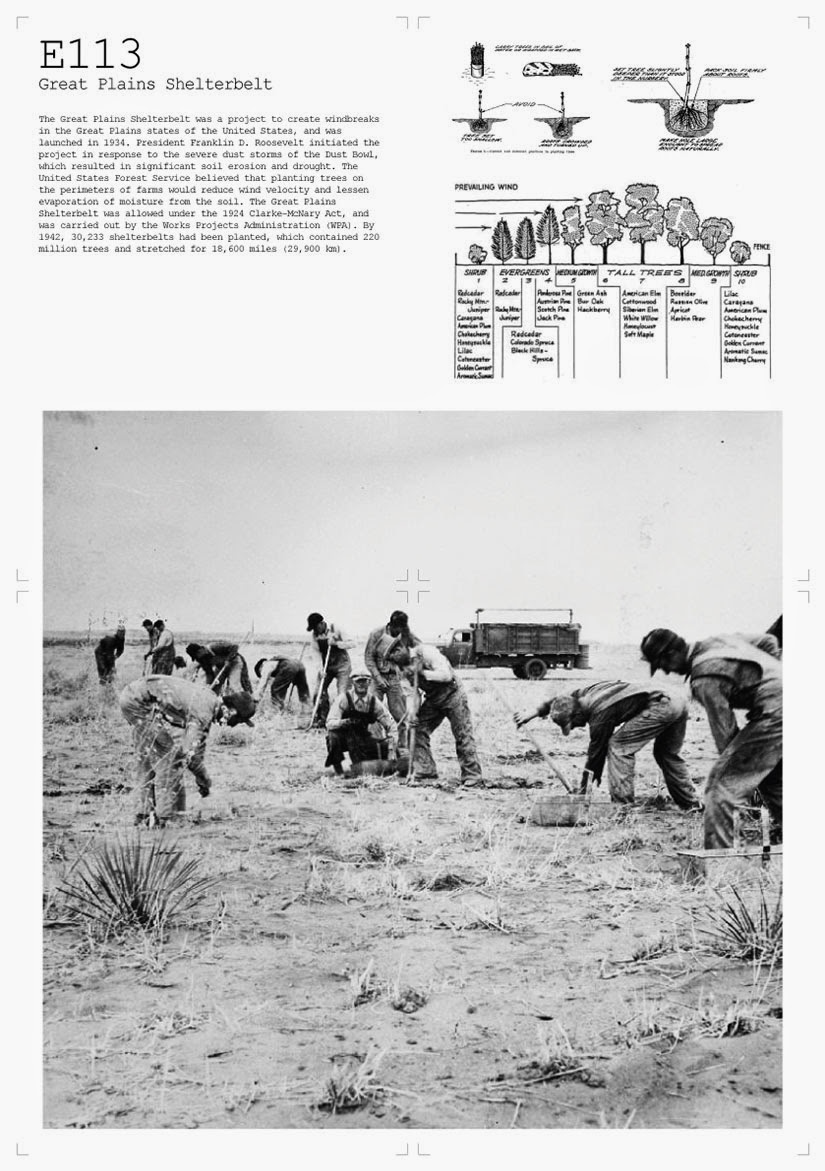
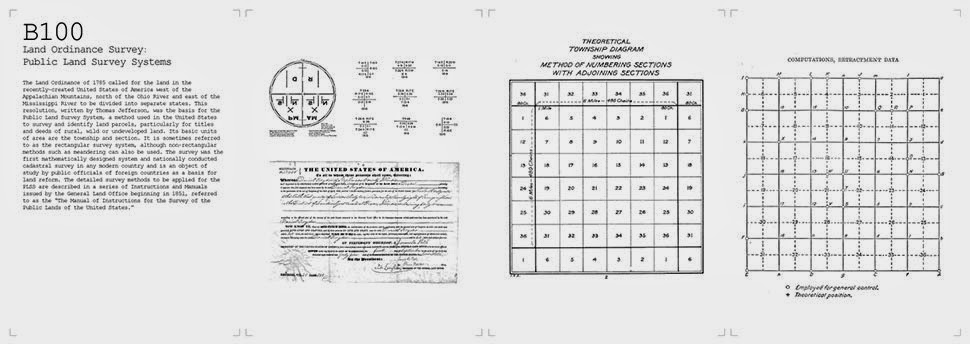
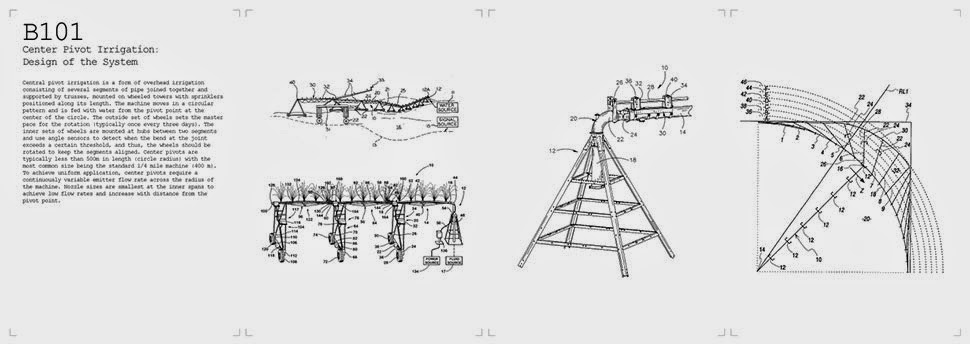
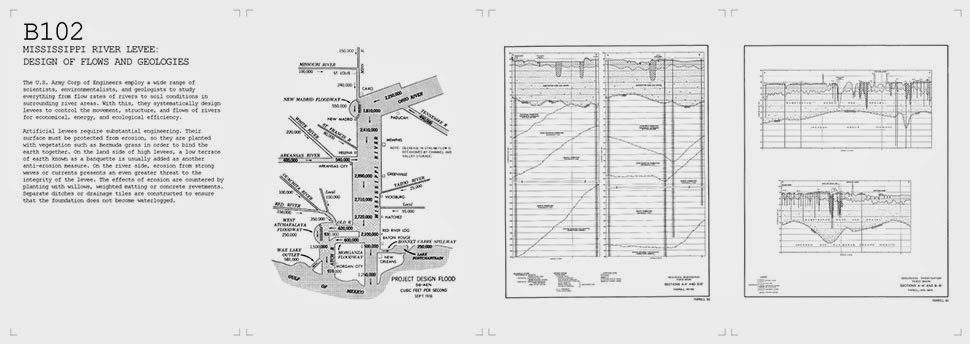
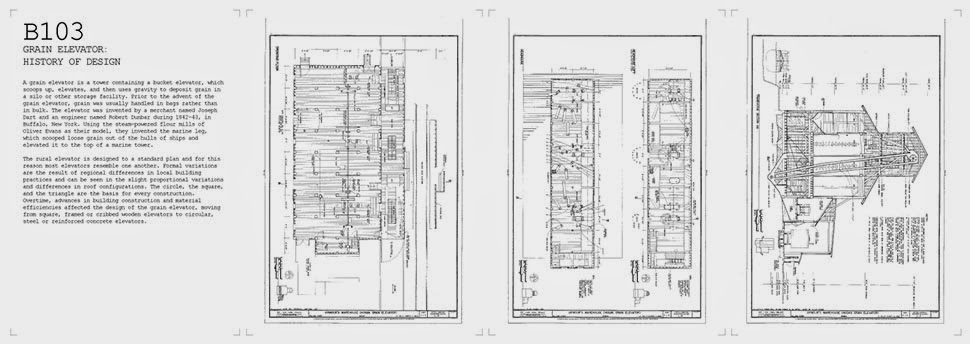
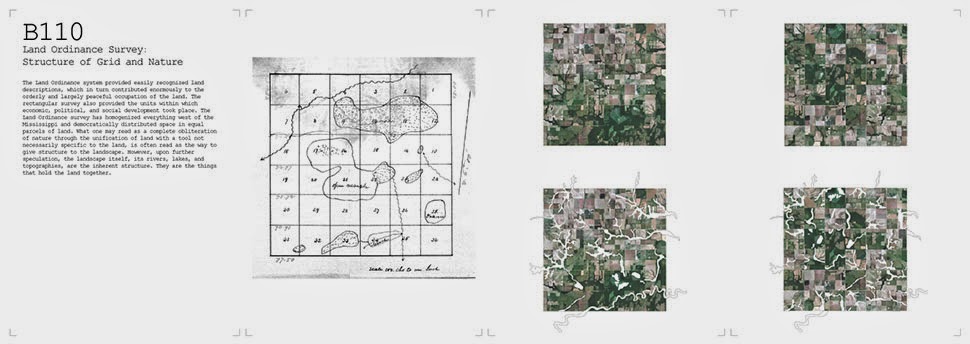
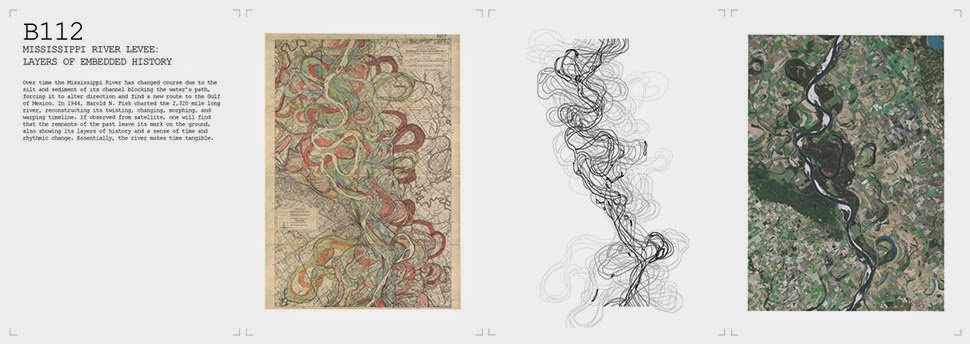
The project includes land ordinance survey tools and irrigation mechanisms, a “Mississippi River levee tool” and the building-sized “grain elevator tool.”

[Images: “Cultivating the Map” by Danny Wills].
In Danny’s own words, the project “finds itself in the territory of the map, proposing that the map is also a generative tool. Using the drawing as fertile ground, this thesis attempts a predictive organization of territory through the design of four new tools for the management of natural resources in the Great Plains, a region threatened with the cumulative adverse effects of industrial farming. Each tool proposes new ways of drawing the land and acts as an instrument that reveals the landscape’s new potential.”

These “new potentials” are often presented as if in a little catalog of ideas, with sites named, located, and described, followed by a diagrammatic depiction of what Wills suggests might spatially occur there.

[Images: “Cultivating the Map” by Danny Wills].
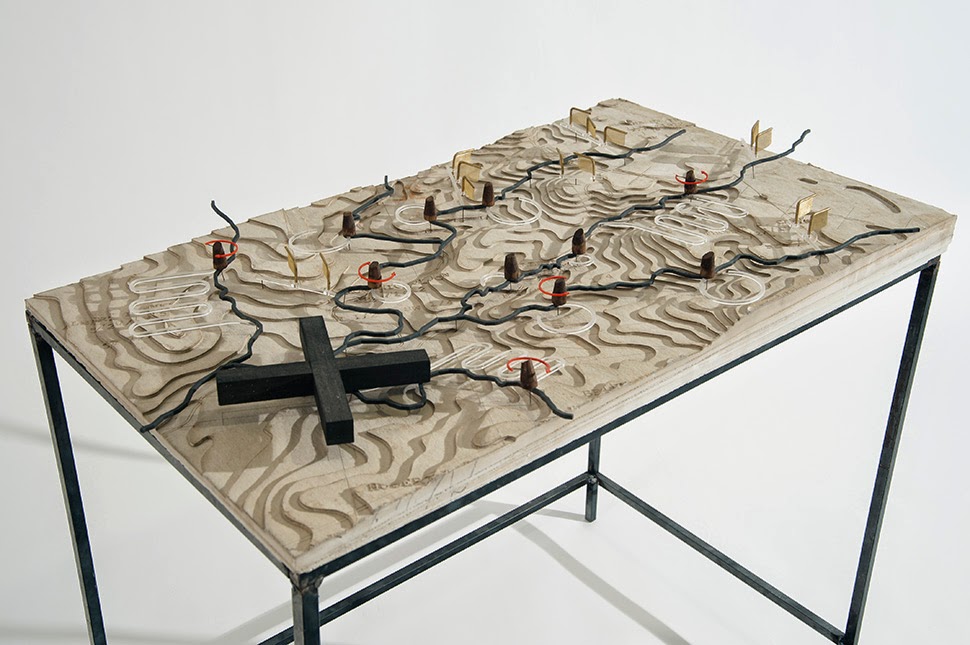
The ambitious project earned Wills both the Henry Adams AIA Medal & Certificate of Merit, and the school’s Yarnell Thesis Prize in Architecture.

[Images: “Cultivating the Map” by Danny Wills].
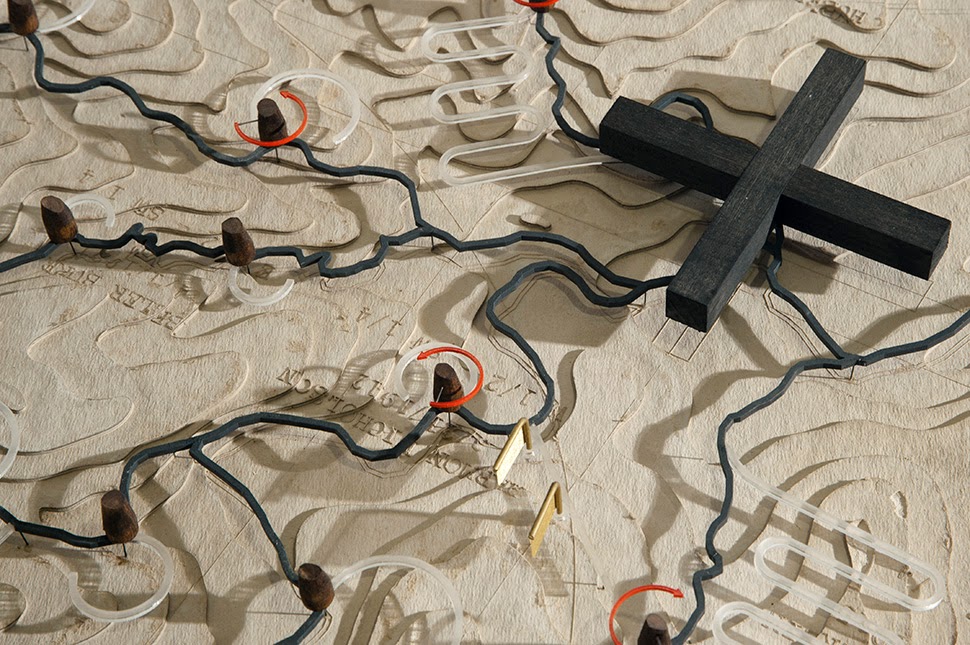
I’ll wrap up here with a selection of images of the landscapes, tools, and instruments, but click over to Danny’s site for a few more. Here are also some descriptions:

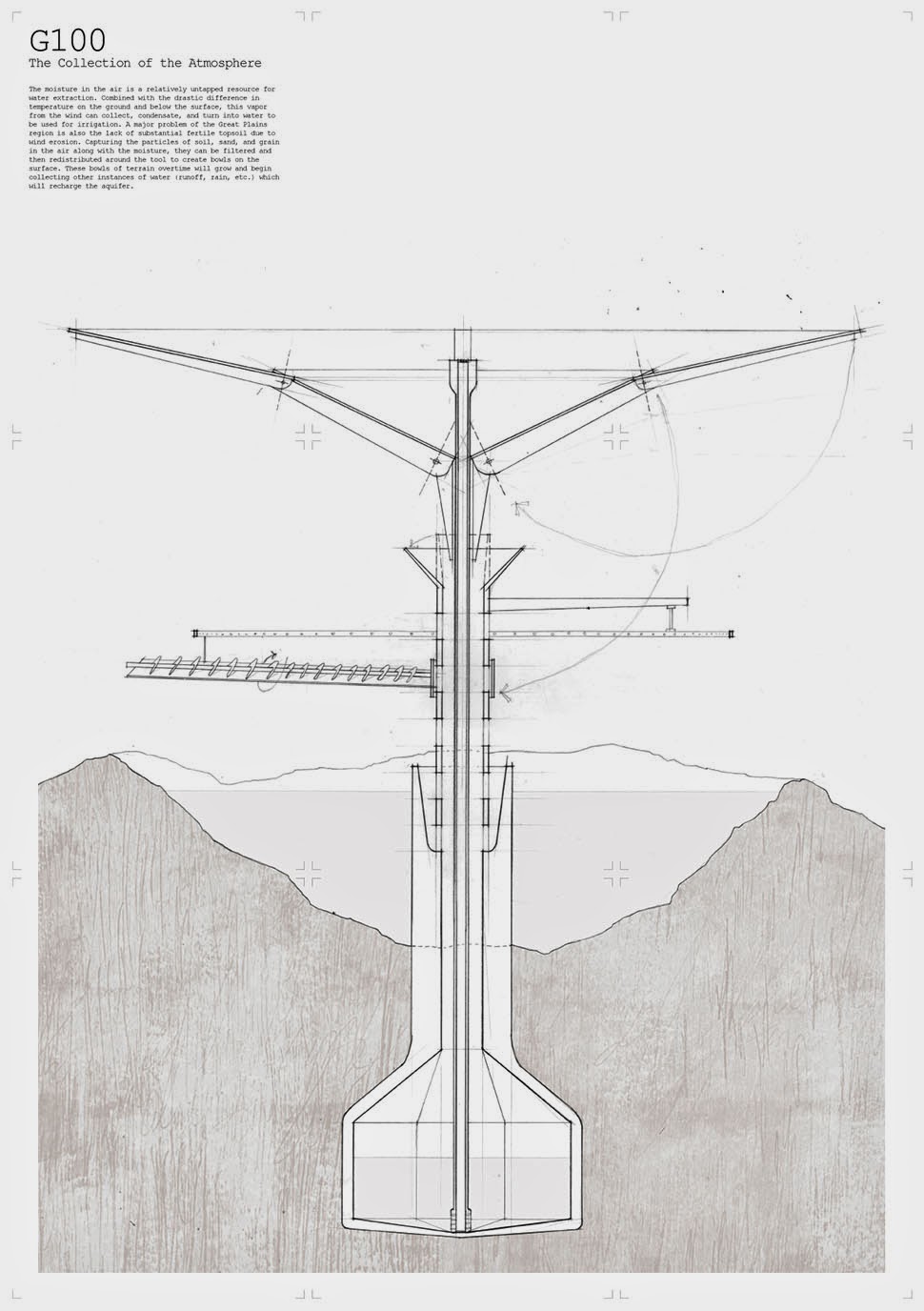
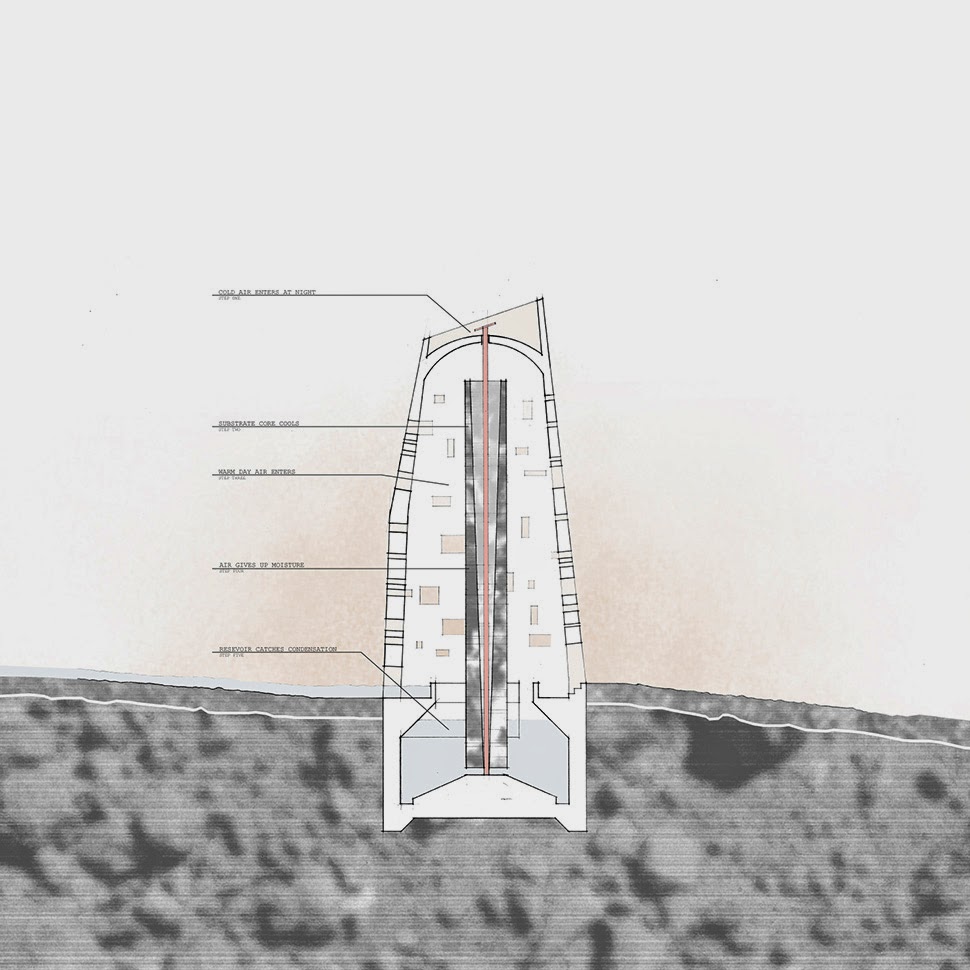
Tool 1: Meanders, Fog Fences, Air Wells

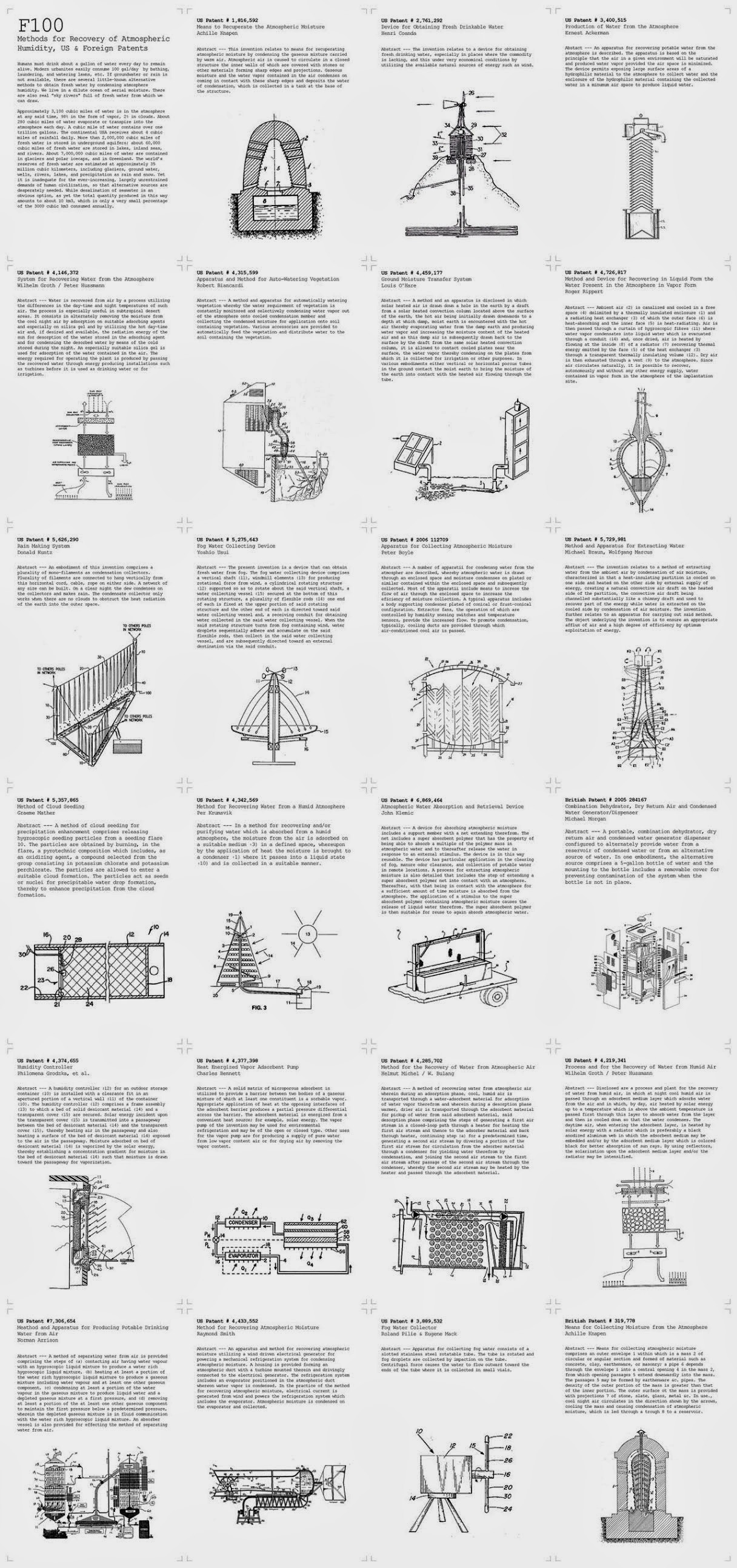
Tool 1 attaches itself to the groundwater streams, both proposing tools to redirect and slow down the flow, as well as tools to collect atmospheric water through technological systems like air wells and fog fences, forming new bodies and streams of water. The new air wells collect atmospheric water through a system of cooling and heating a substrate core inside of a ventilated exterior shell. The air wells also become spaces to observe the re-directing flow of water, as overflow quantities are appropriately managed.

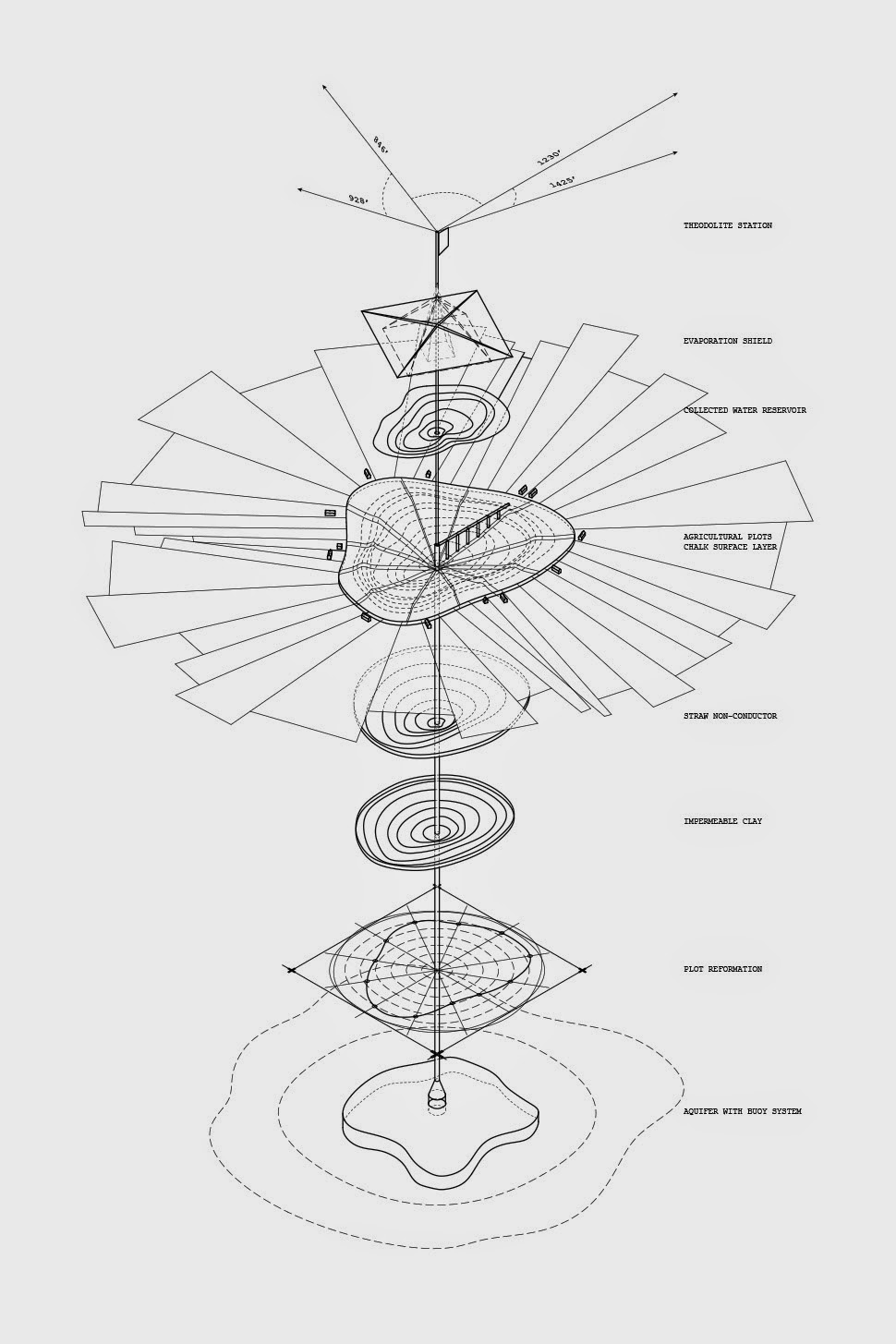
Tool 2: Aquifer Irrigation Ponds

Tool 2 uses the center pivot irrigation rigs to reconstruct the ground, making bowls in the landscape that act as dew ponds. At the same time, the wells become tools and markers to survey the levels of the aquifer below, signifying changes in the depth through elevational changes above. New forms of settlement begin to appear around each ring as a balance is reached between extraction and recharge of the aquifer.

Tool 3: Sand Dunes, Grazing Fields

Tool 3 uses gas wells as new geo-positioning points, redrawing boundaries and introducing controlled grazing and fallowing zones into the region. Walls are also built as markers of the drilling wells below, creating a dune topography to retain more ground water. Each repurposed oil rig becomes an architectural element that both provides protection and feed for grazing animals as well as a core sample viewing station. The abandoned rigs suspend cross sections of the earth to educate visitors of the geological history of the ground they stand on.

Tool 4: Water Recycling Station

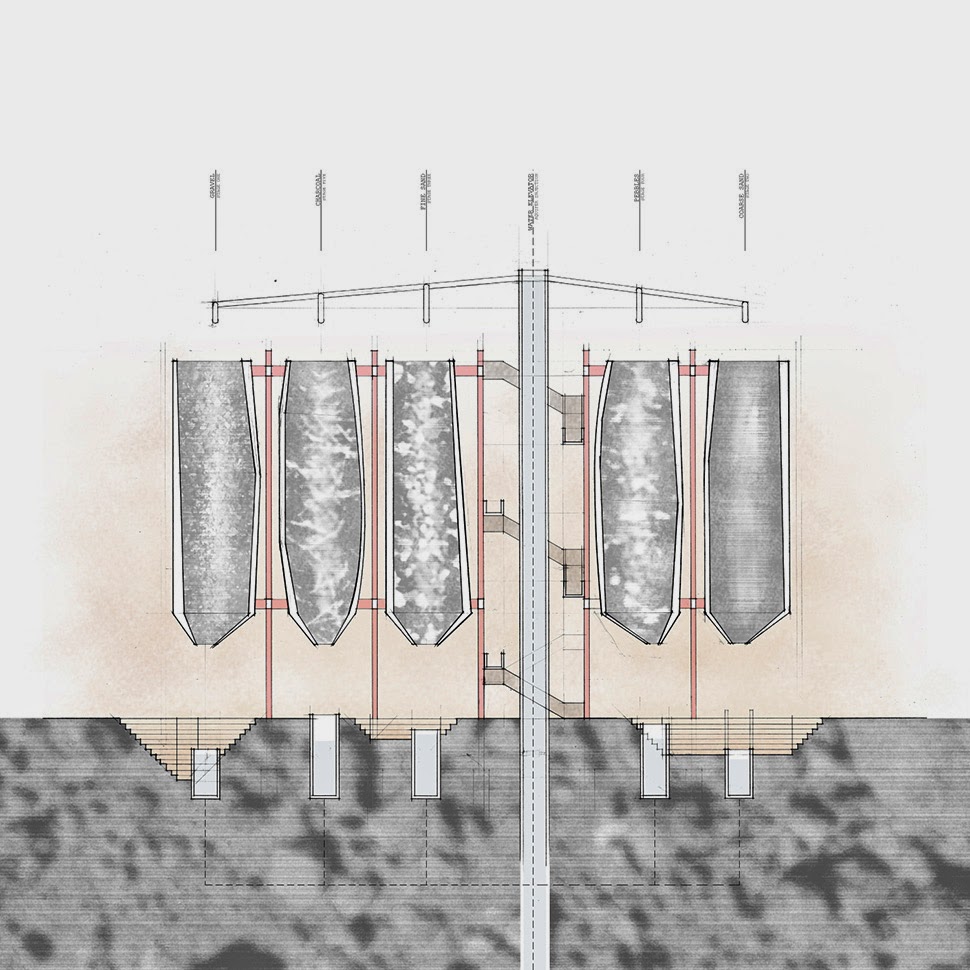
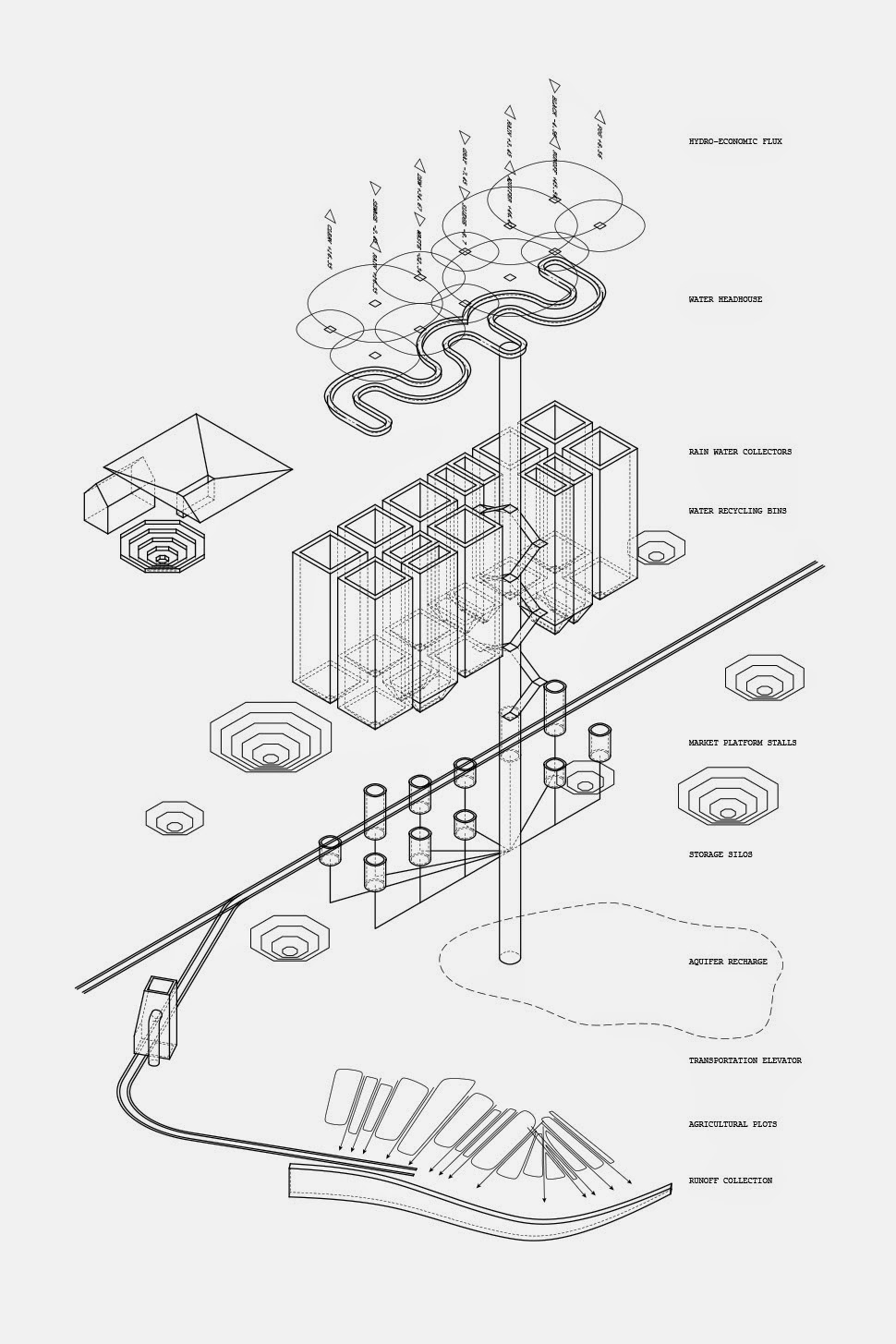
Tool 4 converts the grain elevator into a water recycling station, filling the silos with different densities of sand and stone to filter collected types of water- rain, ground run-off, grey, brackish, etc. Large pavilion like structures are built between houses, collecting water and providing shade underneath. Some housing is converted into family-run markets; the new social space under the pavilions provide for market space. The repurposed grain elevator becomes the storage center for the region’s new water bank. Economic control is brought back to the local scale.

[Images: “Cultivating the Map” by Danny Wills].
The Comet as Landscape Art

[Image: Photo courtesy ESA].

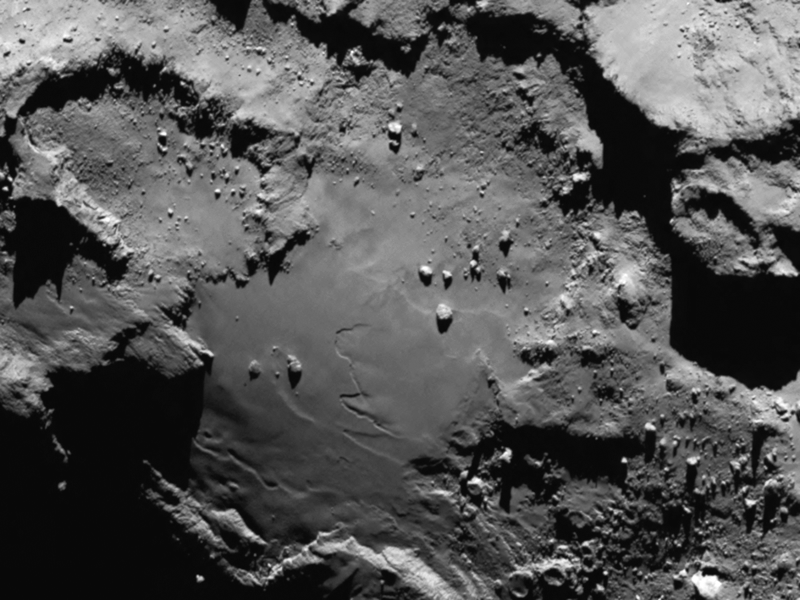
Intrigued by these images as an example of how the tradition of landscape representation has rapidly progressed—from the Romantics and the Hudson River School to Rosetta—I felt compelled to post a few photos of the craggy and glacial surface of Comet 67P/Churyumov–Gerasimenko, sent back to Earth yesterday from the European Space Agency’s Rosetta spacecraft.

The surface of the comet “is porous, with steep cliffs and house-sized boulders,” making it earth-like yet deeply treacherous, an irregular terrain to photograph and a dangerous place to land.

[Image: Photo courtesy ESA].

It is the notion of “land” here that is most interesting, however, as this is really just the imposition of a terrestrial metaphor onto a deeply alien body. Yet the comet is, in effect, literally a glacier: a malleable yet permanently frozen body of ice hurtling through space, occasionally exploding in comas and tails of vapor.

It is “an ancient landscape,” we read, “and yet one that looks strangely contemporary as the sun vaporizes ice, reworking the terrain like a child molding clay.”

Think Antarctica in a winter storm, not southern Utah—or Glacier National Park, not the Grand Canyon.

[Image: Photo courtesy ESA].

Along those lines, some of the most provocative writing on what it means to visually represent the frozen and hostile landscapes of the Antarctic is by writer William L. Fox, whose work offers some useful resonance here.

Fox has written, for example, about the technical and even neurological difficulties in accurately representing—let alone comprehending or simply navigating—Antarctic space and the vast forms that frame it.

Distant landscapes distorted by thermal discontinuities; white levels pushed to the absolute limit of film chemistry; impossible contours throwing off any attempt at depth perception; even the difficulty of distinguishing complicated mirages from actual landforms: these are all part of the challenge of creating images of an exotic landscape such as the Antarctic.

As Fox writes, it was even specifically the tradition of Dutch landscape painting, combined with the maritime practice of sketching coastal profiles, that first introduced the visual world of the Antarctic to western viewers: it was thus seen as an ominous, ice-clogged horizon of fog and low clouds looming always just slightly out of ship’s reach at the bottom of the world.

He calls this the genre of “representational exploration art.”

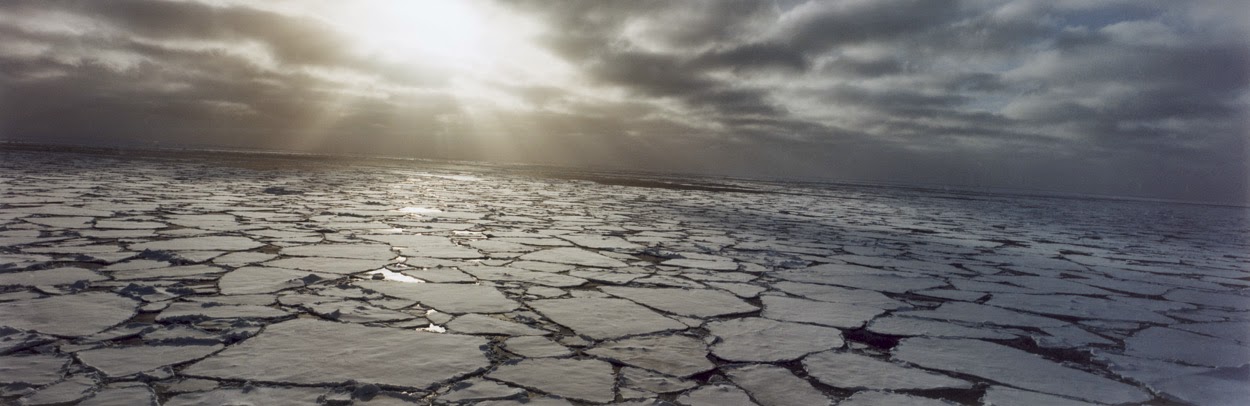
[Image: Photo by Stuart Klipper from his fantastic book, The Antarctic: From the Circle to the Pole, with a foreword by William L. Fox].

In one interesting passage in his book Terra Antarctica, he suggests that the south polar landscape is so extreme, it often resists natural analogy. As Fox describes it, the wind-carved boulders and isolated pillars and cliffs of ice are more like “artworks by Salvador Dalí and Henry Moore, evoking the spirit of surrealism with the former and modernist forms with the latter. The Antarctic is so extreme to our visual expectations that, once we attempt to move beyond measurement to describe it, analogies with other parts of nature fall short, and we resort to comparisons with cultural artifacts that push at the boundaries of our perceptions.”

These include “cultural artifacts such as sculpture and architecture, products more of the imagination than of nature.”

Consider, for instance, that comet 67P is widely known today as the “rubber-duck comet” due to its bifurcated structure, implying, as Fox suggests with the Antarctic, that no natural analogy seemed adequate for describing the comet’s geometry.

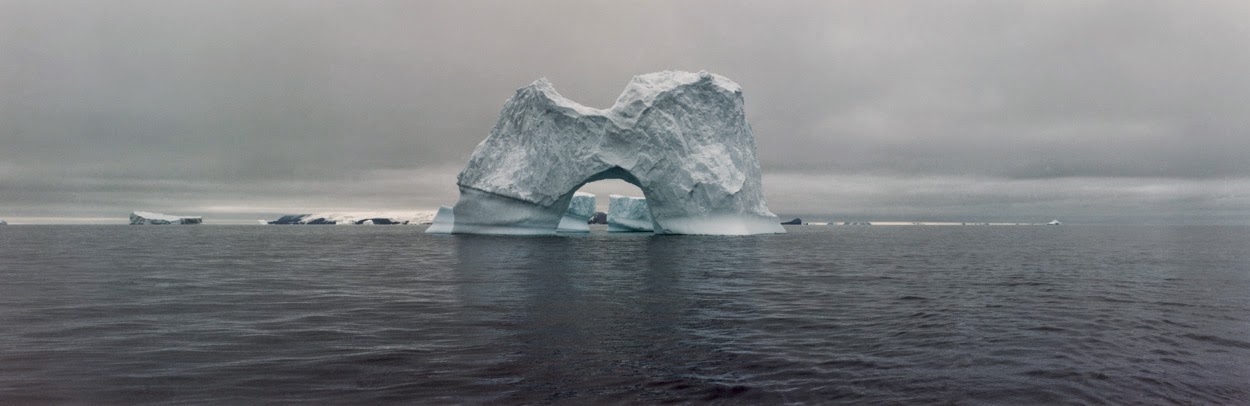
[Image: The gateway arches of the Antarctic; photo by Stuart Klipper from, The Antarctic: From the Circle to the Pole, foreword by William L. Fox].
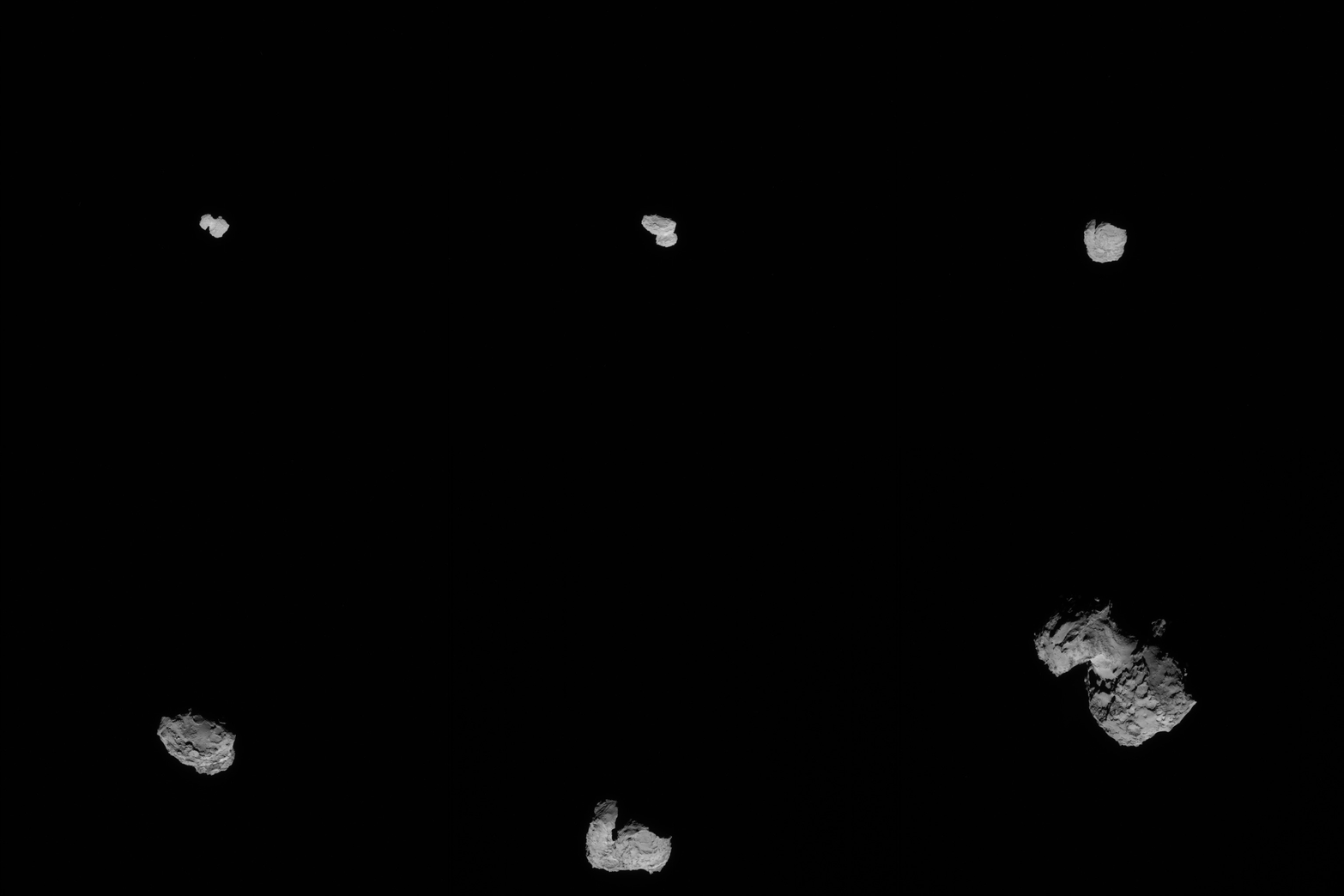
But what are we to make of comet 67P now that we can see it as a physical landscape, not just an ephemeral optical phenomenon passing, at great distance, through the sky? When a blur becomes focused as terrain, what is the best way to describe it? What visual or textual traditions are the most useful or evocative—vedas and sutras or laboratory reports?

Put another way, is poetry as appropriate as a scientific survey in such a circumstance—should “we attempt to move beyond measurement to describe it,” in Fox’s words—and, if not, what new genres of exploration art might result from this spatial encounter?

I’m reminded here of poet Christian Bök’s wry remark on Twitter: “I am still amazed that poets insist on writing about their divorces, when robots are taking pictures of orange, ethane lakes on Titan…”

Now that humans are beginning to land semi-autonomous camera-ships on the frozen ice fields of passing comets, sending back the (off)world’s strangest landscape art—as if a direct line runs from, say, the pastoral landscapes of Claude Lorrain or the elemental weirdness of J.M.W. Turner to the literally extraterrestrial boulders and gullies depicted by Rosetta—how should our own descriptive traditions adapt? What, we might ask, is comet 67P’s role in art history?

[Image: Approaching 67P, via the ESA].

Bunker Simulations

[Image: A replica of the Nazis’ Atlantic Wall defenses in Scotland; photo via Stirling 2014].

The continent-spanning line of concrete bunkers built by the Nazis during WWII, known as the “Atlantic Wall,” was partially recreated in the United Kingdom—in more than one location—to assist with military training.

These simulated Nazi bunkers now survive as largely overlooked ruins amidst the fields, disquieting yet picturesque earth forms covered in plants and lichen, their internal rebar exposed to the weather and twisted by explosives, serving as quiet reminders of the European battlefield.

The various wall sites even include trenches, anti-tank ditches, and other defensive works carved into the ground, forming a kind of landscape garden of simulated fortification.

[Image: A replica of the Atlantic Wall in Scotland; photo via Stirling 2014].

As the Herald Scotland reported the other day, one of these walls “was built at Sheriffmuir, in the hills above Dunblane, in 1943 as preparations were being made to invade Europe. The problem was the Nazis had built a formidable line of concrete defenses from Norway all the way to the Spanish border and if D-Day was to have any chance of success, the British and their allies would have to get over those defenses.”

This, of course, “is why the wall at Sheriffmuir was built: it was a way for the British forces to practise their plan of attack and understand what they would face. They shot at it, they smashed into it, and they blew it up as a way of testing the German defences ahead of D-Day.”

[Image: A replica of the Atlantic Wall in Scotland; photo via Stirling 2014].

It would certainly be difficult to guess what these structures are at first glance, or why such behemoth constructions would have been built in these locations; stumbling upon them with no knowledge of their history would suggest some dark alternative history of WWII in which the Nazis had managed to at least partially conquer Britain, leaving behind these half-buried fortresses in their wake.

Indeed, the history of the walls remains relatively under-exposed, even in Britain, and a new archaeological effort to scan all of the defenses and mount an exhibition about them in the Dunblane Museum is thus now underway.

[Image: A replica of the Atlantic Wall in Scotland; photo via Stirling 2014].

The story of the Scottish wall’s construction is also intriguingly odd. It revolves around an act of artistic espionage, courtesy of “a French painter and decorator called Rene Duchez.”

Duchez, the newspaper explains, “got his hands on the blueprints for the German defences while painting the offices of engineering group TODT, which [had been hired] to build the Atlantic walls. He hid the plans in a biscuit tin, which was smuggled to Britain and used as the blueprint for the wall at Sheriffmuir.”

But Scotland is not the only UK site of a simulated Nazi super-wall: there were also ersatz bunkers built in Surrey, Wales, and Suffolk. In fact, the one in Surrey, built on Hankley Common, is not all that far from my in-laws, so I’ll try to check it out in person next time I’m over in England.

[Images: An Atlantic Wall replica in Surrey; top photo by Shazz, bottom three photos via Wikipedia].

Attempts at archaeological preservation aside, these walls seem destined to fade into the landscape for the next several millennia, absorbed back into the forests and fields; along the way, they’ll join other ancient features like Hadrian’s Wall on the itinerary of future military history buffs, just another site to visit on a slow Sunday stroll, their original context all but forgotten.

(Spotted via Archaeology. Previously on BLDGBLOG: In the Box: A Tour Through The Simulated Battlefields of the U.S. National Training Center and Model Landscape].