Symbolic, ornamental, and eclectic

Christopher Bisset recently produced a short film featuring the work of Portuguese-born Mozambican architect Amancio “Pancho” Guedes. “Set mainly in Maputo,” Bisset explains, “A Procura de Pancho (Looking for Pancho) is an experimental mix of animation, illustration and live action that follows the journey of a solitary student who has come to the city to explore the vibrant work of architect and artist Pancho Guedes.”

The film features some absolutely stunning buildings—buildings that, if I’m being honest, do well without the addition of animated drawings which begin to appear on their outer walls as the movie develops. But Bisset has put together a fantastic visual introduction to an architect far too people have even heard of.

An essay reproduced on Shrapnel Contemporary describes Guedes’s work as “effervescent,” adding that, “In its most exuberant and expressive character, Pancho’s architecture thus merrily escapes the moral task to which architectural modernism had consciously and diligently dedicated itself: the exclusion of the symbolic, the rejection of ornament, and the repression of the eclectic.” Symbolic, ornamental, and eclectic, the buildings seen in Bisset’s 10-minute film seem well worth exploring in person.

Weaponized Seismology

In a 1997 Q&A, Clinton-era Secretary of Defense William Cohen warned that terrorists might someday engage in “an eco-type of terrorism,” as he phrased it, “whereby they can alter the climate, set off earthquakes, [and] volcanoes remotely through the use of electromagnetic waves.”

I would love to see whatever “electromagnetic” weapons he was referring to—perhaps not unlike those found in one of these two games—and to wonder aloud what sort of test range such devices might require and what landscape architects might be able to do with such a place.

Feeding on Quakes

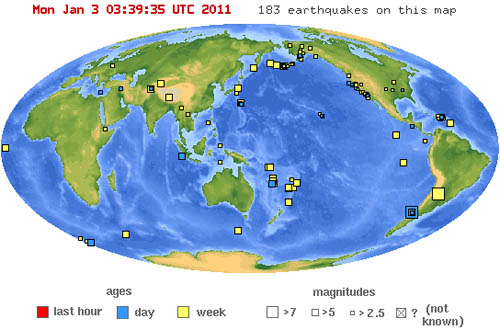
[Image: The USGS global earthquake map].

Five automated Twitter feeds to follow in the new year, if you’re on the trail of earthquakes, especially in Los Angeles and San Francisco, are @EarthquakesLA and @EarthquakesSF; @BigQuakesLA and @BigQuakesSF, if you’re only interested in earthquakes greater than 3.5 on the Richter scale; and @EarthquakeBot, for any earthquake, anywhere in the world, 5.0 or greater.

On the other hand, it would be interesting to see a feed that only notes so-called “slow earthquakes,” or earthquakes “that last days, weeks, or even months.” In fact, slow-earthquake Twitter feeds aside (@SlowEarthquakes? @SlowQuakesLA?), it could be interesting to write a novel set in a Los Angeles undergoing a months-long earthquake, with residents eventually so accustomed to the constant but subtle drone and shimmer of the planet’s surface, with dishes rattling and pebbles rolling off hills, that, when it all comes to an end and the city goes silent, there is widespread panic, dogs and cats begin howling, and a wave of emotion rolls through the city. People pass out in grocery stores and at least one man, living alone in Calabasas, has a catastrophic heart attack.

Talk of a sequel is dismissed as too unlikely to believe…

Future Strategies of Spatial Practice

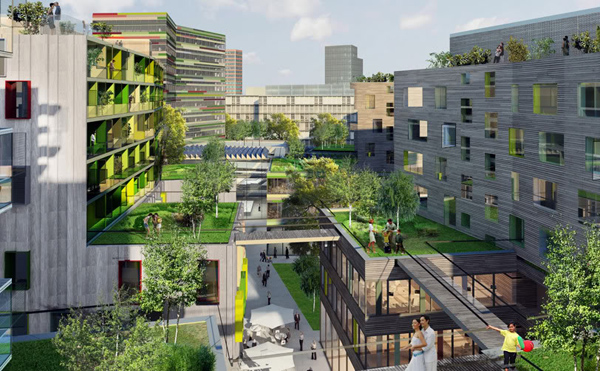
[Image: C_Life by ARUP, Sauerbruch Hutton, Experientia, and Galley Eco Capital, via Rory Hyde].

What better way to start off the new year than to ask what the future role of the architect might be? Rory Hyde has posted an article, originally published last summer, asking what “potential futures for design practice” currently exist or have yet to be created.

Hyde himself offers eight possible roles for spatial practitioners: the community enabler (or “custodian of the built environment”), the visionary pragmatist, the trans-disciplinary integrator, the social entrepreneur (motivated by the “powerful narrative potential of architectural communication in catalyzing complex visions for the future”), the practicing researcher, the long-term strategist, the management thinker, and the unsolicited architect.

While “long-term strategist” sticks out more as an abstract category, applicable to all of the others, rather than a position in and of itself, the analytic impulse behind Hyde’s list has provoked an interesting conversation; Dan Hill, Marcus Westbury, MM Jones, and Gerard Reinmuth are just a few of the participants enlivening the post’s growing comments thread.

Over and Out

[Video: A kind of deltaic 3D printer, printing variable landscapes into existence, from Riparian Rap].

I thought I’d end the year with this quick video of some riverine landscape modeling exercises built through the constant back and forth washes and cross-flows of a self-resurfacing deltaic 3D-printer—and then I’ll see you in 2011.

(Video spotted via @clasticdetritus).

Paris Onion

[Image: Photo by Dsankt].

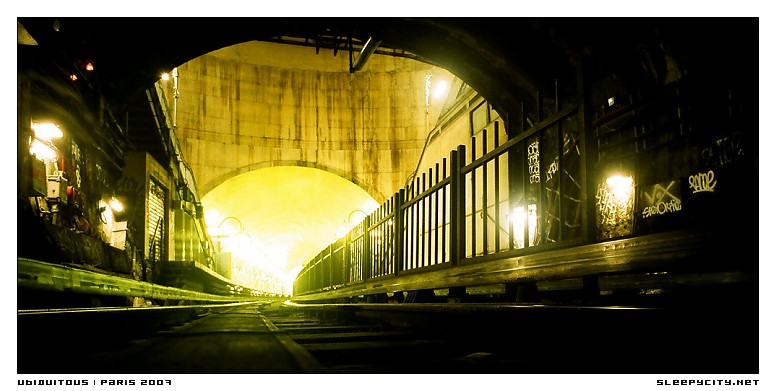
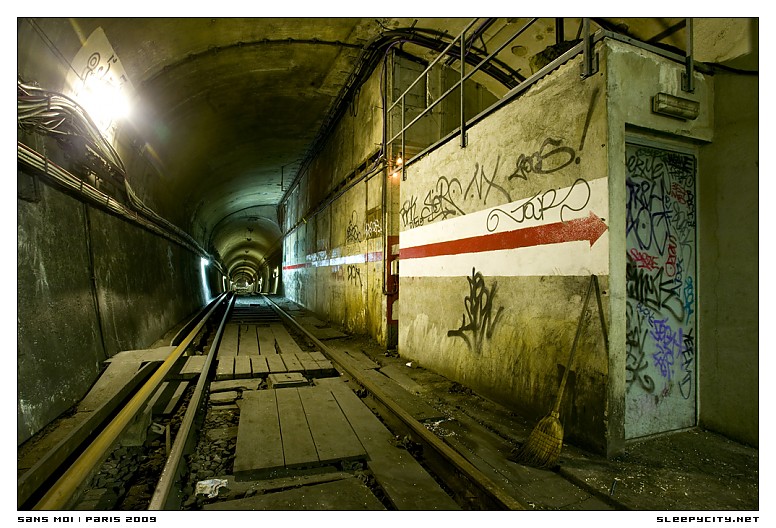
Dsankt of Sleepy City has posted a long and absurdly interesting write-up of his explorations over the years through the Paris Metro system, long after its doors have officially been closed.

“As we haven’t walked every section of tunnel nor checked every door,” he points out, “and considering the evolving nature of the system and the city it supports there is and will always be more to see, find and experience in the metro. This is in no way a definitive list, nor even a checklist for future explorers to use in their adventures in the metro, since discovering your own places is substantially more rewarding and something we should always pursue.”

[Image: Photo by Dsankt].

From “enormous vent systems” and the “abandoned platforms of an active station” to hand-drawn napkin maps and the “driverless robotrains of line 14,” it’s part adventure narrative, part infrastructural history, party underground photo-freakout—and, it’s worth reading in full.

Blue Tape

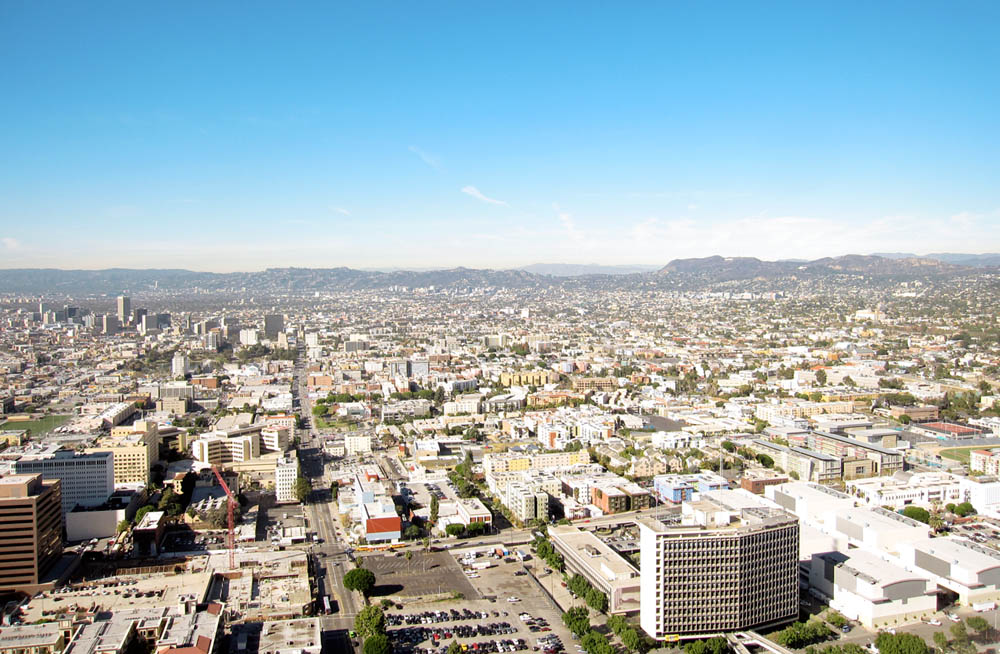
[Image: Los Angeles seen from the 51st floor of City National Plaza, 13 December 2010].

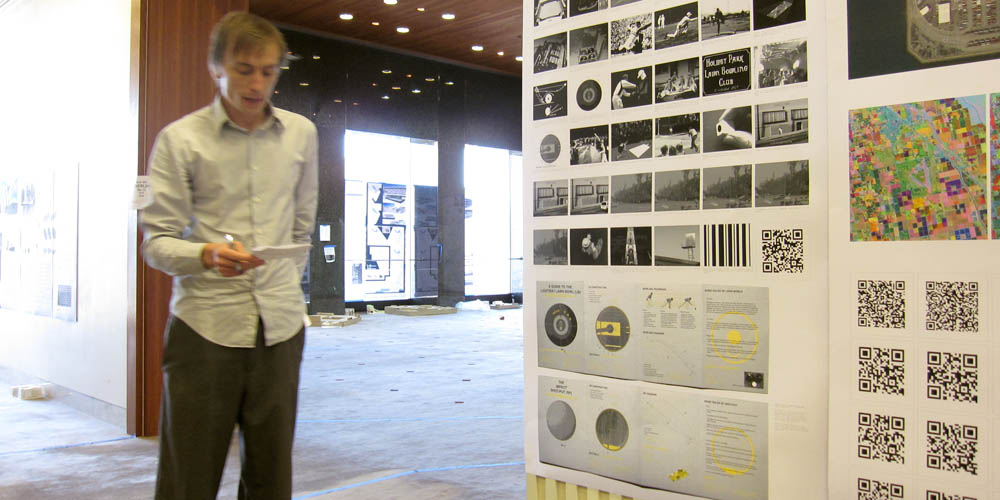
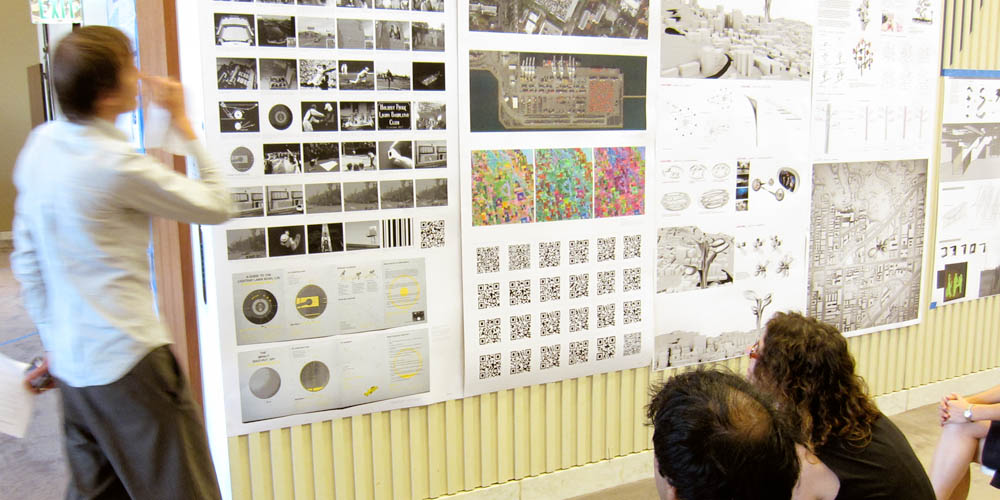
This past week brought the autumn term to an end here in Los Angeles. For two days, students from the USC School of Architecture participated in an experimental final review called “Blue Tape,” named after the blue painters’ tape that the students were required to use in mounting their boards. The technique didn’t quite stick with all projects, however, as students were given often very confined spaces—their boards thus overlapping—or irregular surfaces on which they were meant to display.

“Blue Tape” took place in the otherwise empty interior of a former corporate law office on the 50th and 51st floors of City National Plaza, in downtown Los Angeles. It was an open review, meaning that friends, family, critics, faculty, staff, administrators, fellow students, confidants, significant others, complete strangers, visitors, and the odd building-maintenance crew could wander around, from room to room and corridor to corridor, for hours at at time and check out student work. A reception, overlooking the nighttime intersecting grids and bulging topographies of the city outside, capped it all off.
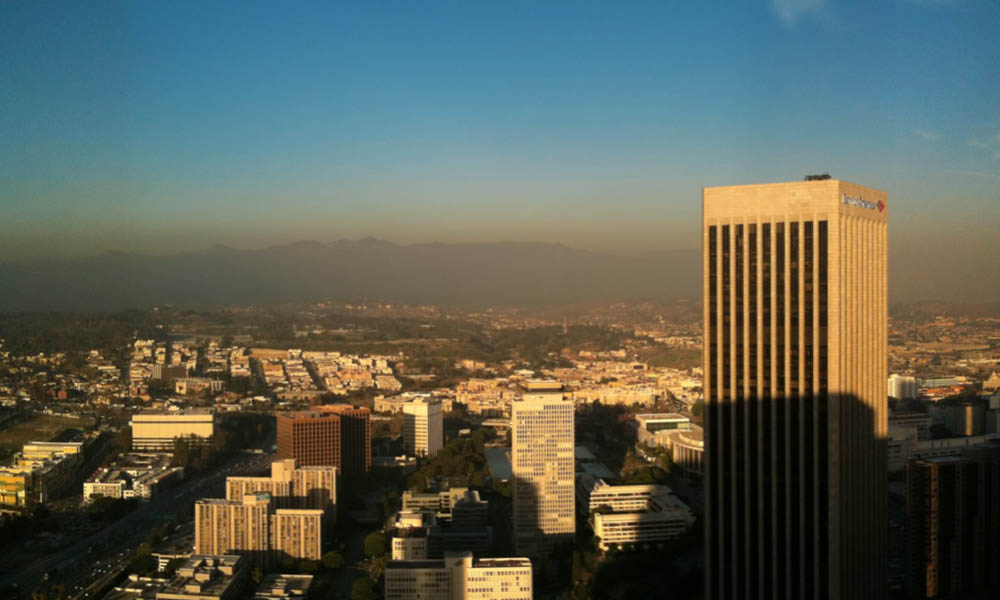
[Images: Downtown Los Angeles at sunset on 13 December 2010].

Archinect‘s Orhan Ayyüce, who participated as a kind of roving juror at “Blue Tape,” including for my own students, writes that, amidst all the reviews he’d done in the past two weeks, “this was the most special one in terms of providing a populated spectacle and a picture of a large beehive-like platform of youthful power.”

The novelty of the arrangement certainly contributed to this sensation. For two evenings in December, the post-recessional emptiness of a downtown corporate office space, with its 1970s wall decorations, flickering fluorescent bulbs, and worn carpets, framed an almost explicitly theatrical staging of architectural wish-fulfilment: a new generation could freely project its own ideas for future cities and building types, under the panoramic spell of a delirious implication, that these cavernous board rooms and floor-to-ceiling glass windows offering views from mountain to sea and back again, might someday house their own design practices. As Orhan phrased it, with what I sense is slight irony, “USC: the world is yours.” However misleading this setting thus might actually have been, it was an enticing carrot to chase.
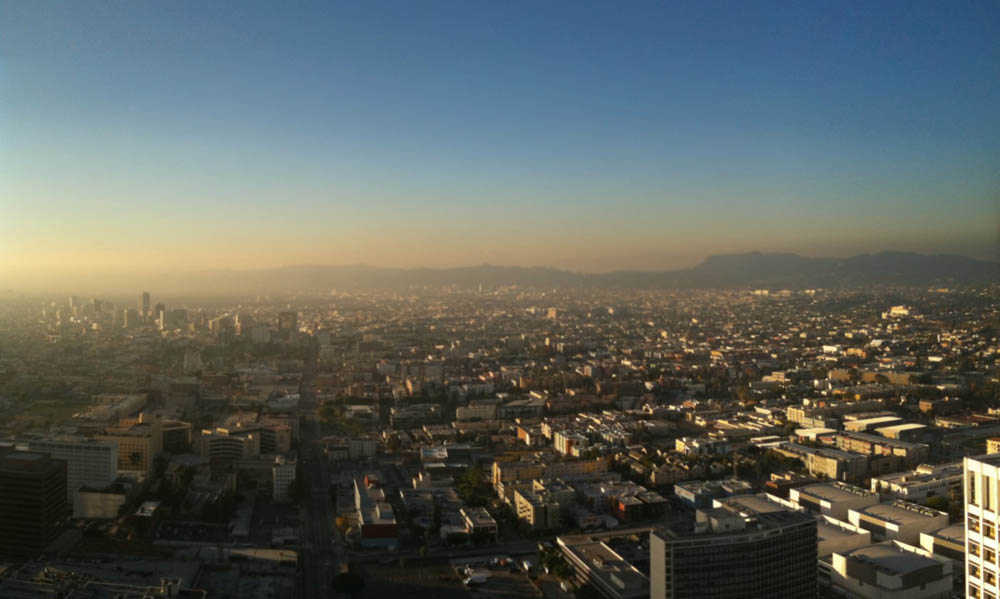
[Image: Los Angeles at sunset from the 51st floor of City National Plaza on Monday, 13 December 2010].

On the other hand, should something like “Blue Tape” become a regular institution for USC, I can see the format—and the location—losing much of its imaginative power after only a few repetitions. Further, it wasn’t all carrot: there were many sticks. Requiring students to transport often massive and easily damaged display boards on the Los Angeles bus network or, alternatively, to pay, without the possibility of reimbursement, truly exorbitant parking fees to attend their own final reviews, and to push such a time-intensive experience so far off USC’s main campus during the same week as final exams, thus compelling many students to leave “Blue Tape” in the middle of everyone else’s presentations, missing out on the intended camaraderie of the day in order to rush back to campus alone and turn in their final papers, is also surely something you can demand only a limited number of times.

As such, faced both with these limits and these opportunities, the students did a fantastic job, their patience and perseverance perhaps exceeding the organizational foresight of the faculty. The beehive of youthful power that Orhan diagnosed is alive and well.
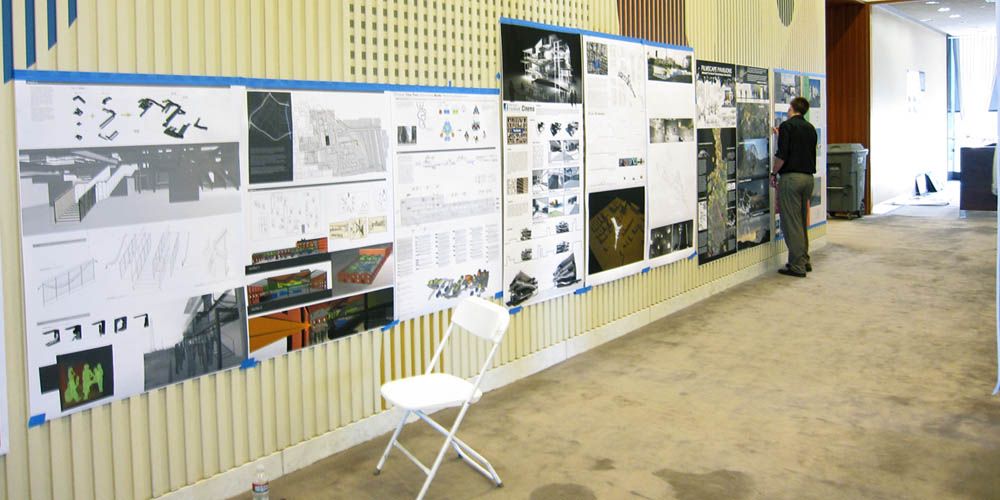
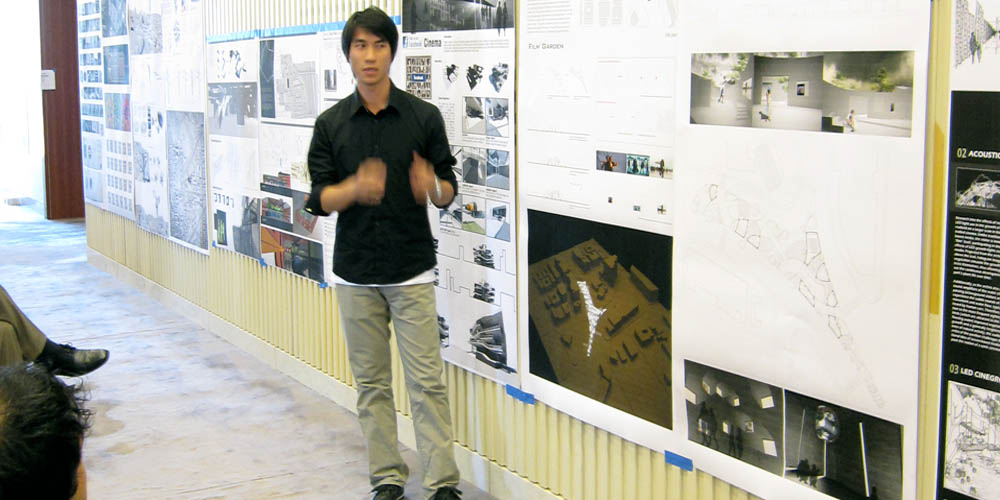
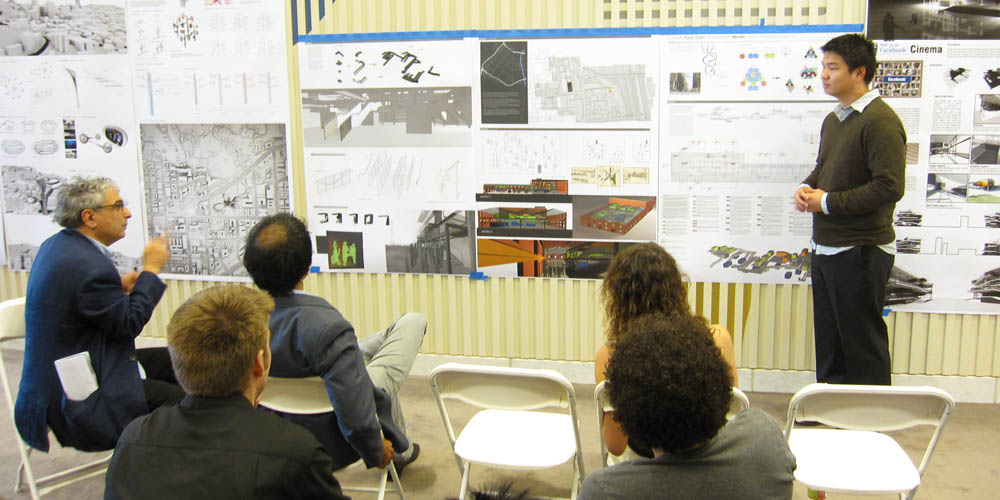
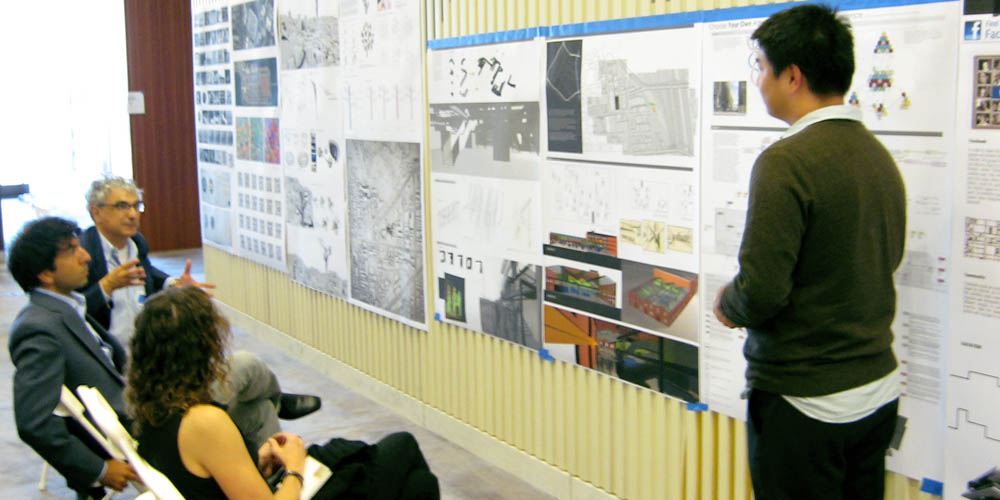
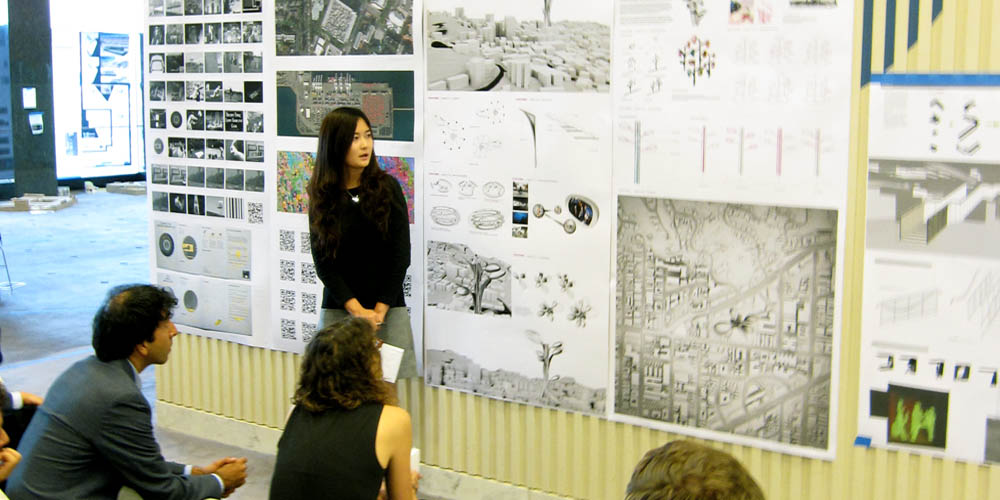
[Image: “Cinema City” projects at the USC School of Architecture’s “Blue Tape” review].

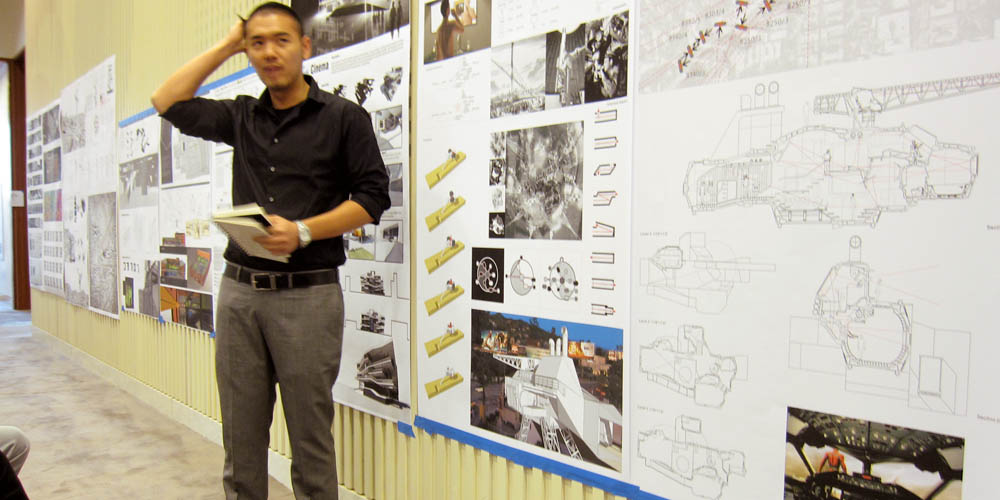
Below, I’ve included some photos taken of my own students presenting their work for a class I called “Cinema City.” As I wrote in the previous post, that studio asked students to consider the architectural future of the movie-going experience. In other words, if today’s increasingly fragmented audiences are just as likely to watch films on their iPhones or tablet computers—not to mention through all-you-can-watch DVD subscription services on home TVs—as they are at the local shopping mall, then what architectural effects might these emerging consumer practices and distribution technologies soon have?

If cinemas, for instance, like libraries, face an uncertain social and economic future, what lies beyond the multiplex and the iPad, on the other side of IMAX and at-home on-demand? If the building type now known as the cinema is forced to mutate, what might it become and how could architects today preemptively steer its future design? What spaces or scenarios can architects imagine that might transform—and re-inspire public interest in—going out to watch movies in public? Further, how might these new spaces influence and interact with the design of the city itself—and possibly even how films are produced?

We read everything from histories of Baroque city planning and theatrical stage-set design, via books like The City of Collective Memory and Margaret Wertheim’s “history of space from Dante to the internet,” and we looked at photo essays of ruined cinemas as well as architectural histories of American movie theater design. Perhaps the most exciting part of the class, however, was simply watching the daily news for examples—taken from the immediate present—of cinematic experiences that radically rethink the traditional movie theater: new screen and projection technologies, new distribution plans hypothesized for Netflix, new types of movie-centric social gatherings in cities and rural villages around the world.
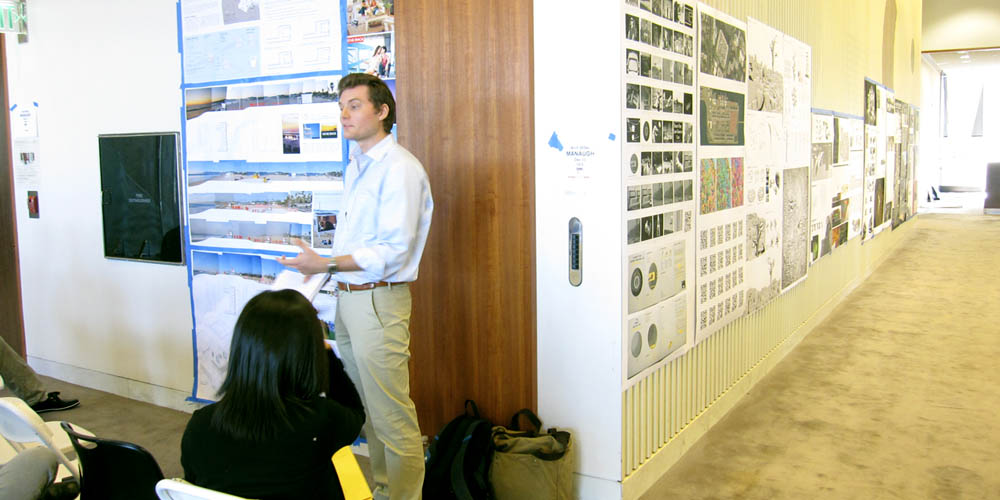
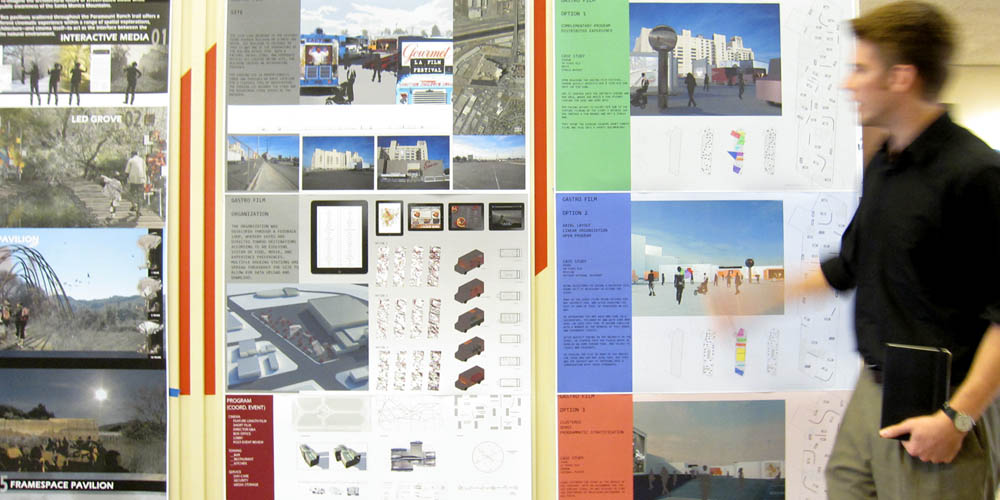
[Images: Students enrolled in “Cinema City” at the USC School of Architecture present their work].

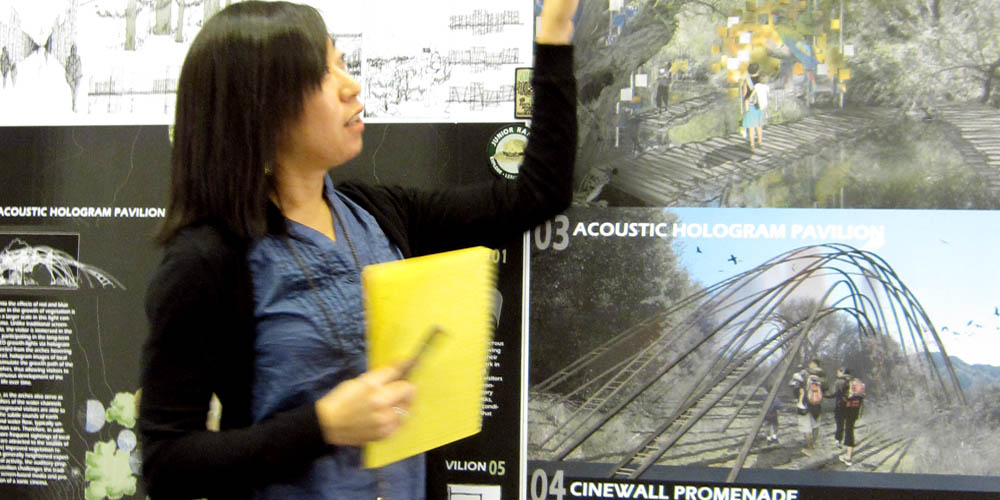
Amongst much other work produced over the course of the semester, the resulting projects specifically presented at “Blue Tape” ran the gamut from repurposed lifeguard stations on the beaches of Santa Monica, transformed into luxury film-cabin rentals and outdoor screening rooms (by student Arthur Page); a series of “film pavilions” for the Santa Monica Mountains, featuring strikingly imaginative uses of hologram-projection technologies and subterranean sound-amplifiers to create truly novel spaces for contextually appropriate films (Jennifer Choi); a cinema designed as if Facebook were the client, with interactive media walls, open terraces for people-watching, and intensely social, rearrangeable interiors, asking the awesomely provocative question of how the various functions of Facebook—from commenting to liking to friending—could be architecturally spatialized in a future multiplex (Anran He); a “film garden” of irregularly angled walls, open courtyards, and enclosed spaces situated on a conjoined archipelago of traffic islands near Beverly Center (Heli Zhang); an outdoor food & film festival imagined for Gourmet.com, with moving screens and survey-determined parking spots for food & projection trucks (Judson Hornfeck); a “cloud tower” of monumental, orchid-like film-viewing pods looming over the streets of Hollywood from a centralized, elevator-filled stalk (Jiejun Li); a “Choose-Your-Own-Adventure” cinema installed inside a multilevel constellation of renovated cargo containers in an old warehouse near the L.A. River (Mike Chou); a private house on Sunset Boulevard built for a reclusive film fanatic—the building would be an “otakutopia,” as the project was called—filled with innumerable wall-mounted optical devices, including wearable periscopes and a kind of lens-cannon on the roof, allowing the eccentric homeowner never to be far from his beloved screen-based media, his house an inhabitable telescope (Yu-Quan Chen); and the QR cinema of the robot future, with films made by machines for machines, as described in the previous post (Jonathan Rennie).

Our guest critics that day were also hugely helpful: Christian Chaudhari, Julian Bleecker, Lisa Little, Darien Williams, and Orhan Ayyüce all contributed to what I thought was a great five-hour conversation about cinema’s still undetermined architectural future.

Finally, you can see slightly larger versions of the above photographs in this Flickr set.

QR Cinema, or: Machines Making Films For Machines

One of my students this fall—Jonathan Rennie, at the USC School of Architecture—has had his final project featured on Near Future Laboratory; the post is written by Julian Bleecker, who served as a guest critic for Jonathan’s review.

[Image: From a project by Jonathan Rennie, produced at the USC School of Architecture].
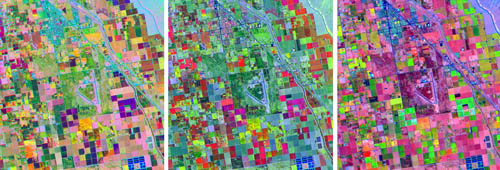
Bleecker writes that the work is “one of those architecture projects that plays at the far end of the spectrum of architecture’s inherent speculative nature.” Specifically, Bleecker summarizes, the project works as “a sneak preview for a future of cinema, proposing a continuous cinema that is freed from both the spatial confines of the movie house and the literary expectations of narrative—told by and to non-human machines.”

[Image: From a project by Jonathan Rennie, produced at the USC School of Architecture].
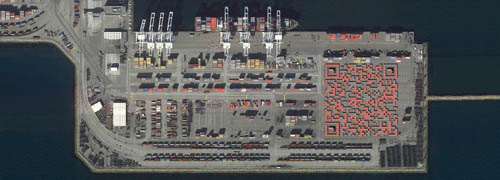
You can read Bleecker’s post for more information—but I should explain that the course itself, called “Cinema City,” asked students to consider the architectural future of screen-based media. In other words, if today’s consumers are just as likely to watch films on their iPhones or home computers—not to mention TVs—as they are at the local shopping mall, then what architectural effects might these emerging audience practices and distribution technologies soon have?

More specifically, in an age of tablet computers and all-you-can-watch DVDs, we asked how architects could influence or even explicitly re-design the social future of the movie-going experience. If cinemas, for instance, like libraries, face an uncertain social and economic future, what lies beyond the multiplex and the iPad, on the other side of IMAX and at-home on-demand? What spaces or scenarios can architects imagine that might transform—and re-inspire public interest in—going out to watch movies in public? Further, how might these spaces influence and interact with the design of the city itself—and possibly even how films are produced?

It’s worth pointing out, as well, that Jonathan’s project was a particularly abstract response to the design brief—indeed, it was the only project in the class that did not, in the end, propose a specific new type of building, space, or public spectacle. Instead, it relied on a series of fictional scenarios through which Jonathan could explore a future world in which, as Bleecker writes, architects begin “embedding machine-readable (or maybe only-for-machine) texts in physical structures.”

The project thus sought to illustrate a situation where the future of cinema is not for humans at all, but is instead for ever-more intelligent machine systems that have developed an admittedly quite whimsical way to communicate with one another. These included container-stacking structures in the Los Angeles harbor and the orbiting satellite systems that surveil them from above.

[Image: From a project by Jonathan Rennie, produced at the USC School of Architecture].

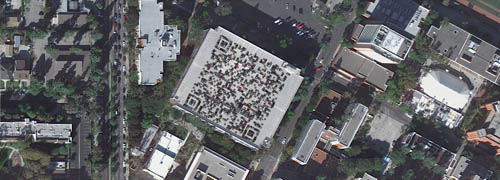
The very idea of cinema being nothing but a series of moving images projected onto a flat surface would thus be replaced, Jonathan’s project suggests, by machine-readable QR codes that embed digital information in the landscape.

Cars strategically parked atop open-air garages; cargo containers precisely stacked at coastal sea terminals; patterns harvested into agricultural fields by automated harvesting equipment; even thermal gradients caused by the urban heat island effect could all become a future “cinema” of QR codes through which machines talk to other species of machines.

[Image: From a project by Jonathan Rennie, produced at the USC School of Architecture].

As Bleecker writes:

Over time, as they see the same films over and over again and become bored, [the machines] begin to look for QR codes elsewhere, perhaps interpreting barcode-like structures in the landscape at different wavelengths—for instance an infrared foliage rendering may appear to contain QR codes. They seek out new films in this way, perhaps even instructing terrestrial machines, such as the cranes at loading docks or tractors in large farm fields, to construct new QR codes containing new [films] and stories.

Insert clever references to SkyNet here…

A Catholicism of Fallen Machinery

[Image: Photo by Allyn Baum for The New York Times].

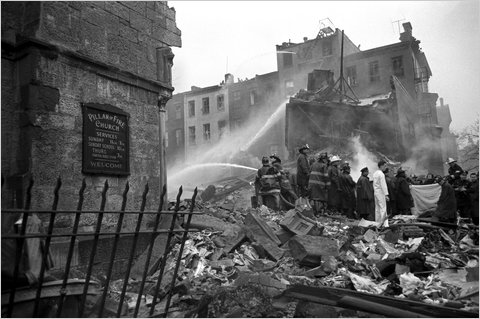
In a short but otherwise quite remarkable article in today’s New York Times, we read about the barely visible traces of a plane crash that occurred 40 years ago in the skies above Park Slope, Brooklyn. As the article explains, there is “little to indicate that the corner of Seventh Avenue and Sterling Place in Park Slope, Brooklyn, bore violent witness to the worst air disaster at the time.”

“If you look closely, though, there are signs—not wounds from that harrowing day so much as faded scars.”

For the most part, these wounds from the sky take architectural form. They are urban archaeologies of airborne collision—the tragic encounter of a plane with the city—recorded in material detail:

At 126 Sterling, where a 25-foot section of the plane’s right wing knifed through a peach-brick four-story apartment complex, the building still stands, but its bunting-patterned tin cornice is gone; the two matching buildings to the right still have theirs. The first dozen courses of brick below the rebuilt roof don’t match the rest. They are shinier, lighter: newer.

Meanwhile, nearby on 7th Avenue, “at the back of the brownstone at No. 20 that caught fire, a second-floor window was never replaced and has been bricked over. Titus Montalvo, who has lived on the ground floor for nearly 40 years, said that a former landlord warned him he might find fingers while digging in the garden.”

There are even what the article refers to as “crash relics”—rusted pieces of wings—still standing in people’s back gardens like scenes from some new Catholicism of fallen machinery, as rewritten by J.G. Ballard.

But there is something almost giddy in the implication that, if only we could perform a rigorous-enough architectural forensics on the surface of the city—revealing traces of disaster hidden in ornamental cornices and bricked-up windows—then otherwise lost events could be both memorialized and reconstructed. Even the smallest mark on a building’s facade becomes a monument to forgotten histories.

Weather Warfare

[Image: From Elements of War by Kalypso Media].

A forthcoming game called Elements of War takes weaponized weather-control as its central theme, “where armies manipulate the forces of nature to rain down destruction on their foes or gain a tactical advantage by transforming the battlefield with hurricanes, tornadoes and earthquakes.”

It is set in the United States in a period “after a secret military weather control experiment sets in motion a near-complete global climate collapse,” featuring “unconventional units” fighting “for control of fearsome weather-based weapons, granting them the power to use tornadoes, hurricanes, earthquakes, torrential rains and other forces of nature as weapons of war.”

[Image: From Elements of War by Kalypso Media].

The game comes out in February 2011, so I haven’t played it and am basing this solely on a recent press release; I thus can’t vouch for its actual execution or gameplay.

Nonetheless, I’m intrigued to see how the game’s “six weather-based weapons,” allowing players to “dominate and transform the battlefield with tornadoes, earthquakes, hurricanes and other elements of war, impacting supply lines, slowing troop movements and devastating the enemy,” work out.

[Image: From Elements of War by Kalypso Media].

The game promises “realistic destruction physics,” and I would hope that the weapons themselves—there is apparently an internal game list of what the designers call “‘What If’ Weaponry”—are actually interesting, and not just repurposed tanks, their cannons firing storms, or rifles shooting electrically-active lightning rounds or something similar.

In fact, the possibilities for genuinely reinvented tools of weather-warfare become pretty delirious after a point, whether it’s something as basic as shoulder-fired devices packed with microtornadic winds or whole fields sown with air-pressure bombs that generate inland hurricanes upon timed detonation.

Long-term seismic-resonance grenades; liquefaction earth-storms; Instant Glacier™ humidity-solidification traps; stationary magnetosphere-deflection architecture.

[Image: A “rain-making machine” via Modern Mechanix].

In an article I often cite here, originally published in The Wilson Quarterly, weather historian James Fleming explains that, as early as World War II, “some in the military had already recognized the potential uses of weather modification, and the subject has remained on military minds ever since. In the 1940s, General George C. Kenney, commander of the Strategic Air Command, declared, ‘The nation which first learns to plot the paths of air masses accurately and learns to control the time and place of precipitation will dominate the globe.'”

Fleming continues:

Howard T. Orville, President Dwight D. Eisenhower’s weather adviser, published an influential 1954 article in Collier’s that included a variety of scenarios for using weather as a weapon of warfare. Planes would drop hundreds of balloons containing seeding crystals into the jet stream. Downstream, when the fuses on the balloons exploded, the crystals would fall into the clouds, initiating rain and miring enemy operations. The Army Ordnance Corps was investigating another technique: loading silver iodide and carbon dioxide into 50-caliber tracer bullets that pilots could fire into clouds. A more insidious technique would strike at an adversary’s food supply by seeding clouds to rob them of moisture before they reached enemy agricultural areas. Speculative and wildly optimistic ideas such as these from official sources, together with threats that the Soviets were aggressively pursuing weather control, triggered what Newsweek called “a weather race with the Russians,” and helped fuel the rapid expansion of meteorological research in all areas, including the creation of the National Center for Atmospheric Research, which was established in 1960.

Many of these climatological strategies ultimately came together in the form of Operation Popeye, during the Vietnam War. As Fleming explains, “Operating out of Udorn Air Base, Thailand, without the knowledge of the Thai government or almost anyone else, but with the full and enthusiastic support of presidents Lyndon B. Johnson and Richard M. Nixon, the Air Weather Service flew more than 2,600 cloud seeding sorties and expended 47,000 silver iodide flares over a period of approximately five years at an annual cost of some $3.6 million.”

In any case, I could go on and on about weaponized climatology; for now, it seems no surprise that weather-weapons would be making their way as offensive tools into new computer games.

(Via Jim Rossignol; earlier on BLDGBLOG: Tactical Landscaping and Terrain Deformation).

Future Food Through Future Funding

[Image: An augmented-eating apparatus from “Foragers” by Dunne & Raby].

For a project called “Foragers,” design duo Dunne & Raby—who spoke last month at Thrilling Wonder Stories 2—sought a design-based solution to the urgent problem of future food supplies. “The world is running out of food–we need to produce 70% more food in the next 40 years according to the UN. Yet we continue to over-populate the planet, use up resources and ignore all the warning signs,” the designers warn. “It is completely unsustainable.”

Their eventual proposal was not a new type of grain, however, or a more effective cookstove. After all, they point out, “we have not really embraced the power to modify ourselves. What if we could extract nutritional value from non-human foods using a combination of synthetic biology and new digestive devices inspired by digestive systems of other mammals, birds, fish and insects?”

Dunne & Raby thus suggested the wholesale genetic alteration of the human digestive tract, in tandem with the design and adoption of new technical instruments for obtaining food from the larger environment. The human body could thereafter metabolize a highly diverse range of nutrients, from tree branches to algae-filled pond water.

But is this the direction that future food-system design and research should be going?

Nicola Twilley, author of Edible Geography and Food Editor for GOOD, is hosting an interesting question this week as part of the ongoing Glass House Conversations about this very topic. “The design of food has the potential to reshape the world,” Nicola writes, “let alone what we eat for dinner.”

Food—the substance itself, as well as its methods of production and consumption—has always been the subject of tinkering and design. The color of carrots, the shape of silverware, and the layout of supermarkets are all products of human ingenuity applied to the business of nourishment. Today, food is being redesigned more fundamentally and at a faster pace than ever before. This process is taking place in a wide variety of different contexts, with very different goals in mind, from corporate food technologists re-shaping salt crystals to maintain palatability while combating heart disease, to synaesthetic experiences designed by artist-entrepreneurs such as Marije Vogelzang.

Which leads to the week’s question: “In an era when food justice, food security, climate change, and obesity are such pressing issues, should there be public funding for food design R&D, and, if so, who should be receiving it?”

Should the designed future of food, and food systems more generally, be left to private corporations, to public institutions, to university labs, to individual entrepreneurs, to speculative design firms, or to some unexpected combination of all of the above? Further, what specific lines of design exploration should be explored when it comes to the global food supply, whether it’s genetic modification or new forms of preservation? Finally, how should these advances in food be best funded and pursued?

The forum will remain open until 8pm EST on Friday, December 17; be sure to join in, as it should be a good conversation.