An edge over which it is impossible to look

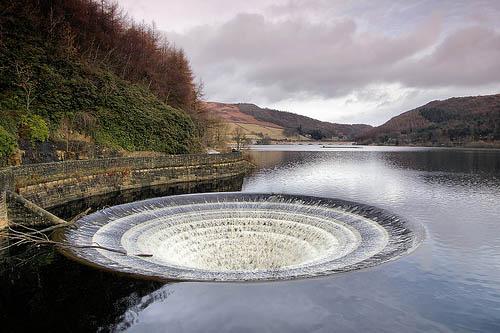
[Image: The Ladybower bellmouth at full drain, photographed by Flickr user Serigrapher].

Nearly half a year ago, a reader emailed with a link to a paper by Andrew Crompton, called “Three Doors to Other Worlds” (download the PDF). While the entirety of the paper is worth reading, I want to highlight a specific moment, wherein Crompton introduces us to the colossal western bellmouth drain of the Ladybower reservoir in Derbyshire, England.

His description of this “inverted infrastructural monument,” as InfraNet Lab described it in their own post about Crompton’s paper—adding that spillways like this “maintain two states: (1) in use they disappear and are minimally obscured by flowing water, (2) not in use they are sculptural oddities hovering ambiguously above the water line”—is spine-tingling.

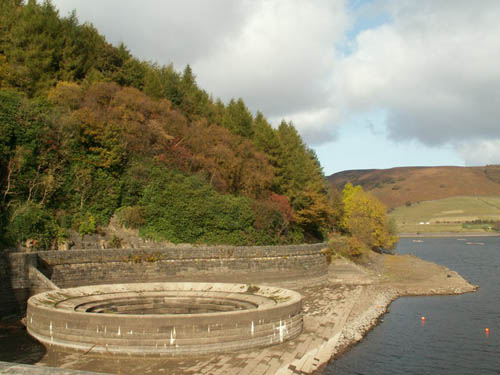
[Image: The Ladybower bellmouth, photographed by John Fielding, via Geograph].

“What is down that hole is a deep mystery,” Crompton begins, and the ensuing passage deserves quoting in full:

Not even Google Earth can help you since its depths are in shadow when photographed from above. To see for yourself means going down the steps as far as you dare and then leaning out to take a look. Before attempting a descent, you might think it prudent to walk around the hole looking for the easiest way down. The search will reveal that the workmanship is superb and that there is no weakness to exploit, nowhere to tie a rope and not so much as a pebble to throw down the hole unless you brought it with you in the boat. The steps of this circular waterfall are all eighteen inches high. This is an awkward height to descend, and most people, one imagines, would soon turn their back on the hole and face the stone like a climber. How far would you be willing to go before the steps became too small to continue? With proper boots, it is possible to stand on a sharp edge as narrow as a quarter of an inch wide; in such a position, you will risk your life twisting your cheek away from the stone to look downward because that movement will shift your center of gravity from a position above your feet, causing you to pivot away from the wall with only friction at your fingertips to hold you in place. Sooner or later, either your nerves or your grip will fail while diminishing steps accumulate below preventing a vertical view. In short, as if you were performing a ritual, this structure will first make you walk in circles, then make you turn your back on the thing you fear, then give you a severe fright, and then deny you the answer to a question any bird could solve in a moment. When you do fall, you will hit the sides before hitting the bottom. Death with time to think about it arriving awaits anyone who peers too far into that hole.

“What we have here,” he adds, “is a geometrical oddity: an edge over which it is impossible to look. Because you can see the endless walls of the abyss both below you and facing you, nothing is hidden except what is down the hole. Standing on the rim, you are very close to a mystery: a space receiving the light of the sun into which we cannot see.”

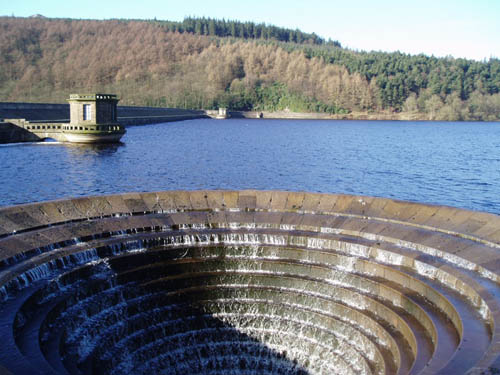
[Image: The Ladybower bellmouth, photographed by Peter Hanna, from his trip through the Peak District].

Crompton goes on to cite H.P. Lovecraft, the travels of Christopher Columbus, and more; again, it’s worth the read (PDF). But that infinitely alluring blackness—and the tiny steps that lead down into it, and the abyssal impulse to see how far we’re willing to go—is a hard thing to get out of my mind.

(Huge thanks to Kristof Hanzlik for the tip!)

The Switching Labyrinth

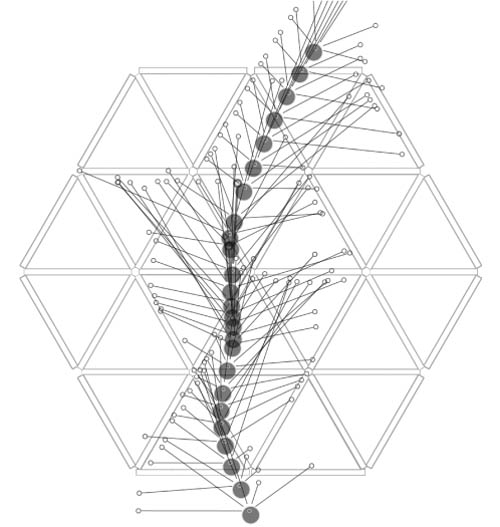
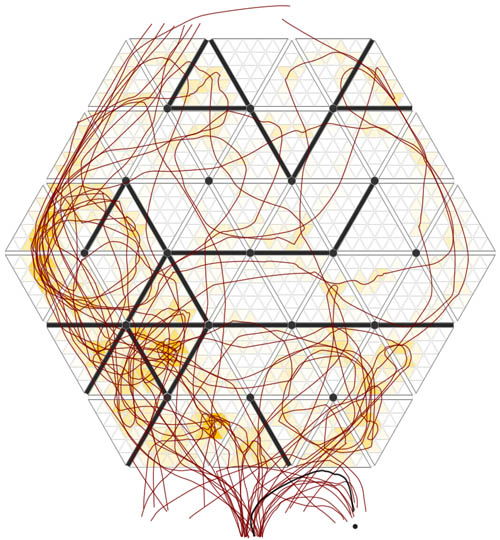
[Image: From “Labyrinths, Mazes and the Spaces Inbetween” by Sam McElhinney].

Sam McElhinney, a student at the Bartlett School of Architecture, has been building full-scale labyrinths in London and testing people’s spatial reactions to them. See photos of his constructions, below.

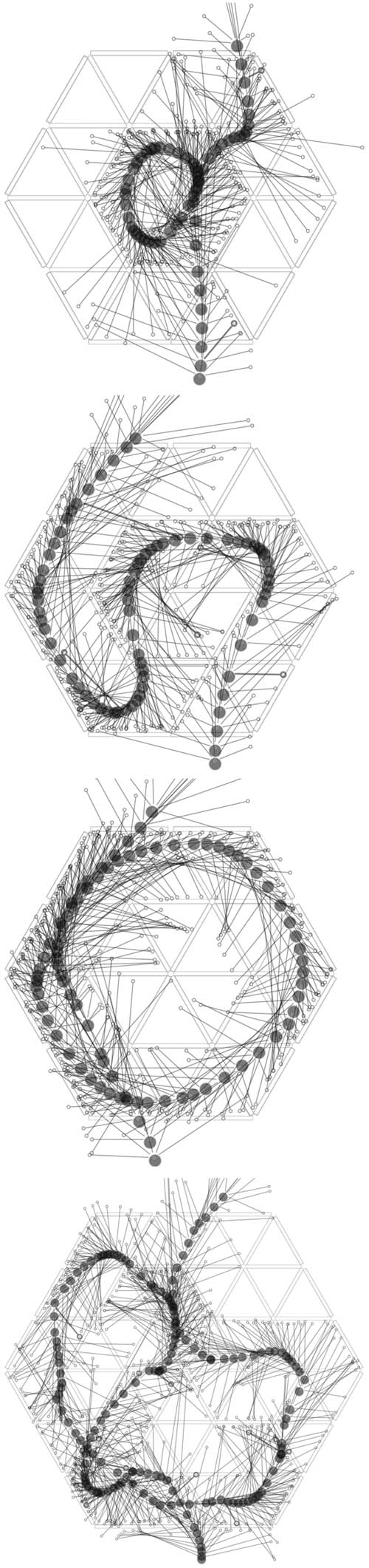
McElhinney explained his research to BLDGBLOG in a recent email, attaching a paper that he delivered earlier this month at a cybernetics conference in Vienna, where it was awarded best paper. Called “Labyrinths, Mazes and the Spaces Inbetween,” it describes McElhinney’s fascinating look at how people actually walk through, use, and familiarize themselves with the internal spaces of buildings, using mazes and labyrinths as his control studies.

In the process, McElhinney introduces us to movement-diagrams, Space Syntax, and other forms of architectural motion-analysis, asking: would a detailed study of user-behaviors help architects design more consistently interesting buildings, spaces that “might evoke,” he writes, “a sense of continual delight”? Pushing these questions a bit further, we might ask: should all our buildings be labyrinths?

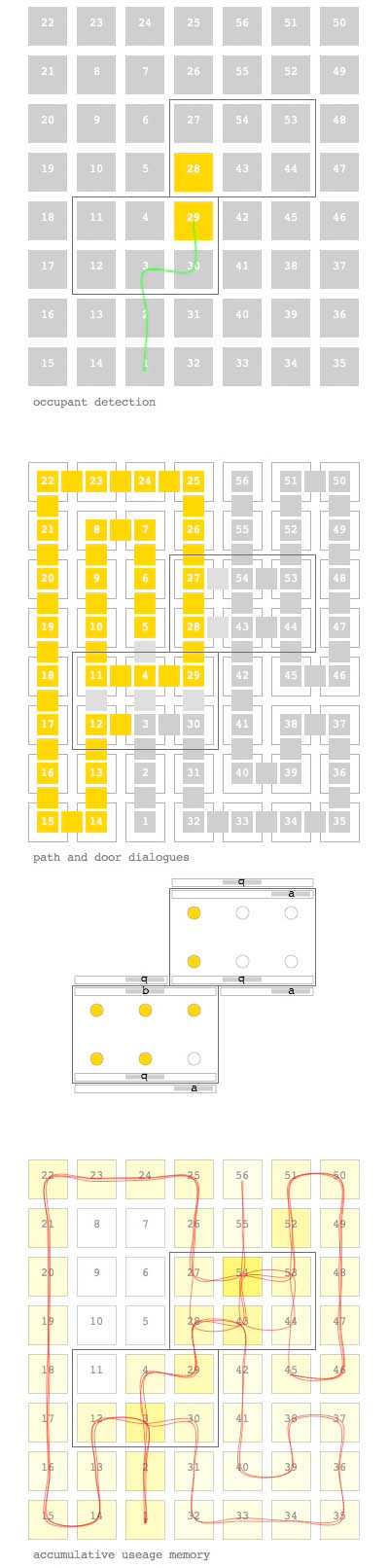
[Images: Movement-typologies from “Labyrinths, Mazes and the Spaces Inbetween” by Sam McElhinney].

Early in the paper, McElhinney differentiates between the two types of interior experiences—between mazes and labyrinths.

A path system can be multicursal: a network of interconnecting routes, intended to disorient even the cunning. It may contain multiple branches and dead ends, specifically designed to confuse the occupant. This is a maze.

Alternatively, a path can form a single, monocursal route. Once embarked upon, this may fold, twist and turn, but will remain a constant and ultimately reach a destination; this is a labyrinth.

The experience of walking these two topologies is very different.

These basic definitions set the stage for McElhinney’s own “premise,” which is “that all space is found, experienced and inhabited in a state of ‘switching’ flux between the diametrically opposed topologies of maze and labyrinth. This offers insights into how we might evoke a sense of continual delight in the user [of the buildings that we go on to design].” Accordingly, he asks how architects might actually construct “a path that switches from a labyrinth into a maze (and vice-versa).”

How can architects design for this switch?

[Images: From “Labyrinths, Mazes and the Spaces Inbetween” by Sam McElhinney].

McElhinney’s argument segues through a discussion of Alasdair Turner’s Space Syntax investigations (and the limitations thereof). He describes how Turner put together a series of automated test-runs through which he could track the in-labyrinth behavior of various “maze-agents”; these reprogrammable “agents” would continually seek new pathways through the twisty little passages around them—a spatial syntax of forward movement—and Turner took note of the results.

Turner’s test-environments included, McElhinney explains, a maze that “was set to actively re-configure upon a door being opened, altering the maze control algorithms” behind the scenes, thus producing new route-seeking behavior in the maze-agents.

[Images: From “Labyrinths, Mazes and the Spaces Inbetween” by Sam McElhinney].

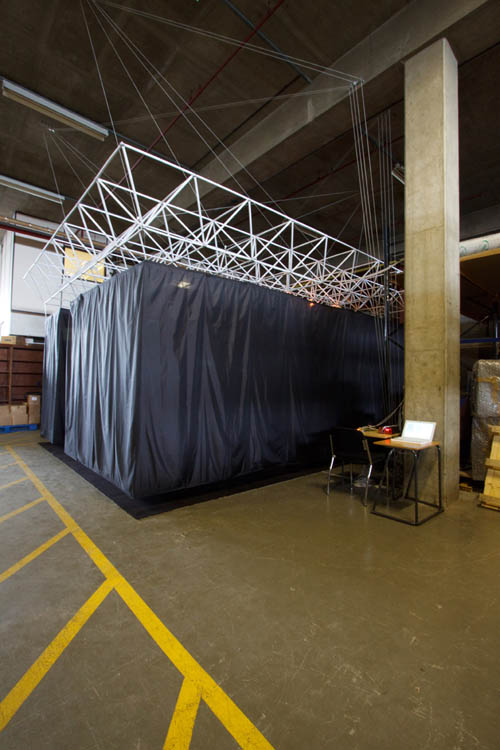
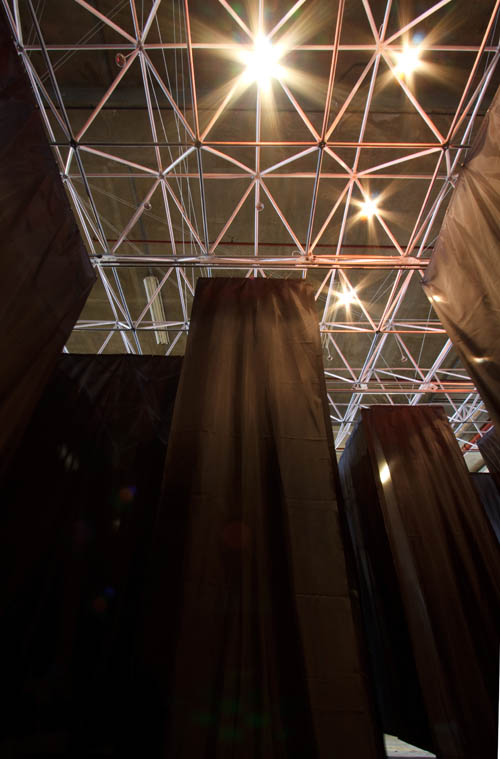
Unsatisfied with Turner’s research, however, McElhinney went on to build his own full-scale “switching labyrinth” near London’s Euston Station. Participants in this experiment “animated” McElhinney’s switching labyrinth by way of “a stepper motor and slide mechanism” that, together, were “able to periodically shift, ‘switching’ openings to offer alternative entrance and exit paths.”

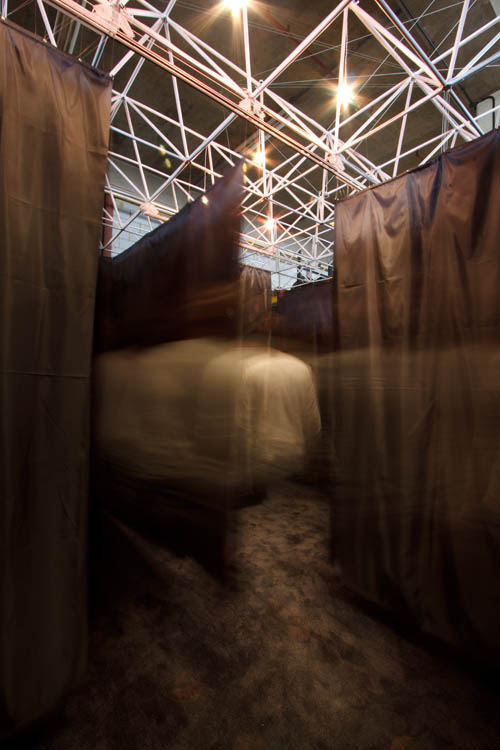
The participants walked in and their routes warped the labyrinth around them.

[Image: Sam McElhinney’s “switching labyrinth,” or psycho-cybernetic human navigational testing ground, constructed near Euston Station].

After watching all this unfold, McElhinney suggested that further research along these lines could help to reveal architectural moments at which there is an “emergence of labyrinthine, or familiar, spatialities within an unknown or changing maze framework.”

There can be a place or moment within any building, in other words, at which the spatially unfamiliar will erupt—and from movement-pathway studies we can extrapolate architectural form, buildings that perfectly rest at the cognitive flipping point between maze and labyrinth, familiar and disorienting, adventurous and strange.

[Images: Sam McElhinney’s “switching labyrinth”].

The cybernetics of human memory and in-situ spatial decision-making processes provide a framework from which we can extract and assemble a new kind of architecture.

[Image: From “Labyrinths, Mazes and the Spaces Inbetween” by Sam McElhinney].

How we move through coiled, labyrinthine environments can be studied for insights into human navigation, physiology, and more.

[Image: From “Labyrinths, Mazes and the Spaces Inbetween” by Sam McElhinney].

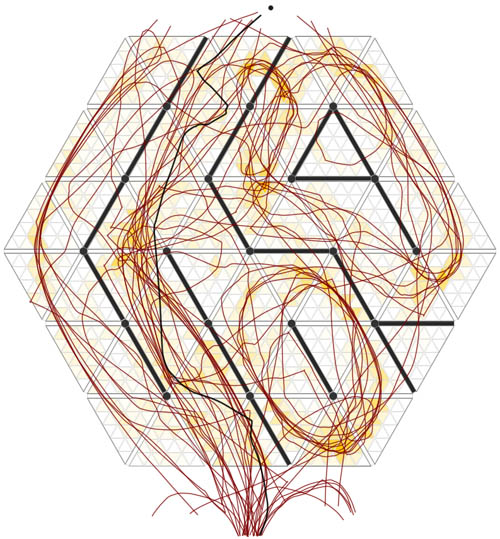
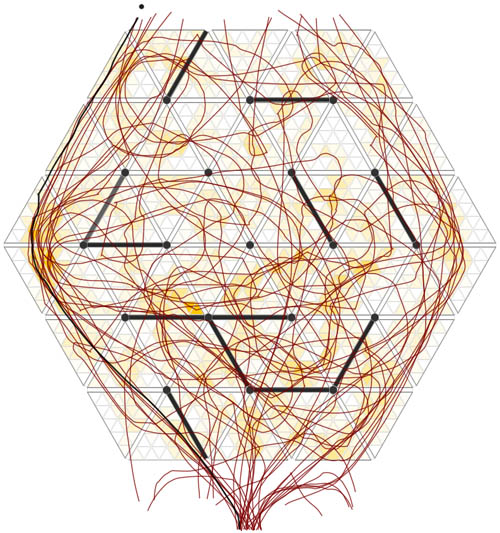
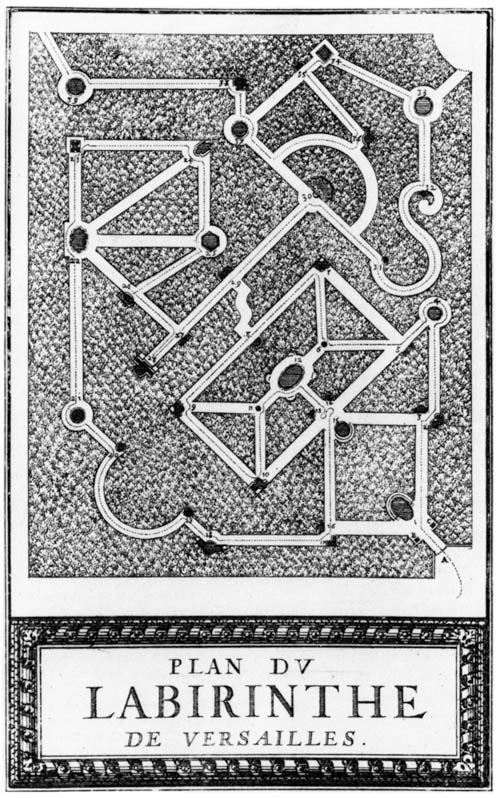
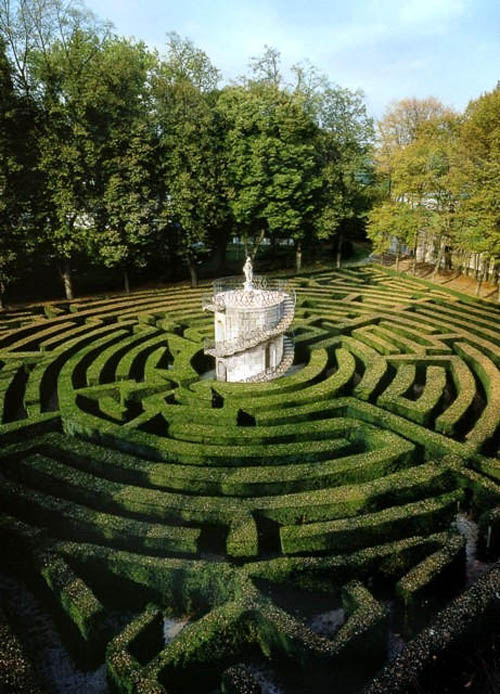
McElhinney sent over a huge range of maze and labyrinth precedents that served as part of his research; some images from that research appear below.

[Images: Maze-studies from “Labyrinths, Mazes and the Spaces Inbetween” by Sam McElhinney].

It’s fascinating research, and I would love to see it scaled way, way up, beyond a mere test-maze in a warehouse into something both multileveled and city-sized.

Quick Links 10

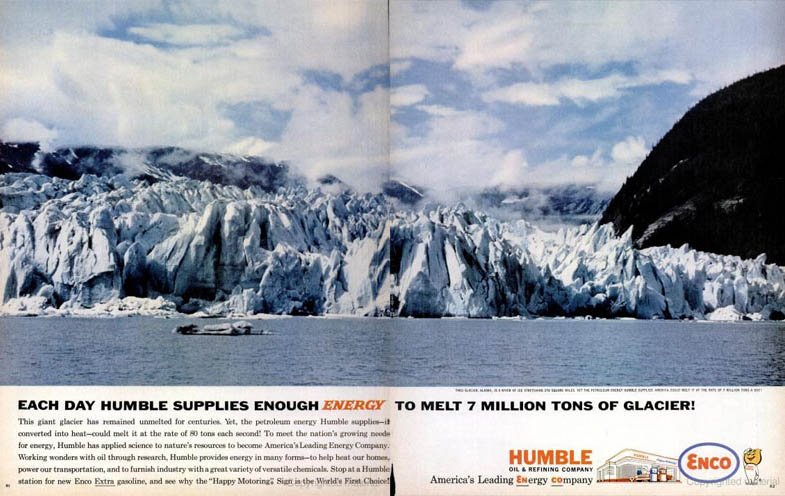
[Image: “Each Day Humble Supplies Enough Energy to Melt 7 Million Tons of Glacier!”].

1) New York Times: “From the city that has banned cars from broad swaths of Broadway and put picnic tables in Times Square, here comes another great reshaping of New York’s streetscape. The Bloomberg administration is moving ahead with what amounts to a radical, river-to-river reimagining of another major corridor: 34th Street.”

Automobiles would be banned on the block between Fifth Avenue and Avenue of the Americas, creating a pedestrian plaza bookended by Herald Square and the Empire State Building. The result would be a street effectively split in two.

2) American Society of Landscape Architects: “Certainly, it’s very difficult to preserve an evolving landscape. We live in a transitional world and have to adapt to our own constants. Sometimes it’s very difficult to imagine that something will remain exactly the same. We had to define heritage categories that are intrinsically evolving. We’re trying at UNESCO to change our approach a little bit to create a vision of how heritage can be seen in a transitional world.”

3) Archaeology: “The stone city of Nan Madol, in Pohnpei, one of the Federated States of Micronesia (FSM), consists of 92 man-made islands built on a coral reef at the edge of a mangrove swamp. The buildings of this mysterious 1,000-year-old site, which was the ceremonial and political seat of an ancient dynasty, are made of stacks of cut stone “logs,” each weighing up to 50 tons. Today, issues of ownership and sovereignty hold up plans to rehabilitate Nan Madol and make it eligible for a UNESCO World Heritage designation.”

4) BusinessWeek: U.S. Smart Bombs Rely on Metals Dominated by China

[Image: A giant battery grows in Texas; image courtesy of Popular Science].

5) Popular Science: “An aging transmission line built in 1948 is the only link between the U.S. power grid and the little city of Presidio in West Texas. So Presidio has invested in a single huge battery that can power the entire town and serve as emergency backup for the frequent outages caused by the line going down.”

6) Daily Telegraph: “Archaeologists in Italy have unearthed the remains of a 6th century BC temple-style building complete with detailed assembly instructions which they have likened to an Ikea do-it-yourself furniture pack.”

7) BBC: “The Nottingham Caves Survey… will use a 3D laser scanner to produce a three dimensional record of more than 450 sandstone caves around Nottingham from which a virtual representation can be made.”

The area which now makes up Nottingham city centre was once known as Tiggua Cobaucc, which means “place of caves.” The caves date back to the medieval period and possibly earlier. Over the years they have been used as dungeons, beer cellars, cess-pits, tanneries and air-raid shelters.

8a) “The Falmouth Convention is a three-day conference in an unconventional form… Conceived as an international meeting of artists, curators and writers to explore the significance of time and place in relation to contemporary art and exhibition making, it has been planned to respond to the situation in Cornwall and other such dispersed, rural areas.”

8b) “Described in the eighteenth century as the ‘richest square mile in the old world,’ the Gwennap Mining District will be the setting for a field trip led by the Falmouth-based arts organisation Urbanomic, ‘a journey into an historical process that assembled the powers of geology, mechanics, hydraulics, mineralogy and metallurgy, salvation and combustion, steam and capital into a mighty, infernal machine that traumatised the Cornish landscape and kick-started the industrial revolution.’”

Visiting lesser-known sites where these components interacted and evolved during the height of the mining trade in Cornwall, the field trip will discover what lies beneath the tourist emblem of the abandoned engine-house. With the guidance of rogue scientists, agrosophists and geophilosophers, it will uncover “the complexities of subterranean poetics and aesthetics, and confront the industrial behemoth that made the earth scream.”

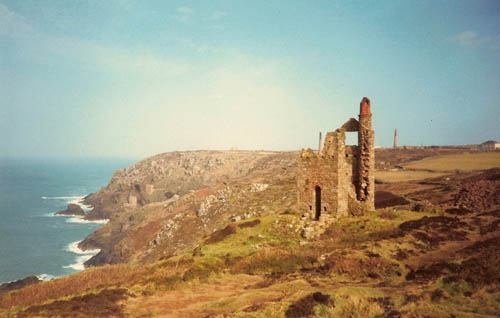
[Image: Engine house of an abandoned mine in Cornwall, photographed by Thenenan T. Kig, of tangential relationship to the Hydroplutonic Kernow tour].

9) Popular Science: “While three-dimensional printing has come a long way, engineers still struggle with fabricating objects smaller than a quarter,” but “researchers have hit upon a technique that could produce any number of microscopic medical or mechanical devices through folding, rather than layered printing.”

10) National Geographic Channel: “Take an inside look at what may be the toughest disciplinary tool in the U.S. prison system: solitary confinement.”

Extra Credit: “The European Union has declared travelling a human right, and is launching a scheme to subsidize vacations with taxpayers’ dollars for those too poor to afford their own trips.”

(Some links via Archaeology, Reza Negarestani, and more).

Strato Lab

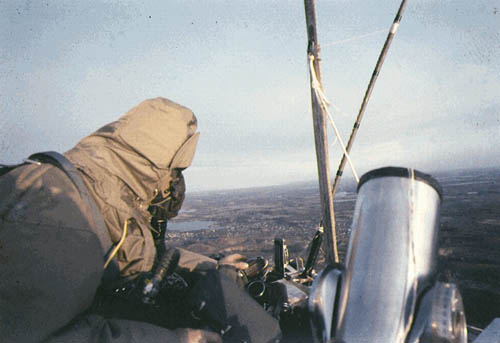
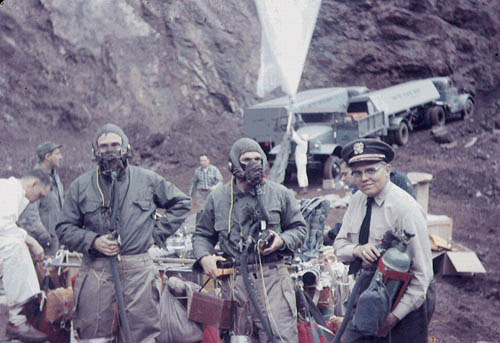
[Image: Strato Lab; photo via Gregory P. Kennedy].

The Strato Lab project was a manned, high-altitude balloon project from the 1950s that ascended with its crew above 80,000 feet several times. The pilots performed scientific observations there, including taking observations of Venus through an on-board telescope.

The specific experiments interest me less, however, than the architectural possibilities of inhabited balloons in the stratosphere. The Strato Lab was a kind of sky-throne, regal and airborne over the continents below.

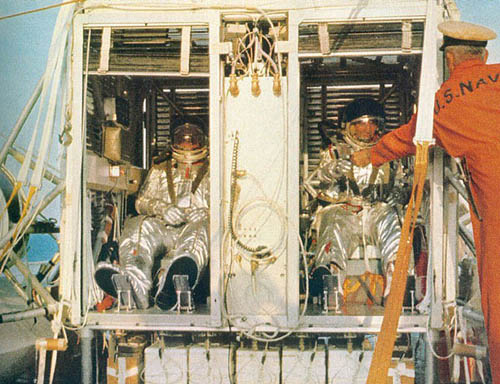
[Image: Strato Lab as sky-throne; photo via Gregory P. Kennedy].

Historian Gregory P. Kennedy has the story over on his website; he includes technical details about how the Strato Lab worked, as well as some thoughts about its position in design history.

Strato Lab had two inward opening hatches mounted in flat frames. Having two hatches made normal entry and exit easier and facilitated rapid exit in case of an emergency. Simple air pressure sealed the hatches. Within the cabin, a pressure equivalent to 17,000 feet was maintained. When the balloon ascended beyond that altitude, the pressure difference between the inside and outside atmospheres forced the hatches against their frames. A silicone O-ring around the outer diameter of each hatch created a pressure-tight seal. During descent, the hatches opened automatically.

The lab was also backed up by a “64-foot diameter nylon cargo parachute,” and, if that should fail in addition to the balloon, the crew members themselves had their own emergency chutes.

“Strato Lab retained the configuration and certain design elements of balloon gondolas of the 1930s,” Kennedy writes. “Thus, it bridged the gap between pressurized gondola designs of the 1930s and modern spacecraft.”

[Image: Strato Lab; photo via Gregory P. Kennedy].

All of this takes on a further, slightly different air of possibility when seen in the context of recent questions about the future of air travel in light of Iceland’s Eyjafjallajokull volcano; if the Katla volcano—ten times the size of Eyjafjallajokull and less than six miles away from it—were to erupt next, for instance, the European airline industry as it currently exists could be put out of business for weeks or months at a time. The New York Times took this as a cue to ask what might be next: high-speed rail, dirigibles, airships…? And that, of course, is if a future supervolcano doesn’t simply cause extinction.

But perhaps high-altitude—and “super-high-altitude“—balloons could be both destination and route: airborne rooms enthroned atop wind systems accessible to civilians for the first time, future platforms for housing at the forecourt of the sky. You build a pressurized village of linked pods, spanning acres—the architectural legacy of Ant Farm—on some land in Nebraska; the final step clips oversized polyethylene balloons to roof-hooks, and then there you go: hauling your project to its rightful site, skybound, where an emerging race of balloonists will evolve massive lungs 95,000 feet above the Great Plains.

The Archigram Archive

[Image: From an “ongoing speculative proposal exploring the implications of cones of vision and their interaction with an existing neoclassical ‘temple’ on the River Thames in Henley, Berkshire,” by Archigram/Michael Webb].

As of roughly 16 hours ago, the Archigram Archival Project is finally online and ready to for browsing, courtesy of the University of Westminster: the archive “makes the work of the seminal architectural group Archigram available free online for public viewing and academic study.”

The newly launched site includes more than 200 projects; “this comprises projects done by members before they met, the Archigram magazines (grouped together at no. 100), the projects done by Archigram as a group between 1961 and 1974, and some later projects.” There are also brief biographies of each participating member of the collaborative group: Warren Chalk, Peter Cook, Dennis Crompton, David Greene, Ron Herron, and Michael Webb.

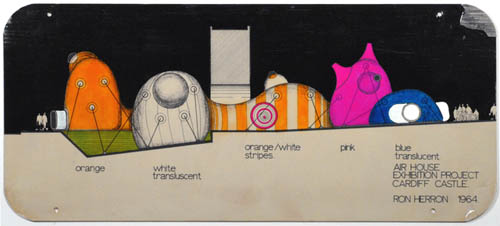
[Image: “Proposal for a series of inflatable dwellings as part of an exhibition for the Commonwealth Festival, located in the lodge of Cardiff Castle,” by Archigram/Ron Herron].

Even at their most surreal, it feels as if Archigram did, in fact, accurately foresee what the architectural world was coming to. After all, if Chalk & Co. had built the things around us, there would be electricity supplies in the middle of nowhere and drive-in housing amidst the sprawl; for good or for bad, we’d all be playing with gadgets like the Electronic Tomato, that perhaps would not have given the iPhone a run for its money but was a “mobile sensory stimulation device,” nonetheless. We might even live together on the outer fringes of “extreme suburbs,” constructed like concentric halos around minor airports, such as Peter Cook’s “Crater City,” an “earth sheltered hotel-type city around central park,” or “Hedgerow Village,” tiny clusters of houses like North Face tents “hidden in hedgerow strips.”

There would be temporary, inflatable additions to whole towns and cities; pyramidal diagrid megastructures squatting over dead neighborhoods like malls; dream cities like Rorschach blots stretched across the sky, toothed and angular Montreal Towers looming in the distance; plug-in universities and capsule homes in a computer-controlled city of automatic switches and micro-pneumatic infrastructure.

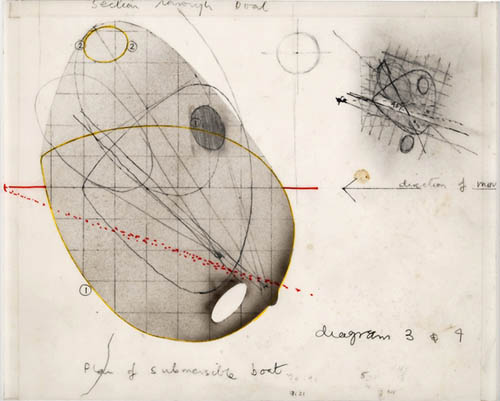
At its more bizarre, there would have been things like the Fabergram castle, as if the Teutonic Knights became an over-chimneyed race of factory-builders in an era of cheap LSD, reading Gormenghast in Disneyworld, or this proposal “for technology enabling underwater farming by scuba divers, including chambers, floats and tubes for walking and farm control.” After all, Archigram asked, why live in a house at all when you can live in a submarine? Why use airplanes when you can ride a magic carpet constructed from shining looms in a “‘reverse hovercraft’ facility where a body can be held at an adjustable point in space through the use of jets of air”?

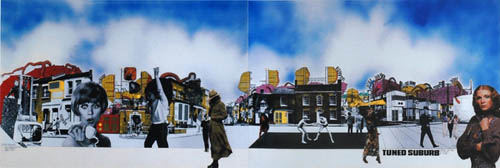
[Image: “Speculative proposal showing use of the ‘Popular Pak’, a kit of architectural parts for ‘tuning-up’ existing buildings, applied to an invented suburb,” by Archigram/Ron Herron].

It might not be architects who have realized much of this fever dream of the world to come, but that doesn’t mean that these ideas have not, in many cases, been constructed. Archigram spoke of instant cities and easily deployed, reconfigurable megastructures—but the people more likely to own and operate such spaces today are Big Box retailers, with their clip-on ornaments, infinitely exchangeable modular shelving, and fleeting themes-of-the-week. Archigram’s flexible, just-in-time, climate-controlled interiors are not a sign of impending utopia, in other words, but of the reach of your neighborhood shopping mall—and the people airdropping instant cities into the middle of nowhere today are less likely to be algorithmically trained Rhino enthusiasts from architecture school, but the logistics support teams behind Bechtel and the U.S. military.

Another way of saying this is that Archigram’s ideas seem unbuilt—even unbuildable—but those ideas actually lend themselves surprisingly well to the environment in which we now live, full of “extreme suburbs,” drive-in everything, KFC-supplied army bases in the middle of foreign deserts, robot bank tellers, and huge, HVAC-dependent wonderlands on the exurban fringe.

The irony, for me, is that Archigram’s ideas have, in many ways, actually been constructed—but in most cases it was for the wrong reasons, in the wrong ways, and by the wrong people.

[Image: Proposal “fusing alternative and changing Archigram structures, amenities and facilities with traditional and nostalgic structures,” by Archigram/Peter Cook].

In any case, what was it about Archigram that promised on-demand self-transformation in an urban strobe of flashing lights but then got so easily realized as a kind of down-market Times Square? How did Archigram simply become the plug-in units of discount retail—or the Fun Palaces of forty years ago downgraded to Barnes & Noble outlets in the suburbs? How did the Walking City become Bremer Walls and Forward Operating Bases, where the Instant City meets Camp Bondsteel?

Archigram predicted a modular future propelled by cheap fuel, petrodollars, and a billion easy tons of unrecycled plastic—but, beneath that seamless gleam of artificial surfacing and extraterrestrial color combinations was a fizzy-lifting drink of human ideas—as many ideas as you could think of, sometimes imperfectly illustrated but illustrated nonetheless, and, thus, now canonical—all of it wrapped up in a dossier of new forms of planetary civilization. Archigram wasn’t just out on the prowl for better escalators or to make our buildings look like giant orchids and Venus Flytraps, where today’s avant-bust software formalism has unfortunately so far been mired; it wasn’t just bigger bank towers and the Burj Dubai.

Instead, Archigram suggested, we could all act differently if we had the right spaces in which to meet, love, and live, and what matters to me less here is whether or not they were right, or even if they were the only people saying such things (they weren’t)—what matters to me is the idea that architecture can reframe and inspire whole new anthropologies, new ways of being human on earth, new chances to do something more fun tomorrow (and later today). Architecture can reshape how we inhabit continents, the planet, and the solar system at large. Whether or not you even want inflatable attics, flying carpets, and underwater eel farms, the overwhelming impulse here is that if you don’t like the world you’ve been dropped into, then you should build the one you want.

In any case, the entire Archigram Archival Project is worth a look; even treated simply as an historical resource, its presence corrects what had been a sorely missing feature of online architecture culture: we can now finally link to, and see, Archigram’s work.

(Note: Part of the latter half of this post includes some re-edited bits from a comment I posted several months ago).

Glacier/Island/Storm Reading List

As the spring semester comes to an end, and as this past Friday afternoon brought with it a guest lecture from historian James Fleming, I thought I’d offer a quick look back at some texts—mostly books—that were of particular use during the Glacier/Island/Storm studio up at Columbia.

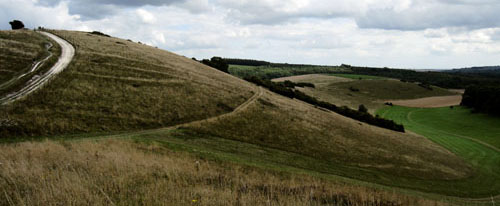
[Image: A hike through the South Downs, photo by the author].

I should add, though, that the following books were not assigned reading—they simply came up as frequent points of conversational reference during individual desk-crits. These were also all in addition to technical readings, done on a per-project basis, such as industry reports on maritime pharmacology, the engineering and construction of offshore structures, the ferroelectric potential of ice, surveys of atmospheric fog- and dew-harvesting techniques in southern England, and the full text of the U.N. Convention on the Prohibition of Military or Any Other Hostile Use of Environmental Modification Techniques.

In turn, those were in addition to several documentary films, such as Owning the Weather, Drifting Station Alpha, and The Reef Builders; which were also on top of a field trip to the Lamont-Doherty Earth Observatory, a visit from marine biologist Thomas Goreau, a daylong symposium looking at Glacier/Island/Storm outside of its more explicit architectural contexts with the authors of Mammoth, Quiet Babylon, and Edible Geography, and a long list of individual student interviews with experts in the field. These took place during overseas trips to destinations as far as Bali, Morocco, the Blue Hole of Belize, the South Downs, and the Swiss Alps. It’s been an awesome semester, at least from my perspective, and I’m sorry to see it go.

In any case, the following list includes texts that came up across more than one project, at multiple times during the semester for various reasons. As such, they were particularly useful in helping to generate design ideas. In no particular order:

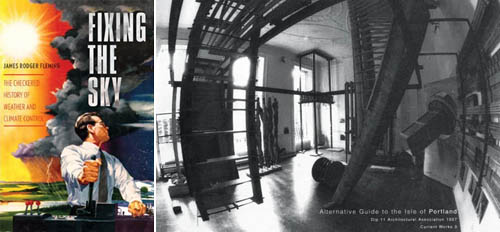
[Images: Fixing the Sky: The Checkered History of Weather and Climate Control by James Fleming and Alternative Guide to the Isle of Portland by Shin Egashira and David Greene].

1)The Climate Engineers” by James Fleming. Fleming’s article is an excellent survey of the history—and possible political future—of weather-control efforts and climate-modification technology, mostly in a military context. “Assume, for just a moment,” Fleming writes, “that climate control were technically possible. Who would be given the authority to manage it? Who would have the wisdom to dispense drought, severe winters, or the effects of storms to some so that the rest of the planet could prosper? At what cost, economically, aesthetically, and in our moral relationship to nature, would we manipulate the climate?” His forthcoming book, Fixing the Sky: The Checkered History of Weather and Climate Control sounds fantastic, and it extends that research.

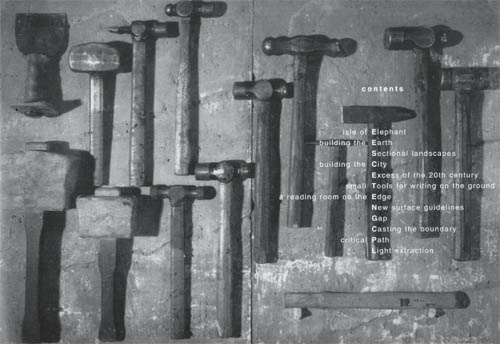
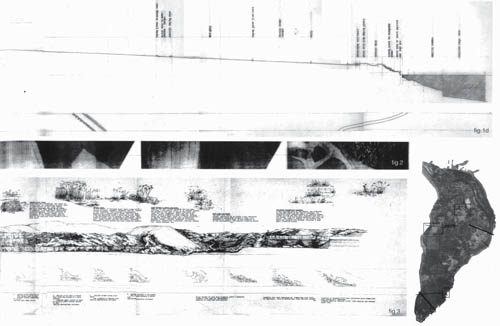
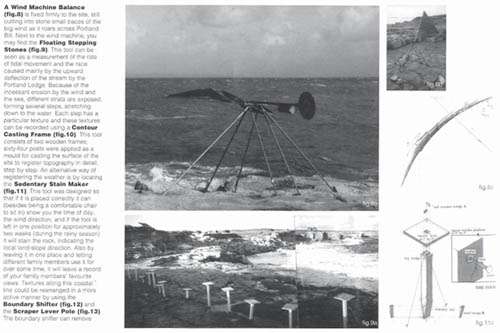
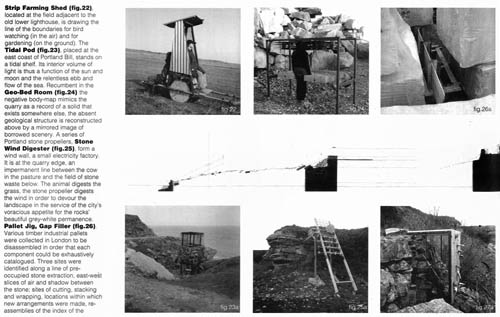
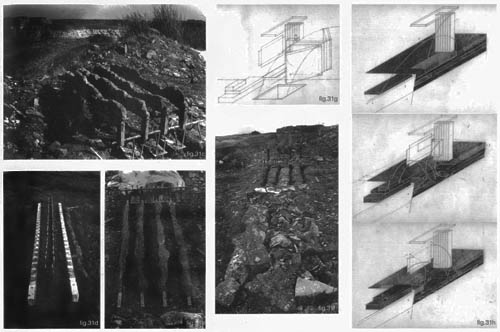
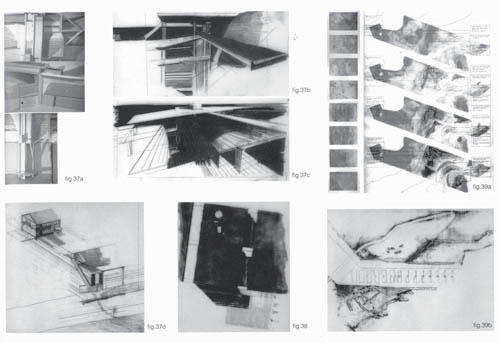
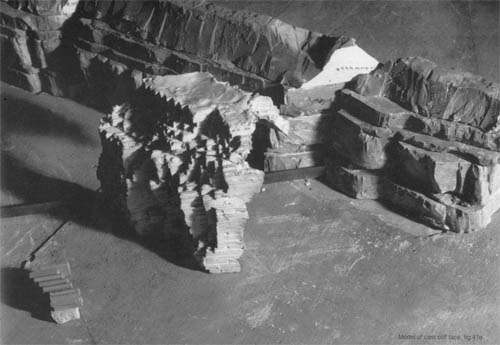
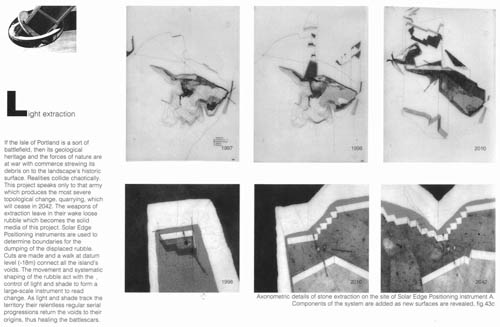
2) Alternative Guide to the Isle of Portland by Shin Egashira and David Greene. I bought this book—a pamphlet, really—back in 1998, and I’ve held onto it ever since, even taking it with me on this (still ongoing) year-plus global trip. Exploring the island of Portland—from which much of London’s architectural rock was once quarried, turning the island’s profile into a negative graph of London’s expansion—from the perspective of investigative landscape design, Egashira’s and Greene’s students covered the terrain in architectural devices, machines, and mechanisms that could record wind speed, coastal barometry, island seismology, water levels, and much more (as well as simply demonstrate carpentry skills).

[Images: Spreads from Alternative Guide to the Isle of Portland by Shin Egashira and David Greene].

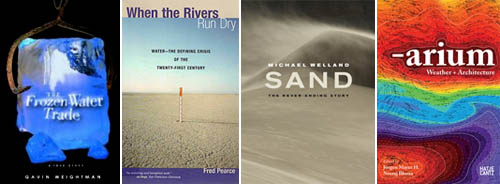
3) The Frozen Water Trade by Gavin Weightman. I first became aware of this book through an old reference on Pruned, but only managed to read it this past winter. A historical look at the early days of ice-harvesting from the surfaces of frozen ponds across New England—after which great cubes would be preserved in ice houses and in the hulls of ships, insulated with saw dust, and sold to markets as far away as India. The economics, technicalities, and strange cultural inspirations behind the ice-harvesting industry are genuinely fascinating. “Those who could afford it,” Weightman explains, “had a fresh block of ice delivered daily, for which they paid a weekly or monthly subscription”—and thus we have the deterritorialized surfaces of frozen ponds, rearranging themselves around the world by monthly subscription.

4) When the Rivers Run Dry by Fred Pearce. This book seemed like something I’d simply file away on my bookshelf for another day, but I stormed through it in less than three nights after letting myself take on the first few pages. Absurdly interesting, and almost impossible to put down, this book about freshwater and its dwindling global presence is so full of interesting material that I could refer to it again and again. Fog nets in South America, dew ponds in Sussex, desert raincatchers, and underground cisterns in China, by way of Iranian qanats, freshwater politics in the U.S. southwest, and polluted irrigation systems in India, cross with disappearing glaciers, the Amazon river, the subsidized economies of hydroelectric projects, and much more, to make a fantastic book. The author, Fred Pearce, also blogs for the Guardian.

5) Sand by Michael Welland. Welland’s book—which I have been meaning to review at great length all Spring and will finally be doing so soon—is equally fantastic. The torsional geometry of sandstorms, dune physics, military geology labs, sand forensics at murder scenes, “sand smuggling,” and large-scale anti-desertification projects in the Sahara meet high-grade silicon mines and granular deposits on Mars in Welland’s informal narrative that goes all the way around (and off) the planet. Welland, too, has a blog, Through the Sandglass, which is well worth checking out.

[Images: The Frozen Water Trade by Gavin Weightman, When the Rivers Run Dry by Fred Pearce, Sand by Michael Welland, and -arium: Weather + Architecture by Neeraj Bhatia and J. Mayer H].

6) -arium: Weather + Architecture by Neeraj Bhatia and J. Mayer H. Published midway through the semester, Bhatia’s and Mayer’s book includes several student projects from a recent weather-design studio in Toronto, as well as the editors’ own original research into climate-modification and its possible urban futures. Bhatia’s short history of thermally regulated interior environments, and what he calls “the crisis of created climates,” is a highlight. Bhatia, of course, is co-author of the blog InfraNet Lab, whose four authors collectively participated in our Glacier/Island/Storm blog week back in February.

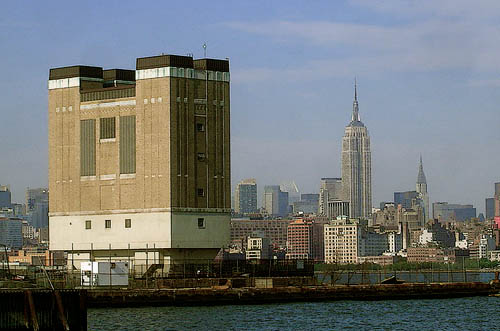
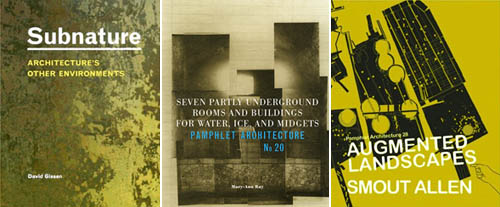
7) Subnature by David Gissen. Gissen’s book has already come up several times, to positive review, here on BLDGBLOG and presumably needs little introduction to long-term readers—but it’s a memorably wide-ranging look at all those other presences in the city that urbanists tend to overlook: puddles, dust, dirt, rats, weeds, and car exhaust, to name but a few. Gissen’s history of the tunnel-ventilation infrastructure of Manhattan was of particular relevance this term, as a few students and I looked briefly at the possibility of weather systems generated underneath the metropolis, as air pressure builds, moves, and dissipates throughout sewers, subway tunnels, and cross-island links. What weather-modification possibilities exist below the earth’s surface? Speculative rhetorical questions aside, Gissen’s book is valuable reading for anyone interested in the flipside of the modern city.

[Image: Holland Tunnel exhaust tower, ventilating the Manhattanite underworld; photo via SkyscraperPage.com].

8) Seven Partly Underground Rooms and Buildings for Water, Ice, and Midgets by Mary-Ann Ray. Mary-Ann Ray’s old Pamphlet Architecture installment is still one of my favorites. As much an archaeological handbook as it is an architectural guide, Ray’s pamphlet takes us into the ruins of underground spaces around Italy, including helical stairways, spherical ice-storage facilities “with as little surface area as possible,” and vaulted secret passageways for midgets.

[Images: Subnature by David Gissen, Seven Partly Underground Rooms and Buildings for Water, Ice, and Midgets by Mary-Ann Ray, and Augmented Landscapes by Smout Allen].

9) Augmented Landscapes by Smout Allen. Smout Allen’s work bridges landscapes, watersheds, continents, and villages, connecting architectural design to the mobile terrains of receding coastlines, wind-blown fens, and drainage canals. “In this Pamphlet,” the authors write, “we discuss five design cases.

In each the physicality of the site and the processes of environmental transformation are exploited—the intrinsic features of the landscape, the force of nature, geography, climate, geology, and land use are all scrutinized. The resulting architectural interventions respond to their dynamic and fluxing territories. The ephemeral character of the environment is reflected in the solidity of the artifacts that inhabit it as they take on a local specificity and lend to their surroundings a sense of nature illuminated.

You can read more about Smout Allen’s work courtesy of an article in the April 2010 issue of Blueprint Magazine.

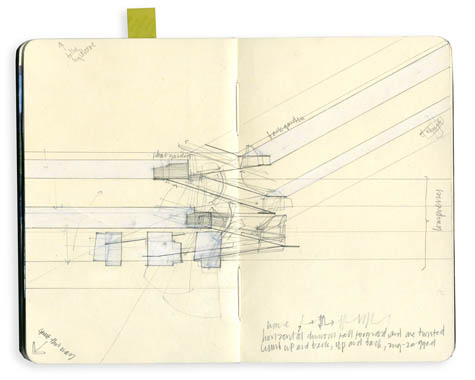
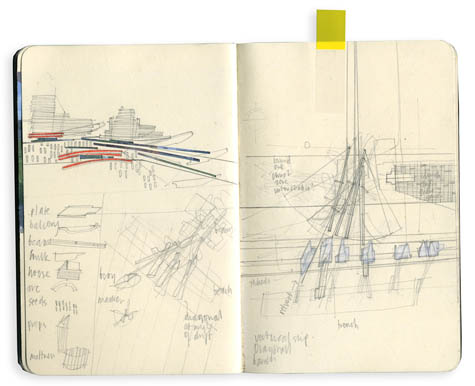
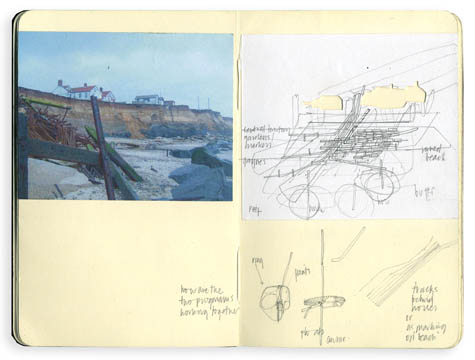
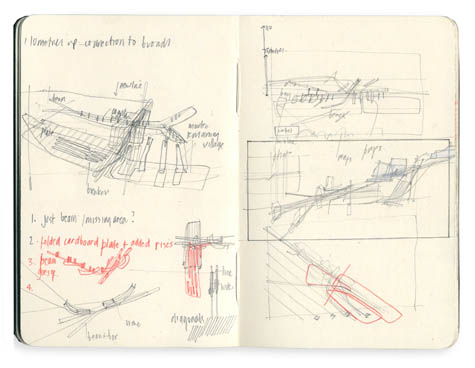
[Images: Four Moleskine spreads from Augmented Landscapes by Smout Allen].

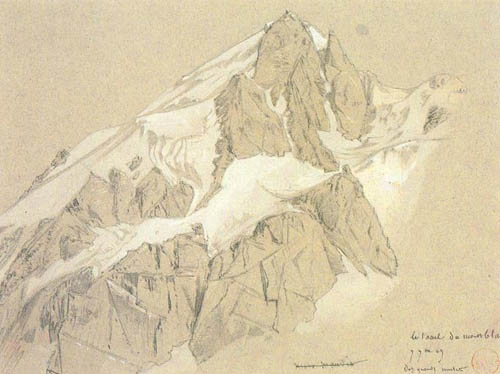
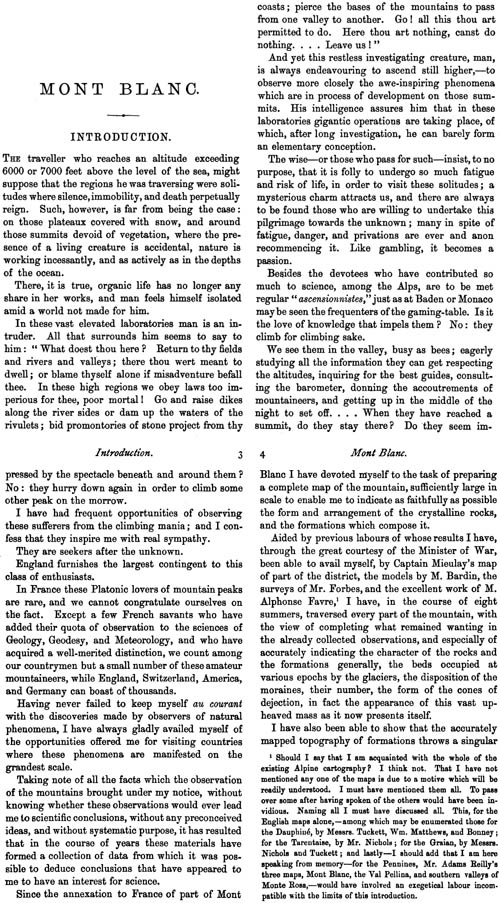
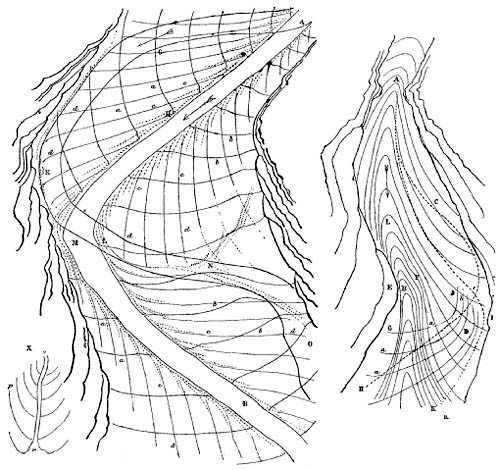
10) Mont Blanc: A Treatise on its Geodesic and Geological Constitution by Eugène Viollet-le-Duc. Last but not least, Viollet-le-Duc’s amazing hybrid architectural/geological analysis of the tectonic structure of Mont Blanc and its glaciers offered us several beautiful insights into the structural properties of ice flows and how they might be of interest in the context of architectural design.

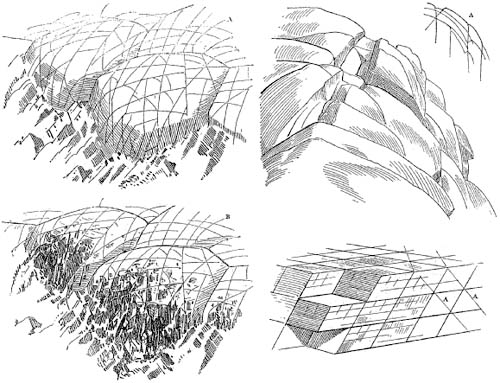
[Images: From Mont Blanc by Eugène Viollet-le-Duc].

Quoting at great length from a paper by architectural historians Martin Bressani and Robert Jan van Pelt:

Viollet-le-Duc’s work on Mont Blanc introduces a new edge to geological discourse in architecture as compared to the painterly outlook of [John] Ruskin. Now, observations of tectonic forms not only served to see nature intensely but also, and mainly, to identify a structural logic to its complex morphology. A basic principle thus organizes Viollet-le-Duc’s analysis of the great massif: The apparent chaos of its outline is only an illusion, as “laws have ordered these forms and determined the great crystalline system.” Viollet-le-Duc’s book is essentially a description of the process of formation of Mont Blanc, using a set of fascinating drawings and diagrams as if he had been present at the time of its genesis. The book’s opening chapter confidently illustrates the initial upheaval that generated the massif: An expanded mass of soft granite (protogine) below the earth’s thick surface erupted through the crystalline crust above, producing a domical rock formation sprouting out of a buttonhole-shape slit. As it slowly cooled and crystallized, this gigantic mass of granite progressively shrank and retreated. According to Viollet-le-Duc, the subtraction process followed a very precise rhombohedral prismatic pattern consistent throughout the whole. Mont Blanc thus acts as one huge crystal formation—every edge, every peak and aiguille follows a geodesic structure. The pattern creates a network of cells, a type of formation that Viollet-le-Duc found also at the micro level in glacial formation. This hexagonal configuration, based upon the equilateral triangle, proved the most fundamental and consistent principle of organization within Viollet-le-Duc’s late writings and architecture.

Within both glaciers and large-scale rock formations, in other words, we can find formal analogies for human architectural constructions—a geometry and order to both rock and ice. Coming round nearly full circle, then, geologist Michael Welland, whose book Sand is mentioned above, wrote a blog post exploring Viollet-le-Duc’s Alpine investigations, also mentioning a kind of geological novella that Viollet-le-Duc wrote shortly before his death.

• • •

Again, that’s by no means all of the material that we looked at this term, but it does give a fairly good list of the textual, historical, scientific, and architectural influences that came up repeatedly during the course.

Agamemnon’s Fortress

In his recent book The Lost Books of the Odyssey—an “ingeniously Borgesian novel that’s witty, playful, moving and tirelessly inventive”—author Zachary Mason, an Artificial Intelligence researcher, fictionalizes King Agamemnon’s attempts to build a fortress underground.

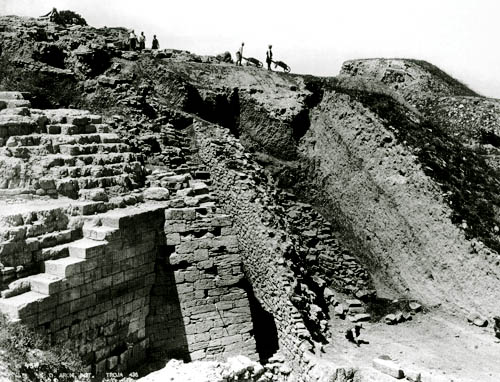
[Image: The walls of Troy slowly revealed].

Agamemnon’s choice of site, however, makes this task rather difficult: it is to be constructed in the sandy plains facing the walls of Troy.

Agamemnon wanted a fortress on the wide plain before the walls of Troy but there was nothing to build with but a few trees and an unlimited quantity of sand. Therefore (at Odysseus’s suggestion) the Greeks dug the negative image of a palace in the white plain, a convoluted warren where cascades of fine grains trickled endlessly down the walls and into the tenuous corridors irregularly shored up with masonry.

Mason describes “frequent cave-ins and sand-slides that suddenly obliterated rooms, courtiers, armories, armorers, elegists and exits.” It was, Agamemnon says to himself, both forward-operating base and future tomb.

Following the wisdom of the court geomancers it was considered impious to exhume any of the collapsed rooms and tunnels, a sin on par with looting a tomb, so when more space was needed the miners struck out into virgin ground. Thus the new underground palace evolved dendritically, sending off new shoots in all directions, sometimes opposed by unforeseen aquifers or plumes of hard rock, working around these obstacles with ant-like tenacity.

The passages multiply and deepen until the fortress “resembled a vast inverted castle, its battlements and towers soaring into the depths of the earth. Now and then a district was separated by a landslide and till the miners could reconnect them to the king’s rule they lived with their own laws and minted their own coins,” forming separate subterranean administrations, split by the logic of collapsing sand and its unpredictable granularity.

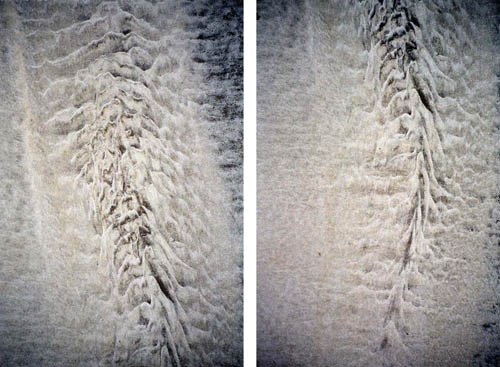
[Images: Extraordinary photographs of sand by Larry Deemer].

The architectural nature of sand grains is something discussed by Michael Welland in his own book Sand. There, Welland introduces us to the complex internal structures of sand dunes:

The weight and pressure distribution within a pile of any granular material is determined by the way in which the individual grains contact each other and distribute the stress. Quite commonly, grain shapes and sizes mean that there are microscopic chains and networks of grains that are oriented and in contact with each other in such a way that they carry most of the pressure from the weight of the material above them. These chains seem to behave like the soaring arches of Gothic cathedrals, which serve to transmit the weight of the roof, perhaps a great dome, outward to the walls, which bear the load. In a sand pile, particularly one that is confined in a container of some sort, these chains perform the same function—they carry the stress outward to the container, rather than directly downward to the base of the pile.

The idea that dunes have internal Gothic cathedrals, arranged chain-like throughout their sandy massing, is an incredible thing to consider. The amorphous mounds of the deep desert are, in fact, both structurally intricate and gravitationally complex.

Agamemnon’s fortress is thus a mathematical model of collapse—an inhabitable diagram of the forces traveling through it—bulwarked and avalanching against itself into new formations and plans. It is an architecture of dynamic materials.

Dream-Sector Physics and Inception Space

[Image: A still from Inception, directed by Christopher Nolan, courtesy of Warner Brothers].

An article I meant to link to the other week takes a look at the architectural design of Christopher Nolan’s forthcoming film Inception. Being a longtime fan of Nolan’s work, going back to his debut feature, Following (which I first saw at the Edinburgh Film Festival in 1999 and which, oddly enough, starred emerging architect Alex Haw, now of Cloud fame), I have to say that I am very much looking forward to seeing this movie.

Geoff Boucher of the Los Angeles Times describes it as “Hollywood’s first existential heist movie,” offering us a preview of some of the film’s sets and spaces in the process.

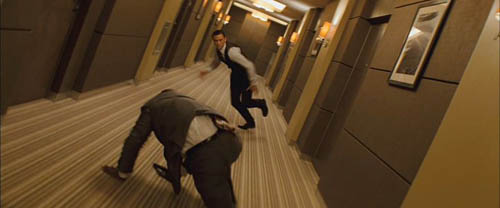
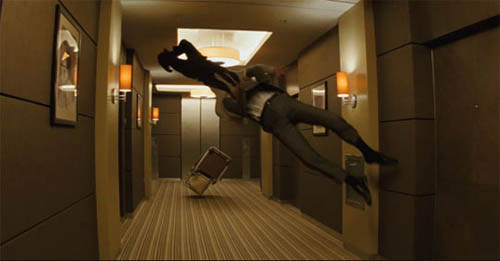
[Images: A rotating hall and fight scene from Inception, courtesy of Warner Brothers].

He specifically highlights the contributions of “special effects guru Chris Corbould (the man who built the Batmobile and has worked on a dozen James Bond films),” who helped to “put a premium on an old-school approach to movie magic” in the physical production of Inception:

Corbould’s teams, for instance, built giant rotating hallways and a massive tilting nightclub set to film the startling Inception scenes when dream-sector physics take a sharp turn into chaos. One of the film’s stars, Joseph Gordon-Levitt, spent long, bruising weeks learning to fight in a corridor that spun like a giant hamster wheel.

The idea of athletically training inside “giant rotating hallways” on a film set is pretty awesome; it comes with the implication that certain combat scenes are less demonstrations of a specific fighting style than the architectural revelation of a whole new type of geometry, an unprecedented way of filling, and thus dominating, space. On the other hand, of course, Boucher is quick to point out that it wasn’t all analogue set construction and advanced balance-training:

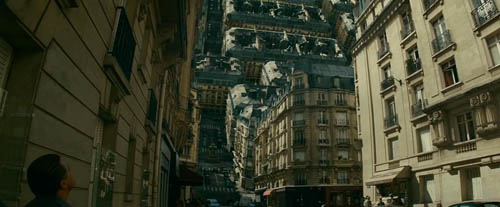
Inception does have major computer effects: Several vivid sequences show a dream metropolis in churning calamity, a city skyline seems to fold in on itself as a dream begins to lose its shape and, unlike many Hollywood versions of dream surrealism, the scene has the look of a massive mechanical failure, not a morphing, liquid calamity. Nolan’s dreams have the sharp edges of Escher, not the syrup drips of Dalí. Architecture is a major influence on the culture of the film too with dreams that are more like blueprints than poems. That speaks to Nolan’s longtime interest in architecture. A key scene in Inception was filmed at the architecture school at University College London, where Nolan was an English major and also met his future wife and producing partner, Emma Thomas.

You can see one of those “massive mechanical failures” in the image, below, where we watch Paris rear up and crease back over on itself like some fine-tuned, mathematically exact introduction to a new, urban-scale baroque.

[Image: From Inception by Christopher Nolan, courtesy of Warner Brothers].

Dream-sector physics meets The Fold.

In any case, check out the trailer when you get a chance—while I try to work some media magic to score an interview for BLDGBLOG with Nolan and Corbould.

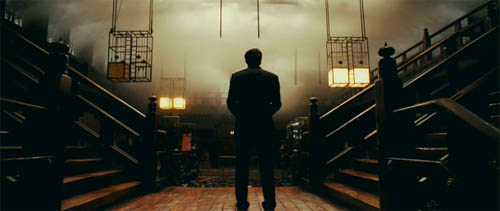
(It’s interesting to note, meanwhile, in the context of this post’s opening image, that Nolan grew up in Chicago—which, in tandem with that image, makes me wonder if some very, very minor part of Nolan’s architectural and stylistic interest in Japonisme—i.e. Batman as ninja in a wood-paneled dojo—wasn’t at least partially inspired by the Frank Lloyd Wright buildings scattered in and around the Chicago area; in fact, the set featured in that opening image could very well have been inspired by Wright’s Imperial Hotel in Tokyo).

Continent-Scale Weather Systems Made of Glass

[Image: Photo by Arni Saeberg/Bloomberg].

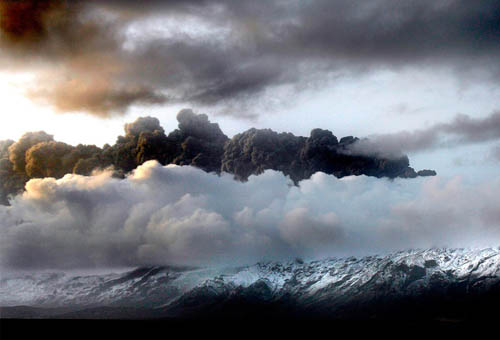
One of many things interesting to me about the ongoing volcanic eruption in Iceland is the fact that it has generated a new weather system made of glass: its own “maelstrom of microscopic volcanic glass shards” that liquify and go molten inside passing airplane engines, causing failure.

If you had told me that a new science fiction novel just come out featuring a planet on which vast turbulent structures of glass move through the global atmosphere, posing a dire threat to machinery and drifting across whole continents in a kind of low-intensity storm of aerosolized crystal, I would, naively, never have assumed that such a thing might also be possible here on earth. The speculative climatology of alien worlds.

[Image: Photo by AP Photo/Brynjar Gaudi].

But, perhaps, if airplane engines are built to fly through air—i.e. not through glass, dust, rocks, or geology—today’s airplanes should be temporarily retrofitted with tunneling equipment under each wing, jury-rigged Herrenknecht machines to drill a new infrastructure of hovering tunnels through the glass-thundering skies of northern Europe.

Shining Path

One of many things that we’ll be looking at tonight in the Blackout seminar that I’ve been teaching over at Pratt in Brooklyn is organically generated electricity—things like virus batteries, biogeobatteries, sediment batteries, and more.

[Image: From Christopher Nolan’s film The Prestige (2006)].

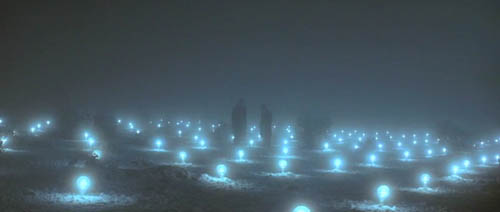
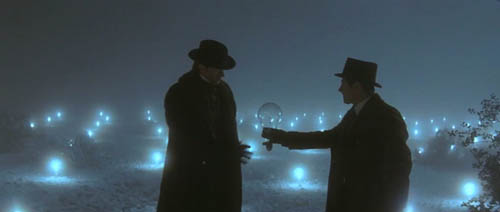
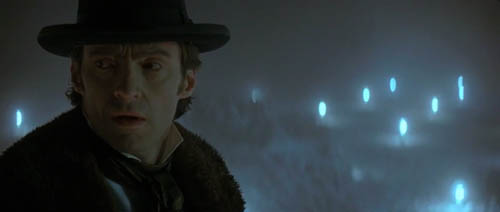
By way of getting there, though, we’ll be taking a very brief look at Christopher Nolan’s under-rated film The Prestige—specifically the scene in which we see a hillside covered in giant incandescent light bulbs, none of which appear to be plugged into anything but soil and all of which are powered wirelessly by a generator located over 12 miles away.

The geological form of the mountain plateau becomes a shining grid framing our two featured characters.

[Image: From Christopher Nolan’s film The Prestige (2006)].

Although The Prestige does not suggest that this is what’s happening in this scene, what if the soil itself was powering these light bulbs? What if soil could be turned into a landscape-scale, distributed electrical device?

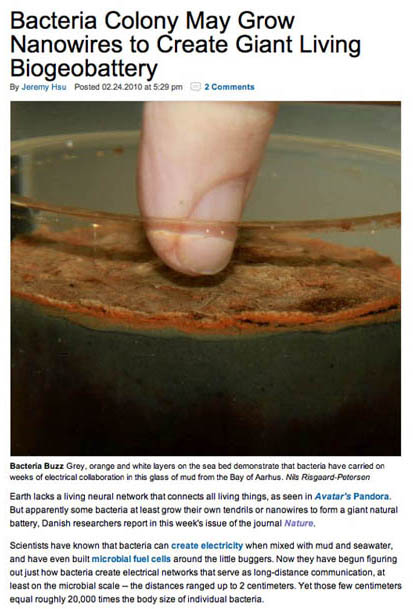
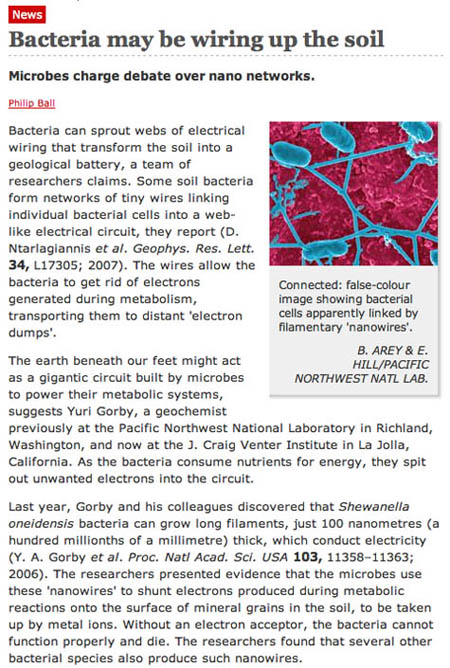
Awesomely, as Nature reported just two months ago, there is growing evidence to back up “a suggestion within the geophysics and microbiology communities that bacteria can grow tiny ‘wires’ and hook up to form a biogeobattery—a giant natural battery that generates electrical currents.”

[Image: From Popular Science].

Then Popular Science picked up on the story:

Scientists have known that bacteria can create electricity when mixed with mud and seawater, and have even built microbial fuel cells around the little buggers. Now they have begun figuring out just how bacteria create electrical networks that serve as long-distance communication, at least on the microbial scale—the distances ranged up to 2 centimeters. Yet those few centimeters equal roughly 20,000 times the body size of individual bacteria.

Imagining soil itself—the ground all around us—as a giant electrical transmission network is astonishing. And, again, while there is no mention of anything like biogeobatteries and their ilk in The Prestige, the very idea that perhaps someday we could plug light bulbs directly into the soil—an organic battery coextensive with the living surface of the earth—amazes me.

[Images: From The Prestige (2006)].

And biogeobatteries are not even the only option here; there are also virus batteries.

MIT reported back in 2006 that a team of researchers had “harnessed the construction talents of tiny viruses to build ultra-small ‘nanowire’ structures for use in very thin lithium-ion batteries. By manipulating a few genes inside these viruses, the team was able to coax the organisms to grow and self-assemble into a functional electronic device.” The resulting virus batteries are tiny, but they could vary in scale “from the size of a grain of rice up to the size of existing hearing aid batteries.”

The future design possibilities are bewildering. Could deposits of virus-impregnated soil be used as electricity-storage devices in rural, off-the-grid areas?

[Image: From Nature].

After all, bacteria might already be “wiring up the soil,” Nature suggested three years ago. Indeed, “bacteria can sprout webs of electrical wiring that transform the soil into a geological battery,” meaning that “the earth beneath our feet might act as a gigantic circuit built by microbes to power their metabolic systems.” And you can build a soil battery yourself:

The researchers filled plastic columns with wet sand infiltrated with a nutrient compound (lactate), and allowed S. oneidensis to grow in this “fake soil.” Only the top of the column was in contact with air. Electrodes inserted at various heights up the columns revealed that, after about ten days, electrical charge was coursing up the column… threaded by a web of filaments between the bacterial cells.

I’m reminded here of the work of Philip Beesley, which often uses self-fertilizing yeast-packs, gels, and seeds to create living geotextiles. In fact, a Beesley Battery doesn’t seem at all very off: a living mat woven through the soil, generating and storing electricity based on pre-existing bacterial activity in the ground.

You infect the soil with a genetically-modified virus patented by MIT and electrical currents start to flow…

[Image: From Christopher Nolan’s The Prestige (2006)].

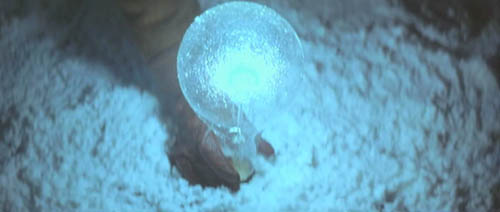
Perhaps someday, then, we could simply show up somewhere, in the middle of the night, surrounded by pine forests and hills, and just crouch down, push a light bulb two or three inches into the earth—

[Image: From The Prestige (2006)].

—and watch as everything around us starts to glow.

Cities Under Siege

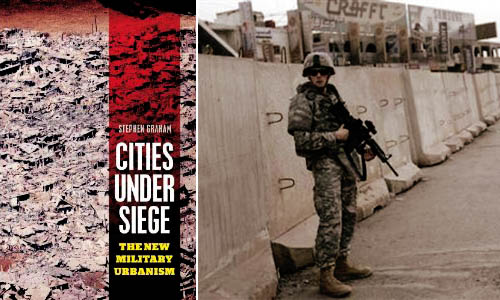
[Image: Stephen Graham’s Cities Under Siege].

In a 2003 paper for the Naval War College Review, author Richard J. Norton defined the term feral cities. “Imagine a great metropolis covering hundreds of square miles,” Norton begins, as if narrating the start of a film pitch. “Once a vital component in a national economy, this sprawling urban environment is now a vast collection of blighted buildings, an immense petri dish of both ancient and new diseases, a territory where the rule of law has long been replaced by near anarchy in which the only security available is that which is attained through brute power.”

With the city’s infrastructure having collapsed long ago—or perhaps having never been built in the first place—there are no works of public sanitation, no sewers, no licensed doctors, no reliable food supply, no electricity. The feral city is a kind of return to medievalism, we might say, back to the future of a dark age for anyone but criminals, gangs, and urban warlords. It is a space of illiterate power—strength unresponsive to rationality or political debate.

From the perspective of a war planner or soldier, the feral city is also spatially impenetrable, a maze resistant to aerial mapping. Indeed, its “buildings, other structures, and subterranean spaces, would offer nearly perfect protection from overhead sensors, whether satellites or unmanned aerial vehicles,” Norton writes.

This is something Russell W. Glenn, formerly of the RAND Corporation—an Air Force think tank based in Southern California—calls “combat in Hell.” In his 1996 report of that name, Glenn pointed out that “urban terrain confronts military commanders with a synergism of difficulties rarely found in other environments,” many of which are technological. For instance, the effects of radio communications and global positioning systems can be radically limited by dense concentrations of architecture, turning what might otherwise be an exotic experience of pedestrian urbanism into a claustrophobic labyrinth inhabited by unseen enemy combatants.

Add to this the fact that military ground operations of the near future are more likely to unfold in places like Sadr City, Iraq—not in paragons of city planning like Vancouver—and you have an environment in which soldiers are as likely to die from tetanus, rabies, and wild dog attacks, Norton suggests, as from actual armed combat.

Put another way, as Mike Davis wrote in Planet of Slums, “the cities of the future, rather than being made out of glass and steel as envisioned by earlier generations of urbanists, are instead largely constructed out of crude brick, straw, recycled plastic, cement blocks, and scrap wood. Instead of cities of light soaring toward heaven, much of the twenty-first-century urban world squats in squalor, surrounded by pollution, excrement, and decay.”

But feral cities are one thing, cities under siege are something else.
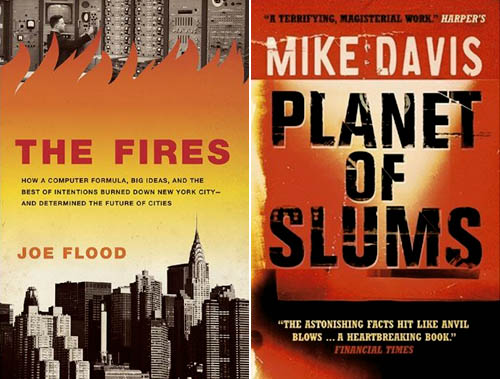
[Images: The Fires by Joe Flood and Planet of Slums by Mike Davis].

In his new book Cities Under Siege, published just two weeks ago, geographer Stephen Graham explores “the extension of military ideas of tracking, identification and targeting into the quotidian spaces and circulations of everyday life,” including “dramatic attempts to translate long-standing military dreams of high-tech omniscience and rationality into the governance of urban civil society.” This is just part of a “deepening crossover between urbanism and militarism,” one that will only become more pronounced, Graham fears, over time.

One particularly fascinating example of this encroachment of “military dreams… into the governance of urban civil society” is actually the subject of a forthcoming book by Joe Flood. The Fires tells the story of “an alluring proposal” offered by the RAND Corporation, back in 1968, “to a city on the brink of economic collapse [New York City]: using RAND’s computer models, which had been successfully implemented in high-level military operations, the city could save millions of dollars by establishing more efficient public services.” But all did not go as planned:

Over the next decade—a time New York City firefighters would refer to as “The War Years”—a series of fires swept through the South Bronx, the Lower East Side, Harlem, and Brooklyn, gutting whole neighborhoods, killing more than two thousand people and displacing hundreds of thousands. Conventional wisdom would blame arson, but these fires were the result of something altogether different: the intentional withdrawal of fire protection from the city’s poorest neighborhoods—all based on RAND’s computer modeling systems.

In any case, Graham’s interest is in the city as target, both of military operations and of political demonization. In other words, cities themselves are portrayed “as intrinsically threatening or problematic places,” Graham writes, and thus feared as sites of economic poverty, moral failure, sexual transgression, rampant criminality, and worse (something also addressed in detail by Steve Macek’s book Urban Nightmares). All cities, we are meant to believe, already exist in a state of marginal ferality. I’m reminded here of Frank Lloyd Wright’s oft-repeated remark that “the modern city is a place for banking and prostitution and very little else.”

In some of the book’s most interesting sections, Graham tracks the growth of urban surveillance and the global “homeland security market.” He points out that major urban events—like G8 conferences, the Olympics, and the World Cup, among many others—offer politically unique opportunities for the installation of advanced tracking, surveillance, and facial-recognition technologies. Deployed in the name of temporary security, however, these technologies are often left in place when the event is over: a kind of permanent crisis, in all but name, takes over the city, with remnant, military-grade surveillance technologies gazing down upon the streets (and embedded in the city’s telecommunications infrastructure). A moment of exception becomes the norm.

Graham outlines a number of dystopian scenarios here, including one in which “swarms of tiny, armed drones, equipped with advanced sensors and communicating with each other, will thus be deployed to loiter permanently above the streets, deserts, and highways” of cities around the world, moving us toward a future where “militarized techniques of tracking and targeting must permanently colonize the city landscape and the spaces of everyday life.”

In the process, any real distinction between a “homeland” and its “colonies” is irreparably blurred. Here, he quotes Michel Foucault: “A whole series of colonial models was brought back to the West, and the result was that the West could practice something resembling colonization, or an internal colonialism, on itself.” If it works in Baghdad, the assumption goes, then let’s try it out in Detroit.

This is just one of many “boomerang effects” from militarized urban experiments overseas, Graham writes.
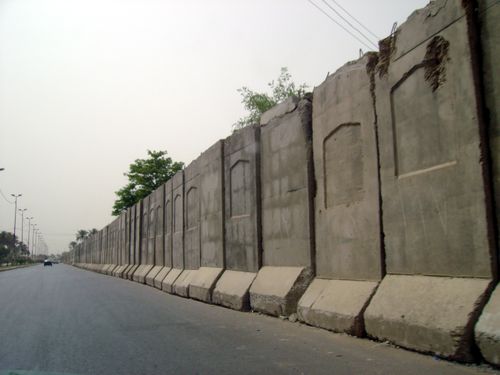
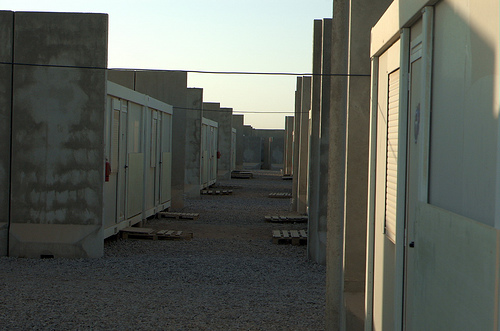
[Images: Blast walls in Iraq].

But what does this emerging city—this city under siege—actually look like? What is its architecture, its urban design, its local codes? What is its infrastructure?

Graham has many evocative answers for this. The city under siege is a place in which “hard, military-style borders, fences and checkpoints around defended enclaves and ‘security zones,’ superimposed on the wider and more open city, are proliferating.”

Jersey-barrier blast walls, identity checkpoints, computerized CCTV, biometric surveillance and military styles of access control protect archipelagos of fortified social, economic, political or military centers from an outside deemed unruly, impoverished and dangerous. In the most extreme examples, these encompass green zones, military prisons, ethnic and sectarian neighborhoods and military bases; they are growing around strategic financial districts, embassies, tourist and consumption spaces, airport and port complexes, sports arenas, gated communities and export processing zones.

Cities Under Siege also extensively covers urban warfare, a topic that intensely interests me. From Graham’s chapter “War Re-Enters the City”:

Indeed, almost unnoticed within “civil” urban social science, a shadow system of military urban research is rapidly being established, funded by Western military research budgets. As Keith Dickson, a US military theorist of urban warfare, puts it, the increasing perception within Western militaries is that “for Western military forces, asymmetric warfare in urban areas will be the greatest challenge of this century… The city will be the strategic high ground—whoever controls it will dictate the course of future events in the world.”

Ralph Peters phrased this perhaps most dramatically when he wrote, back in 1996 for the U.S. Army War College Quarterly, that “the future of warfare lies in the streets, sewers, high-rise buildings, industrial parks, and the sprawl of houses, shacks, and shelters that form the broken cities of our world.” The future of warfare, that is, lies in feral cities.

In this context, Graham catalogs the numerous ways in which “aggressive physical restructuring,” as well as “violent reorganization of the city,” is used, and has been used throughout history, as a means of securing and/or controlling a city’s population. At its most extreme, Graham calls this “place annihilation.” The architectural redesign of cities can thus be used as a military policing tactic as much as it can be discussed as a topic in academic planning debates. There are clearly echoes of Eyal Weizman in this.

On one level, these latter points are obvious: small infrastructural gestures, like public lighting, can transform alleyways from zones of impending crime to walkways safe for pedestrian use—and, in the process, expand political control and urban police presence into that terrain. But, as someone who does not want to be attacked in an alleyway any time soon, I find it very positive indeed when the cityscape around me becomes both safer by design and better policed. Equally obvious, though, when these sorts of interventions are scaled-up—from public lighting, say, to armed checkpoints in a militarized reorganization of the urban fabric—then something very drastic, and very wrong, is occurring in the city. Instead of a city simply with more cops (or fire departments), you begin a dark transition toward a “city under siege.”

I could go on at much greater length about all of this—but suffice it to say that Cities Under Siege covers a huge array of material, from the popularity of SUVs in cities to the blast-wall geographies of Baghdad, from ASBOs in London to drone helicopters in the skies above New York. Raytheon’s e-Borders program opens the book, and Graham closes it all with a discussion of “countergeographies.”

(Parts of this post, on feral cities, originally appeared in AD: Architectures of the Near Future, edited by Nic Clear).