Chocolate Mill

In response to a description featured in an earlier post about “space truffles,” designer (and occasional photographer) Nick Foster pointed me to the video featured below. Originally released last year from the Vitra Design Museum, it documents a 2012 collaboration between Studio Wieki Somers and German chocolatier Rafael Mutter.

What appears simply to be a massive column of chocolate turns out, when shaved down over time—reduced millimeter by millimeter for hours—to have countless, stunning internal geometric patterns marbled and embedded throughout its previously unseen interior. Every turn of the mill reveals more, deeper patterns; every pattern is scraped away to reveal ever deeper shapes.


Objects that only reveal themselves through reduction—or, rather, objects that reveal infinitely different, all but unrecognizable versions of themselves as they are diminished in size or shape—are a particularly fascinating thing to think about.

From genetically modified trees whose inner rings are actually precise 3D objects only revealed when the tree is sliced in section—perhaps like something out of the work of Sascha Pohflepp, where grown machines emerge like fruit from trees—to multi-course meals where each course is somehow embedded within the course that preceded it, there is a bewildering amount of future design possibility in the field.

(Thanks, Nick, for the tip!)

Wood Grain Cosmogram

The previous post, looking at the possibility of an object that could be carved, whittled, and reduced infinitely, each section revealing new, fractal details, reminded me of two short films we showed several years ago at the Silver Lake Film Festival, both by architect Bradford Watson.

An over-literal description doesn’t really do Watson’s work justice. In the first one, embedded below, you are looking at nothing more complicated than a series of 768 sectional cuts taken through a 96-inch 2×4, after which the resulting wooden blocks were used to make black & white prints, and the prints were then played in sequence, like a flipbook. In the second film, you’re watching something even more straight-forward, which is a “matched pair” of 2x4s that have been cut down, photographed, and filmed in order until there is no more 2×4 left to cut through.

And that’s it.

But they’re both well worth watching, if for no other reason than the sensation they give, in the first video’s case, of flying forward through space, complete with weird astronomical bursts of energy shooting diagonally and comet-like across the wood grain (for example, the moment captured at 00:09-00:10).

In the second video, below, the wood seems to mimic the rings of Saturn, a planetary concentricity occasionally crossed and streaked by foreign objects (for example, see the event at 00:18-00:19 or rewatch the weird knotted prominence, like a solar storm in wood, that appears at 00:51-00:59).

It’s as if the wood itself all along had been filming the sun somehow, capturing that solar exposure in wood and documenting the star whose radiation and light had helped it to grow in the first place—as if, when you slice down into something as simple as a 2×4 normally used to construct suburban houses, you can find films of the universe, weird short loops of the skies exploding, splintered by comets and solar storms.

In fact, I’m reminded of a quotation I’ve always liked, from a book called Earth’s Magnetism in the Age of Sail by A.R.T. Jonkers: “In 1904 a young American named Andrew Ellicott Douglass started to collect tree specimens. He was not seeking a pastime to fill his hours of leisure; his motivation was purely professional. Yet he was not employed by any forestry department or timber company, and he was neither a gardener not a botanist. For decades he continued to amass chunks of wood, all because of a lingering suspicion that a tree’s bark was shielding more than sap and cellulose. He was not interested in termites, or fungal parasites, or extracting new medicine from plants. Douglass was an astronomer, and he was searching for evidence of sunspots.”

The idea that an astronomer seeking to study the sun would proceed by making incisions into trees, as if looking for solar fossils there—an astral forensics of the forest—is mind-bogglingly beautiful and seems also to form the poetic subtext that makes Bradford Watson‘s short films so captivating.
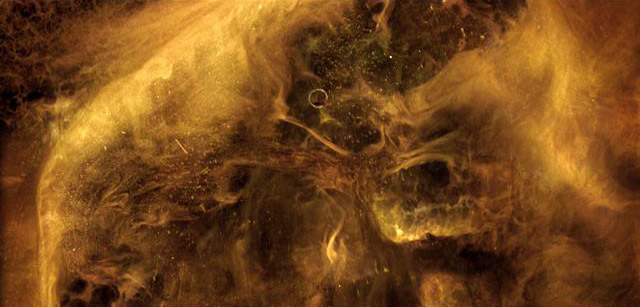
[Image: From The Fountain, courtesy of Warner Brothers].

A few years ago in Wired, meanwhile, veteran science journalist Steve Silberman wrote about the special effects created for Darren Aronofsky’s film The Fountain. Aronofsky, Silberman explained, stumbled across the photographic work of Peter Parks, “a marine biologist and photographer who lives in a 400-year-old cowshed west of London”:

Parks and his son run a home f/x shop based on a device they call the microzoom optical bench. Bristling with digital and film cameras, lenses, and Victorian prisms, their contraption can magnify a microliter of water up to 500,000 times or fill an Imax screen with the period at the end of this sentence. Into water they sprinkle yeast, dyes, solvents, and baby oil, along with other ingredients they decline to divulge. The secret of Parks’ technique is an odd law of fluid dynamics: The less fluid you have, the more it behaves like a solid. The upshot is that Parks can make a dash of curry powder cascading toward the lens look like an onslaught of flaming meteorites. “When these images are projected on a big screen, you feel like you’re looking at infinity,” he says. “That’s because the same forces at work in the water—gravitational effects, settlement, refractive indices—are happening in outer space.”

I mention this simply because it would be interesting to experiment with ultra-low-budget 2001-like astral effects using nothing but sequential shots of wood grain, with its stuttering bursts of spatial events constantly branching out from within.

Space Truffle

[Image: From Fabergé Fractals by Tom Beddard].

One of the perils of spending most of the summer away from blogging, I suppose, is that it’s so easy to miss interesting projects. Something that made the rounds several weeks ago, and that seemed worth re-posting here anyway is this incredible series of images exploring “Fabergé fractals” by digital artist Tom Beddard.

[Image: From Fabergé Fractals by Tom Beddard].

It’s not the sci-fi stoner appeal of the fractals themselves that is so interesting about the images, however, but rather the notion of a 3D object so dense and so complicated with internal surfaces, rings of growth, and convolutedly compressed whorls that you could cut an endless array of millimeter-thin slices from it and each one would always reveal something different. A different texture, a different marbling of colors, a different and effectively unpredictable internal geometry.

[Images: From Fabergé Fractals by Tom Beddard].

You could slice new gems from this thing forever—carving down from every side, milling from every possible angle—and always find some strange new object there before you, one that changes through reduction, always offering, no matter how small the object eventually gets, all but infinite surface area to explore.

Architecturally speaking, it would be internally infinite in plan, internally infinite in section.

[Image: From Fabergé Fractals by Tom Beddard].

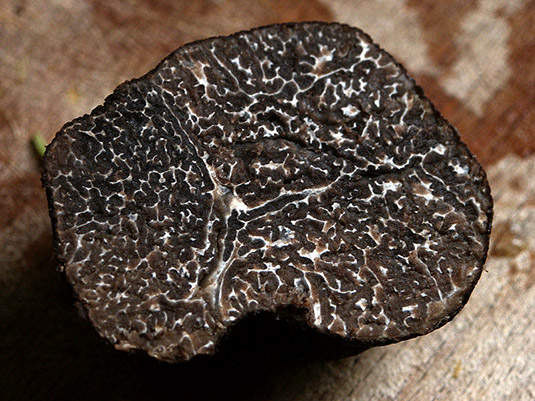
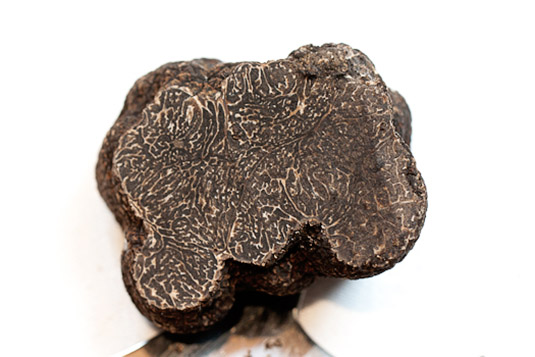
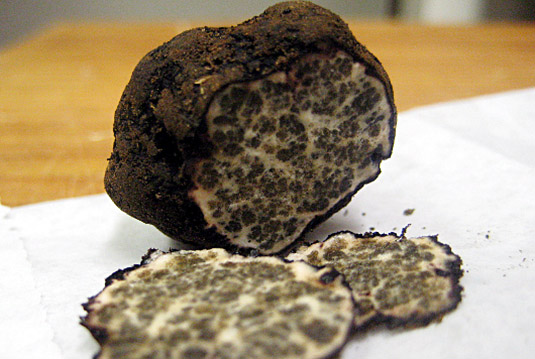
It’s like a truffle—

[Images: Sliced truffles, randomly found via Google].


—a space truffle that could be whittled and shaved down, shaped, sanded, and cut, eternally different from what it used to be at every stage of this spatial surgery.

[Image: From Fabergé Fractals by Tom Beddard].

(Via but does it float).

Voices Loom

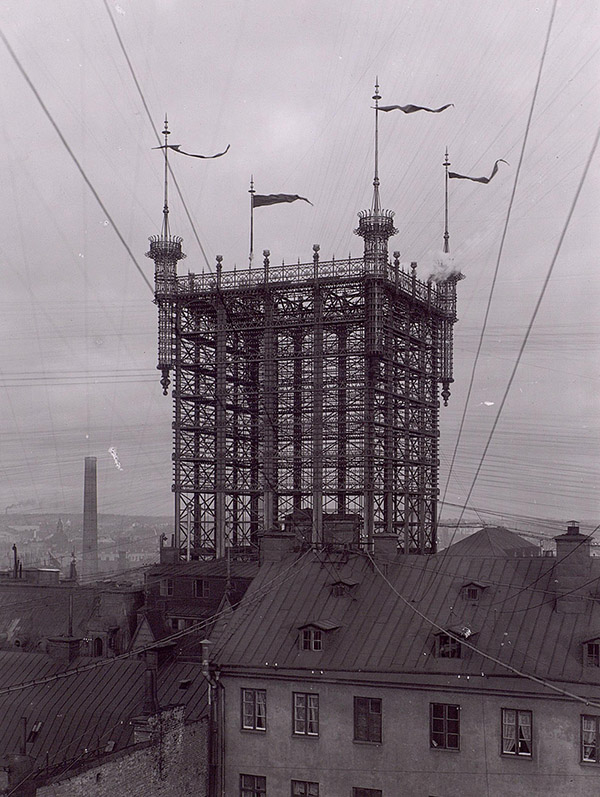
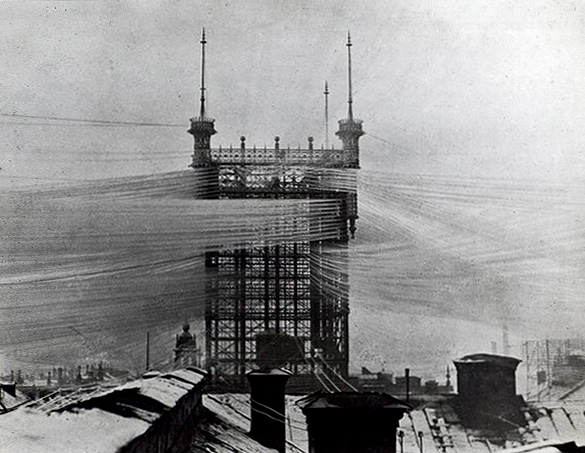
[Image: A telephone tower in Stockholm, Sweden, courtesy of the Tekniska Museet].
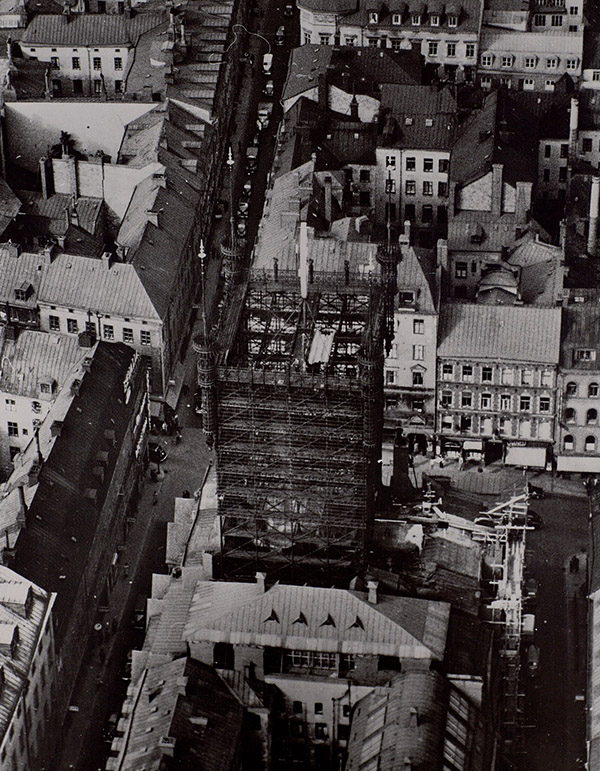
Trying to catch up on the huge variety of things saved over the summer while out on our most recent jaunt for Venue, I’ve got an awful lot of quick links, now less-than-current news items, and a few longer reads that you’ve no doubt seen elsewhere at this point, but I thought I’d go through and choose a few for posting.

[Image: A telephone tower in Stockholm, Sweden, courtesy of the Tekniska Museet].
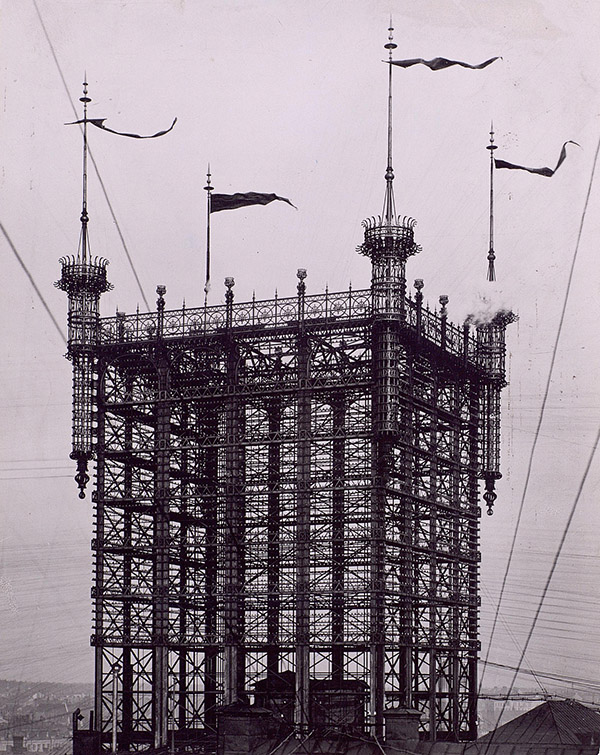
In this case, we’re looking at a telephone tower in downtown Stockholm, one that stood from roughly 1887-1913, and that served at least 5,000 local phones lines—lines that take on the literal feel of a sketch or drawing as they stretch over the streets like some urban-scale loom enthroned over the city, weaving conversations together from every district. It’s a cast-iron stupa through which all voices must pass.

[Image: A telephone tower in Stockholm, Sweden, courtesy of the Tekniska Museet].
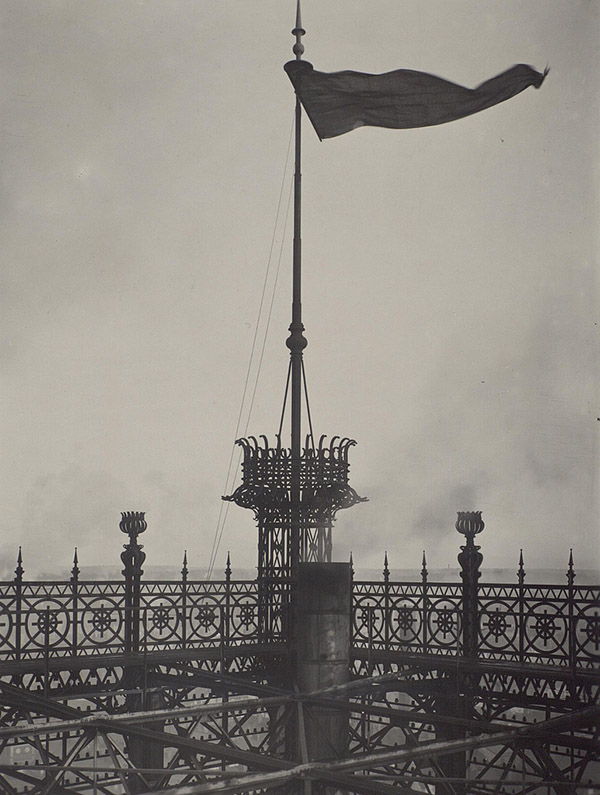
There are a few more photos available at the Tekniska Museet‘s Flickr set, but here is a selection of some of the most interesting—

[Images: A telephone tower in Stockholm, Sweden, courtesy of the Tekniska Museet].
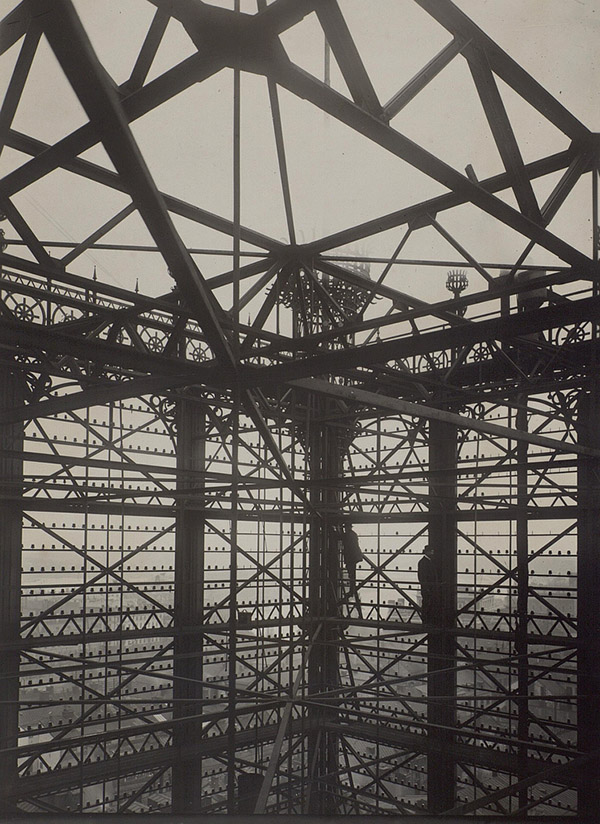
—including a street scene of people walking to or from home with this strange skeletal structure seemingly waiting for them at the end of the lane, listening and dystopian—

[Image: A telephone tower in Stockholm, Sweden, courtesy of the Tekniska Museet].
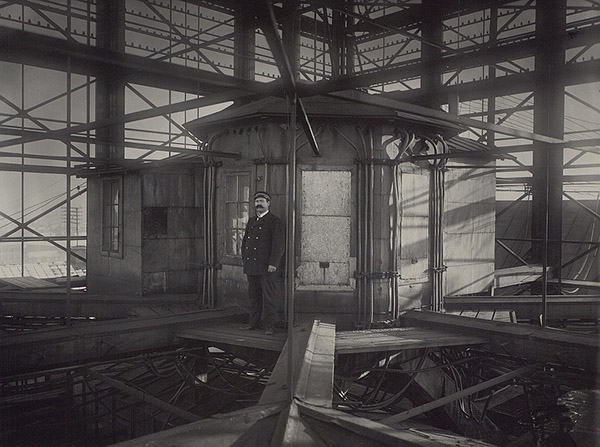
—or this view of it blending into its urban context. It could almost pass as a cathedral or as the intimidating battlements of an unfinished electromagnetic fortress in the middle of the downtown core.

[Image: A telephone tower in Stockholm, Sweden, courtesy of the Tekniska Museet].
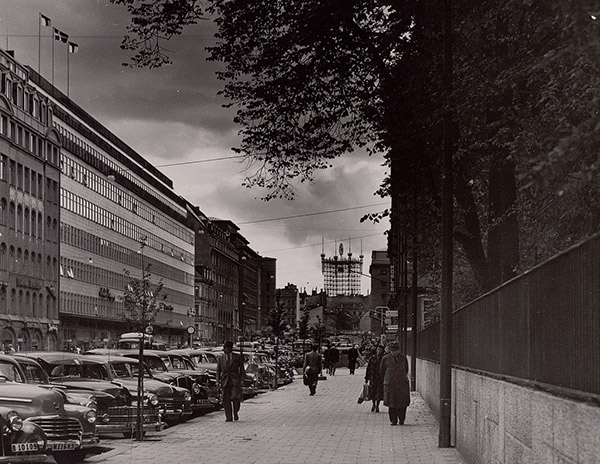
The weird and invisible mysticism of the phone system is laid bare, its nervous system exposed above the roofs of Stockholm and strung up on a tower like the pelt of some rare and conquered animal, forced to host even our most inconsequential conversations.

[Image: A telephone tower in Stockholm, Sweden, courtesy of the Tekniska Museet].

Teenage Mutant Ninja District

Abandoned terrapin turtles purchased 25 years ago at the height of popularity for Teenage Mutant Ninja Turtles have been harming wildlife and changing the ecological character of England’s famed Lake District. Once an orbital center for the lives of poets William Wordsworth and Samuel Taylor Coleridge, the landscape is now infested with discarded pets purchased for their imaginative resemblance to kids’ toys and comic book characters.

Terry Bowes, a regional zoo director interviewed by the Guardian, has become “exasperated at the routine abandonment of creatures,” he explained, “that suffered the misfortune of becoming fashionable at the time of the Teenage Mutant Ninja Turtle craze.”

“I was thinking what we could do about them all,” Bowes told the paper, “and then I heard about another Teenage Mutant Ninja Turtle film coming out soon and steam came out of my ears. I was thinking, ‘Oh no, this is only going to get worse.'”

Human ownership of changing animal species responds to the quirks of popular appeal, we read, including hit films and toy lines: “Pets are just as vulnerable to fashion as anything else, said Bowes, as we passed three enormous European eagle owls he said were abandoned by their owners after they outgrew Harry Potter, and a trio of perky meerkats he said were probably originally bought after seeing the star of the Compare the Market insurance ads.” The region is an open-air zoo of animals that have escaped from popular media.

Surely, though, in a sense, this is just the latest, albeit inadvertent iteration of the infamous American Acclimatization Society, a group of literary-minded naturalists in 19th-century New York City who made it their bizarre goal to “introduce to the U.S. every bird mentioned in Shakespeare’s scripts.” As Scientific American writes, “The Acclimatization Society released some hundred starlings in New York City’s Central Park in 1890 and 1891. By 1950 starlings could be found coast to coast, north past Hudson Bay and south into Mexico. Their North American numbers today top 200 million.” Shakespeare, the Bible, Teenage Mutant Ninja Turtles—all cultural artifacts and unintended animal blueprints for infested landscapes yet to come.

(The recent documentary The Elephant in the Living Room is worth a view here, for anyone interested in the unforeseen—or, far more often, willfully overlooked—negative side-effects of exotic pets).

Alternative Inputs

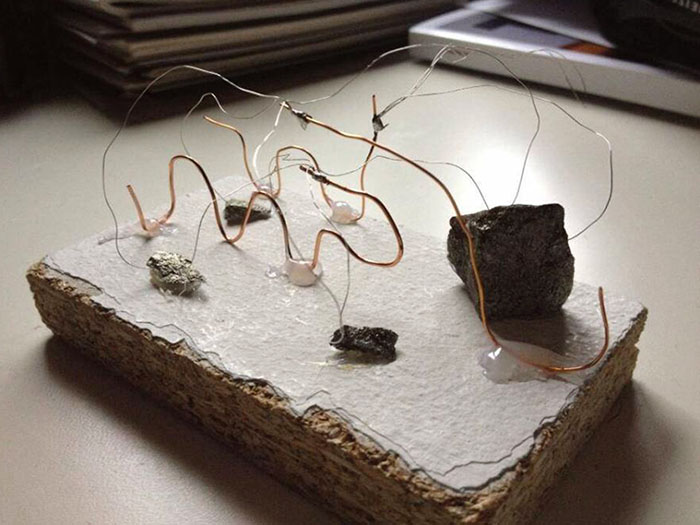
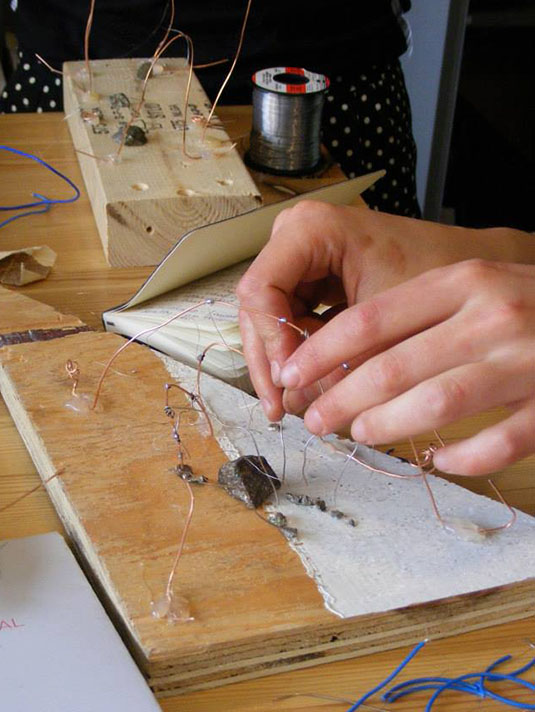
UK artist Ryan Jordan led a workshop earlier this summer in Montréal, building musical instruments out of geological circuit boards, an experiment in terrestrial instrumentation he calls “Derelict Electronics.”

[Image: From “Derelict Electronics” by Ryan Jordan; photo by Lauren Franklin].
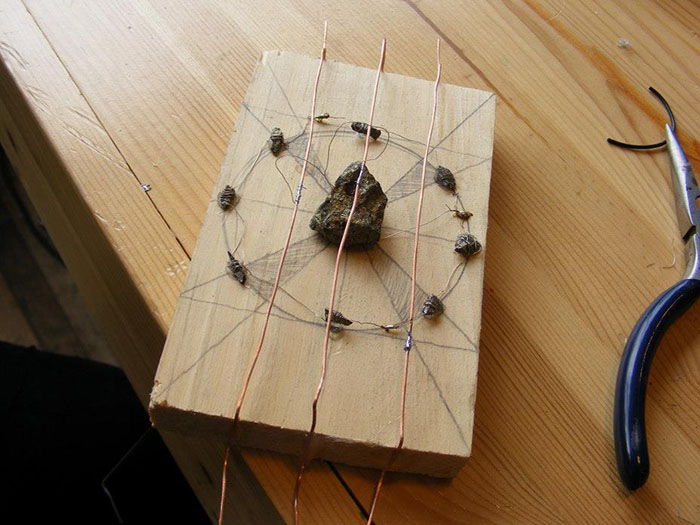
The sputtering and noisy results use “a mesh of point contacts connecting to chalcopyrite and iron pyrite to make crude amplifiers out of rocks.”

“When an electric current is sent through the rocks,” Jordan explains, “sporadic noise bursts from the speakers. With some fine tuning these rocks begin to behave like microphones, amplifying howling feedback and detecting subtle scratches and disturbances in their surrounding environment.”

[Image: From “Derelict Electronics” by Ryan Jordan].
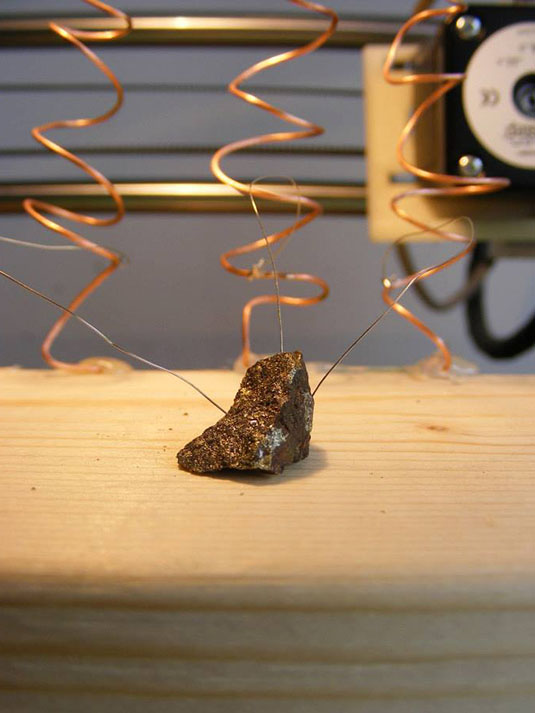
The extraction of sound from or by way of minerals is less bizarre than it might at first sound, considering that, as Jordan points out, his experiment is actually “based on the Adams Crystal Amplifier (1933), a precursor to the modern transistor, one of the fundamental building blocks of today’s electronic and digital world.” In a sense, then, these are just a hipster rediscovery of crystal radio.

The resulting instruments, though visually crude, are Frankenstein-like webs of copper wire and rocks affixed to, in these photographs, a wooden base. The potential for aestheticizing these beyond the workshop stage seems both obvious and highly promising.

[Images: From “Derelict Electronics” by Ryan Jordan].
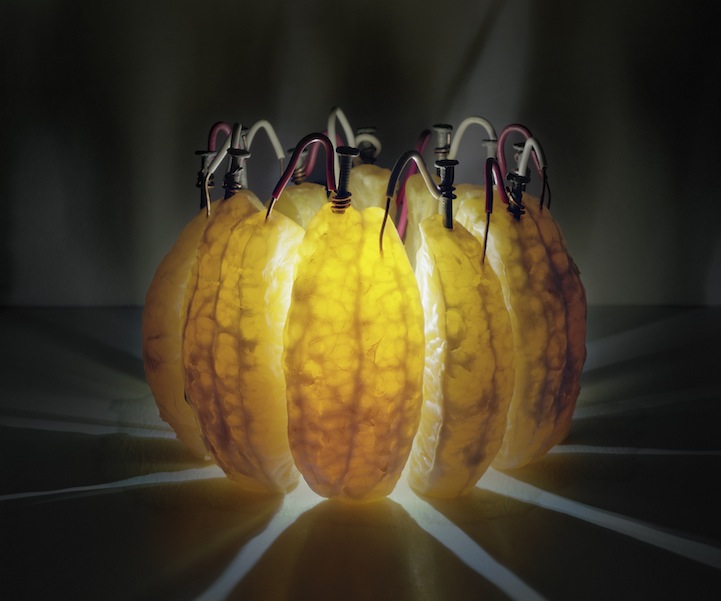
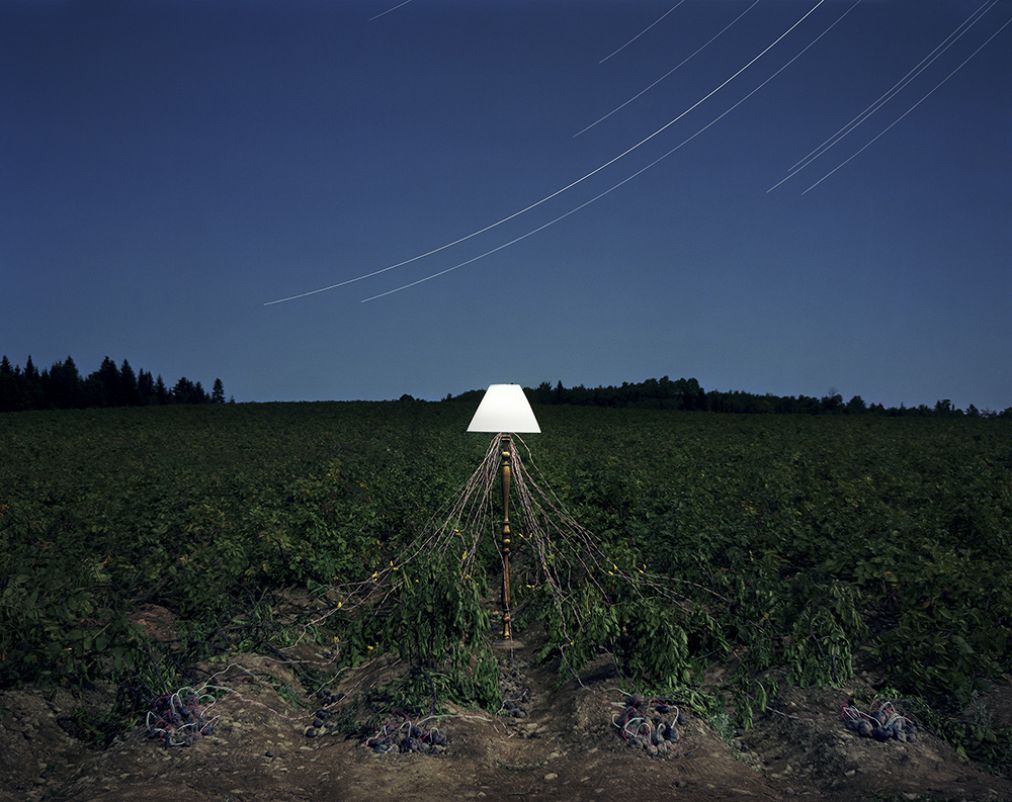
In fact, I’m reminded of the amplified lettuce circuits of artist Leonardo Amico or the recently very widely publicized work of photographer Caleb Charland—in particular, Charland’s “Orange Battery“—which literally taps fruit and vegetables as unexpected electrical inputs for lamps and other lighting rigs.

[Image: Caleb Charland, “Orange Battery” (2012), which took a 14-hour exposure time].

Charland takes stereotypical still-life arrangements, using, for instance, apples and potatoes as an electrical source for the lamp that illuminates the resulting photograph—

[Images: Photos by Caleb Charland].

—or he simply plugs directly into crops while they’re still growing in the field, as if we might someday set up lamps in the middle of nowhere and build outdoor interiors shining at all hours of the day. Redefining architecture as electrical effects without walls.

[Image: Photo by Caleb Charland].

Combining Charland’s and Jordan’s work to stage elaborate, fully functioning rock-radios built from nothing but wired-up pieces of crystal and stone could make for some incredible photographs (not to mention unearthly soundscapes: podcasts of pure geology, amplified).

But, continuing this brief riff on alternative geo- and biological sources of power, there was a short article in The Economist a long while back that looked at the possibility of what they called “wooden batteries.” These botanical power sources would be “grid scale,” we read, and would rely on “waste from paper mills” in order to function.

The implication here that we would plug our cities not just into giant slurries of wood pulp, like thick soups of electricity, but also directly into the forests around us, drawing light from the energy of trunks and branches, is yet another extraordinary possibility that designers would do well to take on, imagining what such a scenario literally might look like and how it would technically function, not solely for its cool aesthetic possibilities but for the opportunity to help push our culture of gadgets toward renewable sources of power. Where forests become literal power plants and our everyday farms and back gardens become sites for growing nearly unlimited reserves of electricity.

(Earlier on BLDGBLOG: Electric Landscapes).

The Peterborough Tunnels

A weird old story I came across in my bookmarks this morning tells a tale of tunnels under the town of Peterborough, England.

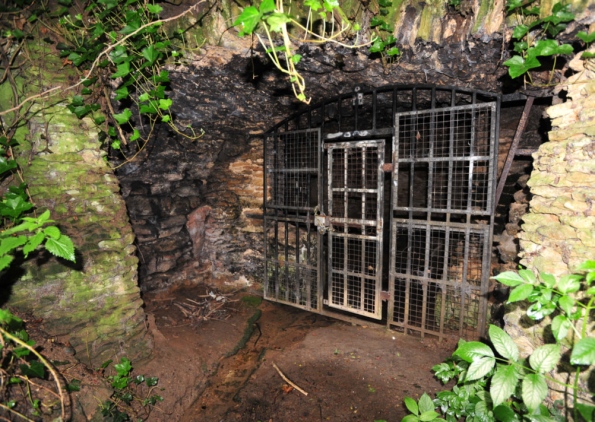
[Image: Gates in Holywell, Peterborough; photo by Rowland Hobson, courtesy of Peterborough Today].

The local newspaper, Peterborough Today, refers to a woman described simply as “a grandmother” who claims “that she crawled through a tunnel under Peterborough Cathedral as a schoolgirl.” That experience—organized as a school trip, of all things—was “terrifying”; in fact, it was “so scary that it gave her nightmares for weeks afterwards.”

About 25 of us went down into the tunnel, one at a time; none of the teachers came in. It was pitch black, had a stone floor and was about two feet high and three feet wide. We crawled along on our hands on knees. The girl in front of me stopped and started screaming, she was so scared. The tunnel started in the Cathedral and ended there too; we were down there for what seemed like ages. When I eventually got home I was in tears. Afterwards I had horrible nightmares for weeks about being buried alive underneath the Cathedral.

What’s fascinating about the story, though, is the fact that not everyone even agrees that these tunnels exist. A “city historian” quoted in the same article says that, while “there are small tunnels under the Cathedral,” they are most likely not tunnels at all, but simply “the ruins of foundations from earlier churches on the site, dating from Saxon times.” The girls would thus have been crawling around amongst the foundations of ruined churches, lost buildings that long predated the cathedral above them.

But local legends insist that the tunnels—or, perhaps, just one very large tunnel—might, in fact, be real. To this end, an amateur archaeologist named Jay Beecher, who works in a local bank by day, has “been intrigued by the legend of the tunnel ever since he was a young boy when he was regaled with tales that had been passed down the generations of a mysterious passageway under the city.” This “mysterious passageway under the city” would be nearly 800 years old, by his reckoning, and more than a mile in length. “Medieval monks may have used the tunnel as a safe route to visit a sacred spring at Holywell to bathe in its healing waters,” we read.

Although Beecher has found indications of the tunnel on city maps, not everyone is convinced, claiming the whole thing is just “folklore.” But it is oddly ubiquitous folklore. One former resident of town who contacted the newspaper “claimed that a series of tunnels ran between Peterborough and Thorney via a secret underground chapel.” Another “said that he recalled seeing part of a tunnel in the cellar at a home in Norfolk Street, Peterborough,” as if the tunnel flashes in and out of existence around town, from basement to basement, church cellar to pub storage room, more a portal or instance gate than an actual part of the built environment. And then, of course, there is the surreal childhood memory—or nightmare—recounted by the “grandmother” quoted above who once crawled beneath the town church with 25 of her schoolmates, worried that they’d all be buried alive in the center of town (surely the narrative premise of a childhood anxiety dream if there ever was one).

No word yet if Beecher has found his archaeological evidence, but the fact that this particular spatial feature makes an appearance in the dreams, memories, or confused geographic fantasies of the people who live there—as if their town can only be complete given this subterranean underside, a buried twin lost beneath churches—is in and of itself remarkable.

(If this interests you—or even if it doesn’t—take a quick look at BLDGBLOG’s tour through the tunnels and sand mines of Nottingham, or stop by this older post on the “undiscovered bedrooms of Manhattan“).

On the Road Again

[Image: Muscovites forced to masks against smoke from the burning forests and peat bogs of a drought-stricken Russia; photo by Alexander Demianchuk/Reuters].
I’ll be on the road for the next week or more, driving west, reading The Dead Hand on our long-delayed move back to Los Angeles, so things will be a bit quiet here. In the absence of regular posts, however, some links worth checking out include Pruned‘s proposal for a “conflict zoo,” or a wildlife arena “that only exhibits animals affected by man-made disasters.”

Instead of showcasing the planet’s marvelous natural beauty and ecological diversity, it collects living artifacts from sites of disturbances, where culture messily intersects with the wilderness… In addition to refugees from the Gulf Coast oil spill, it would also house samples of local fauna affected by other large oil spills, including the one in Dalian, China, koalas saved from bushfires, elephants displaced by civil wars, gorillas smuggled out during outbreaks of genocide, and tropical birds caught in the crossfires between loggers, indigenous tribes and the Landless Workers’ Movement.

While you’re there, Pruned‘s idea for animals repurposing themselves as a kind of living GPS system is pretty amazing, and the Embassy of the Drowned Nations, also featured on that blog, is worth a gander.

[Image: The Embassy of the Drowned Nations by OCULUS].

The opening image of this post, meanwhile, comes from the ongoing fires in Russia, where 30% of the nation’s grain has been destroyed. These drought-induced fires, however, might soon get a lot more frightening:

As if things in Russia were not looking sufficiently apocalyptic already, with 100-degree temperatures and noxious fumes rolling in from burning peat bogs and forests, there is growing alarm here that fires in regions coated with fallout from the Chernobyl nuclear disaster 24 years ago could now be emitting plumes of radioactive smoke.

But were these fires predicted? Are they simply the expected outcome of an already long-thawing landscape—part of what has been described as the “methane time bomb” hiding in the soils and seabeds of the Arctic region? As such, the “coils of pungent smoke [that] threaded into apartment buildings, offices and metro stations” in Moscow—a city where 700 people are now dying everyday—might be a more regular occurrence in the years to come.

Speaking of grain harvests being interrupted and destroyed, NPR recently interviewed Evan Fraser—who was an electrifying speaker at Foodprint Toronto last week—about “how food empires fail and if America [sic] is next.” One of Fraser’s explicit references is a failure of the grain harvest in Russia.

In any case, some other headlines to read (though many continue this unexpectedly apocalyptic tone): Google is buying unmanned aerial drones, because they’re “brilliant for mapping entire neighbourhoods”; a 53,000-year old “Neanderthal bedroom” has been discovered in a cave in Spain; Dubai is plagued with “deserted highways, empty hotel rooms, [and] miles of unsold residential and office space,” but don’t tell that to the city’s boosters, who disappointingly rely on taking quotations out of context to get their point across; just as we read that a globally vital seed bank, where “more than 90% of the plants are found in no other research collection or seed bank,” is on the verge of being destroyed by property developers, we also read that genetically modified crops have escaped into the wild in the U.S., where they threaten to become herbicide-resistant “super-weeds” (like something out of the fiction of John Wyndham); and, amidst all this, Elon Musk, a “brilliant entrepreneur who made a fortune from the internet and has invested vast amounts of it in building his own private space rocket company,” is “planning to retire to Mars.”

Perhaps, once he’s there, he could find a use for robots that “swim through sand like a fish through water,” transforming that desert planet into an unlikely ocean.

Ghost War

[Image: A “ghost” tank; image via PBS].

In his recent book How to Wreck a Nice Beach: The Vocoder from World War II to Hip-Hop, author Dave Tompkins tells the story of how a military voice-scrambling technology (the vocoder) became absorbed by civilian pop culture in the form of artificial, robotized vocal effects.

While still exploring the sound’s WWII origins, Tompkins describes “ghost armies” conjured from nothing using sensory technologies as part of a “sonic deception strategy” practiced on the battlefield. “During World War II,” he writes, “artifice—the illusion of conflict—was a weapon in itself. There were wooden bombs, fake factories, inflatable tanks, synthetic fogs, electronically generated ghost armies, psychoacoustic ventriloquists, and magicians hired to make the coastline disappear.”

Technologists from places like Bell Labs unleashed hi-fi wizardry against the adversary, including misleading sound effects built into torpedoes and “artificial screaming bombs” that, to put this in somewhat Friedrich Kittler-like terms, turned warfare into a kind of lethal, all-encompassing, international discotheque of blinding lights and disembodied shock waves, a carnivalesque over-investment in technology’s fatal side-effects, distracting people long enough that they could be destroyed.

[Image: Signal Corps officers look at militarized turntables in Paris; via the Audio Engineering Society, and featured in Tompkins’s book].

So it was interesting to see last week that PBS has produced a documentary called Ghost Army:

In the summer of 1944, a handpicked group of G.I.s landed in France with truckloads of inflatable tanks, a massive collection of sound effects records, and more than a few tricks up their sleeves. They staged a traveling road show of deception on the battlefields of Europe, aimed at Hitler’s legions. From Normandy to the Rhine, the 1100 men of the 23rd Headquarters Special Troops—the Ghost Army—conjured up phony convoys, phantom divisions, and make-believe headquarters to fool the enemy about the strength and location of American units. Every move they made was top secret and their story was hushed up for decades after the war’s end.

Amongst their crew were “sonics experts” who “made an early use of multi-leveled mixing to replicate the sounds of a massive military unit on the move.”


You can watch the full episode in the embedded video, above.

(Related: Starfish City, Space in the Adaptive Plastic, and many more old posts from the BLDGBLOG archives).

Ground Sounds

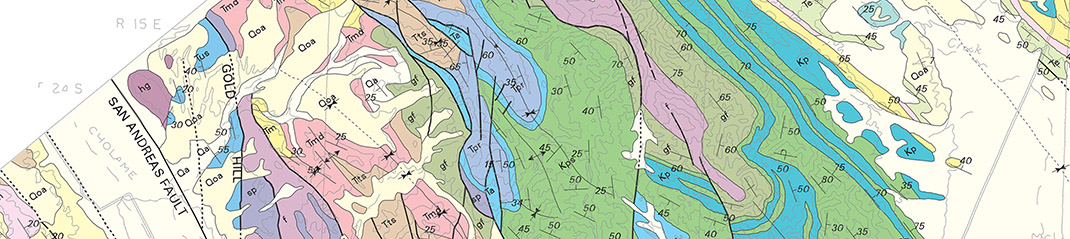
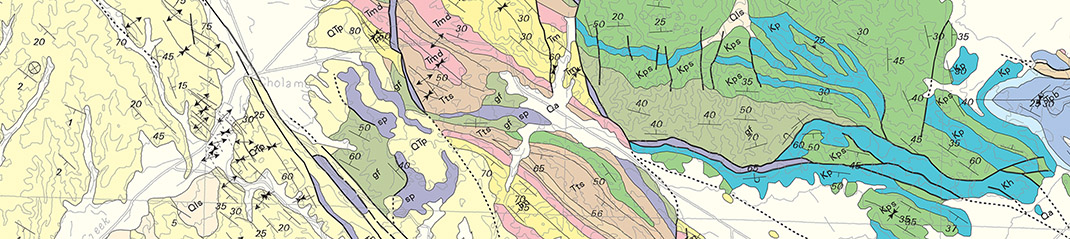
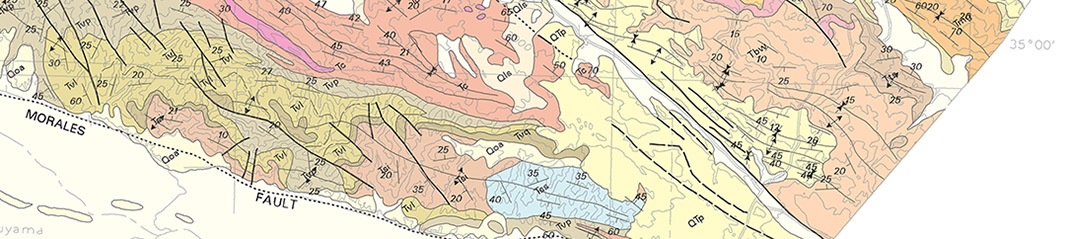
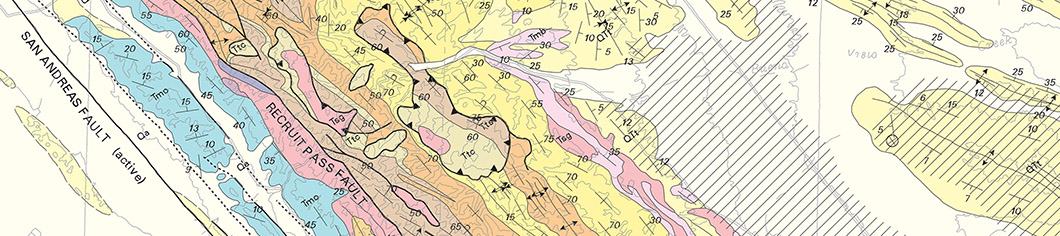
[Image: From a map of the San Andreas Fault, cutting through the Carrizo Plain, by T.W. Dibblee (1973), courtesy of the USGS].
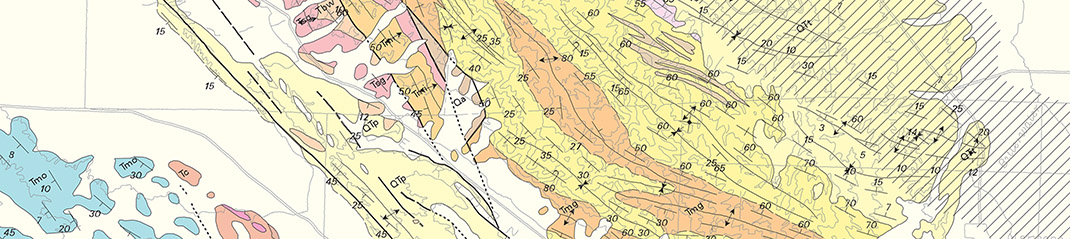
Those of you sonically inclined might be interested in the latest weekend challenge from Marc Weidenbaum‘s Disquiet Junto project: “Read a map of the San Andreas Fault as if it were a graphic notation score,” and then post the acoustic results to Soundcloud.

[Images: From a map of the San Andreas Fault, cutting through the Carrizo Plain, by T.W. Dibblee (1973), courtesy of the USGS].
This collaboration-at-a-distance between BLDGBLOG and the Disquiet Junto comes as a kind of sonic follow-up to the San Andreas Fault National Park architectural design studio I taught this past semester at Columbia, part of which involved designing architectural “devices” or “instruments” for the San Andreas.

[Images: An architectural “instrument” for the San Andreas Fault, designed and fabricated by student David Hecht at GSAPP].

However, the Disquiet Junto challenge literalizes the notion of the “instrument” a bit more, specifically listening for the sonic implications of the Fault.

Partially inspired by earlier graphic and musical explorations, by such composers as John Cage and Cornelius Cardew, among many, many others, the basic idea is that geologic maps of the San Andreas can themselves be “interpreted”—or perhaps willfully misinterpreted is more accurate—as a musical score.

They are, in Marc Weidenbaum’s words, a “faulty notation” for pieces of music that do not yet exist.

[Images: From a map of the San Andreas Fault, cutting through the Carrizo Plain, by T.W. Dibblee (1973), courtesy of the USGS].

You can find out more about how to participate over at the Disquiet website. However, compositions are due Monday, May 27th, so, if you’re interested, you need to dive in straightaway.

Listen to previous Disquiet sound challenges on the group’s Soundcloud page (and consider following Marc Weidenbaum on Twitter for reliably interesting sonic news and world reports).

Update: Listen to nearly three hours of ambient compositions resulting from the challenge.