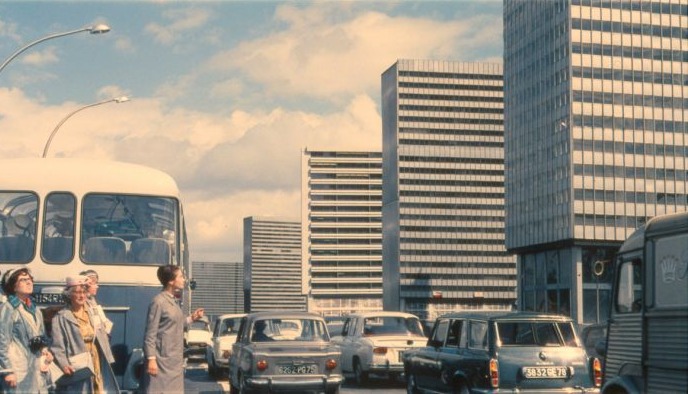
The Politics of Enthusiasm

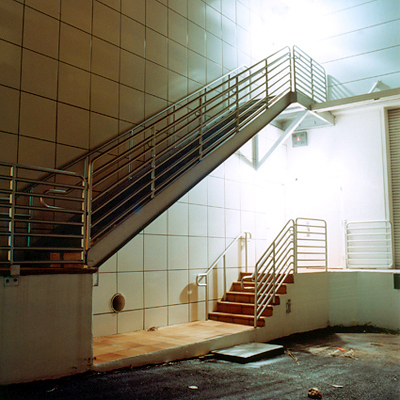
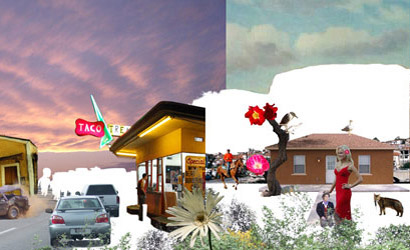
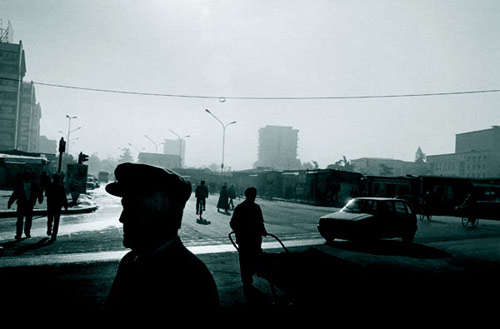
[Image: Emiliano Granado, Night 1].

Two months ago, Ballardian interviewed J.G. Ballard – something previously linked and summarized here – but now, insanely, BLDGBLOG has the wildly flattering privilege of being interviewed itself – joining Ballard, Bruce Sterling, and Iain Sinclair, among others.
Over the course of the interview, Simon Sellars and I talk about J.G. Ballard’s novels, from Concrete Island to Super-Cannes, The Drowned World to Crash – not to mention High-Rise – and we get there via a look at corporate office parks, Richard Meier, science fiction, Le Corbusier, the Paris riots, Archigram, Norman Foster, Sigmund Freud, sexual deviance, Daniel Craig, gated communities, the Taliban, Victor Gruen, future flooded Londons in the era of nonlinear climate change, Steven Spielberg, sports-car dealerships, Margaret Thatcher’s son, public surveillance, Rem Koolhaas…

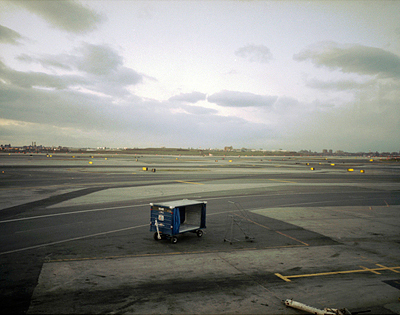
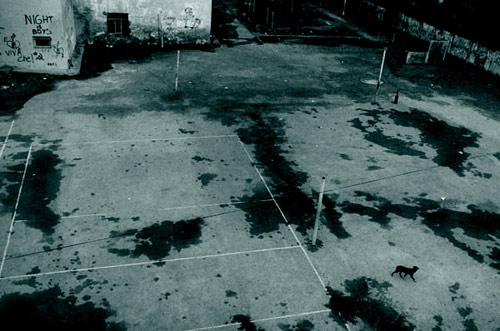
[Image: Emiliano Granado, Environments 2].

Etc.
Read how speculative architectural treatises are actually “an extremely exciting, if totally unacknowledged, branch of the literary arts. Look at Thomas More’s Utopia. Or China Miéville. Or, for that matter, J.G. Ballard.” Discover how “the buildings and cities and landscapes in Ballard’s novels are more like psychological traps built by management consultants – not architects – who then fly overhead in private jets, looking down, checking whether their complicated theories of human cognition have survived the test. Where ‘the test’ is the world you and I now live in.” Learn how “perhaps manufacturing AK-47s is the only way to liven things up.” Argue whether or not “the problem with architecture is that it’s still there in the morning; you can’t turn it off.”
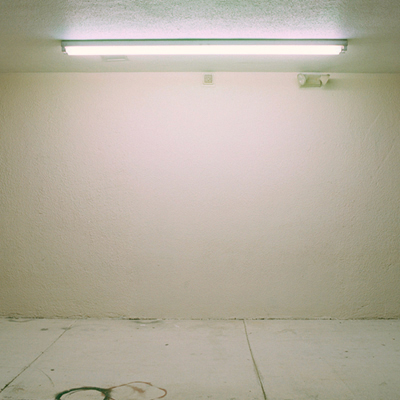
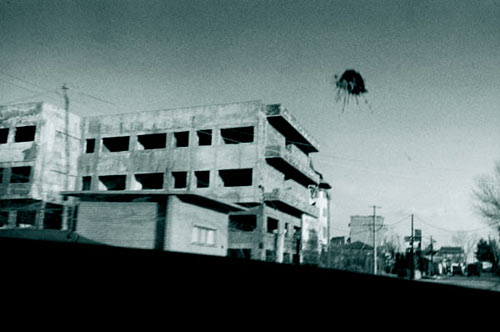
While you’re at it, gaze upon the fantastically Ballardian photography of Emiliano Granado, whose work both accompanies the interview and appears here.

[Image: Emiliano Granado, Environments 11].

Then join commenter #1, at the end of the interview, in disagreeing already with what I have to say… And have fun.

(Earlier, J.G. Ballard-inspired posts on BLDGBLOG: Concrete Island, Bunker Archaeology, 10 Mile Spiral, Silt, The Great Man-Made River, White men shining lights into the sky, Cities of Amorphous Carbonia – and so on).

Offshore (again)

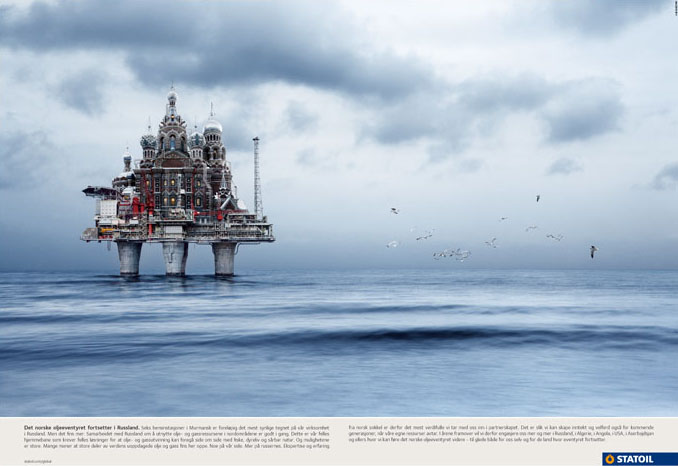
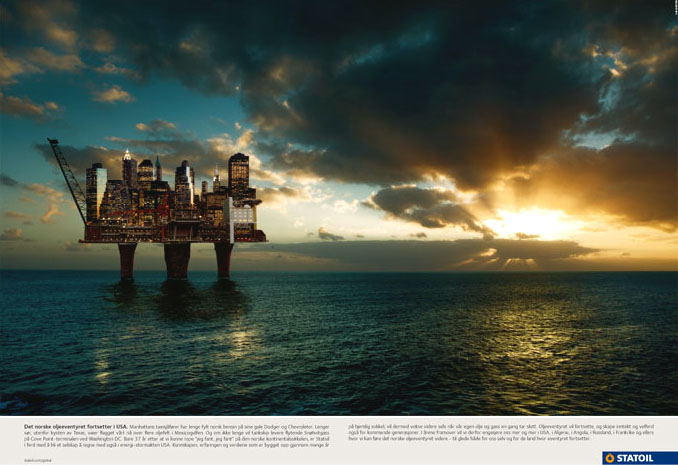
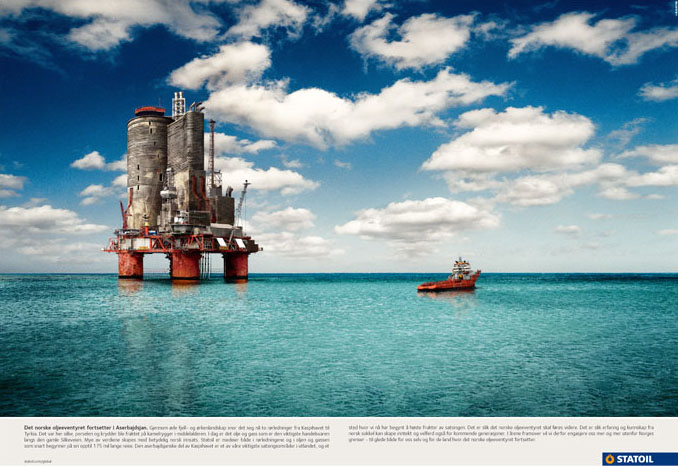
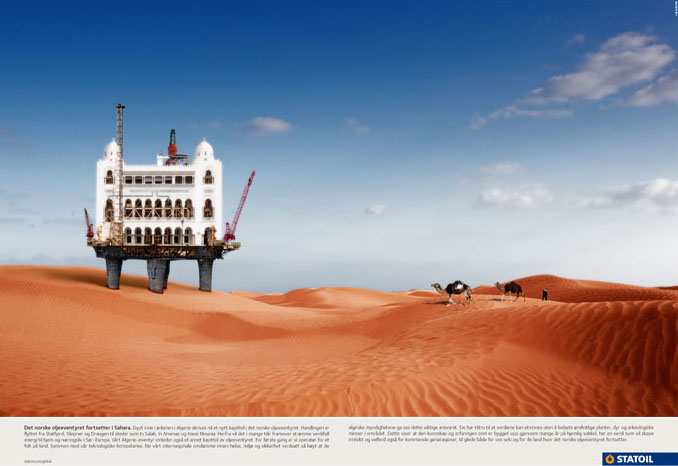
Thanks to a perceptive reader, the Statoil ads that originally inspired BLDGBLOG’s Offshore post have been located.
So here they are…

You’re looking at offshore, utopo-stilted versions of Russia, Rome, New York, Baku, and the Sahara. Design enough of these and you could probably get an M.Arch. degree…
All images by McCann.

(Via elisabethsblog – with huge thanks to Joakim Skajaa. And don’t miss Offshore).

Parking bands

The Economist reports today that the SW London borough of Richmond “is taking radical steps to curb greenhouse-gas emissions”:

In October its Liberal Democrat council announced a plan to price parking permits according to the amount of carbon dioxide emitted by residents’ vehicles. If the council passe[d] the proposal in a vote [that happened yesterday], the cost of an annual permit for cars in Band G – the worst polluters, such as SUVs, Renault Espaces and Jaguar X-Types – will triple to £300 ($568) from January 2007. Band A electric vehicles would be allowed to park for nothing; Band B cars, such as the hybrid Toyota Prius, would get a 50% reduction. Residents owning more than one vehicle would have to pay another 50% for each extra car. Thus a household with two Band G cars would see its annual parking bill rise from £200 to £750.

The article is quick to add that “Richmond residents emit more carbon dioxide per head than any other Londoners.”

(Earlier: Drive Britannia).

Fault whispers

It seems that “a pair of shiny, stainless-steel spheres measuring 7 feet in diameter and standing 50 feet apart” will soon be installed in a new San Diego park by artists Po Shu Wang and Louise Bertelsen. Together, the spheres will “enable visitors to ‘eavesdrop’ and monitor the earthquake fault” that cuts diagonally through the city.
From the San Diego Union-Tribune:

A small microphone lowered into a tube ending near the fault would transmit the sounds of typical, infinitesimal subterranean movement. The sound, which the artists would make audible to humans, could be heard in the park through a loudspeaker mounted inside a cone-shaped opening in the sphere. In addition, they plan to use new cell-phone technology to connect the mike to an international communications system. People all over the world could “dial up” to hear what the artists call “fault whispers.”

(Story via The Dirt. Earlier: resonator.bldg, in which we learn that a man “equipped with seismometers… can turn architectural structures into giant musical instruments and demolish buildings with sound alone.” See also Dolby Earth).

Sun-cancellation cloud

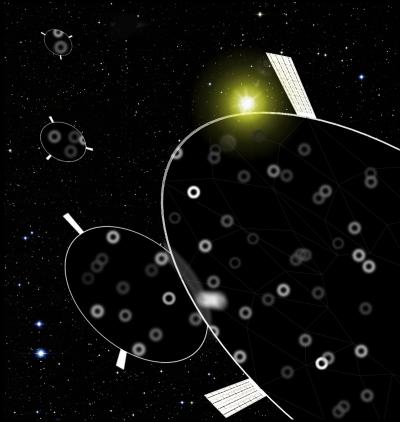
Will “a swarm of umbrellas” protect the Earth from global warming? Roger Angel, at the University of Arizona, apparently hopes so. In Angel’s plan, “a trillion miniature spacecraft, each about a gram in mass and carrying a half-meter-diameter sunshade… would act as a mostly transparent umbrella for the entire planet.”

[Image: The anti-sun space-umbrella cloud, by Roger Angel. Because of the cloud, sunlight is “spread out, so it misses the Earth” – leaving everyone down here pale and confused (but free of global warming)].
The whole thing “could be deployed in about 25 years at a cost of several trillion dollars,” and it “would be accelerated into space by a large magnetic field applied along 2,000-m-long tracks. With each such launch sending out 800,000 flyers, the project would require 20 million launches over a decade.” According to EurekAlert!, this actually means “launching a stack of flyers every 5 minutes for 10 years.”
So will this flying sun-cancellation machine really go live? Shouldn’t we perhaps use derelict buildings instead, hurling gigantic anti-sun clouds of ruined architecture into space – empty tower blocks and football stadia and Thames Water filtration plants, all blocking out the harmful rays? Sunlight passing through the windows of churches casts shadows on farms, affecting harvests… and the temperature on earth will never change.

(Via Roland Piquepaille, on a tip from Bryan Finoki).

Hotelicopter

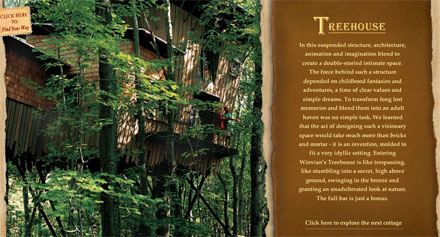
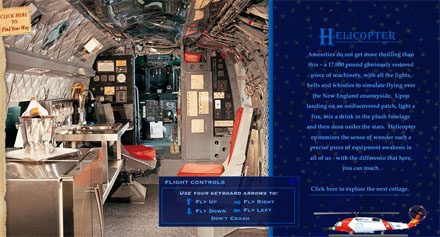
“At the new Winvian resort in Litchfield County, Conn.,” the New York Times reports, “you can spend the night in a restored 1968 Sikorsky Sea King helicopter, so tricked out that Austin Powers might have piloted it. That’s a 17,000-pound mix of the plush and the industrial, of chilled Champagne and crystal waiting atop a stainless-steel fridge alongside an aerospace dashboard.”

[Image: A screen-grab from the Winvian website].

The Winvian isn’t open yet, on the other hand – and it’s priced well out of most holiday budgets. At up to $2000 a night, you’d expect more than just complimentary champagne; perhaps your hotel room can actually take off and rock you to sleep over the Litchfield Hills…
When the hotel does open up – on January 1st, 2007 – visitors will get to choose from amongst “18 cottages designed by 15 architects. Each cottage is conceived around a Connecticut theme: besides Helicopter (Sikorsky builds them in Stratford), others include Beaver Lodge, Camping Cottage, the Treehouse, Secret Society and Industry.” Rumor has it, there’s also a reproduction Hedge Fund Management Office and the much-anticipated George W. Bush Cocaine Suite.
Ah, Connecticut…

[Image: A screen-grab from the Winvian website].

BLDGBLOG will gladly accept offers of a few nights’ stay.

(Earlier: Resort Hotels of the Stratospheric Future!)

Paradise Now

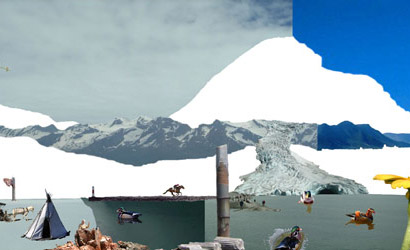
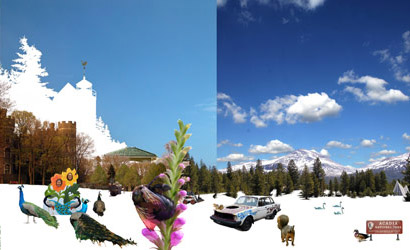
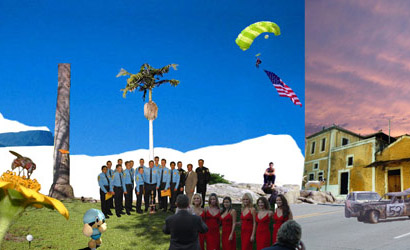
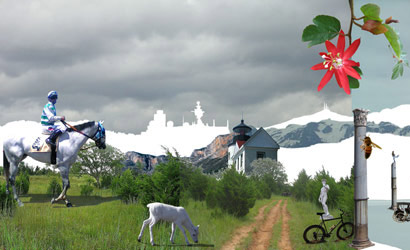
Arcadia by Invertebrate is a project “assembled from images that share the tag ‘arcadia’ in an online photo-sharing website.” Effaced, cropped, combined, and altered, the images then serve as surreal maps of earthly paradise: a stereotyped landscape of personal leisure, backyards, and harmless wildlife, all in the shadow of distant mountain ranges.

Fascinatingly, these are the source images from which Invertebrate built the project.

How would it look, I wonder, if you used the word “prison” as your tag, instead – or “suburb,” “home,” or, for that matter, “paradise”? What about “office” or “hospital” or “factory”? Or, less architecturally, something like “police”?
In any case, don’t miss Borderville, Invertebrate’s earlier and tactically similar project, featured on BLDGBLOG several months ago. For Borderville, “Invertebrate posted a request to the online film community for the titles of movies featuring border crossings. Borderville is assembled out of objects ripped from these movies.”

(Borderville, and Invertebrate, first discovered via Cabinet Magazine).

War City

[Image: Jens Liebchen].

Lens Culture introduces us to German photographer Jens Liebchen’s series DL07: stereotypes of war.
For the project, Liebchen “constructed a series of black-and-white photos of a city under seige [sic] – menacing helicopters buzzing abandoned buildings, furtive figures scrambling down deserted streets, smoke-filled skylines, blood-stained walls and sidewalks, too-young children armed with machine guns… Yet he took all of these photos in a city (Tirana, Albania) while it was at peace.”

[Images: Jens Liebchen].

More at Lens Culture.

The Subterraneans

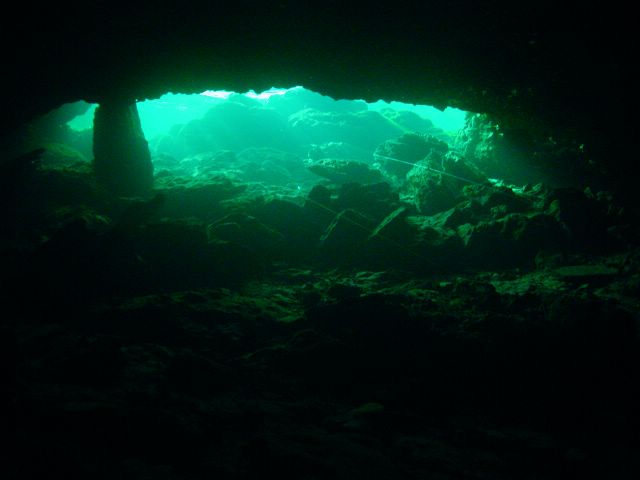
“About 120 miles east of Albuquerque, on the eastern edge of the town of Santa Rosa, N.M., lies a tiny oval of blue water—a spring-fed sinkhole about 80 feet wide and 81 feet deep—known as the Blue Hole. Sometime ago a group of scuba divers dove into the Blue Hole, eager to explore every nook and fissure of the smooth-walled sinkhole. After climbing out, they realized one of their divers had disappeared. Six months later, the body of that diver finally surfaced, but not in Santa Rosa. It was discovered, the story claims, in Lake Michigan—more than a thousand miles away—naked, waterlogged and with much of its skin scuffed off, as if it had been pushed and scraped through miles of rocky tunnels.” The one, terrible word BLDGBLOG was gouged into his flesh…

(Story via Warren Ellis; image via Wikipedia).

Offshore

HEIDRUN[Image: Courtesy of Statoil].

I was flipping through a copy of Archive the other night when I came across a spread of recent print ads by Norwegian oil giant, Statoil. The ads featured cities and skyscrapers and the Roman Colosseum all Photoshop’d perfectly onto offshore oil derricks; they looked like instant and futuristic offshore micro-utopias – or perhaps even some weird, mechano-robotic version of Arnold Böcklin‘s Isle of the Dead.

0[Image: Arnold Böcklin].

In any case, I wanted to post the ads here – but all I could find online were Statoil’s own press images. Those, however, induced a kind of minor panic attack, as the offshore structures they document easily rival, and possibly surpass, the most far-fetched architectural speculations of Constant Nieuwenhuys.

0STATFJORD A[Images: Constant vs. Statoil].

So here are some photos – and anyone who runs across online versions of the Statoil ads, let me know.

0[Images: Courtesy of Statoil].

These next two shots were actually taken inside the legs of one of the derricks; as such, the photographer is standing below sealevel.

Troll AI skaftet på Troll A[Images: Courtesy of Statoil].

But then I got to thinking how, toward the beginning of The Aeneid, we read that Aeneas and his crew have been tossed about by a string of storms and bad navigation, moving island to island against their will:

For years
They wandered as their destiny drove them on
From one sea to the next…

They are accidental exiles, always docking on the wrong shore.

[Image: Courtesy of Statoil].

Unsurprisingly, Aeneas is soon fed up with trying “[t]o learn what coast the wind had brought him to,” so he confronts a random islander – not realizing that it’s actually his mother (his mom happens to be Venus, and she likes to wear disguises). He demands:

Tell us under what heaven we’ve come at last,
On what shore of the world are we cast up,
Wanderers that we are, strange to this country,
Driven here by wind and heavy sea.

Etc. etc. – it’s the endless drama of origin and detour.
My point is simply: how might the Aeneid have been different if the Mediterranean Sea they’d explored had actually been full of oil derricks, a manmade geography of machine-islands, industrialized stilt-kingdoms each more fantastic than the rest – and so they’d set sail beneath the anchored legs of support understructures and maintenance gantries, roping up their ships for the night in the shadow of artificial hills and disguised islands? An Aeneid for the machine age.

[Images: Courtesy of Statoil].

More practical questions include the reuse of these structures: what unintended future functions might these aging derricks be repurposed for? Once their fields run dry, will they be left standing till inevitable collapse? Or will a maritime preservation movement swoop in to save them?
Further, will corporate tax havens of tomorrow be built at sea, in private archipelagos of platform-cities, an experimental terrain for new concepts of financial sovereignty?

[Note: Just to be absolutely clear here, all images of oil derricks used in this post come courtesy of Statoil].

The Weather Bowl

[Image: A passing Illinois lightning storm and supercell, the clouds peeling away to reveal evening stars; photo ©Extreme Instability/Mike Hollingshead. If you can overlook pet photos, meanwhile, don’t miss Hollingshead’s other storm work from 2006 and 2005 – including these Nebraskan auroras. While you’re at it, this storm sequence has some stunning, pre-storm landscape shots].

During a disastrously moderated talk at the MAK Center last night in West Hollywood, where the panelists could hardly get a word in edgewise because of the barely coherent, self-answering, 40-minute monologue of the moderator, Karl Chu briefly managed to say that he was interested in constructing and designing whole continents and weather systems.

Which got me thinking.

Given time, some digging equipment, a bit of geotechnical expertise, and loads of money, for instance, you could turn the entirety of greater Los Angeles into a weather bowl, dedicated to the recreation of famous storms. Install some rotating fans and open-air wind tunnels, build some deflection screens in the Hollywood Hills, scatter smaller fans and blowers throughout Culver City or overlooking Burbank, amplify the natural sea winds blowing in through Long Beach – and you could re-enact famous weather systems of the 18th and 19th centuries, reproducing hurricanes, even bringing back, for one night, the notorious storm that killed Shelley.

You consult your table of weather histories, choose your storm and go: fans deep in hillsides start turning, the wind tunnels roar, and lo! The exact speed and direction of Hurricane Andrew is unleashed. Seed the clouds a bit and reprogram the fans, and you can precisely reproduce the atmospheric conditions from the night William Blake was born. Or the ice storm that leveled electrical gantries outside Montreal, now whirling in a snow-blurred haze through Echo Park.

You could build competing weather colosseums in London, San Francisco, Tokyo, and Beijing. Every night new storms are reenacted, moving upward in scale and complexity. The storm Goethe saw as a nineteen year-old, contemplating European history, kills a family of seven outside Nanking. You soon get Weather Olympics, or a new Pritzker Prize for Best Weather Effects.

One day, a man consumed with nostalgia hacks the control program to recreate the exact breeze on which he once flew a kite over the Monbijouplatz in Berlin…

(For more on the exhibition now up at the MAK Center, download this PDF).