The Underground Wind Bulbs of Utah

[Image: From a PDF by Dresser Rand].

A new electricity distribution system being described as the “‘Hoover Dam’ of the 21st century” will bring wind energy from Wyoming to customers in California—and it will get there by way of a $1.5 billion artificial cave built specifically for storing air inside a salt dome in Utah.

The particular geologic site chosen for this underground storage facility is “a five-mile long, two-mile deep salt deposit,” the Casper Star Tribune reports. “Electricity there would be used to compress air into four underground caverns hallowed [sic] out of the salt deposit. During times of high-demand, air would be released, turning a turbine to create electricity.”

It’s a kind of clockwork weather system buried inside the earth, like something out of the Aeneid.

Dresser Rand, the firm behind the new storage facility, describes a related complex they worked on in Alabama. In a PDF available on their website, they write that their technology allows them to “store air in a salt dome at pressures up to 1100 psig.” To create that facility, the Alabama plant manager explains, “we solution mined it for 629 days. That created 19 million cubic feet of cavern storage.” That’s roughly half an Empire State Building of empty space.

Solution mining works by injecting brine down into salt formations, which dissolves the salt; the brine is then pumped back up to the surface, leaving behind huge empty spaces—artificial caves—usually shaped a bit like lightbulbs or distorted spheres.

In fact, the process brings to mind the extraordinary spatial creations known as “sewage bulbs,” melted directly into the glaciers of Antarctica, as described by William L. Fox in his book Terra Antarctica:

Water for the station is derived by inserting a heating element—which looks like a brass plumb bob 12 feet in diameter—150 feet into the ice and then pumping out the meltwater. After a sphere has been hollowed out over several years, creating a bulb that bottoms out 500 feet below the surface, they move to a new area, using the old bulb to store up to a million gallons of sewage, which freezes in place—sort of. The catch is, the ice cap is moving northward toward the coast (and Rio de Janeiro) at a rate of about an inch a day, or 33 feet per year. That movement means that the tunnels are steadily compressing; as a result, they have to be reamed out every few years to maintain room for the insulated water and sewage pipes. Because each sewage bulb fills up in five to six years, they’re hoping—based on the length of the tunnel and the number of bulbs they can create off it (perhaps even seven or eight)—this project will have a forty-year lifespan. Ultimately, in about the year A.D. 120,000, the whole mess should drop off into the ocean.

In any case, these artificial caves in Utah—let’s call them “wind bulbs”—will thus be linked up with California’s electrical grid, forming a partially subterranean interstate megastructure for on-demand renewable energy transmission.

As the Casper Star Tribune points out, the entire system—this so-called “Hoover Dam of the 21st century,” with a total price tag pushing $8 billion—could someday power as many as 1.2 million California homes and it could be operational as early as 2023.

(Originally spotted via @jonnypeace).

Untitled Landscapes

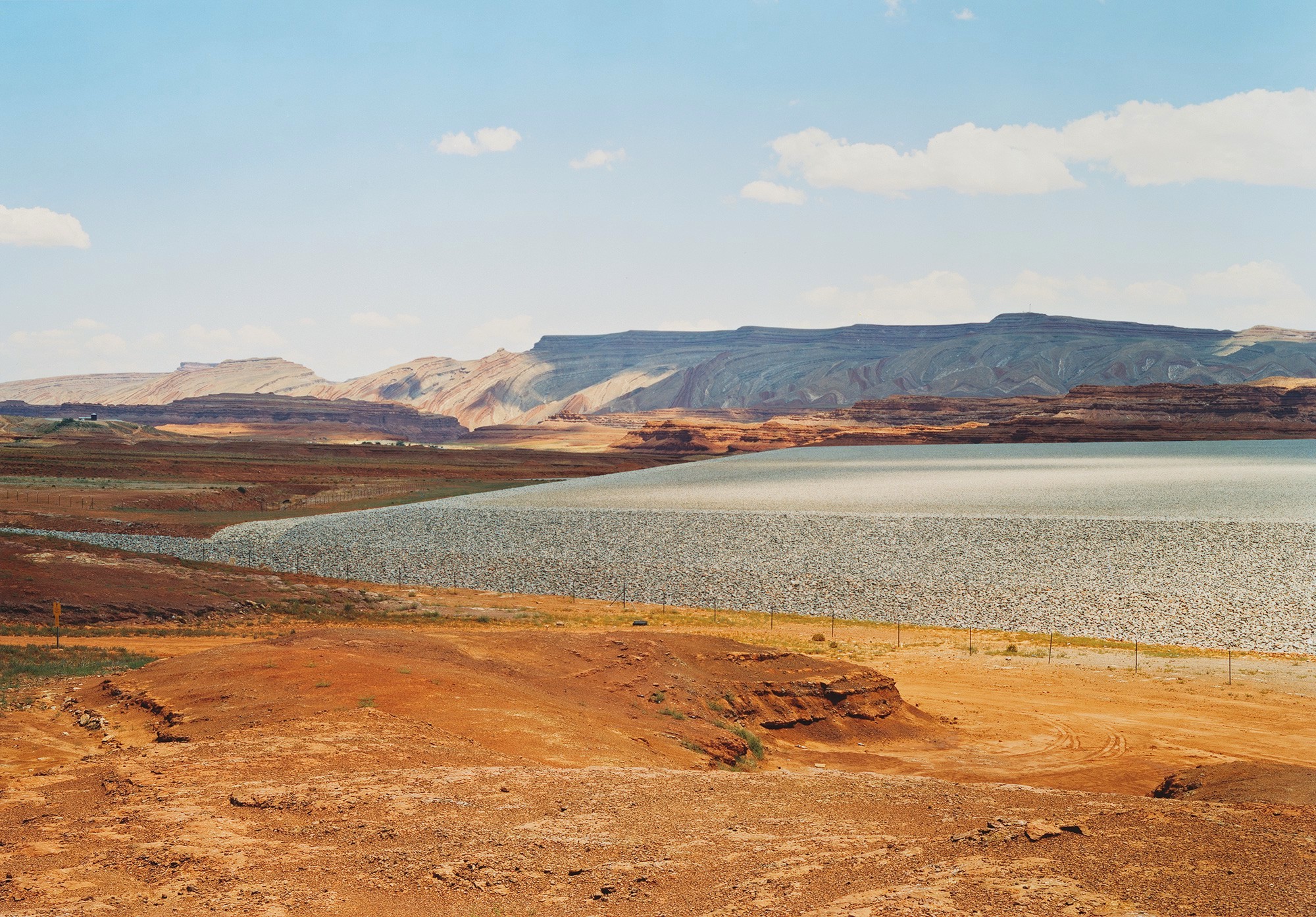
[Image: Untitled (Uranium tailings); Mexican Hat, UT, 2005, by Victoria Sambunaris, from Taxonomy of a Landscape].

Design writer Sarah Rich has posted some really spectacular images by photographer Victoria Sambunaris, along with a short Q&A discussing landscapes altered by human activities and industry.

Truck yards butt up against uranium disposal cells and open pit mines yawn over the horizon from border fences that stretch like continuous monuments through the desert.

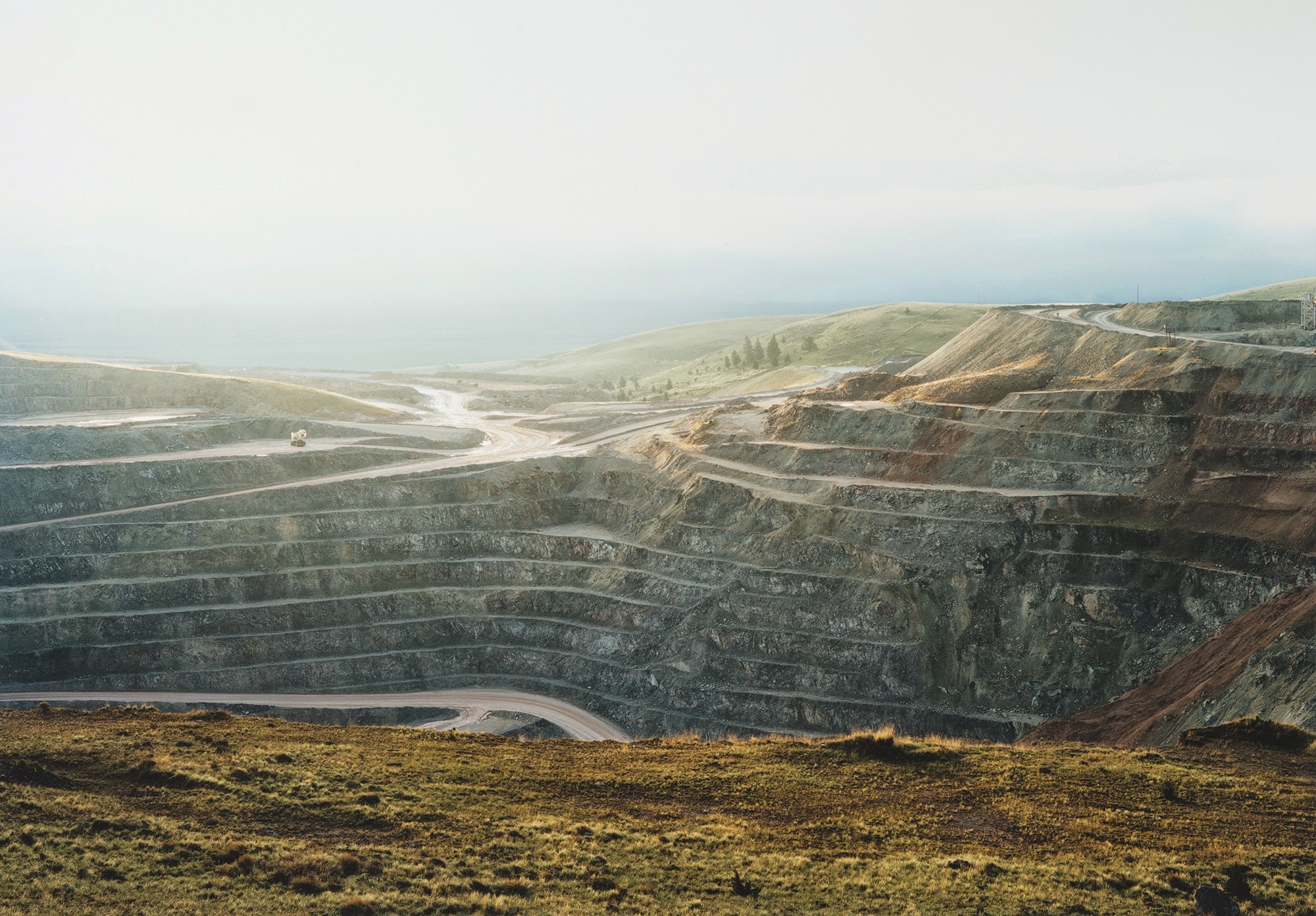
[Image: Untitled (talc mine benches); Cameron, MT, 2009, by Victoria Sambunaris, from Taxonomy of a Landscape].

Sambunaris is, in Rich’s words, “a 21st-century documentarian of human presence in the American landscape… a kind of mapmaker, displaying the layers of material and the layout of space that compose a particular geographic region.”

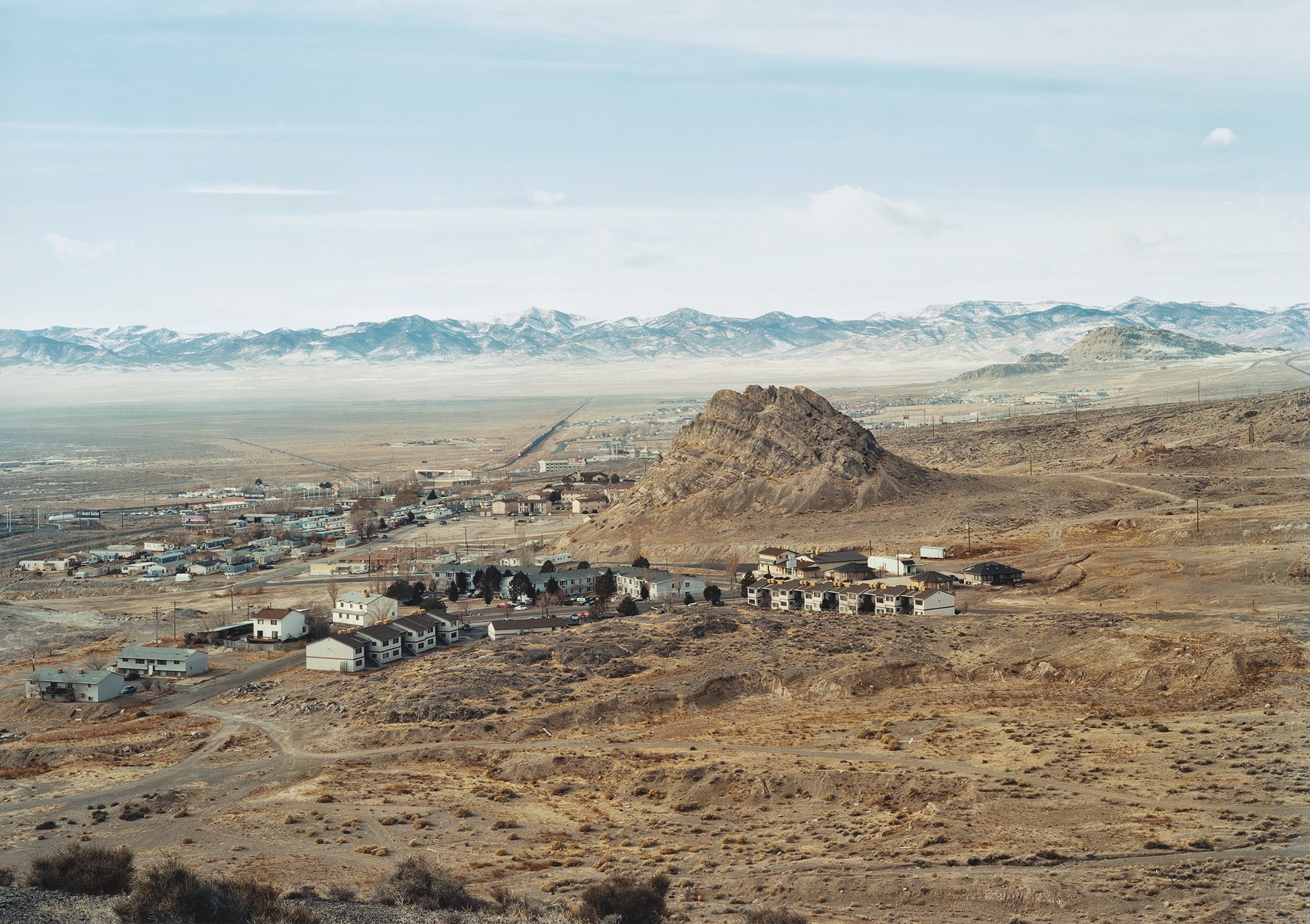
[Image: Untitled (Houses); Wendover, UT, 2007, by Victoria Sambunaris, from Taxonomy of a Landscape].

These layers include infrastructure and housing, but also—and, in some ways, more interestingly—the subtle traces of invisible legislative superstructures that come to define the scenes in question.

For example, Sambunaris’s shot of Yellowstone National Park—which you can see in the original interview—betrays human meddling on a different scale altogether, precisely through its absence of any visible interference. That is, the landscape depicted in Sambunaris’s photo has, in fact, been artificially scrubbed clean of all human traces by an unseen scaffolding of political regulation—its declaration and protection as a National Park—making even this a kind of altered landscape, an arranged scenography planned and implemented from afar by human beings.

In any case, click through to read the full interview, but also consider picking up a copy of the photographer’s new book, Taxonomy of a Landscape, with an accompanying essay by Natasha Egan.

Empty Landscapes of Invisible Dangers

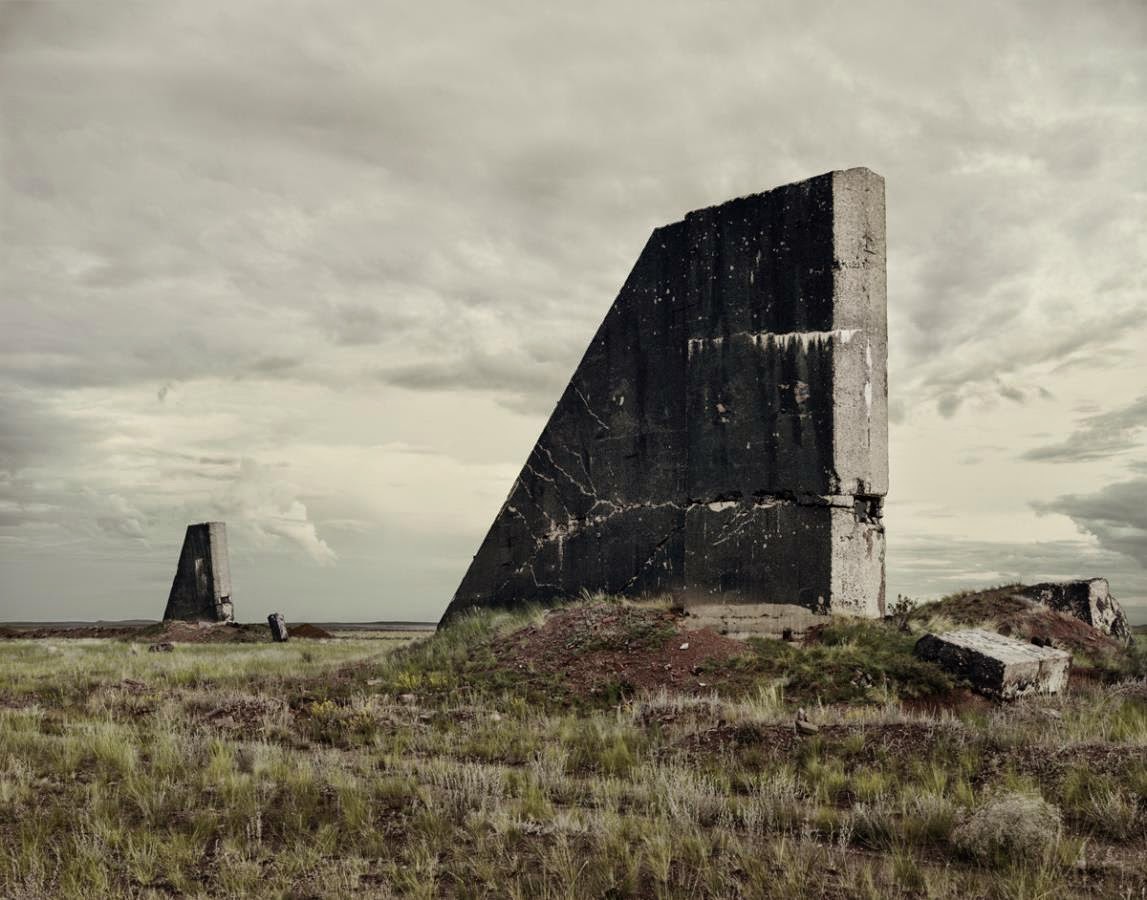
[Image: “The Polygon Nuclear Test Site 1 (After the Event),” Kazakhstan (2011); photo by Nadav KanderNadav Kander, courtesy of Flowers Gallery].

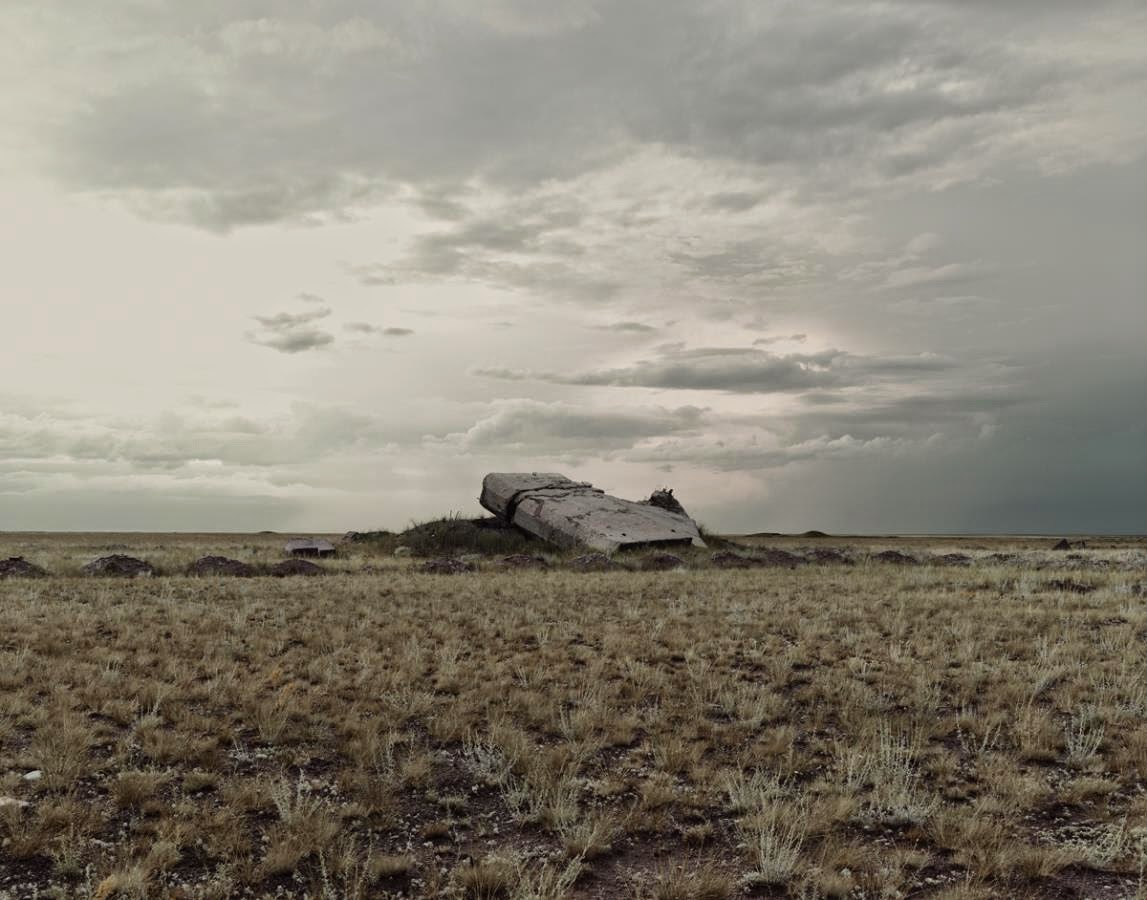
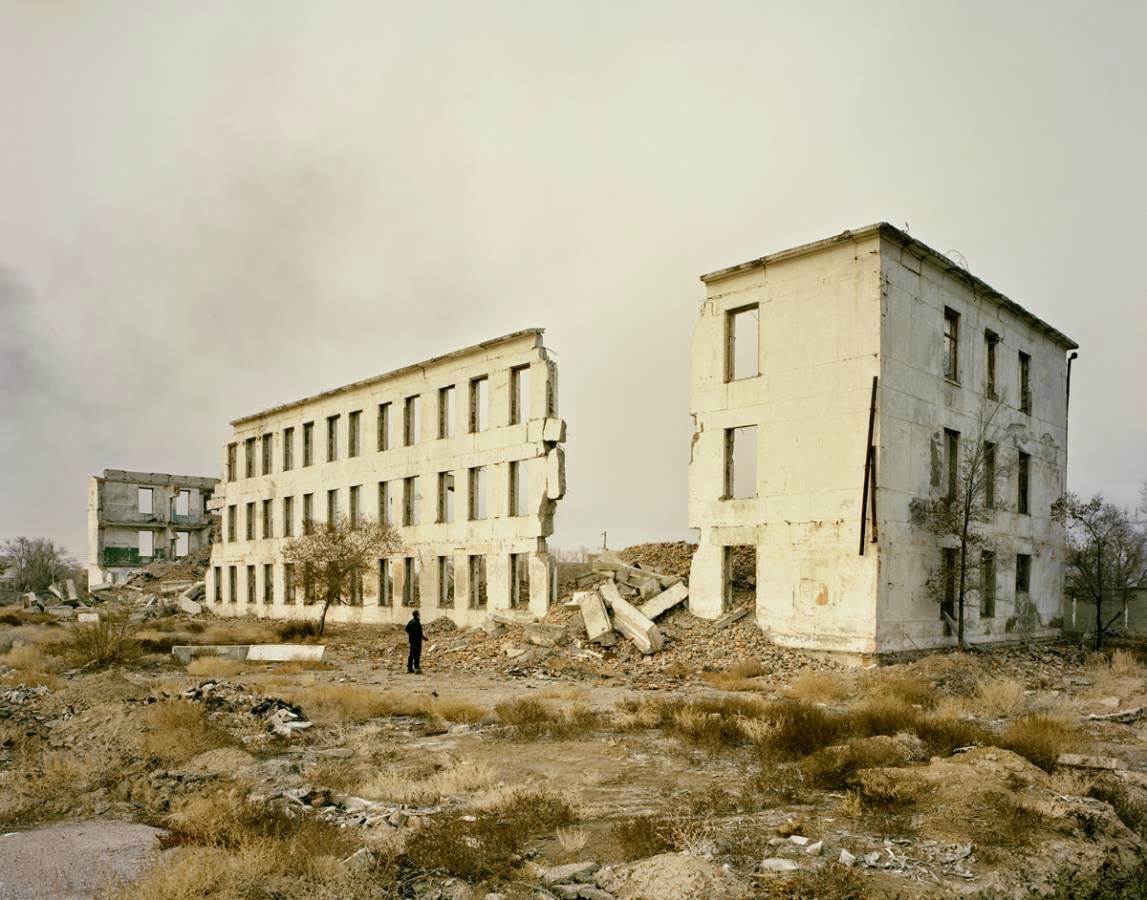
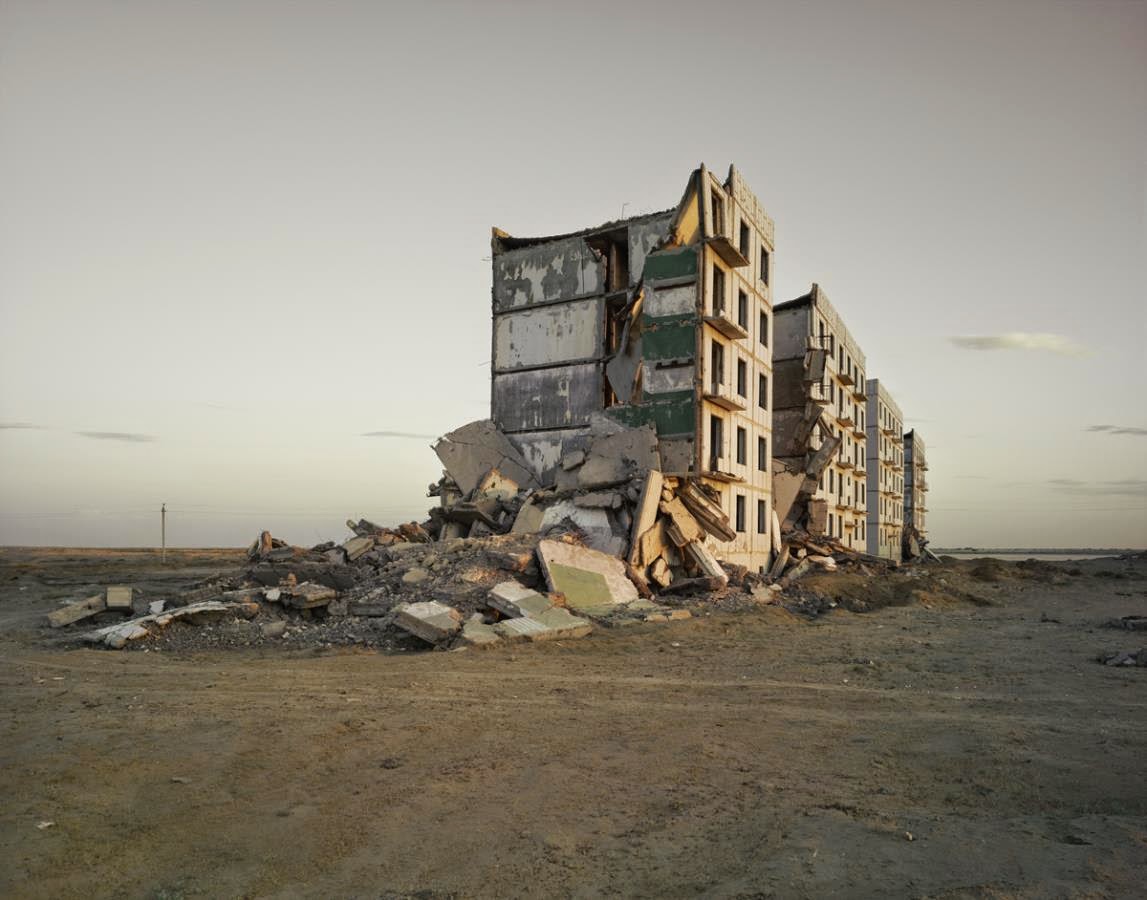
The new book Dust by Nadav Kander documents the broken test-cities of the Soviet nuclear program, with shells of partially dismantled buildings lying scattered across the landscape like dead monuments, anonymous and unsigned.

[Image: “The Polygon Nuclear Test Site VII,” Kazakhstan (2011); photo by Nadav KanderNadav Kander, courtesy of Flowers Gallery].

As the Guardian describes Kander’s work—which opened just last week at London’s Flowers Gallery—the “desolate is rendered sublime—almost too perfect—in these epic images of a land laid waste by Soviet nuclear ambitions.”

What you’re looking at are, in the gallery’s words, “the radioactive ruins of secret cities on the border between Kazakhstan and Russia,” architectural targets now collapsing wall by wall into the barren plain.

[Image: “Priozersk (Military Housing)” Kazakhstan (2011); photo by Nadav KanderNadav Kander, courtesy of Flowers Gallery].

The region they’re in was known simply as the “Polygon,” a suitably abstract designation for what was essentially a nuclear sacrifice zone. From the gallery:

Priozersk (formally known as “Moscow 10”) and Kurchatov are closed cities, restricted military zones, concealed and not shown on maps until they were “discovered” by Google Earth. Enlisted to the pursuits of science and war, the sites were utilized for the covert testing of atomic and long distance weapons. Falsely claimed as uninhabited, the cities, along with nearby testing site “The Polygon” set the stage for one of the most cynical experiments ever undertaken. Scientists watched and silently documented the horrifying effects of radiation and pollution on the local population and livestock.

Kander’s photos are on display until October 11, but you can also buy the book from publisher Hatje Cantz.

[Image: “The Aral Sea I (Officers Housing),” Kazakhstan (2011); photo by Nadav KanderNadav Kander, courtesy of Flowers Gallery].

In the meantime, be sure to check out the gallery’s website for many more photos, and the artist’s own portfolio includes other series well worth a look, such as photos from the Arctic Circle, from the ruins of Chernobyl, and even a fantastic, David Lynchian project called “Night,” featuring all but depopulated suburban landscapes lit up by street lamps and garages.

(Note: This post’s title—”empty landscapes of invisible dangers”—comes from Nadav Kander, as quoted in the Flowers Gallery press release).

Procedural Forestry

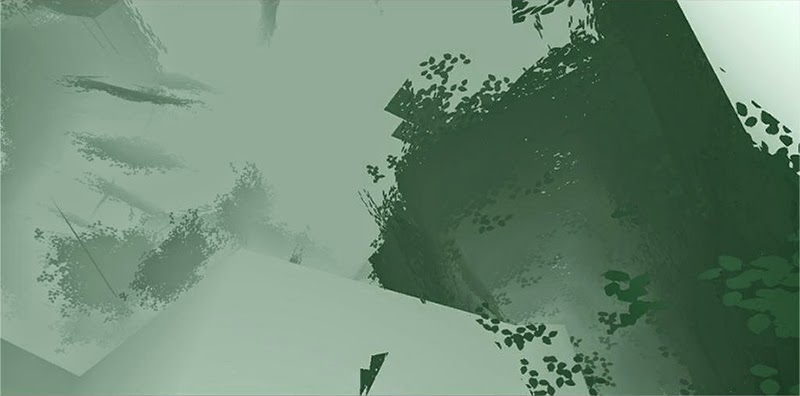
[Image: A “procedural forest gone wrong… or right?,” developed by Florian Veltman].

We looked at procedural Brutalism the other week—and, deep in the BLDGBLOG archives, we explored the moors of a procedurally generated British countryside—so why not procedural forestry?

Designer Florian Veltman tweeted two screen grabs the other week, along with the quick comment that he was “working on a procedural forest.” The first image, which you can see in his tweet, is just a path or small clearing—almost a holloway—cutting forward through a forest of algorithmic leaves and branches.

But it’s the picturesque errorscape seen in the opening image of this post, and in Veltman’s second tweet, that really caught my eye. Captioned by Veltman as a “procedural forest gone wrong… or right?,” it resembles a kind of upended tectonic plate overgrown with vegetation, pierced by the alien presence of a miscalculated substrate erupting from below.

Procedural forestry, procedural geology, procedural oceanography—the very idea of a procedural natural history is just incredible. Unstoppable worlds endlessly flowering from roots of code. Imagine landscape information modeling becoming weirdly sentient, self-generating, and aesthetically sublime, laced with errors, topographies gone wild—stuttering and mutated—in the infinite seams between digital worlds.

We watch in unearthly awe as coded terrains crack open or glitch apart just enough to reveal their mathematical interiors, buried operating systems indistinguishable from nature whirring away within the roots and leaves.

(Indirectly spotted via @jimrossignol).

Celestial Chiaroscuro

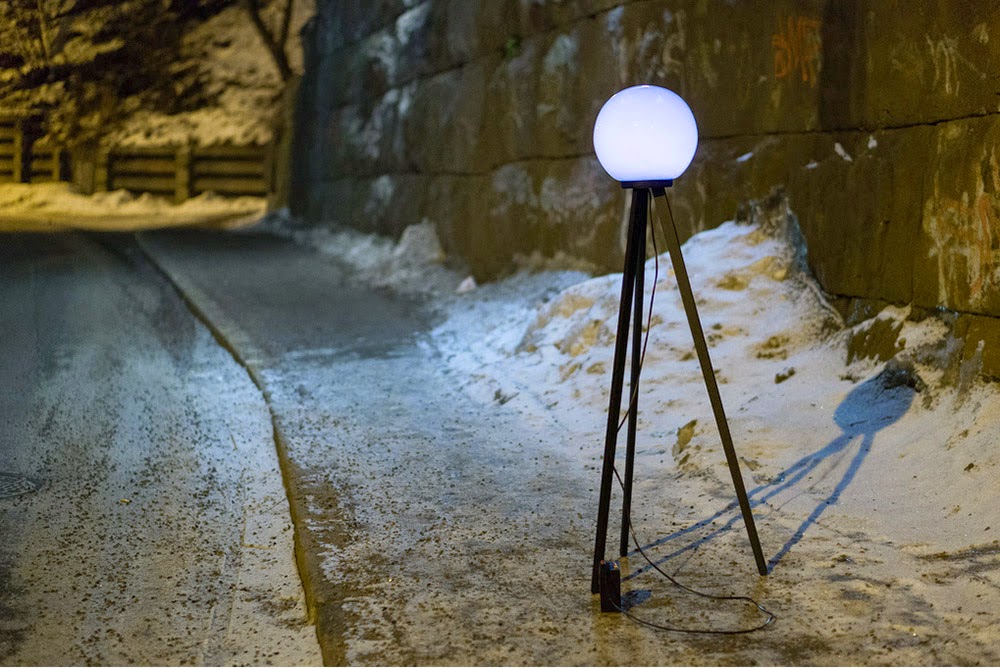
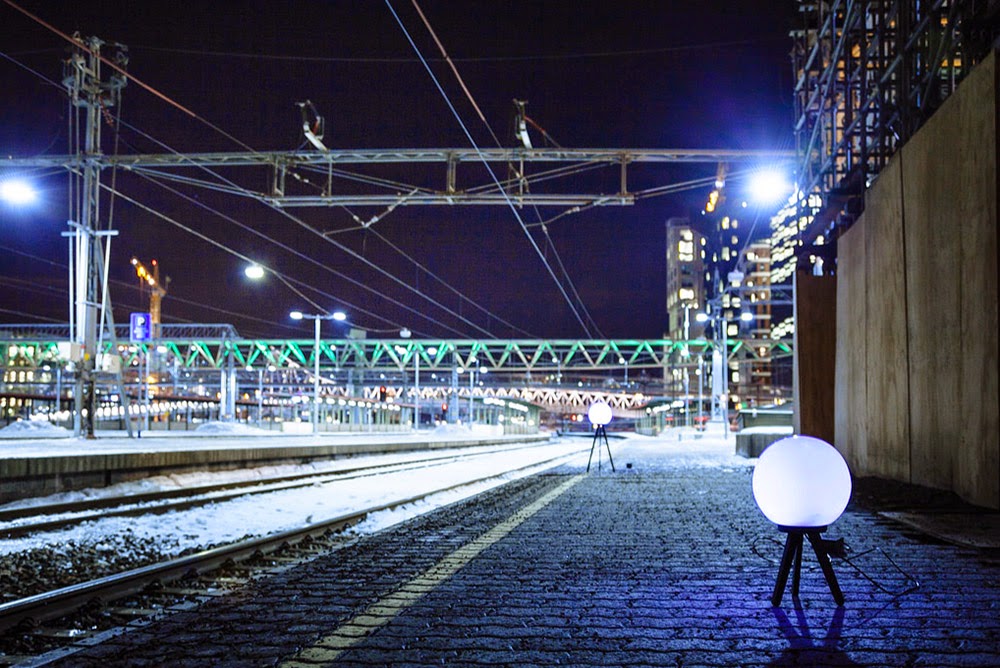
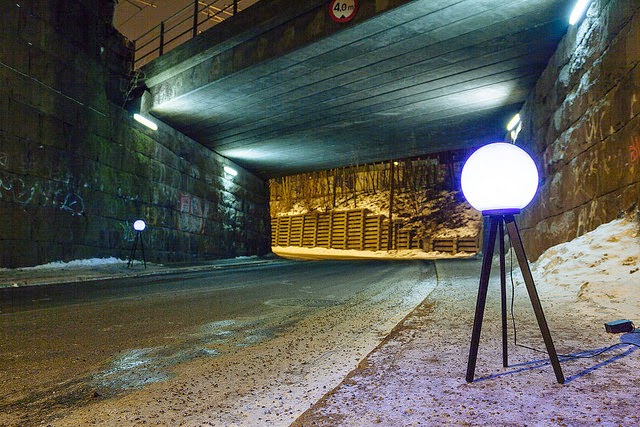
An interesting new project called Satellite Lamps, by Einar Sneve Martinussen, Jørn Knutsen, and Timo Arnall, attempts to visualize the ever-drifting, never exactly accurate workings of GPS.

As the above video shows, the project uses “a set of lamps that contain GPS receivers, that change brightness according to the accuracy of received GPS signals. When we photograph them in timelapse, they reveal how the accuracy changes over time.”

You’re basically watching the indirect effects of signal drift, transformed here into ambient mood lighting that acts secondarily as a graph of celestial geography.

[Image: From Satellite Lamps].

In what the group calls a “selective history of how a piece of the Space Program has ended up in our pockets,” they explain that the everyday reception of signals coming down from the constellation of GPS satellites is always subject to temporary errors, inaccuracies, and misalignments; this can be seen easily enough by glancing at nothing more than your own physical location, as mapped on your cell phone.

They also point to an interesting observation, made by artist James Bridle, that “if you leave a running app such as Nike+ or Runkeeper on your bedside table while you sleep at night, you will wake up to see that the app reports that you ran a significant distance, without doing anything. This, we speculated, is due to the way in which these apps are recording the GPS inaccuracies and counting these as actual, physical movements. In reality, these odd asymmetrical star-shaped tracks offer a map of the shifts of the phone attempting to locate itself.”

This ghostly movement is not “real” in any spatial or geographic sense, but it nonetheless leaves digital tracks in our information profiles, like phantom trips being taken by our data-shadows in secret.

[Image: From Satellite Lamps].

So why not visualize this ongoing slippage—these minor tectonics events taking place inside the tools of geography—in a different form, not with, say, an iPhone scooting around all over your neighborhood at night, trying to keep up with the haunted midnight fugues of an errant running app, but with something stationary, something all the more uncanny for the invisible movements that seem to pass through it like an aurora?

This, then, is the point of Satellite Lamps, which flicker and dim to help reveal the invisible glitches in earth-to-satellite coordination, paradoxically unmoving chandeliers that shine in a chiaroscuro of side-effects leaking in from a parallel world.

[Image: From Satellite Lamps].

In any case, the project is voluminously explained and documented. Considering reading about GPS itself, about the team’s strategy for giving visual form to invisible information, and, finally, about the physical realization of the lamps.

Implied Landscapes

[Image: “Colour experiment no. 61,” 2014; photo by Jens Ziehe, via Tate Britain].

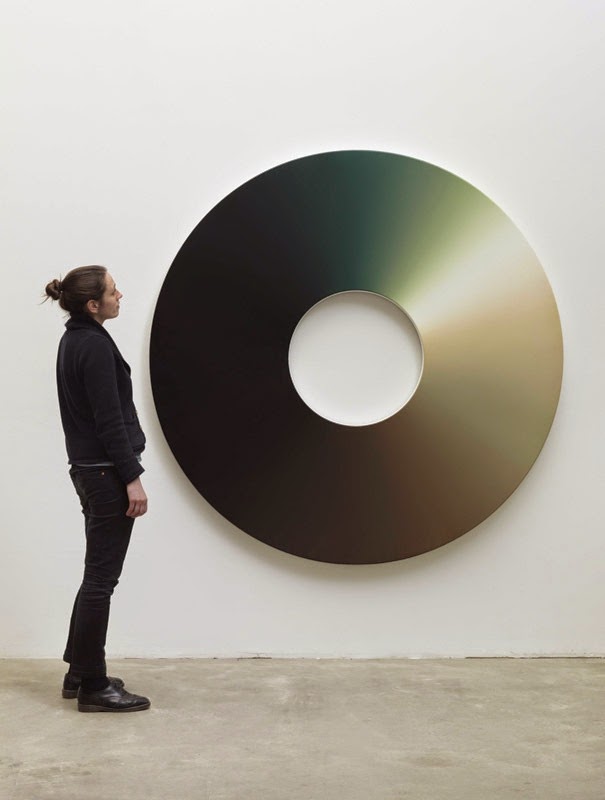
The forthcoming exhibition of J.M.W. Turner’s late works at Tate Britain not only looks amazing, but it’s also accompanied by a gorgeous new series of seven works by Olafur Eliasson.

Called “Turner colour experiments,” the paintings were made after Eliasson “analyzed seven paintings by Turner to create Turner colour experiments, which isolate and record Turner’s use of light and color.”

These are Turner’s paintings, reduced and purified to form, in effect, circular indexes of every color Turner himself once used. They are landscapes, abstracted and distilled.

[Image: “Colour experiment no. 58,” 2014; photo by Jens Ziehe, via Tate Britain].

In fact, these are actually just the most recent pieces from Eliasson’s ongoing research.

As Eliasson writes, describing an earlier and related work called “Emergent fade—colour experiment,” he hopes this work “will eventually lead to a new colour theory based on the prismatic colours.” The technical effort behind all this is insane:

The visible colour spectrum in light ranges in frequency from approximately 390 to 700 nanometres. Since 2009, Olafur Eliasson has been engaged in a project that he hopes will eventually lead to a new colour theory based on the prismatic colours. He began these experiments by working with a colour chemist to mix in paint an exact colour for each nanometre of light in the visible spectrum. Since the initial experiments, Eliasson has used this palette to make a number of different paintings, known collectively as the Colour experiment paintings. Each painting is different and individual, but all are attempts at investigating what Eliasson hopes will evolve into a new colour theory.

Specifically in terms of Turner, Eliasson adds, his goals—seemingly something more from the world of material science than from the history of representational art—are to “begin an experimental study by abstracting the prismatic colours of Turner’s palette and filtering them into a new, utopian colour theory.”

[Image: “Colour experiment no. 60,” 2014; photo by Jens Ziehe, via Tate Britain].

But what’s perhaps most exciting about these, for me, is the idea that these are a bit like the color genetics—the base pairs and physical hues—behind Turner’s extraordinary landscapes and atmospheres.

These imply Turner’s landscapes, falling within the outermost parameters of their light and color.

In each wheel, in other words, we see the compressed and essential colors of Turner’s sunsets, coasts, and rainstorms blowing in to shower half a continent with new tones, the sky cracking open as mountain air filters ambient light into shining cascades, first blurred then separated here down to the nanometer.

[Image: Installation view of “Turner colour experiments” by Olafur Eliasson; photo by Jens Ziehe, via Tate Britain].

I love the idea that these are the rays of light originally depicted by Turner, a kind of visual broadcast tuned to the exact same frequencies, only here purified and re-arranged.

It’s as if seven huge cyanometers have been assembled inside the museum: Eliasson’s brilliant engines through which Turner’s old skies can shine again.

(Vaguely related: The Great Age of Clouds).

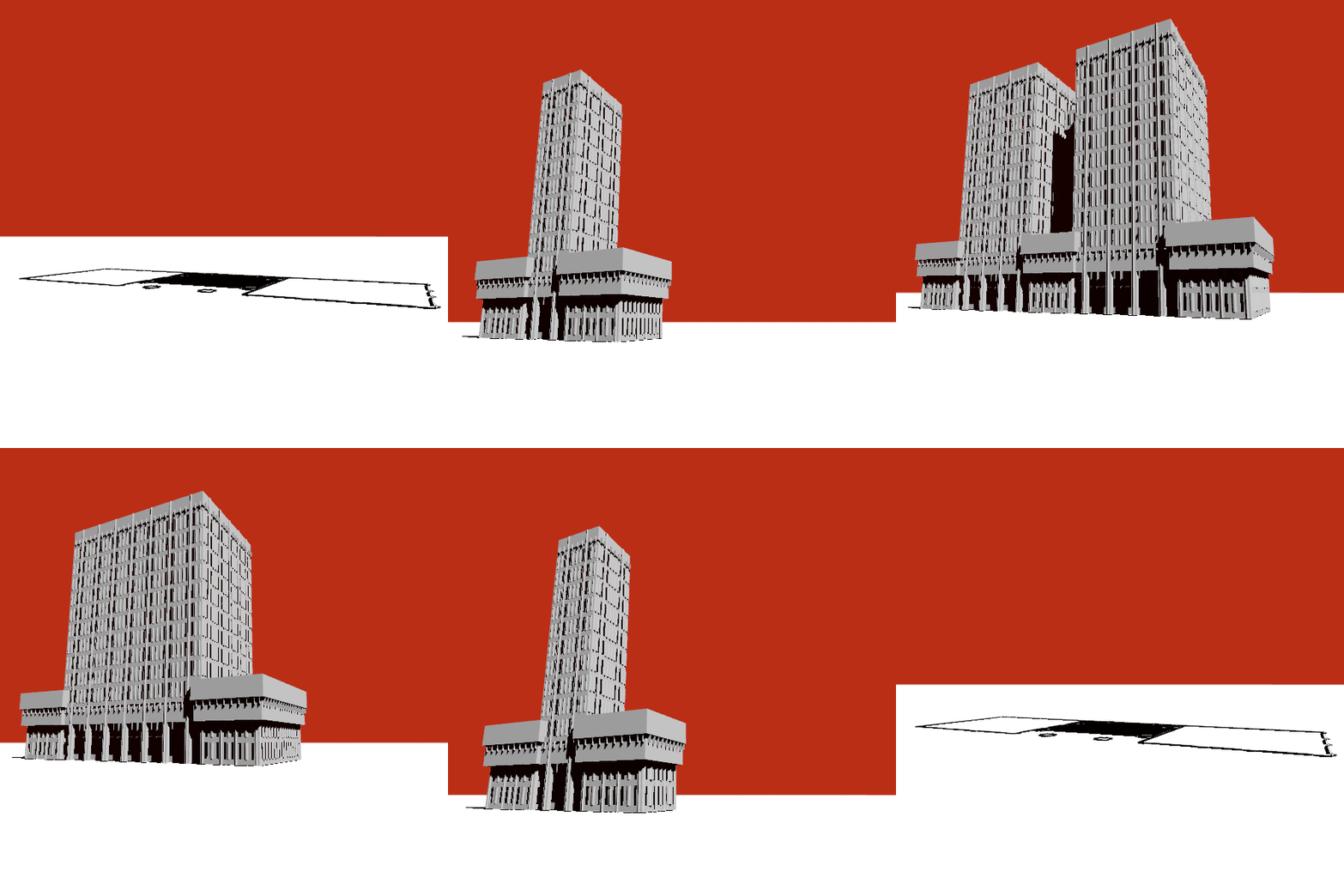
Procedural Brutalism

[Image: Procedural Brutalism by Cedric].

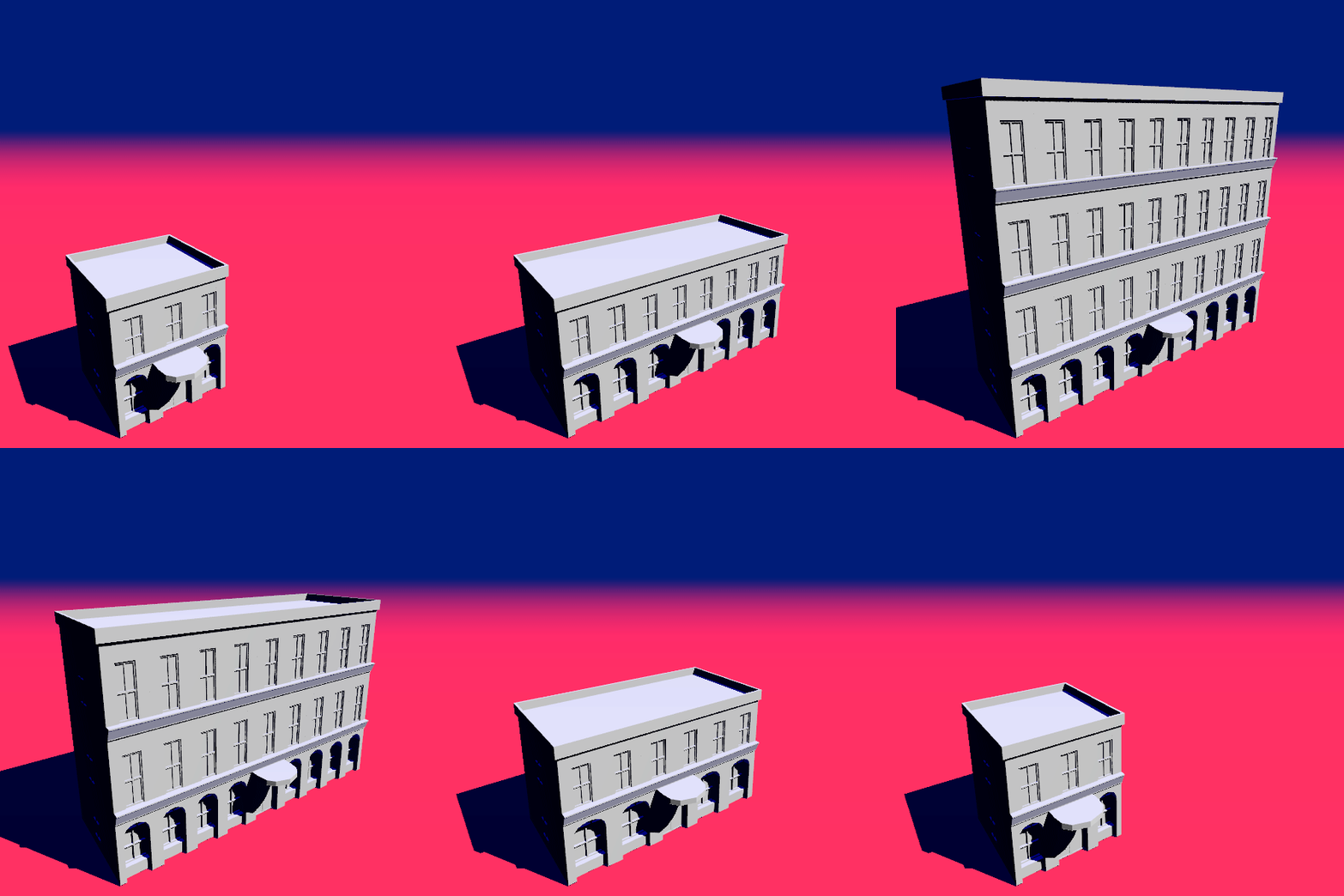
Here are a few GIFs of procedurally generated architecture by a game developer named Cedric, built using Unity. Cedric describes himself as an “indie game dev focused on social AI, emergent narrative and procedural worlds.”

[Image: Procedural Croydon by Cedric].

These were pointed out to me by Jim Rossignol, who has both guest-posted and spoken at length here on BLDGBLOG about procedural architecture, and whose own development company, Big Robot, is behind the awesome “British Landscape Generator” whirring away beneath the rolling hills and cliffsides of Sir, You Are Being Hunted.

[Image: Procedural facades by Cedric].

The GIFs here are relatively big, obviously, so it might take a while for them to load, but then you can just sit back and watch the rule-based production of built structures pop, rise, and expand like urban accordions.

Imagine whole game worlds powered by real-time computation at the building level, constantly and parametrically fizzing with architectural forms, barely predictable new Woolworth Buildings and Barbicans sprouting on-demand from the ground whenever needed.

Shapegarden

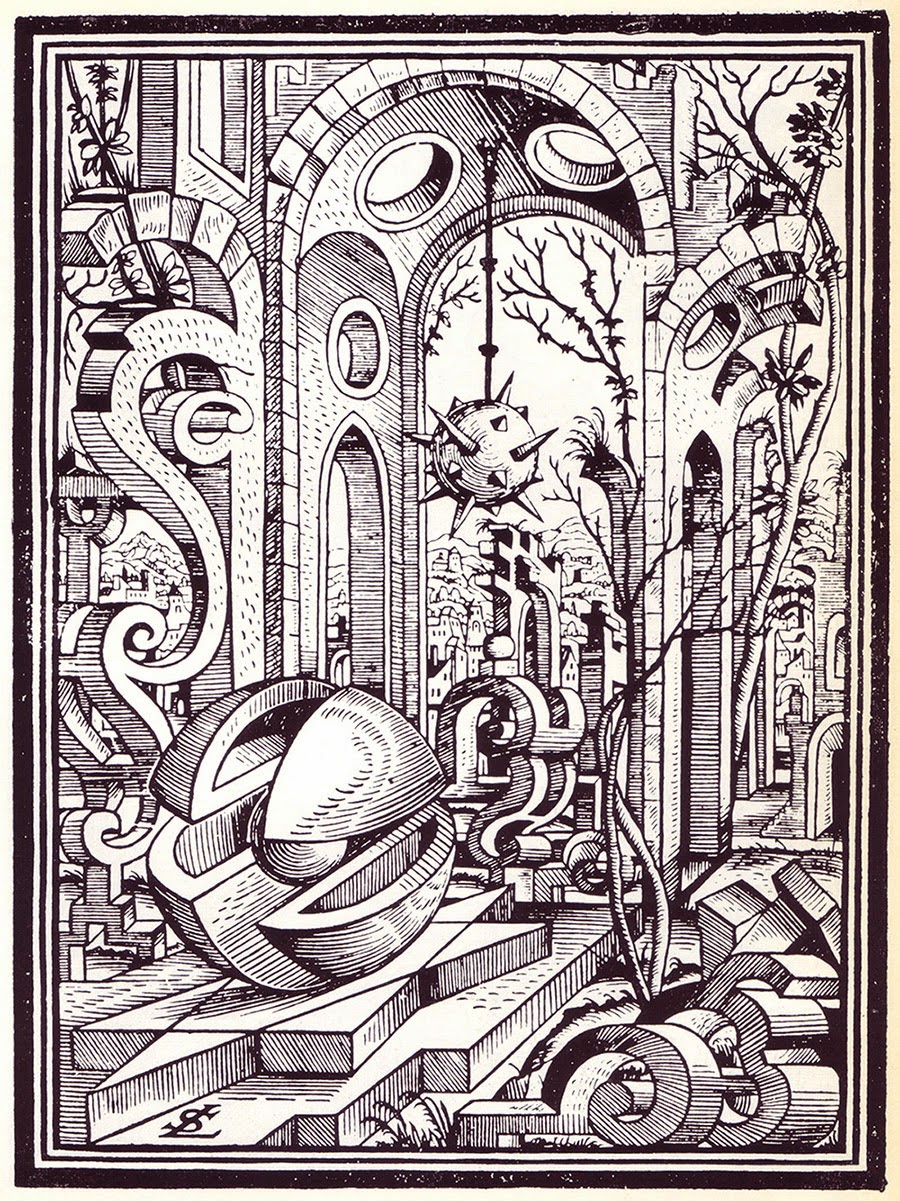
[Image: From “Geometria et Perspectiva” by Lorenz Stöer (1567), via Bibliodyssey].

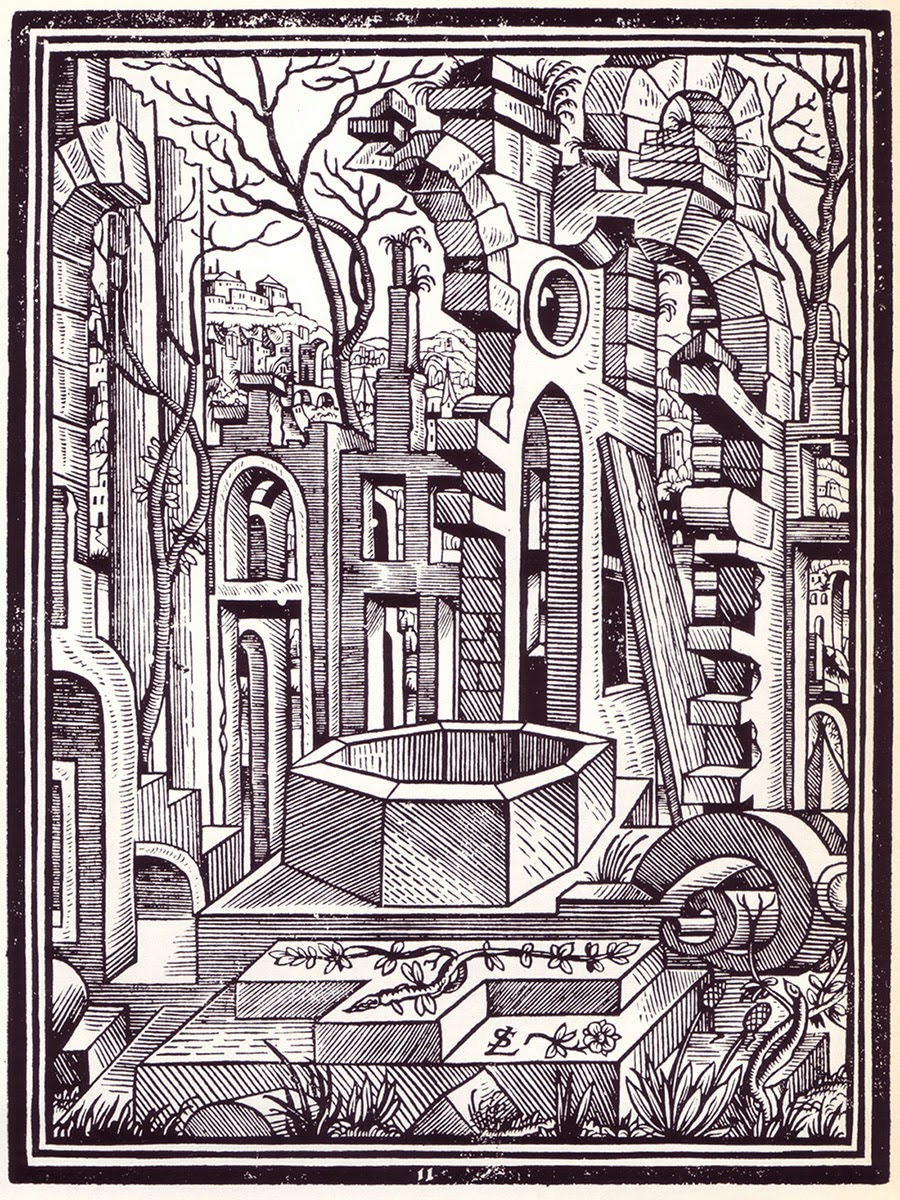
I just thought these images were cool: geometry workouts engraved in the 16th century by Lorenz Stöer, featuring dense architectural exercises of pure geometry, with shapes drawn for the sake of shapes—on top of shapes in front of shapes—all illustrating what perspectival rendering can achieve with complex spatial environments.

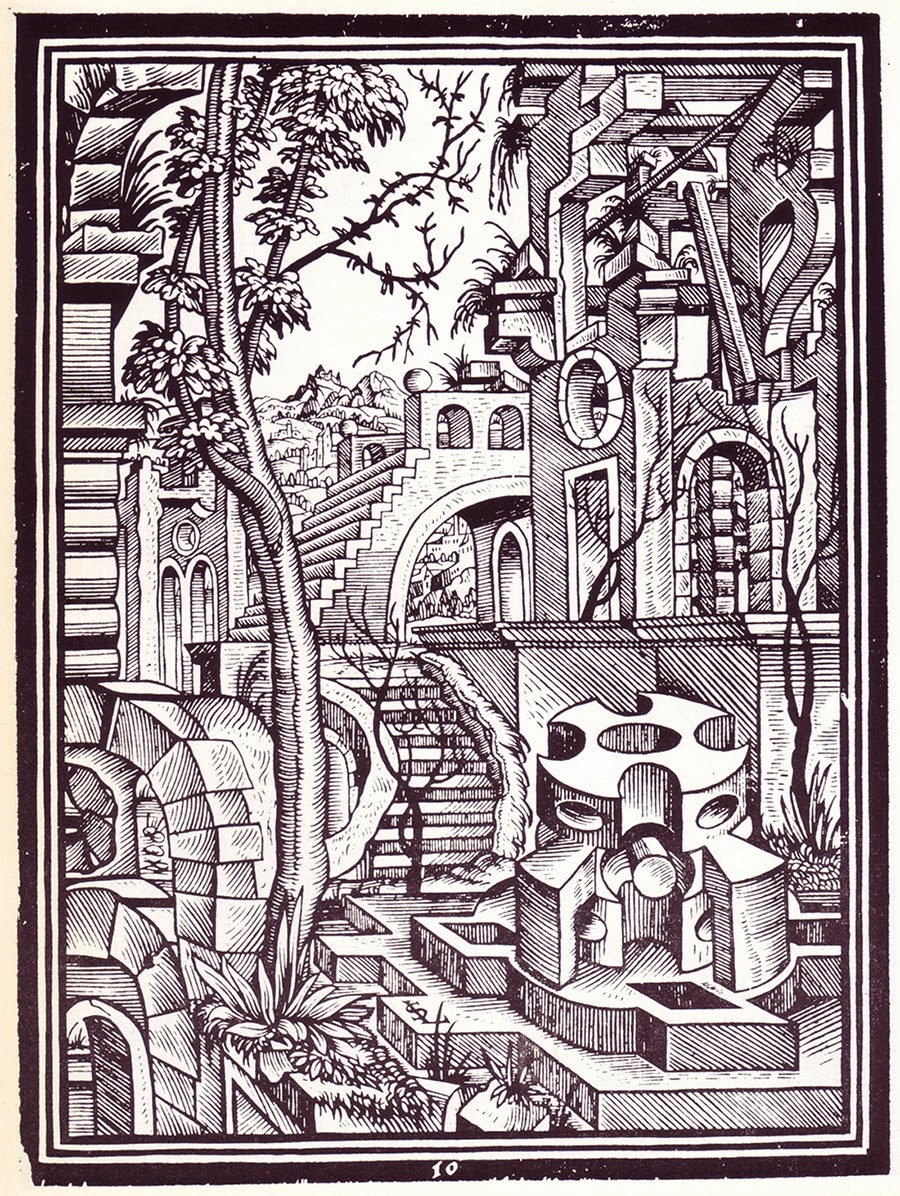
[Image: From “Geometria et Perspectiva” by Lorenz Stöer (1567), via Bibliodyssey].

Light and shadow; depth and relationship; stars and wheels and cylinders; arches and stairs.

You could probably just stare at these all night and imagine new angular worlds emerging through which bewildered humans wander, surrounded by huge and immersive crystal cities, perhaps something like a variant on the Hypnerotomachia Poliphili, a story told “against an ever changing backdrop of mysterious ruins, monuments, orchards, gardens and fountains.”

Now imagine that story retold by a Cubism-obsessed Renaissance engraver doomed to live four centuries ahead of his true time. It’s geometry as a narrative device.

[Image: From “Geometria et Perspectiva” by Lorenz Stöer (1567), via Bibliodyssey].

These were all found via Bibliodyssey, who originally posted these five years ago and who also maintain a full Flickr set featuring these and many more such images. It’s worth noting that that Flickr set was built from scans originally done by Will from A Journey Round My Skull.

Don’t miss that Flickr set.

Demolition School

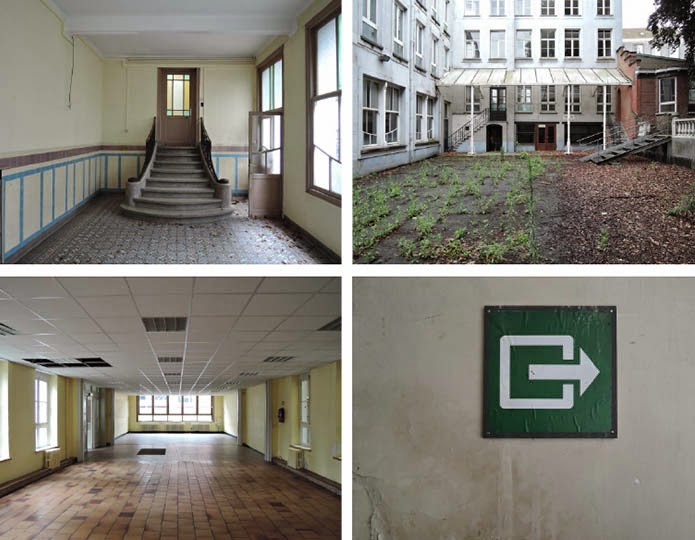
[Image: The Broelschool, Kortrijk, Belgium, via Space Caviar].

As part of the 2014 Biennale Interieur, curatorial group Space Caviar is hosting what they call a “demolition workshop” in the Belgian town of Kortrijk.

Set in a derelict school building condemned to demolition after the workshop has ended, the project aims to “construct alternative routes into and through the building, most significantly a new staircase,” and to explore new forms of improvisatory navigation through architectural space by way of “inventive deletions or modifications.”

Think of it as applied topology in the tradition of Gordon Matta-Clark.

[Images: Some internal views of the Broelschool, via Space Caviar].

You have only a narrow window of time in which to apply to join one of two teams in the exercise, however—that is, you only have until Friday, September 5, to express interest.

To apply, send an e-mail to martina (at) spacecaviar (dot) net with the subject “Broelschool Demolition Workshop,” including your name, contact information, hometown, and professional CV or PDF portfolio, and you need to indicate which of the two teams you are hoping to join. Those teams are, and I quote:

TEAM DÉRIVE (5 people) will construct alternative routes into and through the building, most significantly a new staircase. Through sensitive and inventive deletions or modifications, this group will create shortcuts and reveal hidden aspects of the original architecture, as well as foreshadowing some of the future architectural plans for the building site. Using the building itself as a source of reusable material, the workshop will both predate the destruction and celebrate the transition of the school.

TEAM TIMELINE (5 people) will create a graphical layer on top of the existing architecture that offers a unique chronology of the domestic space over the last half-century. Blending quotes, data, diagrams, graffiti, and way-finding, the timeline will lead visitors to explore the nooks and crannies of the school in search of the steps in the story of the home.

However, in your email you must also then complete these sentences in no more than 100 words: a) My first memory of home is… b) My current home is… c) My ideal home is…

The workshop itself takes place September 23-28.

[Image: “Splitting” (1974) by Gordon Matta-Clark, courtesy of the Metropolitan Museum of Art].

Finally, somehow tying into this event will be a “Roomba ballet” choreographed for 12 robotic vacuum cleaners.

Space Caviar is thus also looking for someone to choreograph that dance, so please also consider getting in touch with them if you have any ideas for how to control 12 algorithmically impulsive, semi-autonomous household appliances.

Through the Cracks Between Stars

[Image: Trevor Paglen, “PAN (Unknown; USA-207),” from The Other Night Sky].

I had the pleasure last winter of attending a lecture by Trevor Paglen in Amsterdam, where he spoke about a project of his called The Last Pictures. As Paglen describes it, “Humanity’s longest lasting remnants are found among the stars.”

Over the last fifty years, hundreds of satellites have been launched into geosynchronous orbits, forming a ring of machines 36,000 kilometers from earth. Thousands of times further away than most other satellites, geostationary spacecraft remain locked as man-made moons in perpetual orbit long after their operational lifetimes. Geosynchronous spacecraft will be among civilization’s most enduring remnants, quietly circling earth until the earth is no more.

Paglen ended his lecture with an amazing anecdote worth repeating here. Expanding on this notion—that humanity’s longest-lasting ruins will not be cities, cathedrals, or even mines, but rather geostationary satellites orbiting the Earth, surviving for literally billions of years beyond anything we might build on the planet’s surface—Paglen tried to conjure up what this could look like for other species in the far future.

Billions of years from now, he began to narrate, long after city lights and the humans who made them have disappeared from the Earth, other intelligent species might eventually begin to see traces of humanity’s long-since erased presence on the planet.

Consider deep-sea squid, Paglen suggested, who would have billions of years to continue developing and perfecting their incredible eyesight, a sensory skill perfect for peering through the otherwise impenetrable darkness of the oceans—yet also an eyesight that could let them gaze out at the stars in deep space.

Perhaps, Paglen speculated, these future deep-sea squid with their extraordinary powers of sight honed precisely for focusing on tiny points of light in the darkness might drift up to the surface of the ocean on calm nights to look upward at the stars, viewing a scene that will have rearranged into whole new constellations since the last time humans walked the Earth.

And, there, the squid might notice something.

High above, seeming to move against the tides of distant planets and stars, would be tiny reflective points that never stray from their locations. They are there every night; they are more eternal than even the largest and most impressive constellations in the sky sliding nightly around them.

Seeming to look back at the squid like the eyes of patient gods, permanent and unchanging in these places reserved for them there in the firmament, those points would be nothing other than the geostationary satellites Paglen made reference to.

This would be the only real evidence, he suggested, to any terrestrial lifeforms in the distant future that humans had ever existed: strange ruins stuck there in the night, passively reflecting the sun, never falling, angelic and undisturbed, peering back through the veil of stars.
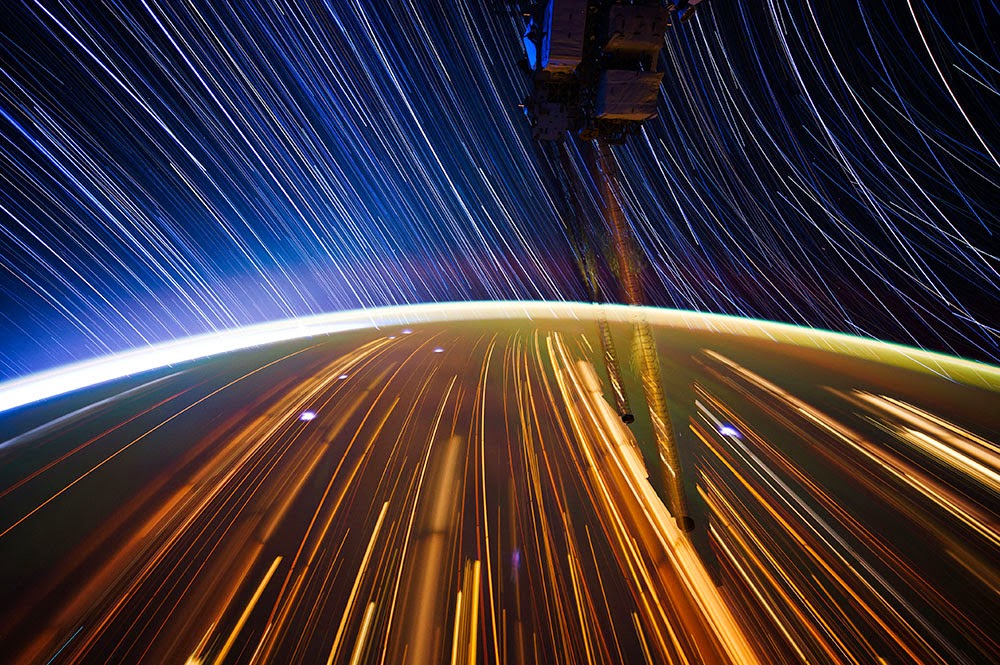
[Image: Star trails, seen from space, via Wikimedia].

Aside from the awesome, Lovecraftian poetry of this image—of tentacular creatures emerging from the benthic deep to gaze upward with eyes the size of automobiles at satellites far older than even continents and mountain ranges—the actual moment of seeing these machines for ourselves is equally shocking.

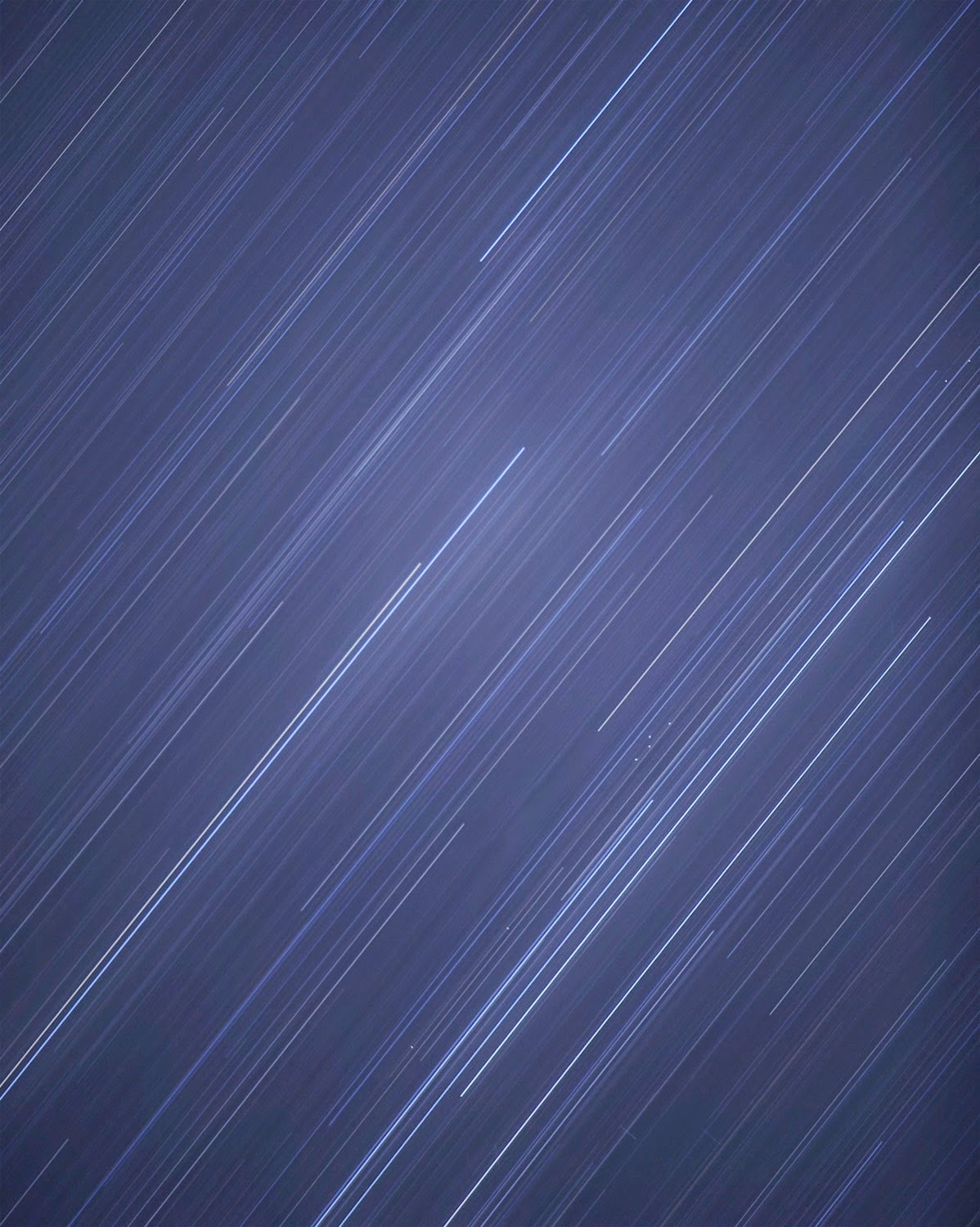
By now, for example, we have all seen so-called “star trail” photos, where the Earth’s rotation stretches every point of starlight into long, perfect curves through the night sky. These are gorgeous, if somewhat clichéd, images, and they tend to evoke an almost psychedelic state of cosmic wonder, very nearly the opposite of anything sinister or disturbing.
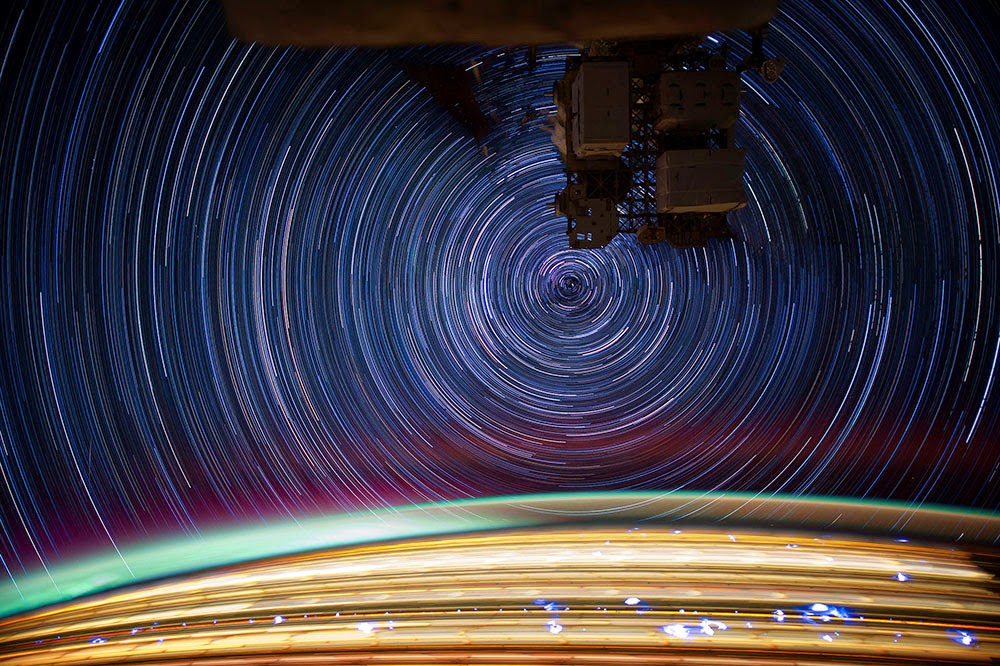
[Image: More star trails from space, via Wikipedia].

Yet in Paglen’s photo “PAN (Unknown; USA-207)”—part of another project of his called The Other Night Sky— something incredible and haunting occurs.

Amidst all those moving stars blurred across the sky like ribbons, tiny points of reflected light burn through—and they are not moving at all. There is something else up there, this image makes clear, something utterly, unnaturally still, something frozen there amidst the whirl of space, looking back down at us as if through cracks between the stars.
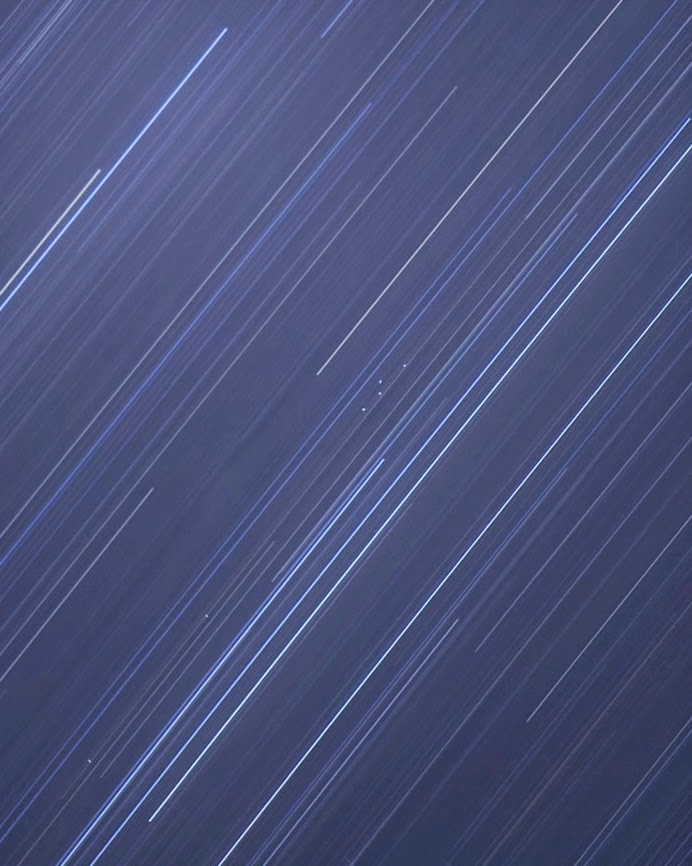
[Image: Cropping in to highlight the geostationary satellites—the unblurred dots between the star trails—in “PAN (Unknown; USA-207)” by Trevor Paglen, from The Other Night Sky].

The Other Night Sky, Paglen explains, “is a project to track and photograph classified American satellites, space debris, and other obscure objects in Earth orbit.”

To do so, he uses “observational data produced by an international network of amateur satellite observers to calculate the position and timing of overhead transits which are photographed with telescopes and large-format cameras and other imaging devices.”

The image that opens this post “depicts an array of spacecraft in geostationary orbit at 34.5 degrees east, a position over central Kenya. In the lower right of the image is a cluster of four spacecraft. The second from the left is known as ‘PAN.'”

What is PAN? Well, the interesting thing is that not many people actually know. Its initials stand for “Palladium At Night,” but “this is one mysterious bird,” satellite watchers have claimed; it is a “mystery satellite” with “an unusual history of frequent relocations,” although it is to be found in the eastern hemisphere, stationed far above the Indian Ocean (Paglen took this photograph from South Africa).

As Paglen writes, “PAN is unique among classified American satellites because it is not publically claimed by any intelligence of military agency. Space analysts have speculated that PAN may be operated by the Central Intelligence Agency.” Paglen and others have speculated about other possible meanings of the name PAN—check out his website for more on that—but what strikes me here is less the political backstory behind the satellites than the visceral effect such an otherwise abstract photograph can have.

In other words, we don’t actually need Paglen’s deep-sea squid of the far future with their extraordinary eyesight to make the point for us that there are now uncanny constellations around the earth, sinister patterns visible against the backdrop of natural motion that weaves the sky into such an inspiring sight.

These fixed points peer back at us through the cracks, an unnatural astronomy installed there in secret by someone or something capable of resisting the normal movements of the universe, never announcing themselves while watching anonymously from space.
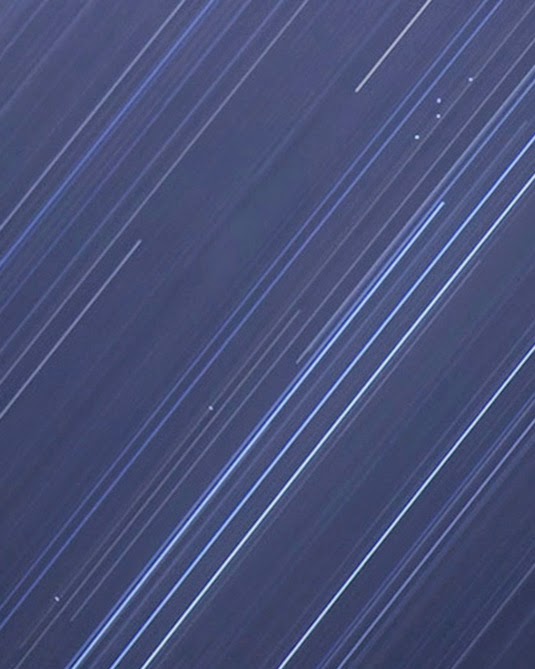
[Image: Cropping further into “PAN (Unknown; USA-207)” by Trevor Paglen, from The Other Night Sky].

For more on Trevor Paglen’s work, including both The Last Pictures and The Other Night Sky, check out his website.

Weather is the Future of Urban Design

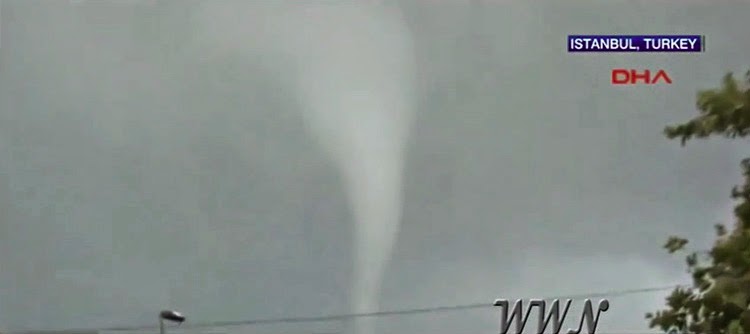
[Image: From a newscast about Istanbul’s recent tornadoes].

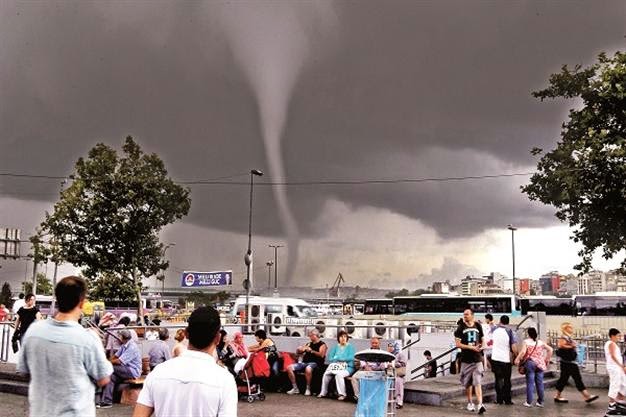
It’s hard to resist a story where urban design is blamed for creating tornadoes. But the recent cluster of “freak mini-tornadoes” striking Istanbul offers an anomaly in search of an explanation, and the newly built outer edges of the metropolis are potentially to blame.

According to Ed Danaher at NOAA’s Center for Weather and Climate Prediction, speaking to the Hürriyet Daily News, “we know that tornadoes are exotic to Istanbul, like snow is to Florida.” That article go on to suggest, however, that these tornadoes “are possibly one result of the city’s rapid urbanization,” and that such a claim can be made based on their conversations with other meteorological researchers working at NOAA.

As their headline states bluntly, “Istanbul tornadoes [are] a ‘result of urbanization’.”

This conjures up frankly outrageous images of a city so sprawling—and so thermally ill-conceived—that huge masses of air at different temperatures are now rising into the sky to do battle, violently colliding like mythological titans above the city to generate the surreal tornadoes now ripping through the neighborhoods below.

Weather might be the future of urban design—but the rest of the news story actually includes no such quotations or any relevant evidence that would back up such a claim. They refer to climate change and its effects on regional humidity, of course, but, oddly enough, there is otherwise no attempt to back up the opening statement.

[Image: Photographer uncredited; via the Hürriyet Daily News].

But… But… It’s so tempting to speculate. Beyond just being clickbait, this vision of suburban sprawl inadvertently churning the skies with the introduced turbulence of tornadoes, and thus destroying the landscape like some twisted instant karma of the atmosphere, is too awesome not to entertain for at least the length of a cup of coffee.

What weird old gods of weather have Istanbul’s architects accidentally awoken? As streets and buildings continue to bulge outward into the forests and hills of the region, what else might their spatial activities unleash?

(Originally spotted via @urbanphoto_blog. Vaguely related: The Weather Bowl).