I’m still reeling from the announcement of Postopolis! – but the good news keeps on coming.
 To make a long story still rather long…
Back in January, Alan Rapp, the art, design, and photography editor for Chronicle Books, attended a BLDGBLOG event hosted by the Center for Land Use Interpretation here in Los Angeles.
Alan and I met, kept in touch, had a pizza, talked about David Cronenberg; and then, last month, we organized an event together in San Francisco.
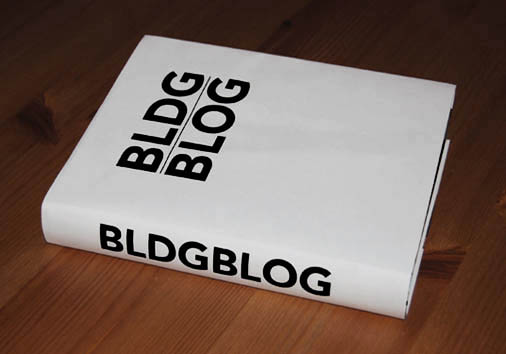
Somewhere in there the idea of a BLDGBLOG book came up – which I soon turned into a formal proposal… and now it’s official: Chronicle Books will be publishing a BLDGBLOG book in Spring 2009 – and my head is spinning!
BLDGBLOG: The Book! The BLDGBLOG Book!
I just can’t even believe how many possibilities there are with this thing. It’s a little crazy.
In a nutshell, though, it’ll be divided up into three major sections – Architectural Conjecture, Urban Speculation, and Landscape Futures – covering everything I’ve already covered here and more…
From plate tectonics and J.G. Ballard to geomagnetic harddrives and undiscovered Manhattan bedrooms, via offshore oil derricks, airborne utopias, wind power, fossil cities, statue disease, inflatable cathedrals, diamond mines, science fiction and the city, pedestrianization schemes, the architecture of the near-death experience, Scottish archaeology, wreck-diving, green roofs, W.G. Sebald, flooded Londons of the climate-changed future, William Burroughs, Andrew Maynard, LOT-EK, Rupert Thomson, The Aeneid, shipbreaking yards, Die Hard, Pruned, Franz Kafka, Rem Koolhaas, tunnels and sewers and bunkers and tombs, micronations, underground desert topologies, Mars, Earth, lunar urbanism, sound mirrors, James Bond, the War on Terror, earthquakes, Angkor Wat, robot-buildings and the Taj Mahal, Archigram, the Atlas Mountains, refugee camps, Walter Murch, suburbia, the Maunsell Towers… and about nine hundred thousand other topics, provided I can fit them all in.
There will be interviews, essays, quotations, photos, original artwork – and hopefully even a graphic novel, strung throughout the book. And it will be well-designed and affordable! And it will put all existing architecture books to shame. Every single one of them. Except maybe a few…
And, importantly, even if there’s someone out there who’s read every single post on this site – I know I haven’t – they’ll still find loads of new material.
 Further, since I’ll more or less be writing this thing over the next six months, I’d love it – love it! – if BLDGBLOG readers wanted to make suggestions, or send me links, or leave comments, or tell me what to avoid…
In fact, half the joy of writing BLDGBLOG has always been the comments, so I hope I can even figure out a way to include the best of them in the book somehow, either chasing down anonymous readers for permission or… something, I don’t know, but the whole point is to be open to everyone’s input and ideas.
A BLDGBLOG book Flickr pool, perhaps…
Or a design contest…
A questionnaire… What’s your favorite bus stop in the world and why?
Who knows – but this should be an absolute blast – and I’ll make sure that the book is actually worth picking up. You won’t just get a bunch of crap you’ve already read, reprinted word-for-word from the blog, served back to you for $30 (or $20, or $25…).
But, man, I don’t even know how many blogs make the leap into book-form! So I’m also nervous. But excited. And a little delirious with possibilities. Hoping that I do it right.
So look out for BLDGBLOG: The Book, or The BLDGBLOG Book, or whatever it will eventually be be called, coming soon to a Borders near you. Spring 2009. Chronicle Books. In a deal that never would have happened had it not been for Alan Rapp.
And, of course, without so many hundreds – and hundreds – of people out there, who went out of their way to help BLDGBLOG find an audience – or who just did or wrote or built or made or said something cool, thus supplying me with material – I might never have started blogging at all.
So I don’t want to jump into some kind of Academy Award acceptance speech here, but I really do have to say thanks to dozens and dozens and dozens of people, including, but in no way limited to – hold your breath: my wife, for editing almost literally every single post I’ve written on this thing and making everything, universally, on all levels, better; Javier Arbona, Bryan Finoki, John Jourden, and Paul Petrunia, in particular, of Archinect for the early break, as well as the entire Archinect crew for putting up with me there; Alex Trevi at Pruned; Marcus Trimble of gravestmor; Simon Sellars at Ballardian; Sarah Rich and Jill Fehrenbacher; Jonathan Bell of things magazine; David Maisel; Cory Doctorow, Jason Kottke, William Drenttel, Jim Coudal, Bruce Sterling, Steve Silberman, Robert Krulwich, Lawrence Weschler, Douglas Coupland, Warren Ellis; The Kircher Society; all the people I’ve interviewed; all the people who have participated in BLDGBLOG events; all the commenters out there, both regular and one-time only, including people who have disappeared (or who no longer leave comments – I miss you!); all the people who have sent me tips; Christopher Stack; Dan Polsby; friends of mine who were part of BLDGBLOG at the very, very beginning, before it even had a logo, including Jim Webb, Cathy Braasch Dean, Neena Verma, and Juliette Spertus; David Haskell of the Forum for Urban Design; William Fox; Ruairi Glynn, Abe Burmeister, Dan Hill, Régine Debatty, Chris Timmerman, Chad Smith, Dave Connell, John Hill, Jaime Morrison, Andrew Blum; Scott Webel; Matthew Coolidge, Sarah Simons, and Steve Rowell of the Center for Land Use Interpretation; Materials & Applications; Leah Beeferman; John Coulthart; Theo Paijmans; my del.icio.us network for linking to so many interesting things; Joerg Colberg; Siologen, Dsankt, and Michael Cook; Theresa Duncan; Curbed LA and SF; Jörg Koch; Steven Ceuppens; Yahoo!, Time Magazine, MSNBC, The Guardian, The Wall Street Journal, The Architectural Review, Mark Magazine, Artkrush, Planetizen; Thomas Y. Levin and Annette Fierro, for letting me sit-in on their classes, free, way back in 2004, leading directly to the birth of this blog; my family (including in-laws!); Blogger; and about ninety-nine million other people, things, places, friends, writers, editors, architects, and on and on and on.
BLDGBLOG would have folded up and disappeared long ago were it not for the encouragement of people who it would take me literally the next two days to thank completely.
So thanks – again – especially to Alan Rapp and to Chronicle Books.
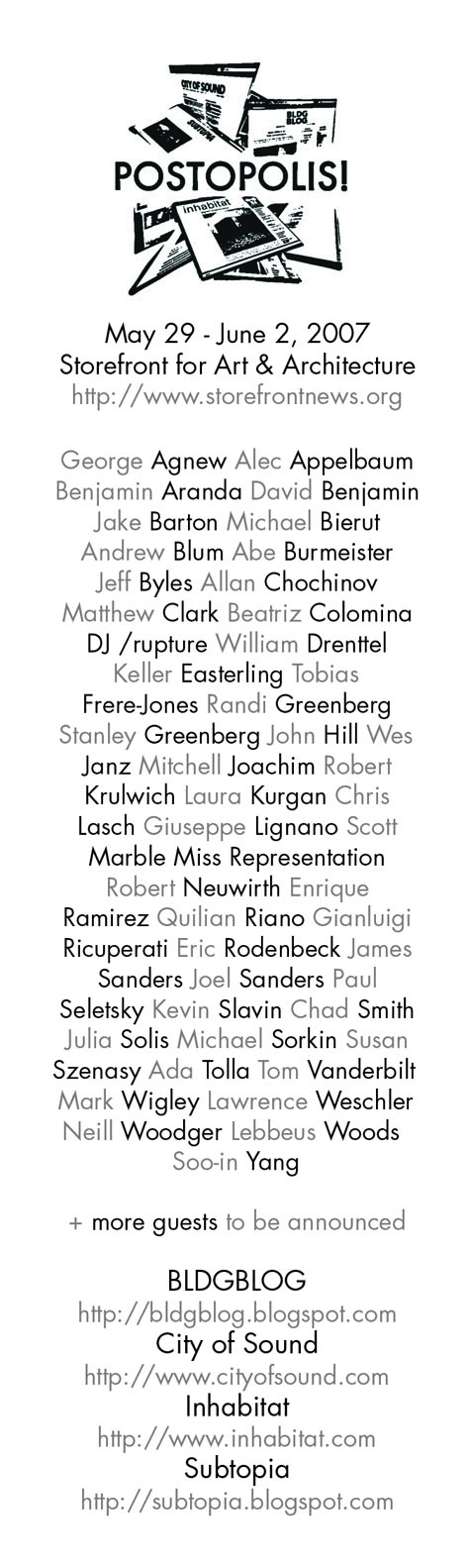
Meanwhile, expect to hear more about all this as I set about actually writing it… And I’ll hopefully see some of you in New York City next week for Postopolis!
(Note: I’ll add more links and such in a little bit – including the names of people who I’ll realize, with horror, that I forgot to mention).

 So…
So…  [Image: What the facade of the Storefront for Art and Architecture will look like if we get to plaster it with our logos…
  [Image: Future
 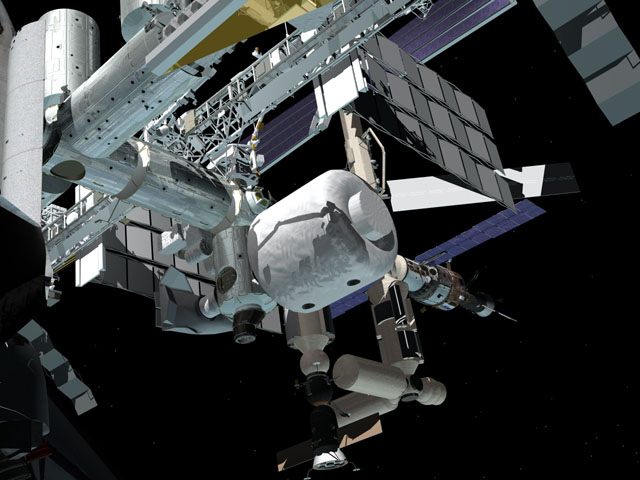 [Image: NASA’s TransHab module, attached to the International Space Station. TransHab designed by Constance Adams; image found via
 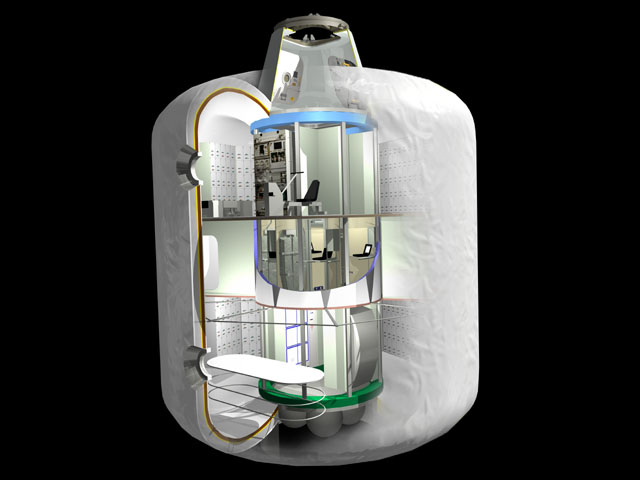 [Image: NASA’s TransHab module; image via
 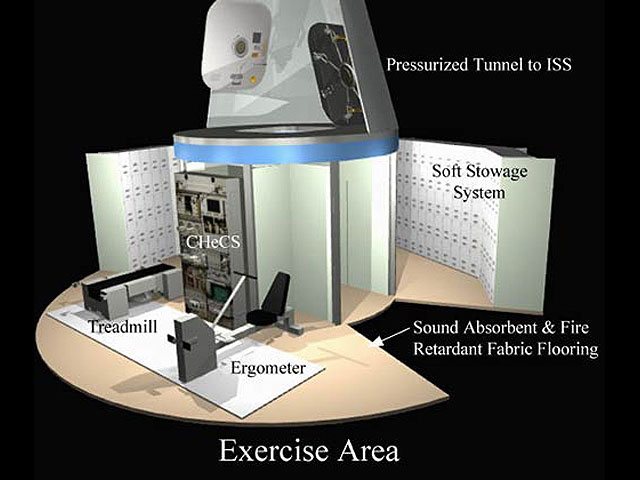 [Image: The TransHab, cut-away to reveal the exercise room and a “pressurized tunnel” no home in space should be without. Image via
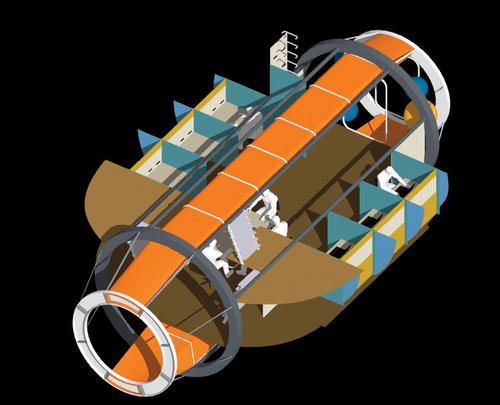
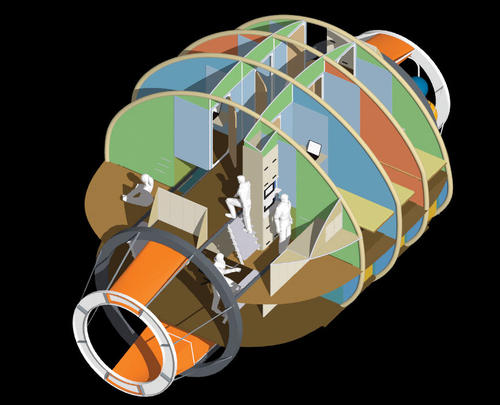 [Images: Georgi Petrov, courtesy of
 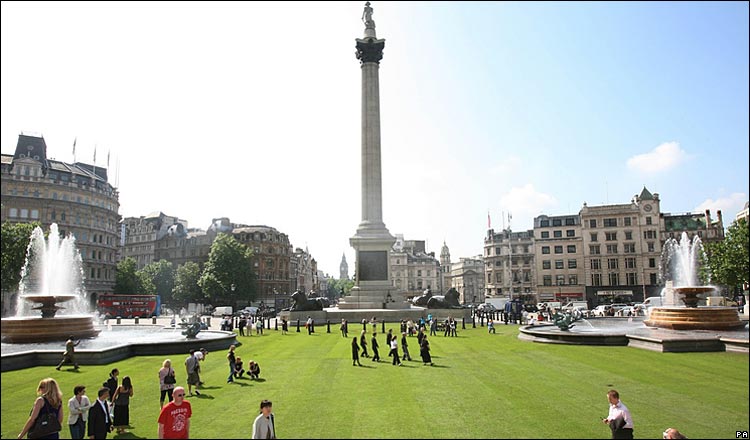 [Image: A green Trafalgar, via the
 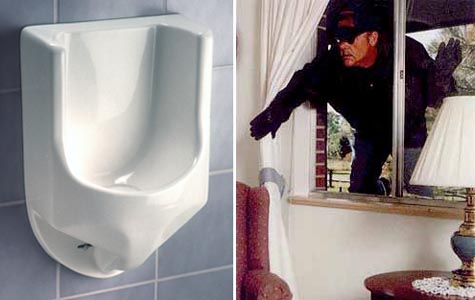 If you could make your house smell like urine, in other words, all your possessions would be permanently safe…
 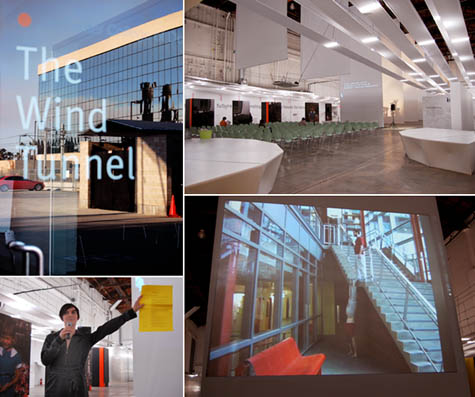 [Image: The final night of the architecture and film festival. From left-right, top-bottom: the
 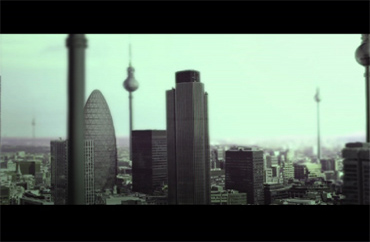 [Image: A scene from Peter Kidger’s The Berlin Infection, produced as part of Kidger’s work with the Bartlett School of Architecture’s
 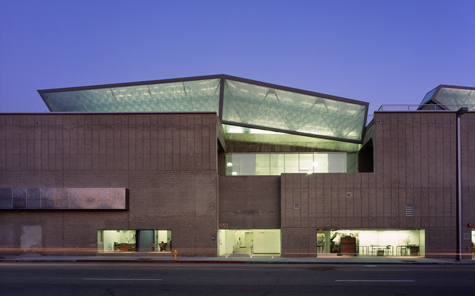 [Image: Outside the wind tunnel – a building rehabbed by
 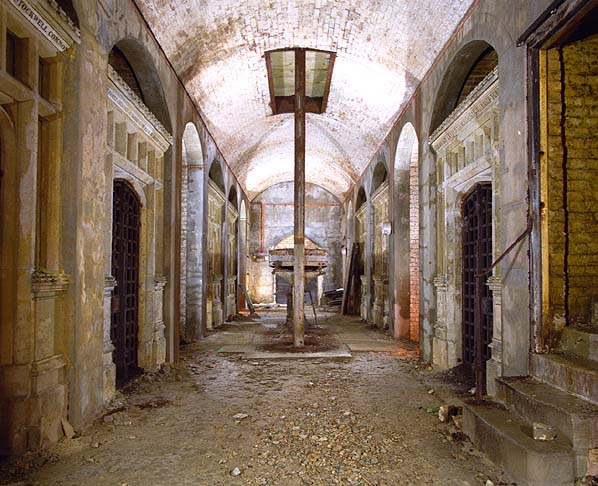 [Image: An underground “coffin lift or ‘catafalque’,” from London’s
 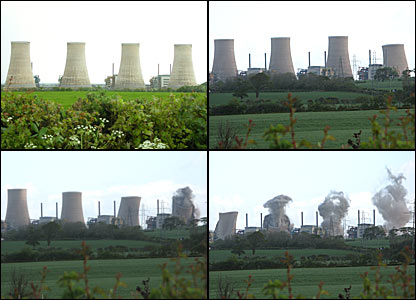 [Images: Photos by Neil Burns capture the destruction; via the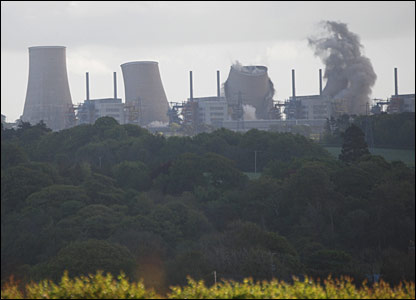
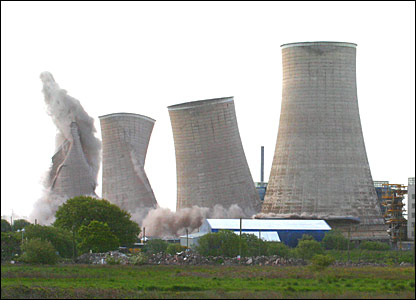 [Images: Photos by Andrew Turner and John Smith; via the
 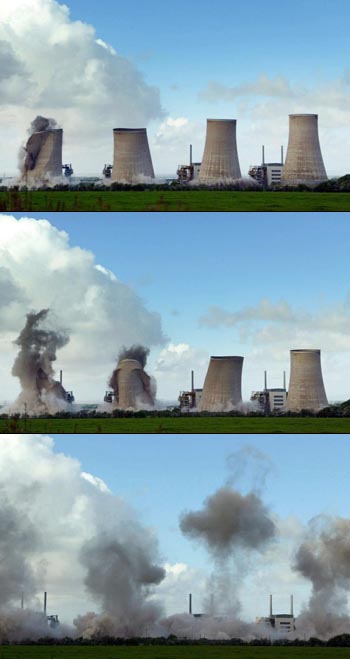 [Images: Via
 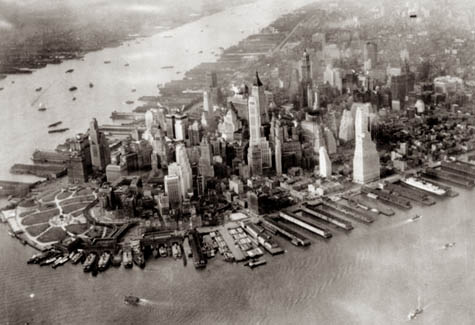 And so I was thinking today that you could go around Manhattan with a microphone, asking people who have had that dream to describe it, recording all this, live, for the radio – or you ask people who have never had that dream simply to ad lib about what it might be like to discover another room, and you ask them to think about what kind of room they would most like to discover, tucked away inside a closet somewhere in their apartment.