
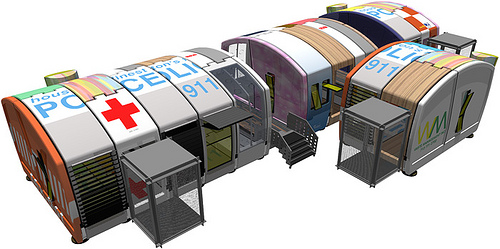
 [Image: The Klip House system by Interloop architects].
The Klip House by Texan architects Interloop is a project dating back to 1997-2001. The architects describe it as “a delivery system that provides the physical and operational infrastructure for trade corporations to participate in the production, delivery, and servicing of housing.”
Not limited only to housing, however, the Klip system was seen as being just as easy to use for hospitals, police stations, and more—even, why not, a pink auto-detailing shop.
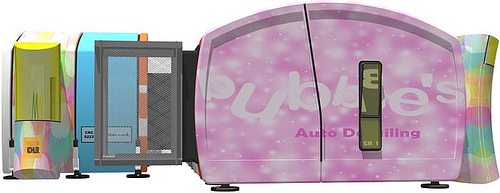 [Image: A pink auto-detailing shop in the Klip system by Interloop].
At the time, Interloop had become “frustrated,” they explain, by “Federal and State initiatives that provide financial assistance to qualified families and individuals by awarding housing ‘vouchers’ to serve as the down payment on a house. In its current format, the voucher system distributes a mass of capital such that one voucher equals one house.” However:
We were, and are, frustrated with a design system that is constricted by insurance companies, loan officers, municipalities, and contractors, etc. and decided to look at the overall economic impact that these vouchers might have if they were bundled, rather than distributed. Instead of designing a single house that has very little impact to the housing industry, we worked with the idea of consolidating the vouchers to pay for a housing platform, or infrastructure. We needed to work outside of the home mortgage process in order to gain some ground.
In other words, producing new housing also means producing new (non-predatory) ways to finance those housing options—architects have to rethink systems of payment as much as they have to rethink the design parameters of prefab componentry.
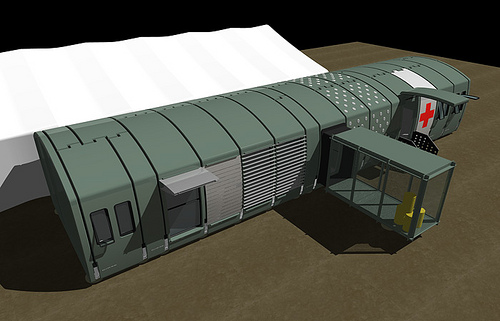
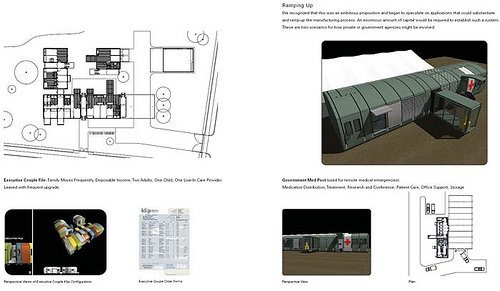

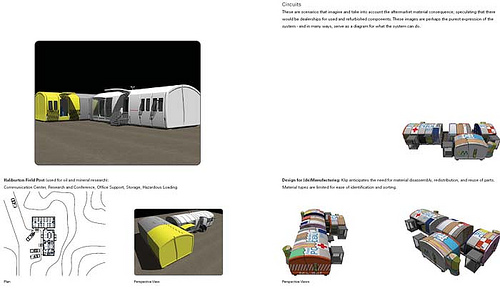 [Images: The Klip system by Interloop].
Klip House, seen here, “is essentially engaging financing systems that exist in automotive and product industries”—a statement which comes with a slight twinge of nostalgia for those heady, Greg Lynn-inspired days of the late 1990s when automobile assembly was the reigning model for cutting-edge architectural thesis projects. If your BMW could be assembled offsite and to your every specification, down to heated seats, aerodynamic rear spoilers, and the perfect JBL sound system, why couldn’t the architecture you live in follow suit?
Seamless, robotic, and delivered perfectly on schedule, the modular assembly of housing—borrowing assembly line techniques taken from Ford, Saturn, or Lexus—was to lead the way to our architectural future.
In any case, the Klip house itself was at least partially inspired by the boot clips of skis and snowboards. That is, its foundation would operate through a terrestrial “binder,” or “adjustable footing system,” onto which new rooms or components could be clipped (thus the house’s name).
The binders thus allow for “an open array of housing components [to] be added, released, interchanged, upgraded and rearranged” at will. “The architectural contribution,” Interloop points out, “is simply to introduce a single enabling technology, i.e. the binder, to generate or illicit response.”
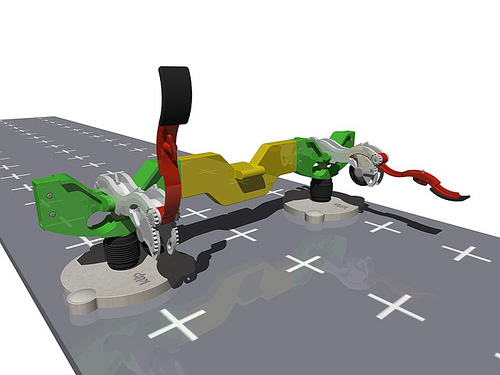
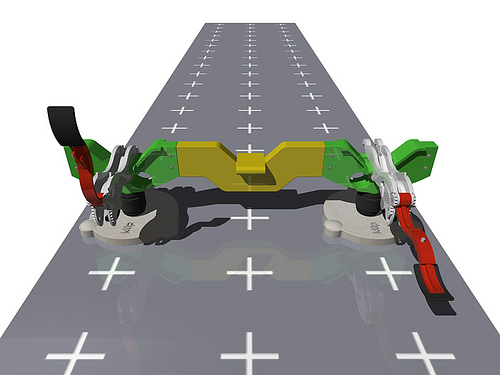
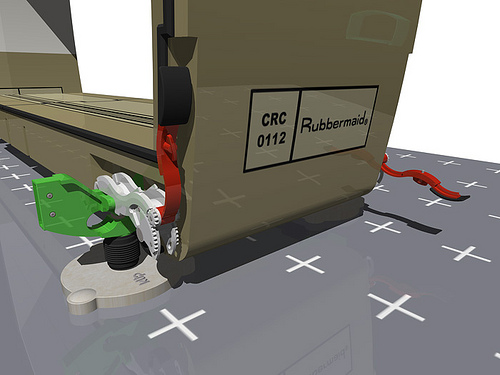
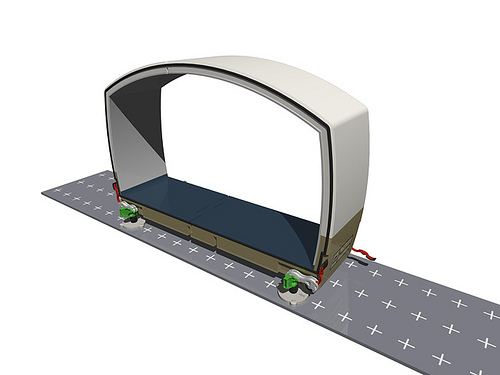 [Images: Inspired by the boot clips of snowboards: the Klip‘s binder system by Interloop architects].
Further, the Klip’s “components are available in three and six foot widths, each made with a variety of options and upgrades,” and they can be either purchased or leased. This adds a Smart Car/iPod-like personalization to the housing design and procurement process.
Your house, hospital, police station, nightclub, field kitchen, mobile writing lab, counterfeit university space, or auto-body shop can thus be expanded (or shrunken)—let alone recolored, retextured, and resurfaced—based on immediate personal and economic needs.
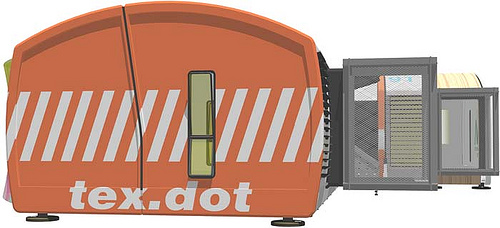
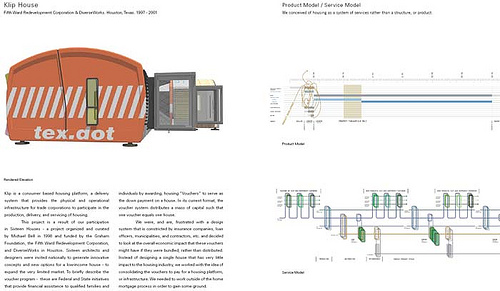 [Image: The Klip House by Interloop architects].
Read more at the architects’ website.
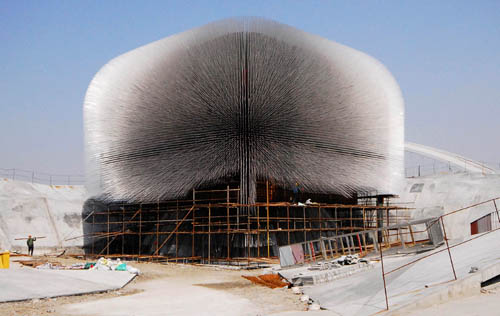 [Image: Thomas Heatherwick’s “Seed Cathedral” at the 2010 Shanghai World Expo; photo by Reuters/China Daily, via
 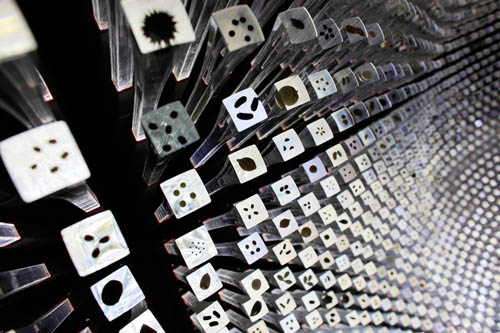 [Image: The seeds revealed; photo by Aly Song for Reuters, via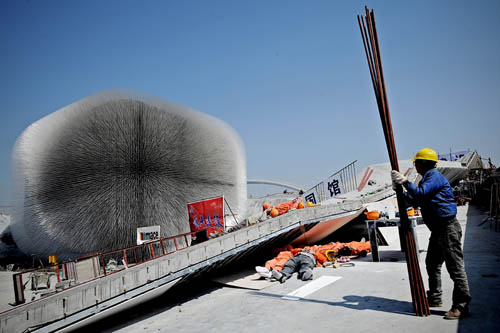
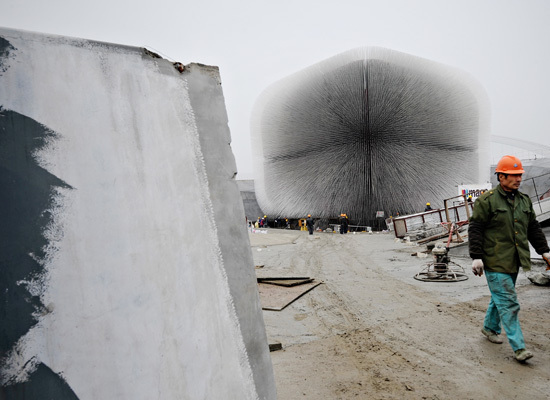
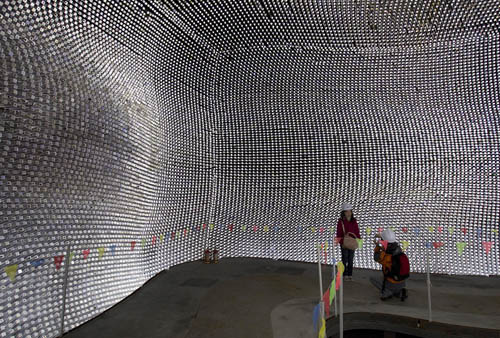
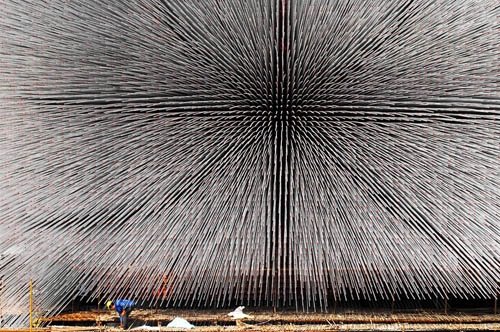 [Images: Thomas Heatherwick’s “Seed Cathedral” prepares to open in Shanghai; photos by Philippe Lopez/AFP/Getty Images; STR/AFP/Getty Images; and AP; all via
 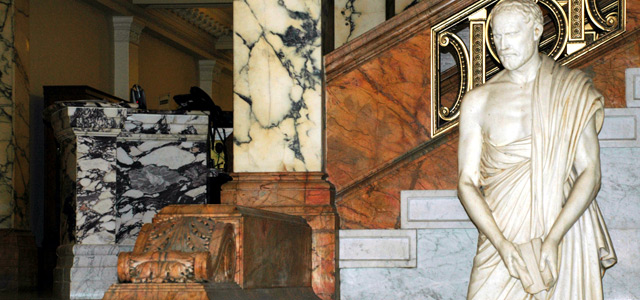 [Image: Inside the Association of the Bar of the City of New York, courtesy of the Lower Manhattan Cultural Council’s
 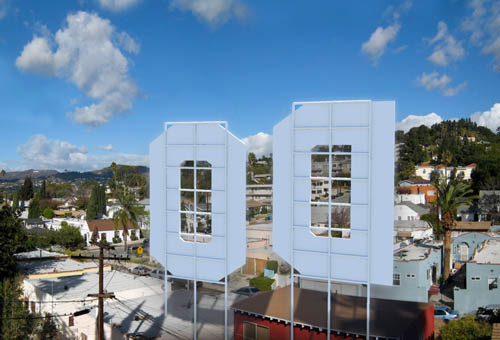 [Image: From “HLYWD” by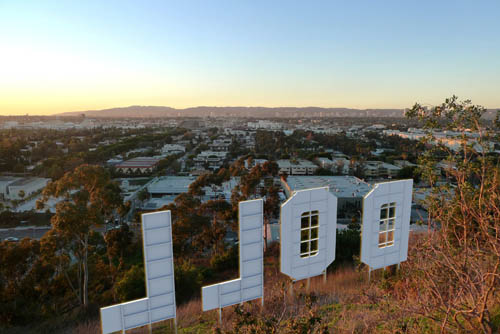
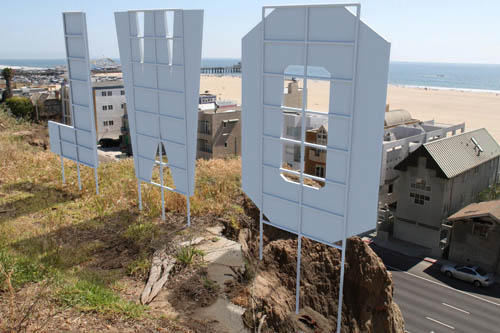 [Images: From “HLYWD” by Jeffrey Inaba and Darien Williams].
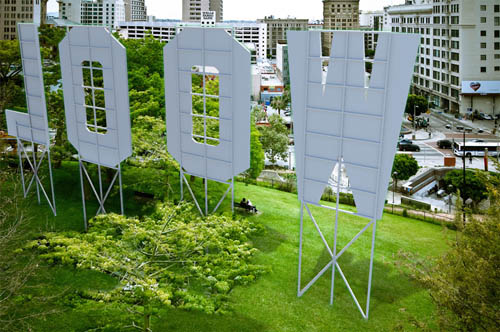 [Image: From “HLYWD” by Jeffrey Inaba and Darien Williams].
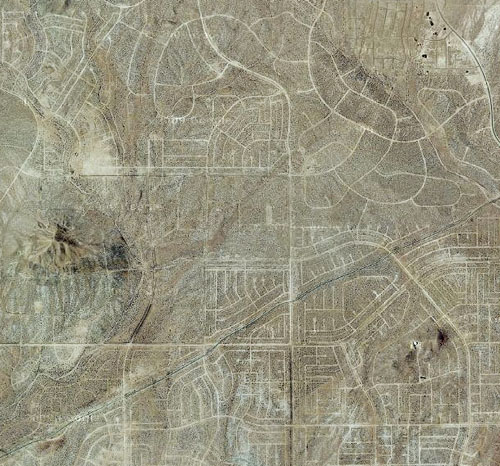 For those of you who have signed up for the BLDGBLOG/Atlas Obscura “
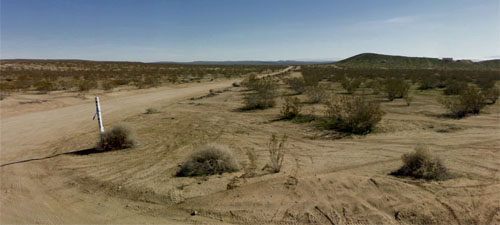
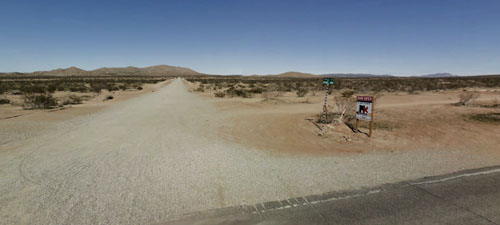
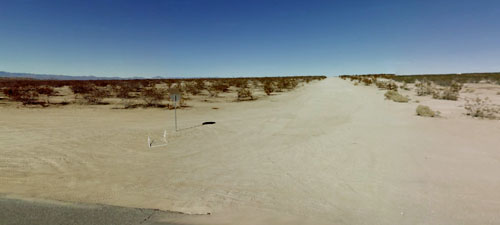 Second, it looks like at least 182 people have signed up for this, which I assume translates into roughly 75 cars making the journey—that’s a substantial caravan. That being the case, our initial meet-up in the parking lot of the California City Rite Aid—as the current plan now stands—will actually be quite hard, if not impossible, to manage.
 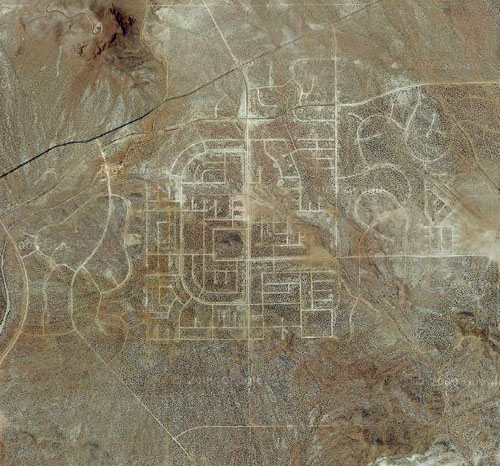 At that point, to be honest, you can just do whatever you’re going out there to do: make films, take photographs, record sounds, write blog posts, Tweet things, interview people, do cartwheels, read Ballard and meet your future best friends. Fly remote-control airplanes with small nose-mounted cameras over the failed glyphs of a forgotten real estate dream. Build kites. Assemble simulated Iron Age tumuli in the dirt and gravel and dedicate them all to Anselm Kiefer. Establish a makeshift geothermal drilling operation and cause an earthquake. Call your mother.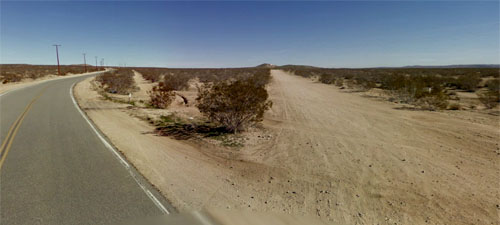
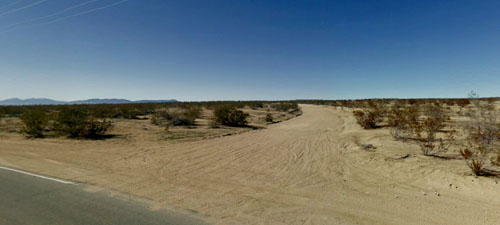
 Finally, a brief bit of legalese—sorry, but I need to cover this stuff, too:
 This is just a quick reminder to anyone in Los Angeles that
  [Image: San Francisco, as seen from the cockpit of a 747; photo by
  [Image: Photo by George Steinmetz/CORBIS for
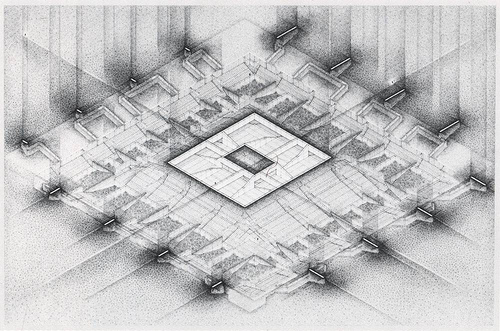 [Image: ONECITY by Will Insley; image via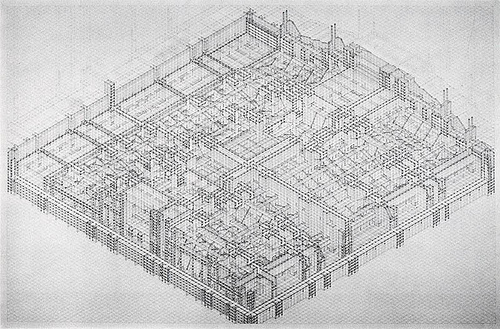
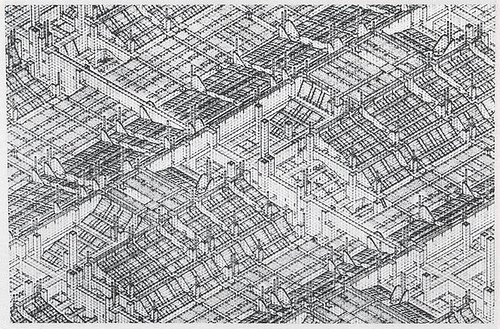 [Images: ONECITY by Will Insley, via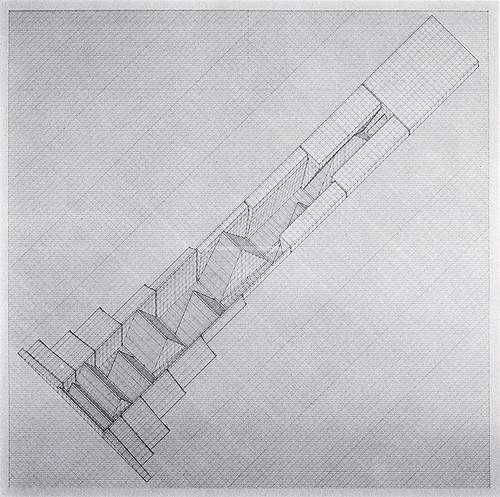
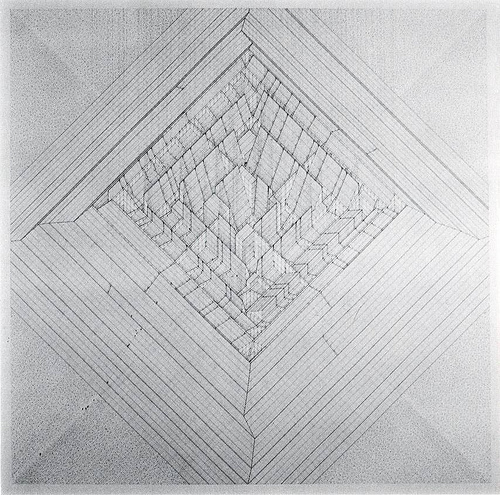 [Images: ONECITY by Will Insley].
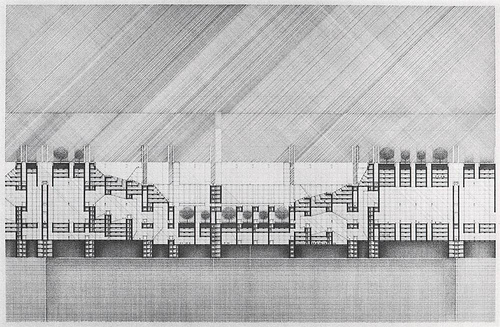 [Images: ONECITY by Will Insley].
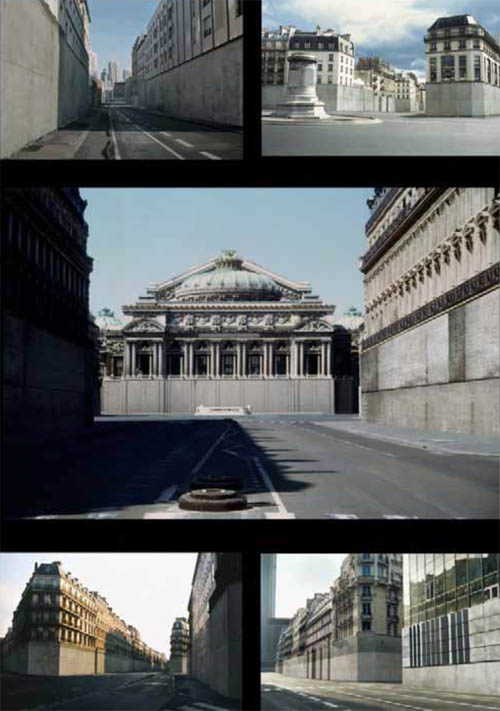 [Images: From Vider Paris (1998-2001) by Nicolas Moulin, courtesy of
 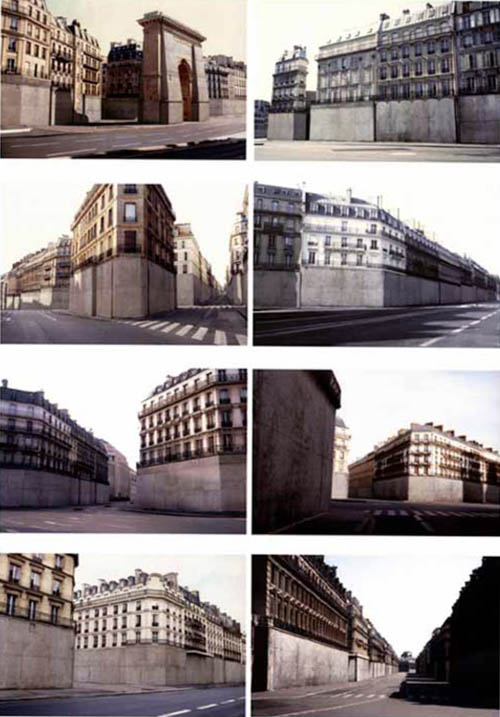 [Images: From Vider Paris (1998-2001) by Nicolas Moulin, courtesy of
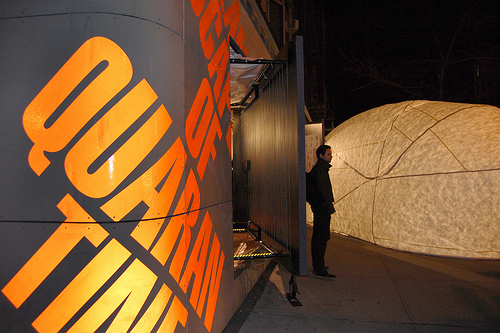 [Image: Outside-in: looking into
  [Image: Photo by
  [Image: Photo by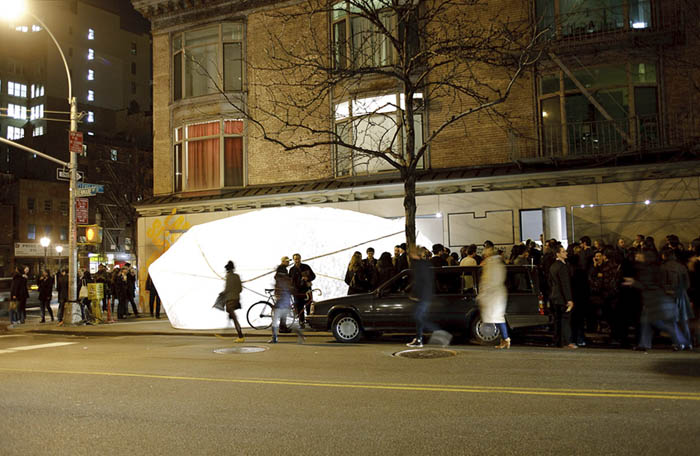
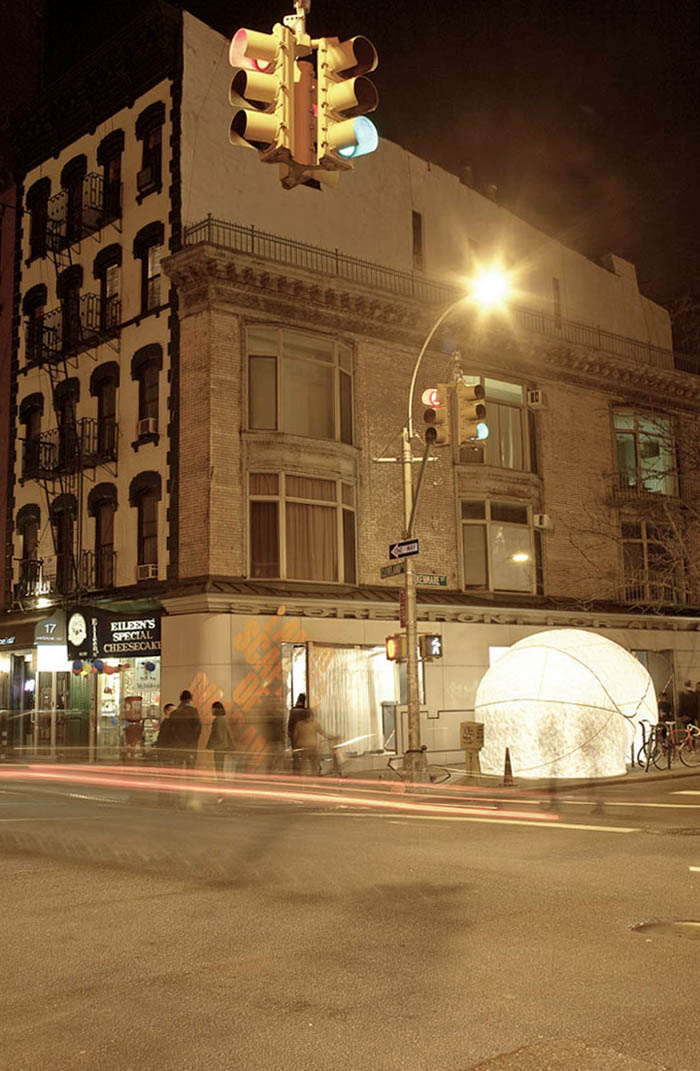
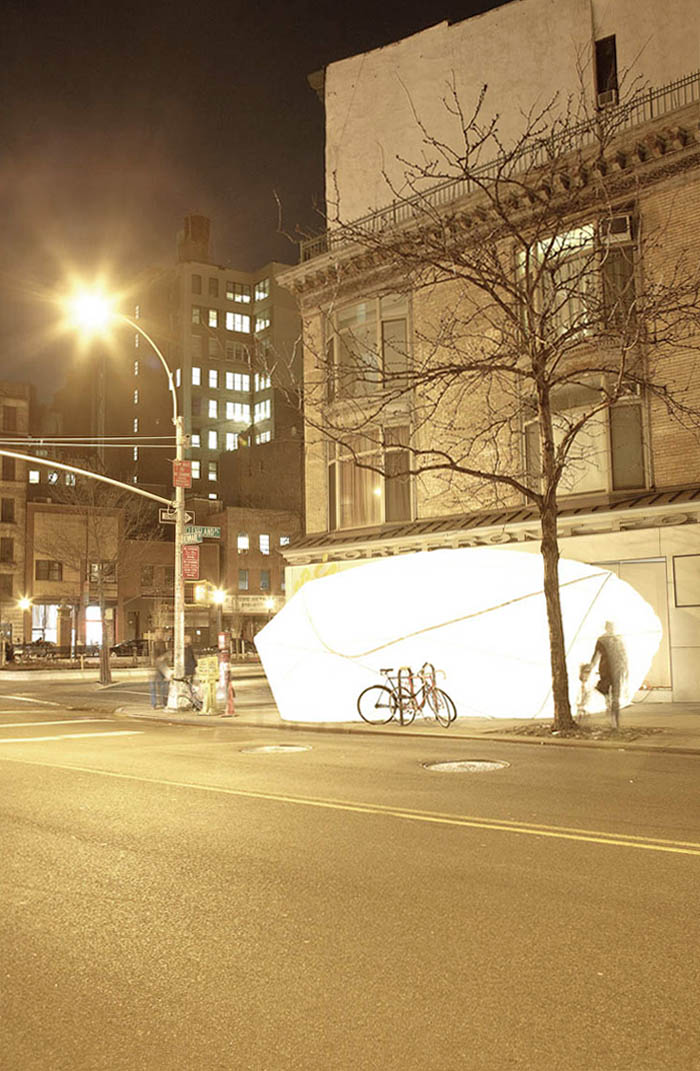
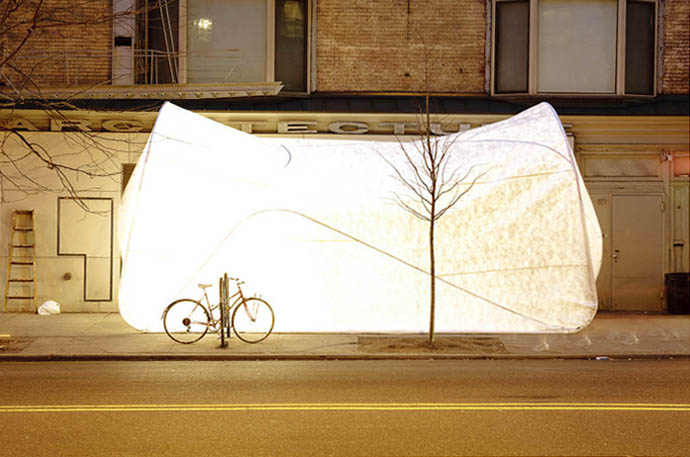
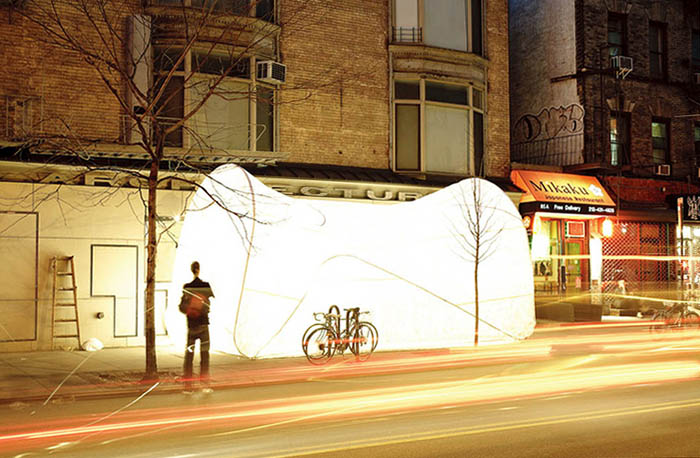
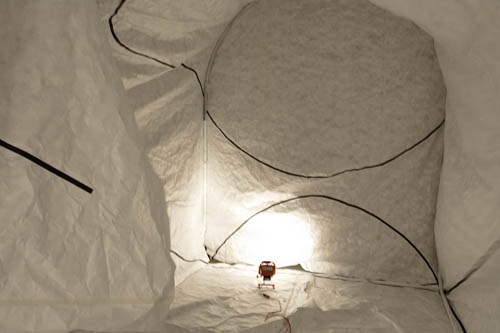
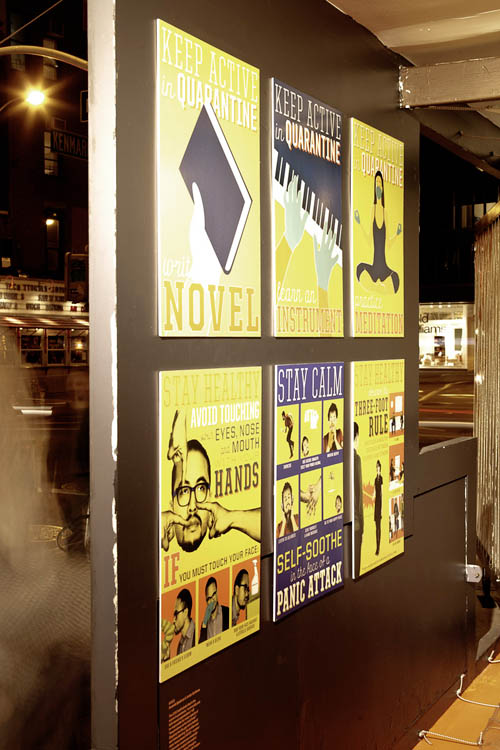
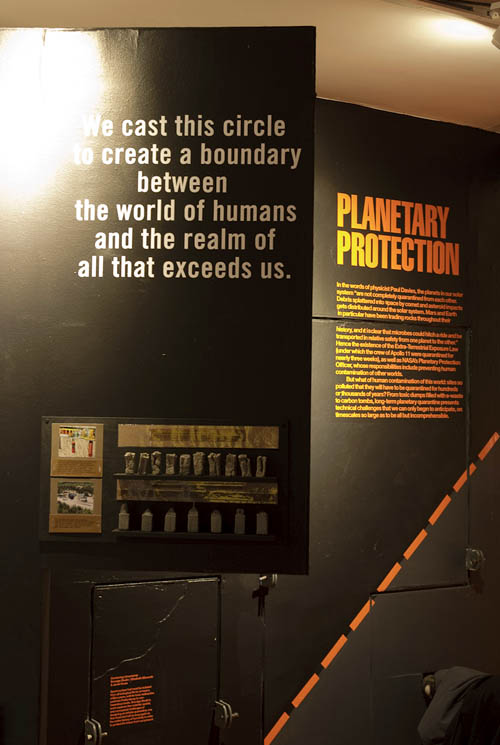
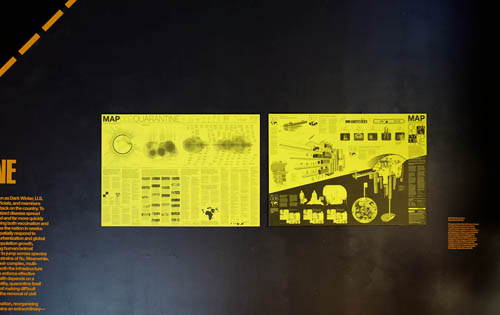
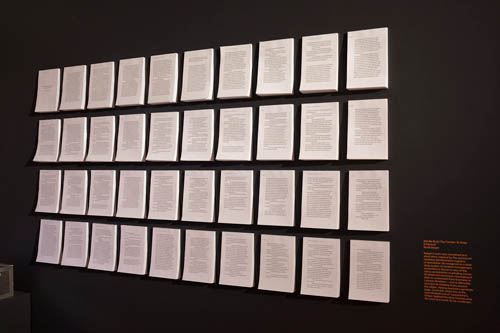
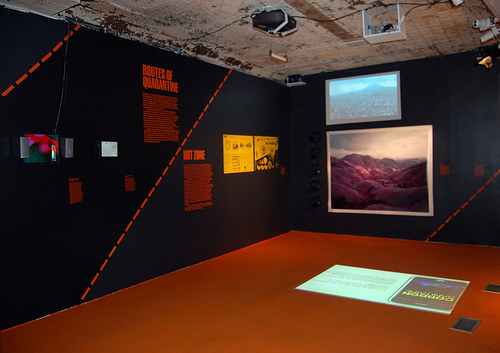

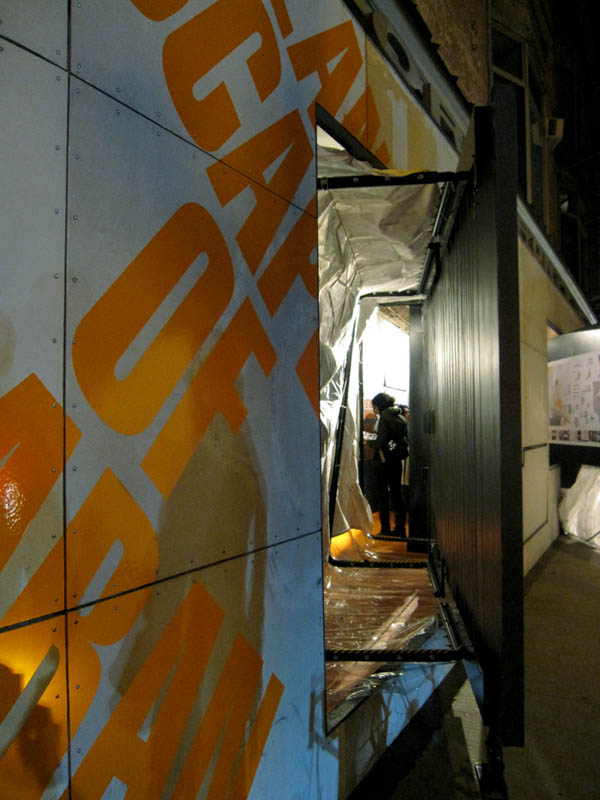
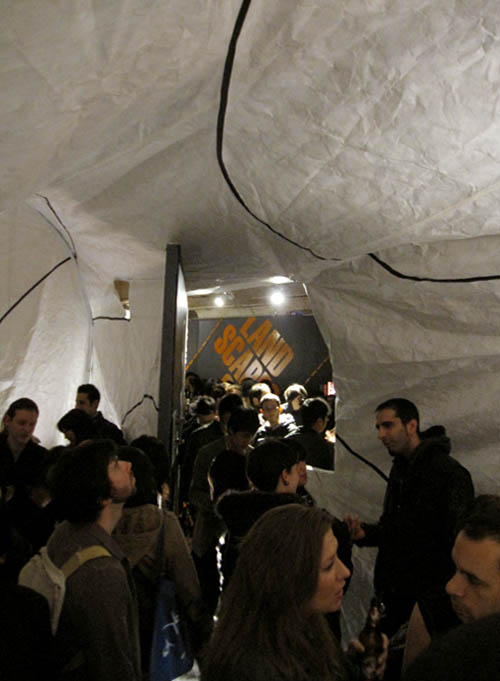
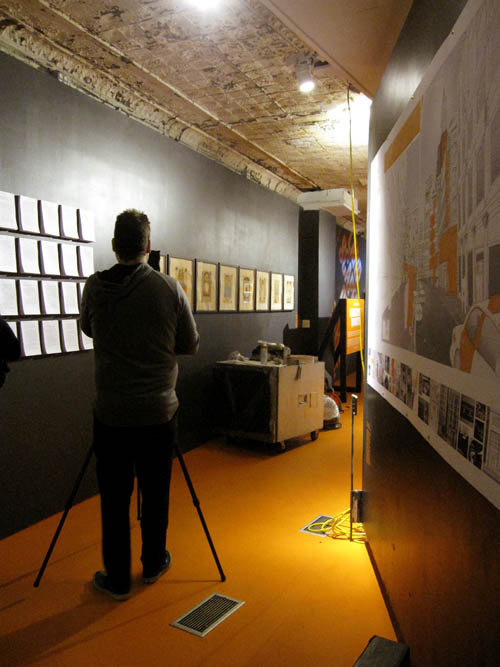 [Images: All photos, except the last five (two of which are by
 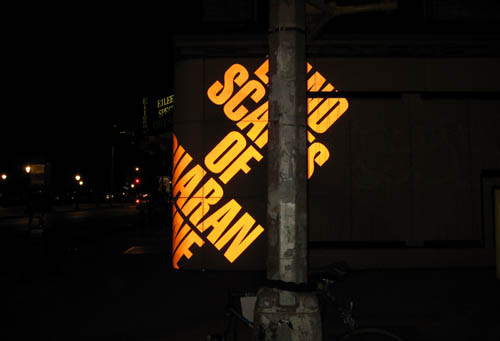 [Image:
 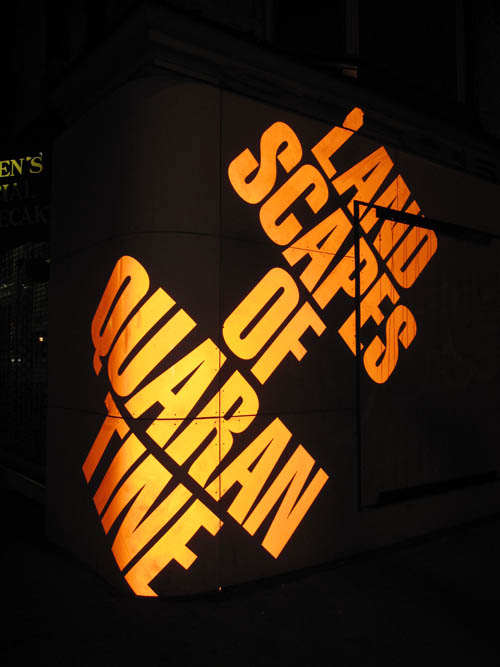 [Image: