Green Trafalgar

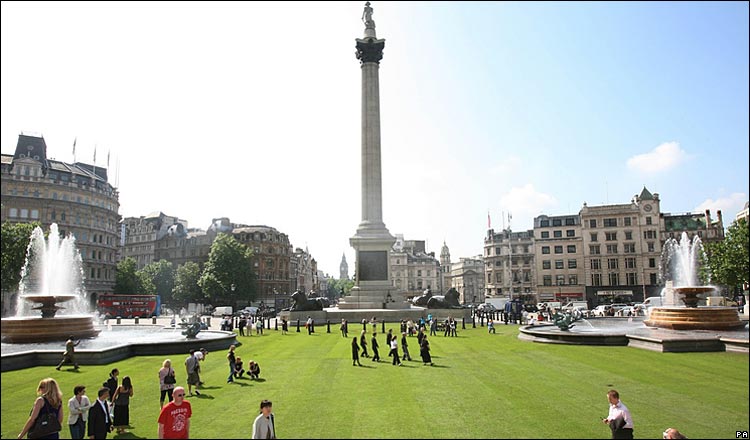
[Image: A green Trafalgar, via the BBC].

There’s a new landscape installation in London. “More than 2,000 sq m of turf has been laid as part of Visit London‘s campaign to promote green spaces and villages in the city,” the BBC reports today.

The grass will cover the square for two days during which visitors will be able to soak up the sunshine in specially laid-out deckchairs or enjoy a picnic.
The turf, which has been sourced from the Vale of York, will then be moved to Bishops Park in Hammersmith and Fulham.

Certainly not the most exciting idea in the world; but I love the underlying concepts: 1) Take a distant landscape (something “sourced from the Vale of York,” for instance) and install it in the center of London. This gives rise to all sorts of possibilities – like recreating the Brecon Beacons throughout the streets of Westminster (you do it in the dead of night and don’t tell anyone what you’re doing). Or: 2) You swap landscapes, installing Trafalgar Square somewhere in the Vale of York to promote urban spaces and cities in the local farmland.
Then again: 3) You simply install lawns everywhere: inside movie theaters and churches and airplanes and hot air balloons… Airborne landscapes and gardens! Flying yards. You then form a company, incorporated in Maryland, called, yes, the Flying Yards and you perform distant landscapes in the sky for stunned crowds.
4) You transform London into what it will look like after it’s been taken over by wild grasses and tree roots and weeds – perhaps even fencing off whole parts of Camden for several years as a complicated work of land art: the city gone feral. Someone at Goldsmiths writes a PhD about you…
But more soon on such future visions of a new London to come.
Defense Cloud

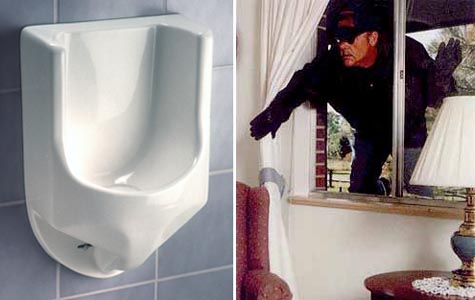
During an event the other night, I had a brief olfactory encounter with a waterless urinal.
While I know that waterless urinals are environmentally fantastic – they save literally tens of thousands of gallons of water a year – I also think that they can smell extraordinarily bad.
The instant you put one to use, in other words, you’re made instantly aware of all the people who have been there before.
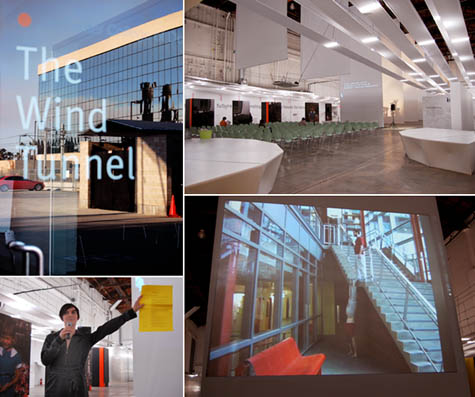
In fact, the experience made me wonder if you could prevent burglary by making houses smell like that: no one, not even a burglar, would come near.

If you could make your house smell like urine, in other words, all your possessions would be permanently safe…
So I was thinking, specifically, that you should attach some kind of scent-emission device to your home burglar alarm – or above the windows and beside the front doorway – before you go away for the weekend. You then just have to choose what scent will be emitted; you type in your PIN; and you go.
Because then, if someone actually does break into your house… an invisible puff of scented air – a defense cloud™ – goes misting out into the hallway, settling down onto your erstwhile burglar – who thus finds himself greeted with an alarmingly strong scent of urine. The scent gets worse by the minute, and seems to be coming from all sides.
What is this place…? the burglar thinks. Do they manufacture waterless urinals here? He recoils in horror.
But should the determined home invader persist in his folly, the scent-alarm simply kicks it up a notch, through different aromas, making everything that much worse – moldy potatoes, rotten chicken parts, gangrenous limbs and human corpses – till only someone without a nose, or a true sociopath, could even contemplate sticking around.
In which case your scent-alarm phones the police.
Only a few unfortunate customers have reported product malfunction.
A scented car alarm is now in development.

cinema.bldg: Film Fest Recap

[Image: The final night of the architecture and film festival. From left-right, top-bottom: the wind tunnel entrance; the set-up; the intro, by Jenna Didier of M&A; and a scene from At Rest: The Body in Architecture by Michael and Alan Fleming. Photos by Nicola Twilley].
Thanks to everyone who came out last night for the final night of the film fest; it was a bit intimate – but it was still fun, and we made it through two cases of beer, so… you can’t beat that.
Anyway, I owe a huge thanks to Leslie Marcus of the Art Center College of Design for her patience, interest, and organizational help; Oliver Hess and Jenna Didier of Materials & Applications, for inviting me to help put all this together in the first place; Architecture Tours LA and Michael Maltzan Architects, our sponsors for last night’s show; and to all the filmmakers who took part – and the people who came out to see their work.
And hopefully we’ll see you again next year!

Back to Pasadena: The Film Fest Finishes

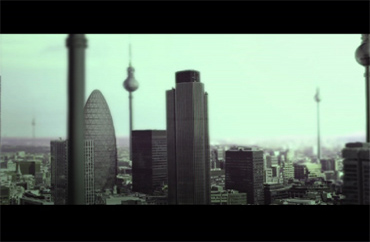
[Image: A scene from Peter Kidger’s The Berlin Infection, produced as part of Kidger’s work with the Bartlett School of Architecture’s Unit 15 in London].
This year’s architectural film fest, jointly organized by BLDGBLOG and Materials & Applications, concludes tomorrow night, Tuesday, May 22, in the wind tunnel at Pasadena’s Art Center College of Design.
Wired liked the first event – so hopefully we can keep the good energy flowing…

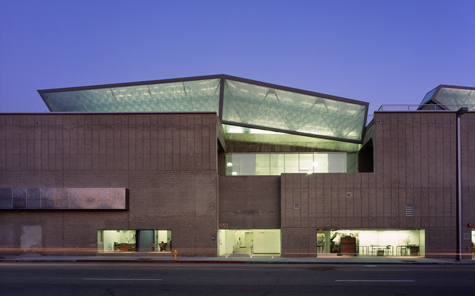
[Image: Outside the wind tunnel – a building rehabbed by Daly Genik. More info about it here].
This time round, we’ll be screening something like an hour and forty minutes’ worth of films, beginning at 8pm. No tickets or reservations are required – and the wind tunnel can be found here (950 South Raymond Avenue, in Pasadena). There’s even free valet parking.
And it should be fun: we’ve got some awesome films lined up – with running times coming in anywhere between two minutes and half an hour – and I’m really looking forward to this.
You’ll be seeing, in this or another order:

Vancouverism in Vancouver, Robin Anderson and Julie Bogdanowicz
Glen Festival School, Fernando Iribarren, Ayers Saint Gross (2007)
LaSubterranea, Raimund McClain and Jesse Vogler (2006)
At Rest: The Body in Architecture, Michael and Alan Fleming (2007)
Spiral Bridge, Dennis Dollens (2007)
Vert-ual, Adam and Nathan Freise (2005)
Alternate Ending, David Fenster, Field Office Films (2007)
London After the Rain, Ben Olszyna-Marzys (2007)
The Berlin Infection, Peter Kidger (2006)
Matched Pair, Bradford Watson (2004)
Declarations of Love, Andre Blas (2006)
Wax On/Wax Off, Benjamin Smith and Wilhelm Christensen (2006)

So come on down – and say hello and drink a coffee (there’s no cafe on site, however) and have a cool Tuesday night, hanging out in a wind tunnel, watching movies about architecture… And if you get restless, you can always walk around and explore Open House: Architecture and Technology for Intelligent Living, which is simultaneously on display in the exact same space.
Hope to see you there!

Elevator to the underworld

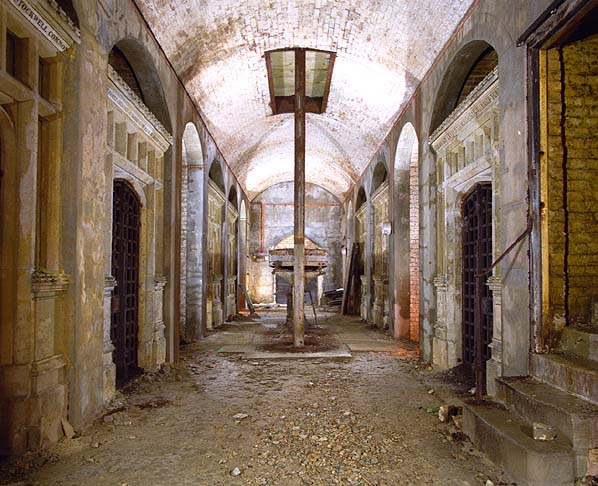
[Image: An underground “coffin lift or ‘catafalque’,” from London’s West Norwood cemetery catacombs. “The blocked aperture in the ceiling led to the now demolished Episcopal Chapel above. The stairs on the right (now blocked) also led up to the chapel.” Photo by Nick Catford, the wildly great and seemingly omnipresent photographer behind Subterranea Britannica].
London’s West Norwood cemetery opened to the public in 1837; it boasted “two chapels with a series of vaults or catacombs constructed beneath the Episcopal Chapel.”
Fantastically, the catacombs came with “a hydraulic coffin lift or catafalque to transport the coffins from the chapel to the vaults below.”
Although “[b]oth chapels were severely damaged during the war and the Episcopal Chapel was finally demolished in 1955 and replaced by a walled rose garden, the catacombs below were undamaged and remain intact and accessible today.”
A lot more information is available at Subterranea Britannica, but, if you don’t feel like reading text, be sure to check out Nick Catford’s photo gallery. Some of those images are genuinely creepy; some quite beautiful; others just really, really cool.

Demolition Day

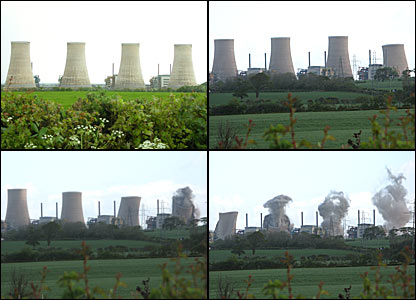
[Images: Photos by Neil Burns capture the destruction; via the BBC].
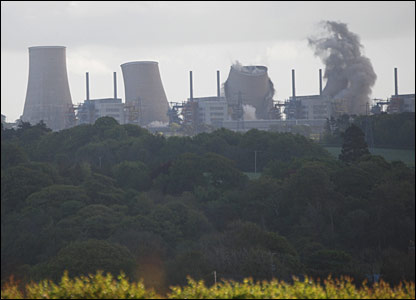
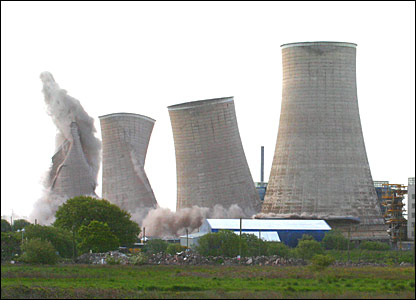
The BBC posted a short photo-spread today that looks at the implosion of four cooling towers at the Chapelcross nuclear power station, in Scotland, where the UK used to produce weapons-grade plutonium.
“The towers were brought down in 10 seconds, generating an estimated 25,000 tonnes of rubble,” we read.

[Images: Photos by Andrew Turner and John Smith; via the BBC].
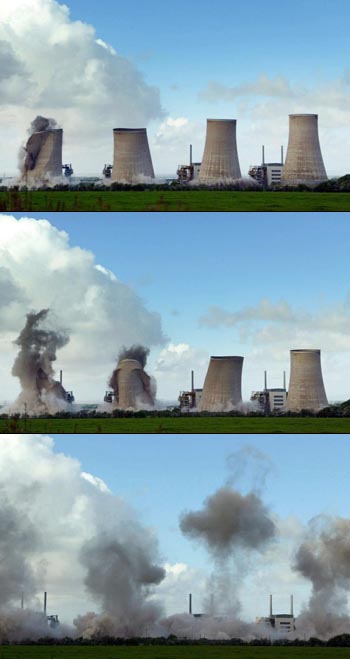
I think it’s interesting, though, that the towers seem to crimp and torque in some of these pictures, almost whirling, or folding, down onto themselves like some kind of self-imploding Richard Serra sculpture, made of lead-reinforced concrete. Might demolition somehow reveal other geometries and architectural forms – otherwise unknown material tendencies held at bay by engineering?

[Images: Via The Scotsman].

In loosely related news, meanwhile, I’m excited to announce that Jeff Byles, author of Rubble: Unearthing the History of Demolition, will now be speaking at Postopolis! next week – so if you’ve got a soft spot for demolition, and the various arguments surrounding it, please stop by! More speakers to be announced shortly, including an up-to-date schedule.

The Undiscovered Bedrooms of Manhattan

A friend of mine once told me about the “typical dream of a New Yorker,” as he described it, wherein a homeowner pushes aside some coats and sweaters in the upstairs closet… only to reveal a door, and, behind that, another room, and, beyond that, perhaps even a whole new wing secretly attached to the back of the house…
Always fantasizing about having more space in Manhattan.

And so I was thinking today that you could go around Manhattan with a microphone, asking people who have had that dream to describe it, recording all this, live, for the radio – or you ask people who have never had that dream simply to ad lib about what it might be like to discover another room, and you ask them to think about what kind of room they would most like to discover, tucked away inside a closet somewhere in their apartment.
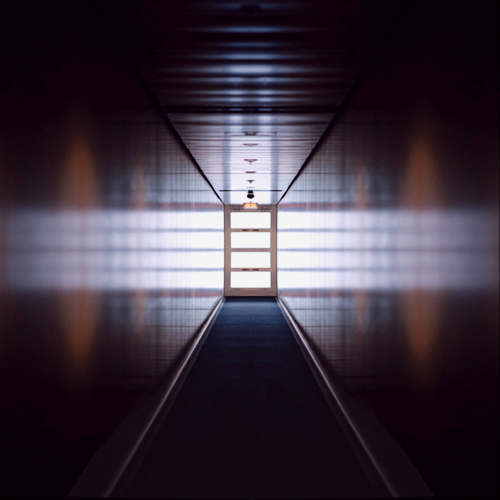
What additions to space do the people of New York secretly long for?
Of course, you’d probably need to record about 5000 people to get a dozen or so good stories – but then you’d edit it all down and listen to the unbelievable variations: people who find secret attics, or secret basements, secret closets inside closets, or even secret children’s bedrooms, secret bathrooms, hidden roof gardens, even a brand new 4-car garage plus screened-in porch out back. One guy finds a sauna, and a cheese cave, and then a bicycle-repair shop…
What does it all mean?
And if you once dreamed about finding a secret UPS loading dock attached to your back door… would Freud approve?
So you get all these stories together and you make a radio piece out of it. A month or two later, it’s broadcast during rush hour, on a Friday night, as you want to give people something to think about over the weekend.
But soon commuters are pulling over to the side of the road and staring, shocked, at the radio – because you’ve given no introduction, and no one out there has any idea what this is.
Some guy found a boathouse attached to his apartment in Manhattan…?, one driver thinks.
And the stories keep coming.
There’s a skyscraper with a whole hidden floor…? someone thinks, momentarily amazed – before driving into the car in front of her.
A woman on the Upper East Side found what?
Or: All along he had a basketball court behind the bedroom wall?
The NJ turnpike gets backed up for miles and the Brooklyn Bridge is at a stand-still.
It’s mass hysteria.
Where are all these secret rooms…? People want to know. And why don’t I have one…? Manhattanites are knocking on walls, taking measurements. drafting letters to the rent control board.
But then the credits roll, and the radio station cuts to commercial, and everyone realizes that those were all just stories. Dreams.
There are no secret rooms – they think.
So they pull back onto the highways – and you go down in radio history.
Within two weeks you’ve signed a six-figure deal with Henry Holt to turn it into a book, and Paul Auster volunteers to write the forward.
You call it: The Undiscovered Bedrooms of Manhattan.
It gets accidentally shelved with Erotica.
People cry as they read it.
A sequel is planned, interviewing residents of London and Beijing.

(With thanks to Robert Krulwich, who puts up with emails from me full of ideas like this…).

At the end of the tunnel

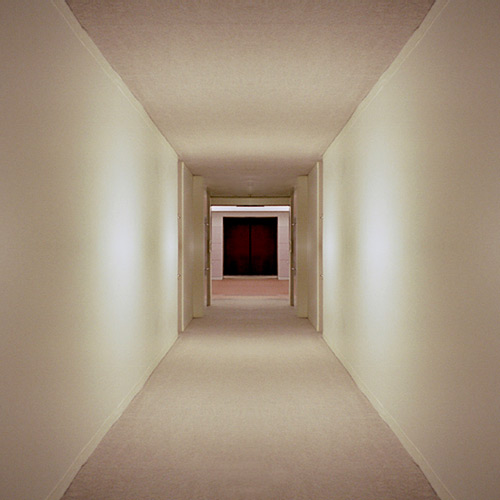
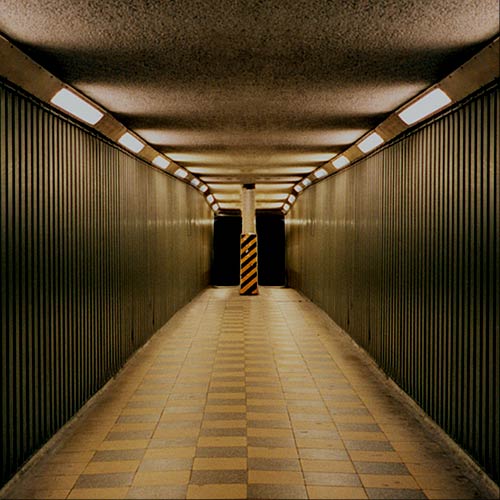
New Scientist reports that certain architectural hallucinations associated with near-death experiences – such as bright lights at the end of long hallways and tunnels – might actually be the product of a sleep disorder.

[Image: From the series Tunnel Vision, by Jill Fehrenbacher].

Neurophysiologist Kevin Nelson, New Scientist tells us, thinks that near-death experiences (or NDEs) “may be little more than dream-like states brought on by stress and a predisposition to a common kind of sleep disorder. If he’s right, as many as 40 per cent of us could be primed to see the light.”
But what I think deserves more exploration is the tunnel – the architectural space within which NDEs seem to occur.
For instance, is there a particular type of structure that people see when it comes to almost dying? If so, are those structures simply optical phenomena – or are there cultural and historical influences at work?
If you’re an architect, are your NDEs particularly detailed?
And what if you see a bright tunnel, inverted, ending in a space of pure darkness…?
The article doesn’t really address these issues.

[Image: From the series Tunnel Vision, by Jill Fehrenbacher].

“Written accounts of NDEs go back more than two thousand years,” we learn instead, and they “have been reported all over the world. Most include a ‘point of no return’ that if crossed will lead to death, and a person who turns you away from it.”
But what about the archtecture? Does everyone see the same hallway – or do some people see large rooms, or skylights, or even underground car parks, or caves, or maybe some huge mechanical garage door that slowly creeps open…?
Is there an architecture of death?
Can it be measured and taught to others?

[Image: From the series Tunnel Vision, by Jill Fehrenbacher].

If death does have a structure – or, at least, if near-death experiences do spatialize in certain pre-existing ways – if death has a spatial format, you could say – then clearly death could also be architecturally reconstructed, based on eyewitness accounts, here on earth, in the present moment, with us.
We could visit it, in groups, and emotionally prepare…
So what would happen if an architect teamed up with an anthropologist (who studies cultural narrations of the near-death experience) and with a neurophysiologist (who understands the underlying cortical mechanisms), to design themed environments specifically meant for triggering NDEs?
It’d be a kind of post-Buddhist thanatological fun ride, complete with people passing out – then waking up, blinking and vibrant, determined to change their lives, giving hugs to others and starting things over again.
Hallways of Rebirth, they might be called – and the first person to make it to the end of that hall without passing out wins $10,000.

[Image: From the series Tunnel Vision, by Jill Fehrenbacher].

It’s harder than it sounds.

(All photos from Jill Fehrenbacher’s Tunnel Vision series).

Architectural Dermatology

According to the BBC, Indian officials have concluded that a “deep-cleansing mud pack may be the only way to return a yellowing Taj Mahal to the cultural landmark’s former white marble glory.”
By “caking the building in clay,” we read, those same officials can actually “draw out surface impurities” – but how do they know whether or not they’ve purchased the right mud mask…?

[Earlier on BLDGBLOG: the oddly popular Hurling Taj Mahals into the Sky].

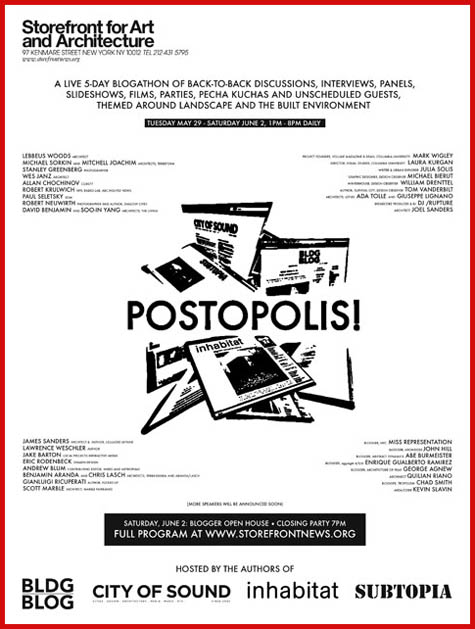
Postopolis! Update

A poster for Postopolis! will be coming out soon (without a red border), including the list of speakers as it now stands – and I’m unbelievably excited about this thing. I really can’t wait.
So: scattered over the course of five days, from May 29 to June 2, from 1pm-8pm everyday, at the Storefront for Art and Architecture in New York City, you’ll be hearing from, among many others yet to be announced:
Lebbeus Woods, Laura Kurgan, Michael Sorkin & Mitchell Joachim, Stanley Greenberg, Joel Sanders, Susan Szenasy, DJ /rupture, Andrew Blum, Jake Barton, William Drenttel, Tom Vanderbilt, Michael Bierut, Lawrence Weschler, Robert Krulwich, Benjamin Aranda & Chris Lasch, Randi Greenberg, Allan Chochinov, Julia Solis, Ada Tolla & Giuseppe Lignano, Scott Marble, Paul Seletsky, Robert Neuwirth, Wes Janz, James Sanders, Eric Rodenbeck, Kevin Slavin, Gianluigi Ricuperati, Quilian Riano, Miss Representation, Enrique Gualberto Ramirez, George Agnew, Chad Smith, Abe Burmeister, John Hill… and a lot more to come (including unannounced guests who just happen to be in New York that week).
So it should be a blast.
Stay tuned for specific times and so on, coming soon – and if you’re anywhere near NY, please consider stopping by: it’s not an academic conference, and the more people the merrier…
Finally, the other three blogs involved in planning all this are City of Sound, Inhabitat, and Subtopia – with the indispensible help of Joseph Grima, from the Storefront for Art and Architecture.

Sci-Fi Mecca

So it looks like Wired liked our science fiction and film panel, held last week.

[Image: Courtesy of Mark Goerner – here’s a large version].

The four panelists, Wired writes, showed “art that’s rarely seen outside the film studio: pictures of otherworldy and futuristic cities that special effects crews and CGI geeks use as blueprints to build the backdrops for outer-space fights, alien worlds and castles fit for dragons.”
Read more – and see a lot more images – at Wired.
Meanwhile, some more background on the event can be found here, on BLDGBLOG – or you can even check out ARCHITECT Magazine‘s coverage of the event (although, if you read that article, note that the date for our second screening has been moved from May 9 to May 22).
Finally, if you were there, thanks again for coming out!